Welcome to the home page for student work in the Earlham College Computer Science Senior Capstone Experience.

From the course catalog:
Each participant completes a semester-long capstone project in a research group setting. Weekly meetings with the instructor individually and with the group as a whole. In addition, explores topics from the cultural, ethical, historical or broader scientific context of computer science in readings and discussion. Culminates in a public seminar and student presentation.
This is our home for publishing this information to the web.

About Me:

with No Comments

My name is Kenny Shema, and I am a class of 2025 student pursuing a major in Computer Science and Economics.

Project:

My project consists of a personalized music recommendation system that uses real-time heartbeat data to suggest songs matching the user’s current mood or energy level. Built with a focus on integrating wearable sensor data and machine learning, the project aims to enhance emotional connection and user experience through adaptive, data-driven music selection.

Proposal:

Introduction

with No Comments

Introduction

My name is Helena Aleluya José, and I’m an international student from Angola. I’m also a Computer Science and Theater double major, and an African and African-American Studies and Creative Writing double minor. As both a computer scientist and a playwright, I wanted to create a project that reflects the intersection of my passions. For my senior capstone, I developed a framework that applies topic modeling techniques (LDA) to a corpus of dramatic texts in order to study playwright originality

Abstract

This capstone project aims to develop a novel approach for analyzing and comparing playwrights’ unique voices and styles by applying topic modeling techniques, specifically Latent Dirichlet Allocation (LDA), on a corpus of theater texts. By leveraging advanced natural language processing (NLP) methods, the project will preprocess and prepare a diverse collection of plays for topic modeling, implement custom algorithms tailored for dramatic literature, and analyze the discovered topics to identify recurring themes, character archetypes, and narrative structures prevalent across different playwrights’ works. Interactive visualization tools will be developed to facilitate the exploration and interpretation of these insights, enabling literary scholars and critics to understand the creative processes better and the influences that shape dramatists’ voices.

Keywords 

Topic modeling techniques, textual analysis, LDA model, Digital Humanities

Karolayne Gaona

with No Comments

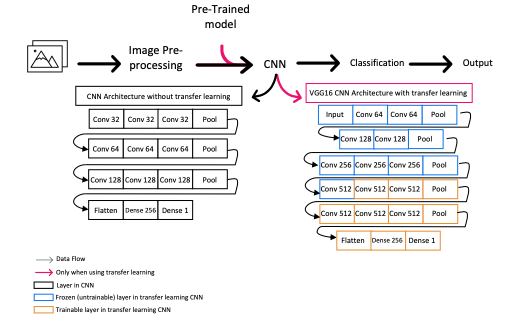
Pet identification is important for veterinary care, pet ownership,
and animal welfare and control. This proposal presents a solution
for identifying dog breeds using dog images. The proposed method
applies a deep learning approach to identify the dog breeds. The
starting point for this method is transfer learning by retraining
existing pre-trained convolutional neural networks on the Stanford
Dog database. Three classification architectures will be used. These
classifiers will take images as input and generate feature matrices
based on their architecture. The stages these classifiers will undergo
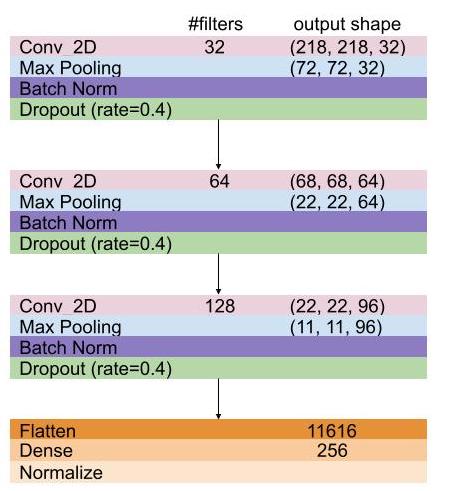
to create feature vectors are 1) Convolution to generate feature
maps and 2) Max Pooling: highlight features are extracted from
the feature maps. Data augmentation is applied to the database to
improve classification performance.

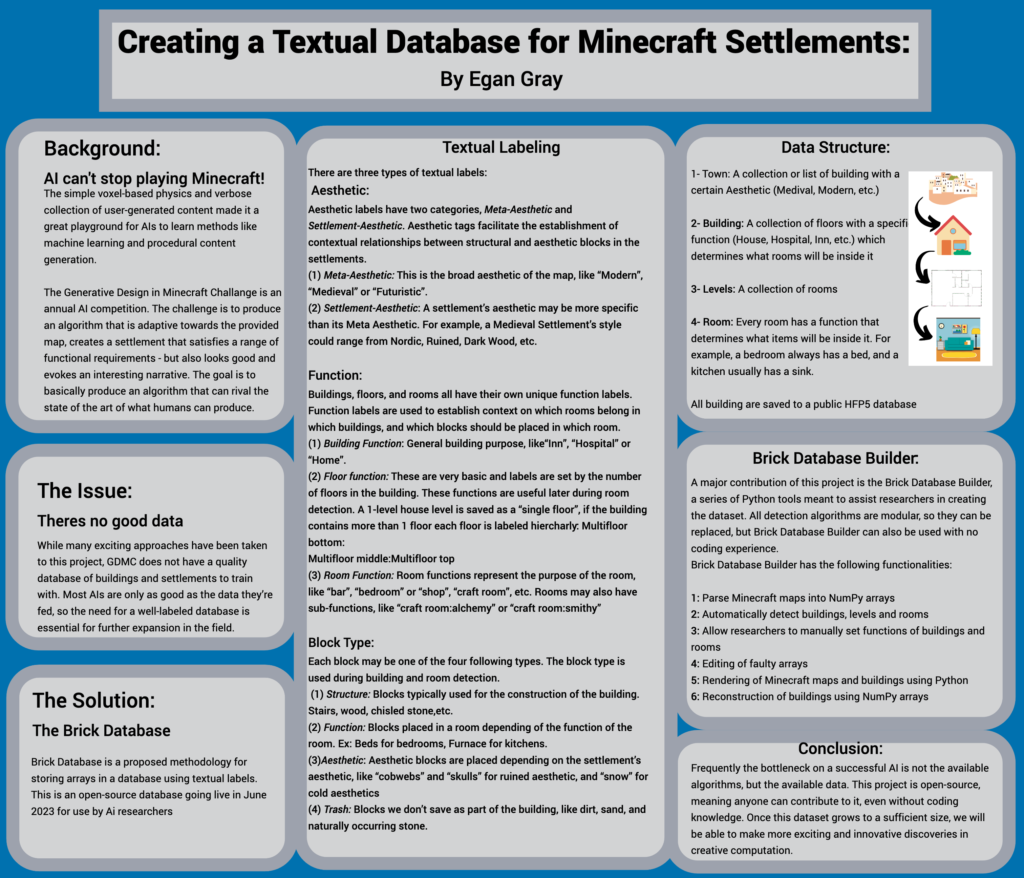
Building a textual dataset for the Generative Design in Minecraft Competition

with No Comments

Abstract:

This paper presents the structure and design of a novel open-source textual database named the Brick Database for Minecraft settlements. Aimed at addressing the current lack of comprehensive datasets for model training in the Generative Design in Minecraft Competition (GDMC), this study explores the methodologies and potential challenges in creating a textual database and automatically detecting buildings and rooms.

Paper:

Software demonstration:

Poster:

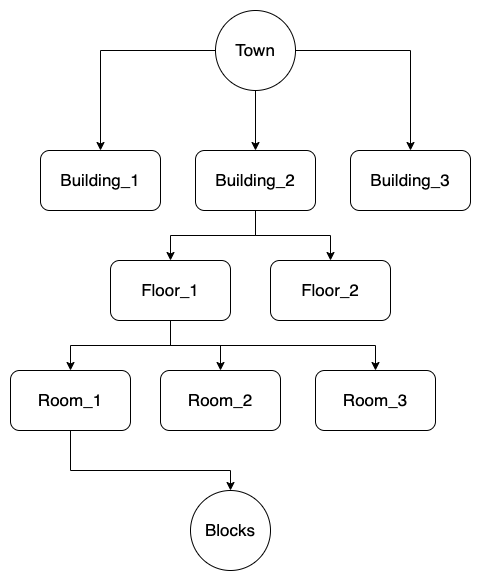
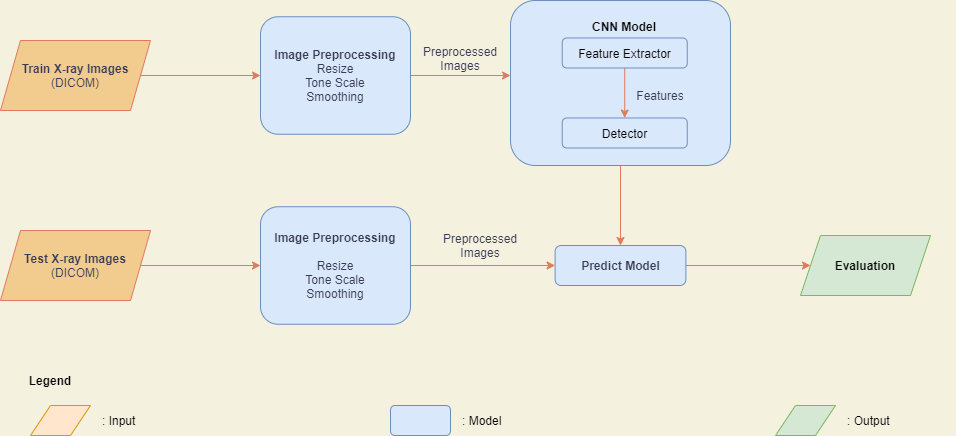
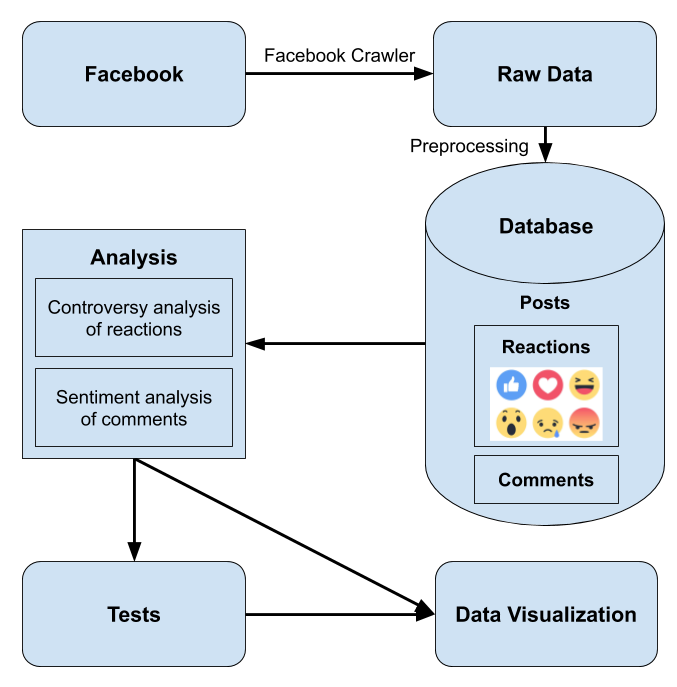
Data diagram:

Final Three Pitches

with No Comments
  1. Machine learning to automatized music composition

This project aims to build a system that uses machine learning algorithms to generate original music compositions based on original ones. This project will be studying machine learning techniques for pattern recognition. 

The feedback I received from this seems to be more approachable than my first pitch, but I haven’t been able to receive more feedback because nobody has experience with this matter. 

However, Doug questioned if there are Machine learning packages that I could use to build my project. Because in my project I aim to produce a new product from already existing ones. So, do we have packages to generate a new thing? It is possible to configure a train to produce something new. 

I am currently getting in contact with the music department because there is a professor who teaches a class, “Making Music with Computer.” 

I learned about software for music composition called “Max” which is a visual programming language for music and multimedia. I also learn about authors as David Cope, who he has a lot of work regarding artificial intelligence in music. I also investigated different types of music algorithms for composition and am currently looking for a specific problem or field to explore in this area. 

Figure out because off all the complexity of this keep things simple.

  • translational models
  • mathematical models
  • knowledge-based systems
  • grammars
  • optimization approaches
  • evolutionary methods
  • systems which learn
  • hybrid systems
  1. Detecting non-child-appropriate content in videos. 

Nowadays, it is very easy to get access to a lot of content online, including music, articles, games, videos, and movies. In the last couple of years, the use of video platforms such as YouTube has become very important for education, entertainment, hobbies, etc. However, YouTube is a platform where anyone can upload content, and not all content is appropriate to everyone. It can be because they may include sensitive content or bad words. This project will aim to use deep learning and machine learning for video analysis. It will require image processing to process video clips. It can also work with pattern recognition. This project aims to detect images and audio from the videos. 

Challenge: video processing, 

Data set of video file tag if they are not appropriate for children. 

Potential dataset:

https://zenodo.org/record/3632781 (Restricted)

https://figshare.com/articles/dataset/The_Image_and_video_dataset_for_adult_content_detection_in_image_and_video/14495367/1 (adult content detention)

Youtube Data API (meta data)

Good Resources 

https://cbw.sh/static/pdf/tahir-asonam19.pdf
  1. Real-time sign language translator to text.

This project aims to use machine learning to accurately translate real-time sign language to text by capturing sign language gestures using a camera (more likely from a computer’s web camera) to text. This system should be able to recognize various signs. I would like to study computer vision techniques. 

From the input I received from Doug, this is a very ambitious project. We thought about what would be more convenient. Translate from moves gestures to text or from text to moves gestures. The first option seems to be more complicated because computer vision techniques can be a vast area. More than understanding computer vision techniques, but will also be required to recognize sign language and the context. To be able to train machine learning, I will require a lot of data that may not be easy to obtain. 

This project will aim to have a friendly user interface. So it will be easy for the user to navigate through the translator. 

https://www.kaggle.com/datasets/datamunge/sign-language-mnist
  1. Machine leaning for the prediction of stroke diseases

Stroke is a cerebrovascular disease and is a significant causes of death. It causes significant health and financial burdens for the individual and the system. There are many machine-learning models built to predict the risk of stroke or to automatically diagnose stroke using predictors such as life factors or images. However, there has not been an algorithm that can predict using lab tests. 

https://www.kaggle.com/code/aradhanapratap/stroke-prediction-using-supervised-learning-models
https://www.kaggle.com/datasets/shashwatwork/cerebral-stroke-predictionimbalaced-dataset
https://catalog.data.gov/dataset/rates-and-trends-in-heart-disease-and-stroke-mortality-among-us-adults-35-by-county-a-2000-45659

CS 388 Momo Hirose Pitches

with No Comments

Idea #1 

My research question: 

What algorithms can be used to simulate policy making?

Public policy should obviously be for all citizens, but people often feel that their voices and real needs are not reflected in policy. In my home country of Japan, I have witnessed many voices on Twitter (now called X) about the policies they want from the government. I would like to create software that can use government data to simulate and predict what the impact would be if the government actually implemented those policies. Such a tool would help in better evidence-based policy making.


Idea #2

My research question: 

How can we combine speech recognition, AI, and data extraction to automatically and instantly display the data mentioned in public discussions?

In Japan, when public policies are made, they have to be discussed in the Council or the Diet (Japanese national congress) in order to be approved. However, these discussions are often not easy to understand for the citizens for the following two reasons. 

  1. Politicians tend to criticise each other for trivial words or actions, so it is hard to understand the points of what is being discussed.
  2. What we, the citizens, see on television is only politicians arguing. Without visual aids it is even harder to follow the discussions. 

If the data (graphs and numbers) are automatically displayed when politicians refer to data by recognising the voice, policy-making will be more evidence-based and discussions will be easier for citizens to understand.

  • An example of a specific issue I would like to look at is Japan’s declining birth rate – this is often discussed in the National Diet, but because it is such a broad topic, the discussions sometimes get lost without data.
    • https://www.shugiintv.go.jp/jp/
    • * This link above is the website where you can access all the archives of live broadcasts of the National Diet.
    • * The videos cannot be downloaded (only available for watching in the web browser) 
    • https://www.shugiin.go.jp/internet/itdb_shitsumon.nsf/html/shitsumon/menu_m.htm
      • This government official website shows text data of the questions and answers that were discussed in the National Diet. They are listed by topics and available in PDF and HTML format. (* Only in Japanese, but I can translate for the purpose of this research) 

Idea #3  Computational Modeling of National Budget

My research question: 

What algorithms can be used to better allocate the national budget?

What I realized while working with the government agencies in Japan last summer was that the policy-making process focuses heavily on the rationale of policies, and after they are approved, the evaluation is not as important as it should be. This could lead to a situation where the national budget continues to be allocated to policies that are not effective. If we can create a system to quantify the impact of each policy and also get comments from citizens, and use an algorithm to allocate the national budget, I think we could have a better cycle of public policy.

  • Since examining the entire national budget could be huge, here’s a specific topic I’m interested in investigating: 
    • The budget for developing the startup ecosystem in Japan
      • How is it currently allocated to each policy?
      • How effective are these policies?
      • How should the budget be allocated in the future, using computer modelling?
      • * Data and information on the development of the startup ecosystem and its budget can be found at the Japanese Ministry of Economy, Trade and Industry.

6 Annotated bibliography – Tien

with No Comments

Facial Expression Recognition: This pitch will focus on facial expression recognition (FER) using convolutional neural networks (CNNs), which helps people with difficulties in communication, analyzes human’s emotion, and helps with development of AI in supporting humans during their daily life. Dataset: CK+ : 48×48 pixels images in grayscale format; face cropped; emotions includes anger (45 samples), disgust (59 samples), fear (25 samples), happiness (69 samples), sadness (28 samples), surprise (83 samples), neutral (593 samples), contempt (18 samples). Tufts Face Database: multi-modal face image images with more than 100,000 images, 74 females and 38 males from different age groups. 

Suppressing uncertainties for large-scale facial expression recognition

Kai Wang, Xiaojiang Peng, Jianfei Yang, Shijian Lu, and Yu Qiao. 2020. Suppressing uncertainties for large-scale facial expression recognition. Proceedings of the IEEE/CVF conference on computer vision and pattern recognition (2020), 6897–6906. https://openaccess.thecvf.com/content_CVPR_2020/html/Wang_Suppressing_Uncertainties_for_Large-Scale_Facial_Expression_Recognition_CVPR_2020_paper.html

This paper addressed a specific problem in large-scale FER, which is “uncertainties caused by ambiguous facial expression, low-quality facial images, and the subjective of the annotators” by using the Self-Cure Network. Because it focuses on a problem in FER, it is a good example if we want the purpose of our proposal to be about addressing a problem in the domain. It also mentions a lot of good dataset for FER  along with works on FER using algorithms in the citation, which are good resources for our proposal. Related works in the field are also provided and went into detail to showcase the problem that the paper is focusing on. The methods that were proposed in the paper are based on the observation that CNNs can be uncertain about their predictions. 

Deep-emotion: Facial expression recognition using attentional convolutional network

Shervin Minaee, Mehdi Minaei, and Amirali Abdolrashidi. 2021.Deep-Emotion: Facial Expression Recognition Using Attentional Convolutional Network. Sensors 21, 9, 3046. https://www.mdpi.com/1424-8220/21/9/3046

This paper is about FER using attentional CNNs. It discusses the challenges of FER and how attentional CNNs can be used to address them. The author proposed a new attentional CNN architecture that is able to focus on important facial regions for emotion detection. Because I decided to use CNN as the main method for processing the data in my paper, I can consider using the proposed attention CNNs from this paper. The proposed attentional CNN architecture consists of 2 main components: a feature extraction network and an attention network. The feature extraction network extracts features from the input image, while the attention network learns to focus on the most important facial regions for emotion detection.

Facial expression recognition: A survey

Yunxin Huang, Fei Chen, Shaohe Lv, and Xiaodong Wang. 2019. Facial expression recognition: A survey. Symmetry 11, 10, 1189. MDPI. https://www.mdpi.com/2073-8994/11/10/1189

This paper is a survey for FER of visible facial expressions, which provides a lot of necessary background knowledge like terminologies and difficulties in the field. It also provided a throughout FER approach from beginning to end process including Image processing, feature extraction, gabor feature extraction, and expression classification. CNNs, Deep Belief Network, Long Short-Term Memory, Generative Adversarial Network are introduced and cited with current works related to them.

Facial emotion recognition using transfer learning in the deep CNN

M. A. H. Akhand, Shuvendu Roy, Nazmul Siddique, Md Abdus Samad Kamal, Testuya Shimamura. 2021. Facial emotion recognition using transfer learning in the deep CNN. Electronics 10, 9, 1036. MDPI. https://www.mdpi.com/2079-9292/10/9/1036

This paper focuses on Deep CNN and Transfer Learning (TL). CNN is a popular technique used for FER and it is one that I’m considering moving forward with. This paper also focuses on using these techniques to reduce the development efforts, which is an understanding problem that all of the previous ones haven’t touched on. FER systems need to be able to handle occlusion, noise, and other challenges. Deep CNNs have been shown to be effective for FER tasks. CNNs are able to learn complex features from images, which can be helpful for identifying FER. Transfer learning is a technique where a pre-trained model is used as a starting point for a new model. This can be useful for tasks where there is limited training data available. In the paper, they introduced the technique of adopting a pre-trained Deep CNN model and replacing its dense upper layer(s) compatible with FER, and then fine-tuning the model with facial emotional data. This approach has been shown to achieve remarkable accuracy on both the FDEF and JAFFE facial image datasets.

Local multi-head channel self-attention for facial expression recognition

Roberto Pecoraro, Valerio Basile, and Viviana Bono. 2022. Local multi-head channel self-attention for facial expression recognition. Information 13, 9, 419. MDPI. https://www.mdpi.com/2078-2489/13/9/419

This paper proposed Local multi-head Channel self-attention (LHC) in the context of computer vision and in facial expression recognition. LHC is a very new approach in the field of FER. This paper will be useful because the LHC module is a type of self-attention module that can be integrated into CNNs, and it has been shown to improve the performance of CNNs on FER tasks. In a CNN, each layer learns to extract different features from the input image. The LHC module allows the CNN to learn long-range dependencies between features, which can be helpful for FER. 

Guided open vocabulary image captioning with constrained beam search

Peter Anderson, Basura Fernando, Mark Johnson, and Stephen Gould. 2016. Guided open vocabulary image captioning with constrained beam search. arXiv preprint arXiv:1612.00576. https://arxiv.org/abs/1612.00576

I read this paper for another class, and I think it is pretty interesting if I can incorporate this into my paper. The paper proposed a method for improving the performance of open vocabulary image captioning models. Open vocabulary image captioning models are able to generate captions that contain words that are not present in the training data. The author introduced a technique called constrained beam search to guide the generation of captions. Contrainsed beam search forces the generated captions to include certain words. FER uses words “happy”, “sad”, “angry”, and “neutral”, constrained beam search could be used to force the system to predict at least one of these words in each prediction. 

Sentiment analysis of online food reviewWhen people buy products online, the one thing that they tend to look closely at are the reviews of the product. Having good reviews and understanding the needs of the customers through the review can help the business grow tremendously. A review usually comes in two parts: the rating and the reviews. While the text-review system can be easy to interpret the customers’ overall experiences without any biases, the star-rating system tends to be less informative and it is up to the viewer to interpret the rating. This project aims to perform sentiment analysis on the reviews dataset, so it provides more accurate feedback on the products. Another aspect that this project can develop toward is that it can perform analysis on the negative languages on the recent reviews to let the businesses know what they should focus on improving. Amazon Fine Food Reviews dataset, which contains data over a 10 year period (1999 to 2012). Another plan to replace this dataset is using DoorDashAPI to collect reviews from the restaurants on DoorDash.

Comparative study of deep learning models for analyzing online restaurant reviews in the era of the COVID-19 pandemic

Yi Luo, and Xiaowei Xu. 2021. Comparative study of deep learning models for analyzing online restaurant reviews in the era of the COVID-19 pandemic. International Journal of Hospitality Management 94, 102849. Elsevier. https://www.sciencedirect.com/science/article/pii/S0278431920304011

The paper performs analysis on four features of 112,412 restaurants on Yelp and shows outcome comparison between algorithms. The data are collected by using a web scraper, which is a method that we proposed for our paper if we can’t find a more recent dataset. They also mentioned the process of data cleaning, which includes 2 procedures: tokenization and stopwords removal. They provided 2 deep learning and machine learning algorithms: gradient boosting decision tree classifier, random forest classifier, bidirectional LSTM, and simple word-embedding model. They also proposed both theoretical and practical implications for future work, which is a good place to find motivation for our paper.

A survey on sentiment analysis methods, applications, and challenges

Mayur Wankhade, Annavarapu Chandra Sekhara Rao, and Chaitanya Kulkarni. 2022. A survey on sentiment analysis methods, applications, and challenges. Artificial Intelligence Review 55, 7, 5731-5780. https://link.springer.com/article/10.1007/s10462-022-10144-1

This paper provided a background on sentiment analysis like the survey for FER, which also gives us a good start to understanding how to approach sentiment analysis. It provides a throughout beginning-to-end process of a sentiment analysis. I find it useful when reading about the 3 main approaches, which are Lexicon Based Approach, Machine Learning Approach, and Hybrid Approach. It also introduced some common machine learning algorithms for sentiment analysis: Naive Bayes, support vector machines, and deep learning. Naive Bayes is easy to implement and can be trained on a relatively small dataset. Support vector machines can be trained to achieve high accuracy, but they can be more difficult to implement and require a larger dataset than Naive Bayes. Deep learning algorithms like recurrent neural networks and CNNs are more difficult to implement and require a large dataset to train.

Sentiment analysis of restaurant reviews using hybrid classification method

M. Govindarajan. 2014. Sentiment analysis of restaurant reviews using hybrid classification method. Sentiment analysis of restaurant reviews using hybrid classification method 2, 1, 17-23. https://www.digitalxplore.org/up_proc/pdf/46-1393322636127-133.pdf

This paper compared the effectiveness of different methods made for classifying restaurant reviews and whether it is beneficial to use ensemble techniques. It includes methods like Naive Bayes, Support Vector Machine and Genetic Algorithm. I think they provide a broad look at what methods are available for classification and that can be helpful for our paper, but I am not sure if it will be useful for our paper since we are not planning to explore classification in restaurant reviews but more about the sentimental analysis of it. However, the amount of paper available on the topic that I proposed is quite limited. If we can get access to one of the paper I listed below, they can be a good resource since it is more related to the direction I want to develop my proposal.

Sentiment analysis of customer reviews of food delivery services using deep learning and explainable artificial intelligence: Systematic review

Anirban Adak, Biswajeet Pradhan, and Nagesh Shukla. 2022. Sentiment analysis of customer reviews of food delivery services using deep learning and explainable artificial intelligence: Systematic review. Foods 11, 10, 1500. MDPI. https://www.mdpi.com/2304-8158/11/10/1500

This paper focuses on AI and DL for sentiment analysis. They explained more about how AI, DL, ML are developing within each other. I think this paper acts as an overall guide on the techniques that I should use for my paper. It includes information about different AI methods that are used in sentiment analysis of customer reviews for food delivery services and also challenges when using DL techniques on customer reviews. 

“His lack of a mask ruined everything.” Restaurant customer satisfaction during the COVID-19 outbreak: An analysis of Yelp review texts and star-ratings

Maria Kostromitina, Daniel Keller, Muhittin Cavusoglu, and Kyle Beloin. 2021. “His lack of a mask ruined everything.” Restaurant customer satisfaction during the COVID-19 outbreak: An analysis of Yelp review texts and star-ratings. International journal of hospitality management 98, 103048. Elsevier. https://www.sciencedirect.com/science/article/pii/S0278431921001912

This paper is similar to what I might want to do for my pitch: it includes background information about the review text in relation to the choice of star-ratings. It also provides an interesting aspect of how Covid-19 affected the reviews of the customers, and how, depending on the situations, the reviews that the customers read might not help them make the right decision of choosing a good restaurant.

Sentiment analysis of customers’ reviews using a hybrid evolutionary svm-based approach in an imbalanced data distribution

Ruba Obiedat, Raneem Qaddoura, Al-Zoubi Ala’M, Laila Al-Qaisi, Osama Harfoushi, Mo’ath Alrefai, and Hossam Faris. 2022. Sentiment analysis of customers’ reviews using a hybrid evolutionary svm-based approach in an imbalanced data distribution. IEEE Access 10, 22260–22273. IEEE. https://ieeexplore.ieee.org/abstract/document/9706209/

This paper, other than proposing new techniques for sentiment analysis, addresses the problem of imbalance dataset, which is a common problem to encounter in data analysis. Even thought, the paper doesn’t perform the work on an English-based dataset, it is useful to see how they deal with imbalance data problems. They use Naive Bayes, SVM, and Genetic Algorithm on the dataset, then compare with their proposed hybrid model built with all three classification methods

3 Pitches – Polished version

with No Comments

Pitch 1: Reduce the encounter of local minima in heuristic search space. In the heuristic search space of heuristic algorithms, there are areas where the nodes appear to be closer to the goal state, but when the algorithm encounters these areas, they actually wasted more resources to reach the goal. These areas are called local minima. Local minima tends to arise more when using distance to go as the heuristic value instead of cost to go, which is an aspect that this project plans to explore. Avoiding local minima and understanding the behavior can help improve the performance of heuristic search algorithms. Overall, this project will explore the problem of local minima with beam search. 

Risk: There is limited information on this topic and a lot of knowledge gaps that will need to be filled. 

Pitch 2: Facial expression recognition: classify facial expression using machine learning. Problem: help people in communication, analyze human’s emotion, help with the development of AI in supporting humans during their daily life. Dataset: CK+ : 48×48 pixels images in grayscale format; face cropped; emotions includes anger (45 samples), disgust (59 samples), fear (25 samples), happiness (69 samples), sadness (28 samples), surprise (83 samples), neutral (593 samples), contempt (18 samples). Tufts Face Database: multi-modal face image images with more than 100,000 images, 74 females and 38 males from different age groups. 

Risk: Finding a suitable machine learning algorithm, process image data.

Pitch 3: Sentiment analysis of online food review. When people buy products online, the one thing that they tend to look closely at are the reviews of the product. Having good reviews and understanding the needs of the customers through the review can help the business grow tremendously. A review usually comes in two parts: the rating and the reviews. Users, a lot of the time, mistakenly choose the wrong rating for the products, so the reviews are more reliable in most situations. This project aims to perform sentiment analysis on the reviews dataset, so it provides more accurate feedback on the products. Another aspect that this project can develop toward is that it can perform analysis on the negative languages on the recent reviews to let the businesses know what they should focus on improving. Amazon Fine Food Reviews dataset, which contains data over a 10 year period (1999 to 2012). Another plan to replace this dataset is using DoorDashAPI to collect reviews from the restaurants on DoorDash.

Risk: dataset is not recent and will keep looking for a more recent dataset.

Annotated Bibliography

with No Comments
  1. Pitch #1: “Online Child Safety: Using deep learning to detect inappropriate video content for children.”: 

In today’s digital world, where online content is easily accessible, my project aims to use deep learning and machine learning techniques, such as Neural Networks, to tackle the challenge of inappropriate content on video platforms like YouTube. Using advanced image processing and pattern recognition, my goal is to detect and flag unsuitable imagery and audio within videos. With a focus on creating a child-safe environment, I aim to build a comprehensive dataset of video file tags, making online platforms more secure for users of all ages and fostering a responsible and enjoyable digital experience. 

Research question: To improve the accuracy and efficiency of content classification on YouTube, can I compare and evaluate the performance of different deep learning architectures, such as Convolutional Neural Networks (CNNs) and Recurrent Neural Networks (RNNs) versus human judgment, in the context of detecting inappropriate content? What are the trade-offs in terms of computational resources and real-time processing?

Datasets:

https://zenodo.org/record/3632781 (Restricted)

https://figshare.com/articles/dataset/The_Image_and_video_dataset_for_adult_content_detection_in_image_and_video/14495367/1 (adult content detention)

YouTube Data API (metadata)

Good Resources:

https://cbw.sh/static/pdf/tahir-asonam19.pdf
  1. Bringing the Kid back into YouTube Kids: Detecting Inappropriate Content on Video Streaming Platforms
[1] Tahir, Rashid, Faizan Ahmed, Hammas Saeed, Shiza Ali, Fareed Zaffar, and Christo Wilson. 2019. “Bringing the Kid Back into YouTube Kids: Detecting Inappropriate Content on Video Streaming Platforms.” In Proceedings of the 2019 IEEE/ACM International Conference on Advances in Social Networks Analysis and Mining, 464-469.

  • Nowadays, YouTube (YT) has become a very popular platform used by a lot of people, including children. YT has a section for children called YT Kids, but sometimes inappropriate children’s content may be leaked onto the platform. In this research, they collected data manually from a range of videos and used deep learning as a filter mechanism.
  • The researchers designed and implemented a deep learning model just for the task of content classification. They used a variety of deep learning models, such as Convolutional Neural Networks (CNN) and Recurrent Neural Networks (RNN), to analyze elements of the content of the videos, including visual, audio, and motion. These model were chosen for their ability to learn complex patterns from raw data.
  • The management of video data is more complex because there are more elements to evaluate than a photo, for example, so they used a pre-trained CNN (VGG19) to extract relevant visual features from individual frames in a video. They used a type of RNN Bidirectional Long short-term memory (LSTM) to capture temporal relations in the motion features in videos, and finally, to process the audio of the videos, they used spectrograms to extract relevant audio and then deep learning models can analyze audio features to detect inappropriate language, words, etc. 
  • The way this research processed and classified their data was that the extracted motion, audio, and visual elements of each scene were put together into a single feature vector for that scene. Then, this single feature vector is fed into a fully connected neural network layer, followed by a softmax layer for classification. Deep learning models can effectively process and combine all these features to make decisions about the content of each scene. 
  • This paper is relevant to my pitch because my project aims to use deep learning and machine learning for video analysis, which is the research of this paper which also deals with the issue of content filtering and detection. 
  1.  A Deep Learning-Based Approach for Inappropriate Content Detection and Classification of YouTube Videos
[2] Yousaf, Kanwal, and Tabassam Nawaz. 2022. “A Deep Learning-Based Approach for Inappropriate Content Detection and Classification of YouTube Videos.” IEEE Access 10 (2022): 16283-16298.

  • This paper talks about YT being a platform that attracts malicious uploaders who share inappropriate content targeting children. To address this issue, this article proposes a deep learning-based architecture for detecting and classifying inappropriate content video by using an ImageNet pre-trained CNN model, specifically EfficientNet-B7 to extract video descriptors. This descriptor is then processed by a bidirectional long-short-term memory (BiLSTM) network to learn effective video representation and video classification. An attention mechanism is also incorporated into the network. 
  • Their proposed model uses a dataset of cartoon clips collected from YouTube videos, and the results are compared with traditional machine learning classifiers.
  • This paper’s methodology is processed in three steps. Video processing in which YouTube videos are split into small clips and labeled through manual annotation. Then, the CNN model and pre-trained on ImageNet is used to extract deep features from processed video frames. These features are also used to feed the BiLSTM network. The extracted videos are processed by BiLSTM Network to learn video representations. The output is then used for multiclass video classification.
  • The data set of this paper contained a total of 111,561 video clips. Out of that number, 57,908 clips were labeled as safe, 27,003 as sexual nudity, and 26,650 as fantasy violence. This distribution was made to ensure a balanced dataset for training and evaluation. 
  • The researchers compared different classifiers, such as Support Vector Machines (SVM), k-nearest Neighbors (KNN), and Random Forest that use EfficientNet. They found out that these machine learning classifiers were outperformed by their deep learning model.
  • This article mentions that for future work, combining temporal and spatial features and increasing the number of classifications, their model can be even better.
  • My project focuses on the same problem domain as the article’s. My pitch attempts to use machine learning and deep learning as well. This article could potentially provide me with guidance for dataset collection.
  • This article cited the previous article, “Bringing the Kid Back into YouTube Kids: Detecting Inappropriate Content on Video Streaming Platforms.”
  • This article is directly related to my area of research. I could use as a framework some of the methodologies from this paper because it is related to the use of the CNN model. 
  1. Evaluating YouTube videos for young children
[3] Neumann, Michelle M, and Christothea Herodotou. 2020. “Evaluating YouTube Videos for Young Children.” Education and Information Technologies 25 (2020): 4459-4475.

  • This article discusses the evaluation of YT videos for small children. The main concern of this article is about the quality of the appropriate quality of video content for children. This paper proposes to provide a framework for evaluating the quality of YT videos for young children, saying that this information can be used by educators and YouTube creators. I found this information relevant to my pitch because it can provide me guidance for video classification.
  • The article discussed YT official labeling for the classification of children’s content. The author proposes that these classifications do not necessarily study how children learn from screen media.
  • This study studies children’s interaction with screen media, develops a rubric for YT videos, and uses this rubric on YT videos.
  • The rubric they made is based on criteria related to age appropriateness, content quality, design features, and learning objectives.
  • They tested five videos with different content by human judgment. 
  • This paper can provide a framework to understand a clear understanding of what is appropriate for children on YT videos.
  • This paper discusses the use of Cohen’s Kappa to measure inter-rater reliability. In my project, I will probably be dealing with a large dataset, I can use a similar statistical method to asses between automated judgment and human judgment. 
  1. A Deep-Learning Framework For Accurate And Robust Detection Of Adult Content 
[4] Kusrini, Kusrini, Arief Setyanto, I Made Artha Agastya, Hartatik Hartatik, Krishna Chandramouli, and Ebroul Izquierdo. 2022. “A Deep-learning Framework for Accurate and Robust Detection of Adult Content.” Journal of Engineering Science and Technology. Engg Journals Publication.

  • This paper highlights the importance of filtering sensitive media, such as pornography and explicit content in general, on the internet. It talks about the negative consequences of exposing children to this content. 
  • The paper discusses old alternatives to solve this issue, such as IP-based blocking, textual analysis, and statistical color models for skin detection. However, this paper introduces the idea of using and transitioning to deep learning. To go from handcrafted features to deep neural networks. 
  • This paper proposes to use the deep-learning framework and spatial and temporal characteristics of video sequences for adult content detection. The framework is based on CNN architecture called Inception-v3 for spatial feature extraction. Temporal characteristics are modeled using long-term short memory (LSTM). The authors used different deep-learning network architectures such as VGGNET, RESNET, and Inception. Inception-v3 was selected to be the most efficient in the feature extraction. 
  • The Dataset is the NPDI dataset, which contains explicit (pornographic) content as well as non-explicit content. This dataset is used for training and classification. 
  • After extracting features from images or video frames using color distribution, shape information, skin likelihood, etc., clustering techniques (k-means) and classifiers (Support Vector Machines, SVM, etc.) are used to separate explicit from non-explicit content. 
  • They used HueSIFT and space-time interest points with SVM and Random forest for better classification using statistical machine learning algorithms. 
  • The paper also mentions that deep learning models such as AlexNet, GoogleLeNet have higher accuracy compared to traditional machine learning methods. 
  • The results said that the deep leaning based approach outperforms previous methods and achieves high accuracy, mostly using LSTM networks. 
  • This paper has great visuals that may help me better orient when creating the visuals and graphs for my paper. I probably won’t be using the dataset from this paper, but it is a great source to have a better understanding of how LSTM works and how could implemented in CNN architecture.
  1. Disturbed YouTube for Kids: Characterizing and Detecting Inappropriate Videos Targeting Young Children
[5] Papadamou, Kostantinos, Antonis Papasavva, Savvas Zannettou, Jeremy Blackburn, Nicolas Kourtellis, Ilias Leontiadis, Gianluca Stringhini, and Michael Sirivianos. 2020. “Disturbed YouTube for Kids: Characterizing and Detecting Inappropriate Videos Targeting Young Children.” In Proceedings of the International AAAI Conference on Web and Social Media, 14:522-533.

  • This paper mentions that many YT channels are for young children, but there is a significant amount of inappropriate content that is also targeted at young children.
  • YT recommendation system sometimes suggests not the best content for children.
  • This research collected a dataset of videos, including inappropriate and for children as well as random videos, and classified the videos as suitable, disturbing, restricted, or irrelevant.
  • A deep learning classifier is developed to detect disturbing videos automatically. 
  • The dataset is collected using YT Data APU and multiple approaches to obtain seed videos. Manual annotation is performed to label videos. 
  • This project starts with the seed videos as a starting point. These seed videos are videos that are appropriate for young children. Then, randomly choose from the recommended videos and choose the videos recommended by the platform. Then, a trained binary classifier is used to predict if the recommendation is appropriate or not. Keep track of whether the next video is appropriate or not. They analyze these random walks and product statistics. 
  • The authors trained a deep-learning classifier to classify the videos automatically. To train the classifier, the authors used a labeled dataset of videos.
  1. Very Deep Convolutional Networks For Large-Scale Image Recognition
[6] Simonyan, Karen, and Andrew Zisserman. 2014. “Very Deep Convolutional Networks for Large-Scale Image Recognition.” arXiv preprint arXiv:1409.1556.

  • This paper talks about the impact of convolutional neural network (ConvNet) depth in the context of large-scale image recognition. It explores the use of deep networks with small (3×3) convolutional filters and shows that increasing network depth improves performance.
  • They found that using small (3×3) convolutional filters and pushing the network depth to 16-19 layers can lead to a huge improvement. 
  • This paper focuses on ConvNets architecture and explores increasing the depth. 
  • During the paper, the authors argue their decisions about input size, convolutional layers, etc. The training process involves optimizing the multinomial logistics regression objective using mini-batch gradient descent with momentum. Regularization techniques such as weight decay and dropout are used.
  • To test, they used a trained ConvNet as input images for classification. The input is rescaled to a predefined smallest side as Q, which is a test scale.
  • The network is applied densely over the rescaled test image. The fully connected layers are converted to convolutional layers, and the result is a fully convolutional network is applied to the whole uncropped image.
  • This paper, very similar to other papers, will provide me with a better understanding of using CNN models on a big data set of videos. I want to review this paper to study how they worked increasing the depth of the layers.

2. Pitch #2: Machine learning for music recognition: 

This project aims to use machine learning for music genre recognition. In a world where music is everywhere, music recognition can be a bit of a challenge. I will use machine learning techniques to teach the system to recognize unique patterns and characteristic that defines the music genre.  I may try to duplicate already well-known models for music recognition and compare two of them to see which one is more efficient. 

Research question: To optimize music genre recognition using machine learning, can we compare and evaluate the performance of traditional machine learning classifiers, such as logistic regression and support vector machines (SVMs), with deep learning architectures like convolutional neural networks (CNNs) using a diverse dataset? How do these algorithms perform in terms of accuracy?

Data sets:

http://millionsongdataset.com/
https://www.kaggle.com/datasets/saurabhshahane/music-dataset-1950-to-2019
https://www.aicrowd.com/challenges/spotify-million-playlist-dataset-challenge
  1. A Machine Learning Approach to Musical Style Recognition
[1] Dannenberg, Roger B, Belinda Thom, and David Watson. 1997. “A Machine Learning Approach to Musical Style Recognition.” Carnegie Mellon University.

  • This article is about the applications of machine learning for music recognition. The main problem of this article is the challenge of making computers understand and perceive music beyond low-level features like low-level and tempo.
  • There is a lot of avoidance in research about high-level inference, so it is a challenge to build music-style classifiers. 
  • This article proposes the development of a machine learning classifier for music style recognition. 
  • The data collection in this research is by recording trumpet performances in different styles and then labeling them according to the style. 
  • The machine learning techniques used are naive Bayesian classifier, linear classifier, and neural networks to build the style classifier. 
  • They trained the classifier a portion with the data and then the rest of the data.
  • There are a lot of challenges because music can be multifaceted. Also, selecting features by trying to capture the essence is not easy.
  • There are a lot of overlapping styles in music.
  • The training of the data can be time-consuming and requires a lot of human effort.
  • This article could be relevant to my work to provide context and framework. 
  1. Music Genre Classification using Machine Learning Algorithms: A comparison
[1] Chillara, Snigdha, AS Kavitha, Shwetha A Neginhal, Shreya Haldia, and KS Vidyullatha. 2019. “Music Genre Classification Using Machine Learning Algorithms: A Comparison.” International Research Journal of Engineering and Technology 6, no. 5 (2019): 851-858.

  • They built multiple classification models and trained them over the Free Music Archive (FMA) dataset without hand-crafted features. 
  • To be able to classify the genre of a song, previous work had used both Neural Network (NN) and machine learning. To use NN, this has to be trained end to end using spectrograms of the audio signals. Machine Learning algorithms, like logistic regression and random forest, use hand-crafted features from the time and frequency domains. The manually extracted features like Mel-Frequency Cepstral Coefficients (MFCC), Chroma Features, Spectral Centroid, etc., are used to classify the music into its genres using ML algorithms like Logistic Regression, Random Forest, Gradient Boosting (XGB), Support Vector Machines (SVM). The VGG-16 CNN model gave the highest accuracy.
  • With deep learning algorithms, we can achieve the task of music genre classification without hand-crafted features. 
  • Convolutional neural networks (CNNs) are a great choice for classifying images. The 3-channel (R-G-B) matrix of an image is given to a CNN, which then trains itself on those images. 
  • In this project, the sound wave can be represented as a spectrogram, which can be treated as an image as spectrograms using Short Time Fourier Transform (STFT). CNN will process the spectrograms by capturing patterns. There are a lot of elements that will be extracted: statistical moments, zero-crossing rate, root mean square energy, tempo, etc. 
  • CNN accuracy was about 88%, but models such as LR and ANN may have higher accuracy.
  • The used dataset is from a Free Music Archive dataset. 
  • This paper is relevant to my project because provides a very detailed methodology in the research that I may use as guidance. 
  1. Music instrument recognition using deep convolutional neural networks
[1] Solanki, Arun, and Sachin Pandey. 2022. “Music Instrument Recognition Using Deep Convolutional Neural Networks.” International Journal of Information Technology 14, no. 3 (2022): 1659-1668.

  • Identifying musical instruments within many instruments is very complicated. The research uses a deep CNN to try to achieve this task. The music data set of the instrument is labeled and entered into the network and can estimate multiple instruments from audio signals of many lengths. 
  • Mel spectrogram representation is used to convert audio data into matrix format.
  • The neural network in this research is formed of 8 layers. The softmax function is also used to provide higher chances of identification. 
  • They use CNN for its convolutional layers, pooling layer, etc.
  • This article could be relevant to my project because the techniques for the extraction of relevant data from the music data set could help me in editing my data. Also, the information about deep learning, including CNN could be relevant as a guide. I could explore a similar research but using a different model.
  • The conversion of audio data into spectrograms is also very needed information for my project. 
  1. Music genre classification and music recommendation by using deep learning
[1] Elbir, Ahmet, and Nizamettin Aydin. 2020. “Music Genre Classification and Music Recommendation by Using Deep Learning.” Electronics Letters 56, no. 12 (2020): 627-629.

  • This paper talks about the importance of music in people’s lives and the need to classify music by genre. 
  • This paper reviews preview work on music classification, including Time-Frequency analysis, Mel Frequency Cepstral Coefficients, wavelet transformations, and support vector machines but the authors introduce a convolutional neural network for extracting features from raw music spectogram and mel scpectogram. They compared the performance of CNN-based methods with traditional processing methods.  
  • In this paper, the author proposes MusicRecNet, a new CNN-based model for music genre classification.
  • They claimed that this model outperformed their previous classifier. 
  • The dataset used in this research is the GTZAN dataset, which contains 1000 music samples from ten genres to evaluate the model.
  • Each music sample is divided into six 5-second parts and generates Mel Spectograms. MusicRecNet, with three layers and additional features such as dropout, is trained on these spectrograms. 
  • They used various classification algorithms such as MLP, logistic regression, random forest, LDA, KNN, and SVM applied to the vectors. 
  • The accuracy of MusicRecNet is 81.8%, but when used with SVM, it is 97.6%. 
  1. Music Genre Classification: A Comparative Study between Deep-Learning and Traditional Machine Learning Approaches
[1] Lau, Dhevan S, and Ritesh Ajoodha. 2022. “Music Genre Classification: A Comparative Study Between Deep Learning and Traditional Machine Learning Approaches.” In Proceedings of the Sixth International Congress on Information and Communication Technology: ICICT 2021, London, Volume 4, 239-247. Springer.

  • This paper compares the deep learning convolutional neural network approach with five traditional off-the-self classifiers using spectrograms and content-based features. This experiment uses GTZAN dataset, and the result is of 66% accuracy.
  • The paper introduces the importance of music and the role of genres in categorizing music. Music genre classification is identified as an Automatic Music Classification problem and part of Automatic Music Retrieval. 
  • The study uses automatic music genre classification using spectrogram images and content-based features extracted from audio signals. It uses deep learning CNN and traditional classifiers such as logistic regression, k-nearest neighbors, support vector machines, random forest, and multilayer perceptrons. 
  • The dataset has 1000 songs and is 30 seconds long. It includes raw audio files, extracted mel frequency cepstral coefficients spectrograms, and content-based features. 
  • To train the data, the data set was duplicated and divided into 10,000 3-second song pieces. 
  • The spectrogram size was 217×315 pixels, and 57 features were selected, such as chroma short time Fourier, root mean square error, spectral centroid, Harmony, Tempo, zero crossing rate, etc. 
  • Then CNN was used for deep learning, which consists of an input layer followed by five convolutional blocks. Each block had specific layers. They used a 2D matrix in a 1D array. 
  • The traditional machine learning models were implemented by using Scikit Learn library. 
  1. Multimodal Deep Learning for Music Genre Classification
[1] Oramas, Sergio, Francesco Barbieri, Oriol Nieto Caballero, and Xavier Serra. 2018. “Multimodal Deep Learning for Music Genre Classification.” Transactions of the International Society for Music Information Retrieval 1 (1): 4-21. Ubiquity Press.

  • This article discusses music genre classification using a multimodal deep-learning approach. They aim to develop a system that can automatically assign genre labels to music based on different types of data, including audio tracks, text reviews, and cover art. 
  • The authors proposed a 2 step approach: 1) to train a neural network for each modality (audio, text, etc.) on the genre classification and extract intermediate representations from each network and combine them in a multimodal approach.
  • Audio representation is learned from audio spectrograms using CNN,  text from music-related texts using a feedforward network, and visual uses a residual network. 
  • The model uses weight matrices and hyperbolic tangent functions to embed audio and visual representations into the shared space. 
  • The dataset used is The million song dataset, which consists of metadata. The data is split into training, validation, and test sets.
  • According to the authors, combining the three modalities outperforms individual modalities. 

CS388 Fall2023 Three Pitches

with No Comments

Saki Pitches

  1. Data visualization (information visualization)
    I would like to create data visualizations about the rate of females in STEM areas in different countries /eras. One of the visualizations I can think of is a map visualization since I would like to focus on areas. I specifically would like to explore the cause why Korean females tend to go to STEM areas in college more than Japanese females, focusing on the education system, role models, and some other social facts.
    Data Sets Examples
    https://www.oecd.org/gender/data/
    https://statusofwomendata.org/explore-the-data/employment-and-earnings/additional-state-data/stem/
  2. Chatbot
    I will create a chatbot which prospective students and current students can ask about Earlham College. It will be great research about Human Computer Interaction. A difficult point might be how to get the information about Earlham to the database which the chatbot will base on. I am also interested in designing its webpage at the same time.
  3. Evaluation and Redesign of Instagram
    As a computer science major, I am particularly interested in web development. The problem that I found interesting to solve was how people can  live with social media without much stress. I always think that social media such as Instagram now becomes a platform for people to “show off” part of their lives in some ways. I can do research on what kinds of User experience effects on humans mental health. I could evaluate the app based on Use experience aspects. I can work on researching user experience principles and its effects.

Andex Nguyen – Covid-19 Reception Rate in South-East Asian Countries

with No Comments

About Me:

I am Andex Nguyen, a Senior who’s majoring in Data Science.

Introduction:

Since 2020 when the pandemic struck us for the first time, Covid-19 has always been a globally noteworthy issue. In this project, the questions that I am trying to find the answers for are how different countries in 1 region, specifically South-East Asian Countries, responded to the Vaccine, and what may be the reasons for that difference. A lot of the time, the matter of the people not having vaccinated stem from the political issues, economic and medical ability to acquire the vaccines, and the belief systems of those countries. My country, Vietnam, did very well in preventing Covid-19 by executing strong quarantine policies for our first step, and we proceeded to excellently secure an adequate amount of vaccines for our people. I want to see if the countries around the same area as my country also did a similarly good job. There would also be a case difference between fully vaccinated and those who are still waiting to complete their vaccination process.

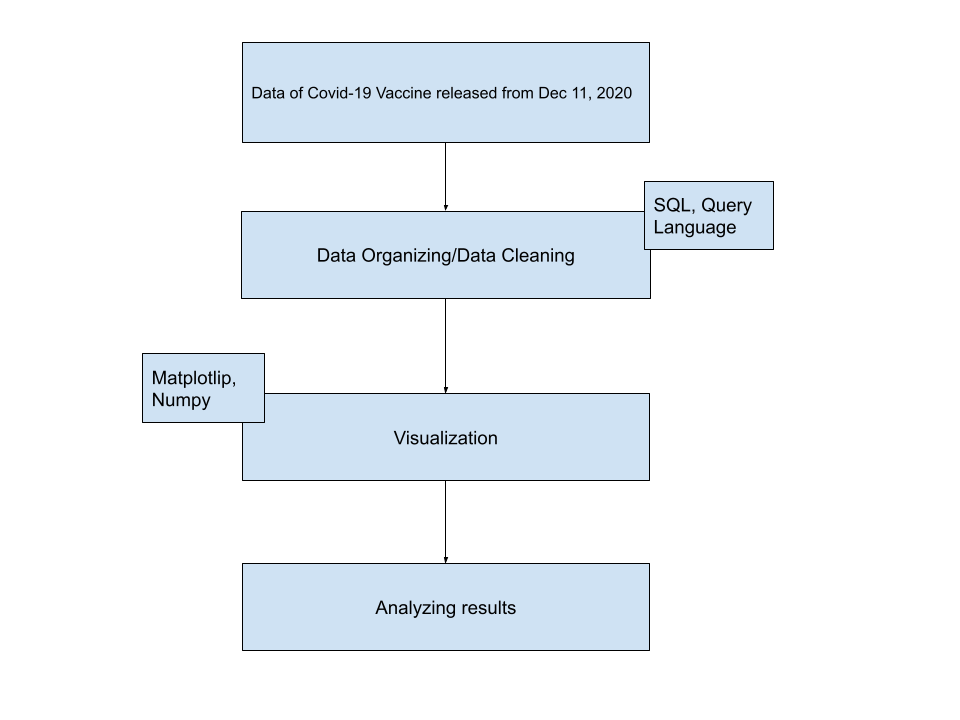
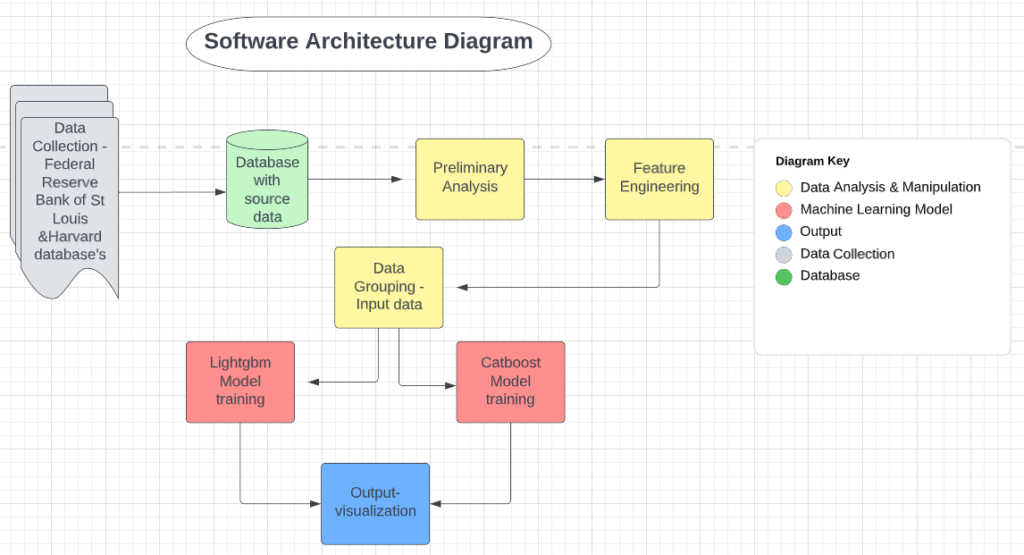
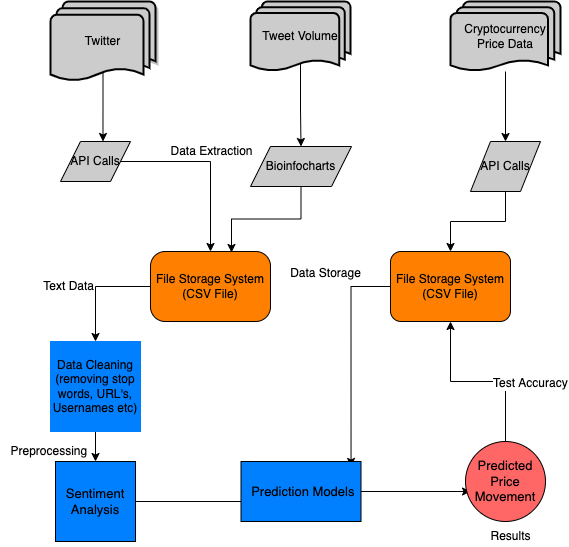
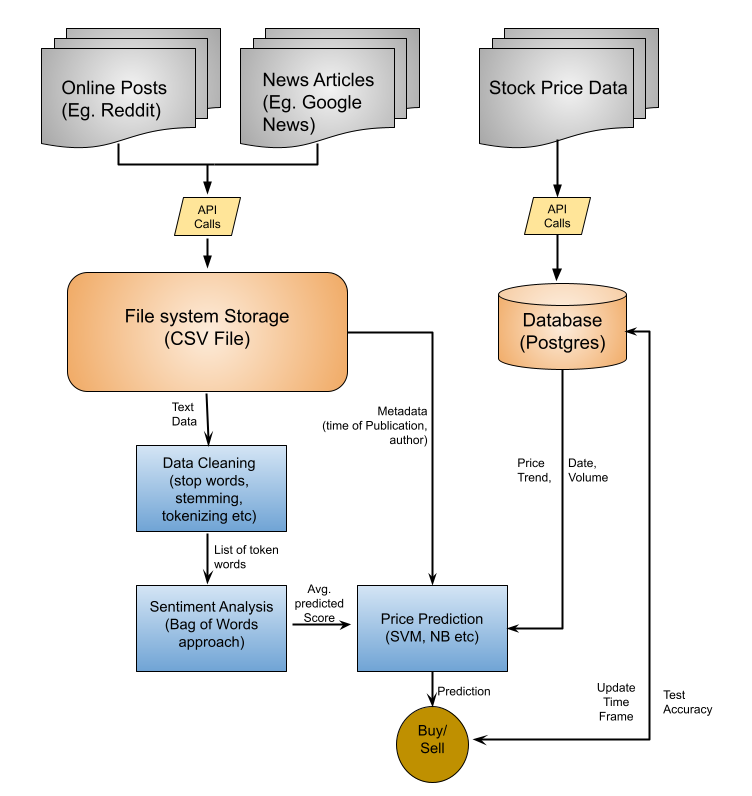
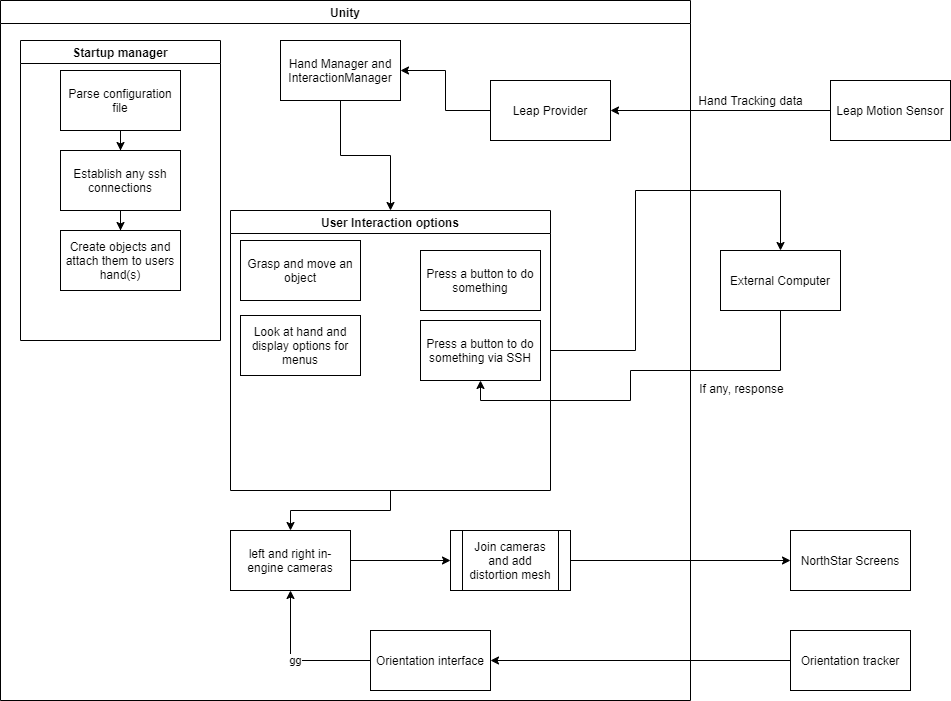
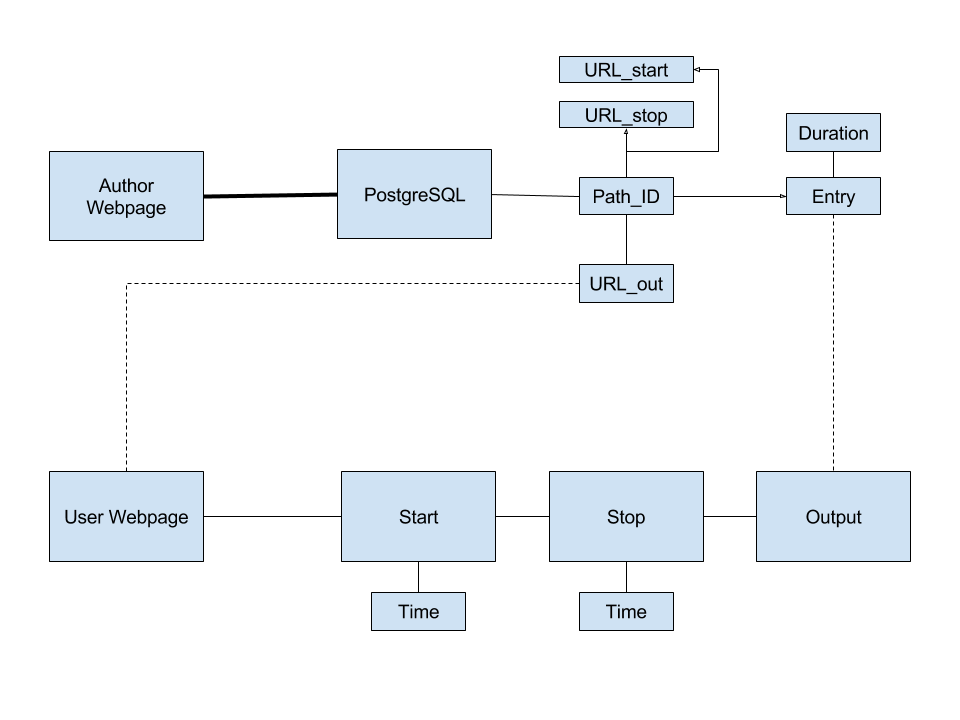
Data Architecture Diagram:

GitLab link:

https://code.cs.earlham.edu/ahnguyen18/ds_488_covid_19_vaccine_responses-in-south-east-asian-countries/-/tree/main

Abstract

with No Comments

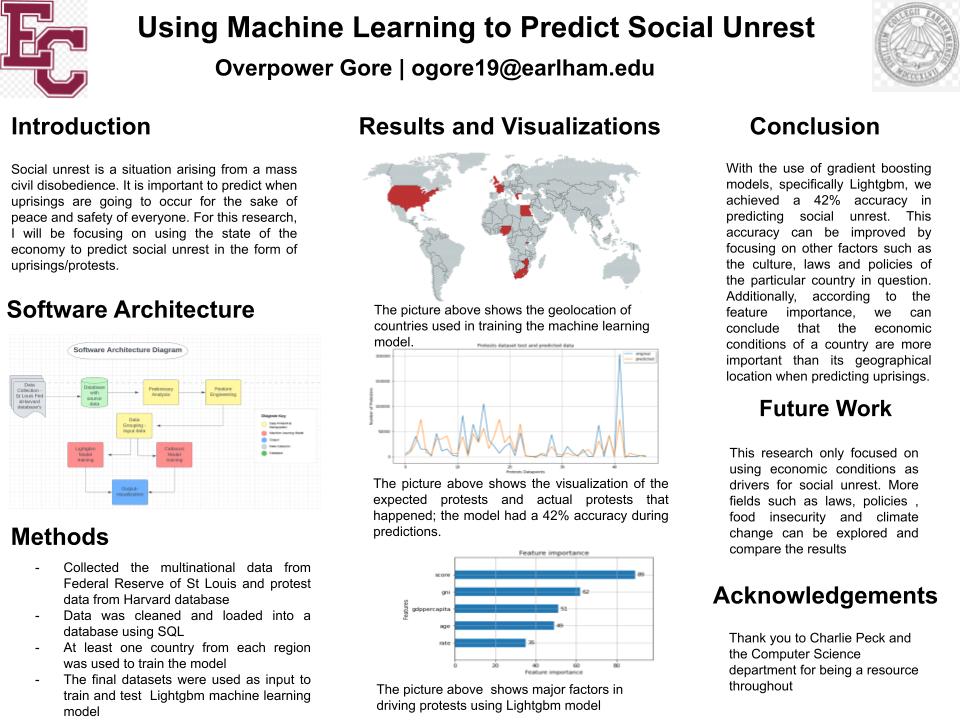
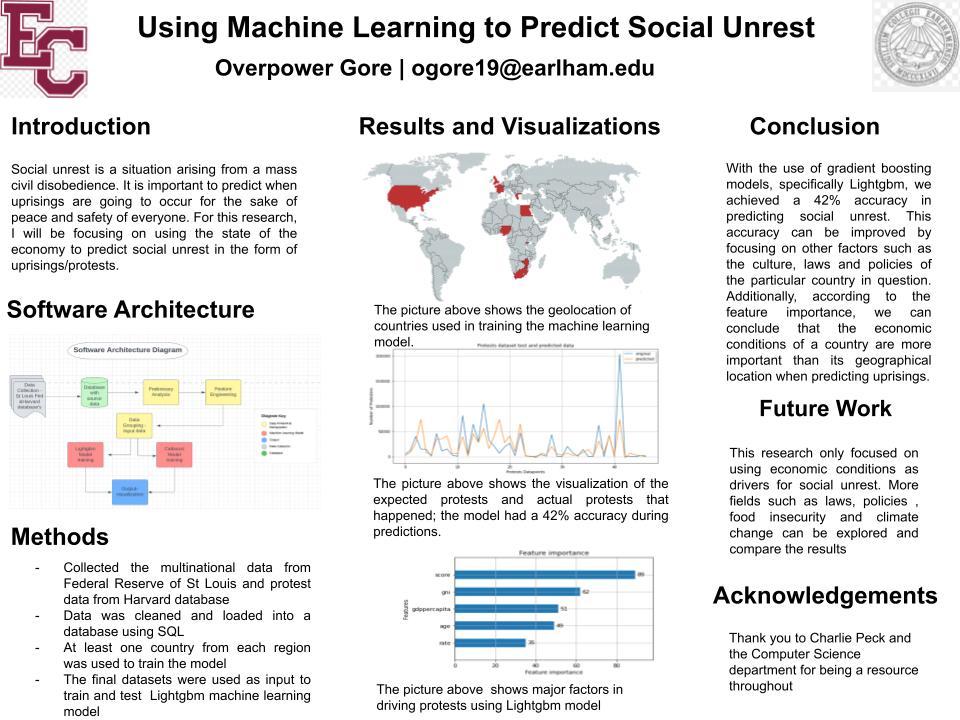
Uprisings are an act of resistance/rebellion. Uprisings could be the general population rising against the government (such as the protests in Zimbabwe as people protest over the poor economic conditions) or it could be people with morally questionable intentions against the general populace such as the Boko Haram in Nigeria. It is important to predict when uprisings are going to occur for the sake of peace and safety of everyone. This leads to the question of how we can possibly know before a social upheaval begins. Currently there is no official way to predict social unrest or a protest; people only know when a protest has already started. For this research, I will focus on using machine learning to study the effects of economic trends causing social uprisings. I use the trained machine learning model to predict when social upheaval’s are likely to happen. This model will be continually improved by doing exploratory data analysis to see which financial metrics are more reflective of the economy at any given time and using those metrics as input into the model. Continuously improving the accuracy of the model means we get closer to accurately predicting social unrest consequently ensuring the peace and safety of the public in the event of a protest

Introduction

with No Comments

Hi, my name is Overpower Gore but everyone calls me OPG. I am a senior Data Science student at Earlham College with a passion for information technology. I have held multiple internships impacting positive organizational outcomes through software development, data analysis, and data visualization.

CS 388 Annotated Bibliographies

with No Comments

1)

I am interested in completing research related to the use of machine learning to generate decision trees which control non-player character behavior in video games. Decision trees are relatively interpretable and have a high-level correspondence to behavior trees, which are used in the most common approach to AI for video games (Świechowski, 2022). I also enjoyed working with them when I took Artificial Intelligence and Machine Learning. The two environments I would propose using for testing is the Micro-Game Karting template in the Unity Asset Store, which is available for free and was used for testing by Mas’udi (2021).

Annotated Bibliography

Chan, M. T., Chan, C. W., & Gelowitz, C. (2015). Development of a Car Racing Simulator Game Using Artificial Intelligence Techniques. International Journal of Computer Games Technology, 2015.

  • Has focus on emulating human behavior
  • Use of waypoint system combined with conditional monitoring system
  • Uses trigger detection because it detects objects within the trigger area, where ray-casting can only detect collisions in one direction
  • Unity’s waypoint system and built-in gravity and vector calculations minimize development effort

This paper argues that Unity, as a development platform for a racing game, has advantages over the use of traditional AI search techniques for implementation of path-finding. These points could help to justify a decision to utilize Unity as an environment for testing.

Fairclough, C., Fagan, M., Mac Namee, B., & Cunningham, P. (2001). Research Directions for AI in Computer Games. Department of Computer Science, Trinity College, Dublin.

  • Covers the role of AI in action games, adventure games, role-playing games, and strategy games
  • Describes the status of AI within the game industry at the time of its publication
  • Lists a wide range of benefits to exploring the field of game AI
  • Discusses the TCD Game AI Project

This article gives a number of reasons for the simplicity of AI used by game developers in comparison to that used in academic research and industrial applications, and mentions a number of well-understood techniques in wide use at the time of its publication, including FSMs and A*. It also offers a number of reasons why research into AI for computer games is a worthwhile endeavor.

French, K., Wu, S., Pan, T., Zhou, Z., & Jenkins, O. C. (2019, May). Learning Behavior Trees from Demonstration. In 2019 International Conference on Robotics and Automation (ICRA) (pp. 7791-7797). IEEE.

  • Focuses on how a behavior tree can be learned from demonstration
  • Understands behavior trees as modular, transparent, reactive, and readily executable
  • The control nodes of behavior trees are Sequence, Fallback, Parallel, and Decorator
  • Algorithm 1 naively converts a decision tree to a behavior tree, while BT-Express takes advantage of the properties of a decision tree in doing so
  • Robot uses behavior tree to execute task without human input
  • Task executed is dusting with a micro fiber duster, requiring six distinct steps

This article gives advantages of behavior trees and describes two methods by which a decision tree can be converted to a behavior tree. This could be helpful in understanding the relationship between the decision trees which I intend to work with and the behavior trees that are prevalent in video game AI.

Guo, X., Singh, S., Lee, H., Lewis, R. L., & Wang, X. (2014). Deep Learning for Real-Time Atari Game Play Using Offline Monte-Carlo Tree Search Planning. Advances in Neural Information Processing Systems, 27.

  • Environment used is the Arcade Learning Environment (ALE), a class of benchmark reinforcement learning (RL) problems
  • Results for Deep Q-Network used as a basis
  • Repeated incremental planning via the Monte Carlo Tree Search method UCT
  • Combines UCT-based RL with deep learning by using a UCT agent to provide training data
  • Tests three methods, the most successful of which trains a classifier-based convolutional neural network (CNN) through interleaving of training and data collection to obtain data for an input distribution bearing a closer resemblance to that which would be encountered by the trained CNN

This paper presents results from game-playing agents whose performance was tested on the ALE, an environment which includes a variety of games for the Atari 2600 and thus would allow for testing the performance of decision trees on a range of different games, as well as permitting straightforward evaluation of the agent’s performance through scores achieved on the seven games used to evaluate Deep Q-Network. It also offers an example of the use of a method that would be infeasible for real-time play to generate training data for a faster agent, which, similar to the use of machine learning to generate a decision tree, uses a time-intensive process to create a classifier which can make decisions in real time.

Mas’udi, N. A., Jonemaro, E. M. A., Akbar, M. A., & Afirianto, T. (2021). Development of Non-Player Character for 3D Kart Racing Game Using Decision Tree. Fountain of Informatics Journal, 6(2), 51-60.

  • Waypoint system and raycasting used for pathfinding
  • Decision trees used with waypoint system and raycasting to determine NPC actions
  • Performance tested through FPS (frames per second), lap time over ten laps, and a driving test based on collisions with walls over ten laps
  • Agent’s performance compared to that of the ML NPC provided with Karting Microgame

This article offers an example of the use of decision trees to control NPC behavior. The environment it uses, Micro-Game Karting, which is now known as Karting Microgame, also offers an accessible environment for testing the performance of decision trees.

Van Lent, M., Fisher, W., & Mancuso, M. (2004, July). An Explainable Artificial Intelligence System for Small-Unit Tactical Behavior. In Proceedings of the national conference on artificial intelligence (pp. 900-907). Menlo Park, CA; Cambridge, MA; London; AAAI Press; MIT Press; 1999.

  • Full Spectrum Command, a commercial platform training aid developed for the U.S. Army, includes an Explainable AI system
  • In the after-action review, a soldier within the game can answer questions about the current behavior of its platoon, and the AI system identifies key events
  • Gameplay resembles the Real Time Strategy genre most closely, though with a number of differences
  • NPC AI controls individual units, while Explainable AI works during the after-action phase
  • NPC AI is divided into Control AI, which handles immediate responses and low-level decision-making, and Command AI, which handles higher-level tactical behavior

This paper offers an example of one approach to transparency of video game AI, that of creating a distinct system to explain its action in retrospect, as well as a different context in which explainability is relevant. It could be compared with the use of behavior trees and decision trees to allow for transparency in video games.

2) 

I wish to complete research related to the use of databases in video games to improve the efficiency of computations by increasing data locality and taking advantage of the optimizations of database management systems. While the article and dissertation by O’Grady (2019, 2021)  which are referenced below both appear to focus on the feasibility of that approach, it seems likely that additional exploration is warranted regarding demonstrable advantages. For this exploration, I would propose focusing on the execution of path-finding through a database management system, one of the main areas examined by O’Grady (2021). Specifically, I wish to focus on sub-optimal path-finding, since optimality is generally not essential in the context of video games (Botea, 2013), despite the widespread use of A* (Kapi, 2020).

Annotated Bibliography

Abd Algfoor, Z., Sunar, M. S., & Kolivand, H. (2015). A Comprehensive Study on Pathfinding Techniques for Robotics and Video Games. International Journal of Computer Games Technology, 2015.

  • Covers techniques for known 2D/3D environments and unknown 2D environments, represented through either skeletonization or cell decomposition
  • Grids can be divided into regular grids and irregular grids, both of which are widely used in video games
  • As an alternative to grids, hierarchical techniques are used to reduce memory space needed.

This article offers an overview of the various pathfinding techniques used for video games and robotics. It is organized by environment representation and could be helpful in comparing and evaluating path-finding algorithms in order to determine which to use with a specific representation. It might also assist in deciding on an environment representation.

Bendre, M., Sun, B., Zhang, D., Zhou, X., Chang, K. C., & Parameswaran, A. (2015, August). Dataspread: Unifying databases and spreadsheets. In Proceedings of the VLDB Endowment International Conference on Very Large Data Bases (Vol. 8, No. 12, p. 2000). NIH Public Access.

  • Data exploration tool called DataSpread
  • Relational database system used is PostgreSQL
  • Offers Microsoft Excel-based front end while managing all the data in a back-end database in parallel
  • Spreadsheet design focuses on presentation of data, while databases have powerful data management capabilities

This paper describes a system created by unifying relational databases and spreadsheets, with the goal of retaining the advantages of spreadsheets while taking advantage of the power, expressivity, and efficiency of relational databases. The objective and approach of this research bear significant resemblances to those of O’Grady’s 2021 dissertation, in that both seek to increase the efficiency of a system by handling costly computations in a relational database. However, this article differs from O’Grady’s work in that it is based on a spreadsheet interface and an underlying database, rather than focusing on the implementation of specific components of a system within a database management system. 

Botea, A., Bouzy, B., Buro, M., Bauckhage, C., & Nau, D. (2013). Pathfinding in games. Schloss Dagstuhl-Leibniz-Zentrum fuer Informatik.

  • Explains A*, Manhattan distance, and Octile distance
  • Discusses alternative heuristics such as the ALT heuristic, the dead-end heuristic, and the gateway heuristic
  • Covers approaches involving hierarchical abstraction
  • Discusses symmetry elimination, triangulation-based path-finding, and real-time search
  • Covers compressed path databases and multi-agent path-finding
  • Discusses a range of potential areas for further research, including the generation of sub-optimal paths

This paper explains the logic and advantages of various approaches to path-finding in video games. It also recognizes that in video game contexts, suboptimal paths are acceptable

O’Grady, D. (2019). Database-Supported Video Game Engines: Data-Driven Map Generation. BTW 2019.

  • Constructs maps composed of tiles through use of rules applied at specific frequencies
  • Map generation implemented in SQL and run on PostgreSQL 10
  • OpenRA used for on-site demonstration

This paper provides a demonstration of how a portion of a game’s internals can be moved to a database system. Its goal is to show that the benefits of moving expensive computations to a database system can be obtained while still allowing straightforward modification of the process by game developers.

O’Grady, D. (2021). Bringing Database Management Systems and Video Game Engines Together (Doctoral dissertation, Eberhard Karls Universität Tübingen).

  • Implementing data-heavy operations on the side of the database management system (DBMS) increases data locality
  • DBMS benefit from decades worth of development and optimization
  • Explores how databases can be involved in the operation of video game engines beyond their role in data storage
  • Evaluates practicality of three video game engine components when implemented in SQL
  • The third of these components is path-finding
  • The path-finding algorithm investigated is A*.
  • Storing spatial information about the game world in a DBMS allows for easy implementation of additional constraints to avoid collisions upon planning, preliminary reduction of the search space, preparatory analysis of the search space, and performing the path search close to the data
  • The pgRouting extension, implemented in C++ is used as a baseline
  • Two other custom implementations are also explored, both of which expect vertex-weighted graphs
  • The map is assumed to already be in a relational representation, as is the ability of actors to pass over certain types of tiles
  • Finding unilaterally connected components allows path-finding to be sped up in some cases
  • An implementation of A* in pure SQL is included
  • An implementation of Temporal A*, designed to avoid collisions, in SQL is also included
  • An Iterative Path Finding implementation in SQL, which gradually finds paths for multiple agents, is also given
  • Path-finding has to be completed in a timely manner, but players are willing to accept higher latencies for it compared to other actions
  • Shorter paths were found faster using the native implementation of OpenRA
  • As paths increased in length, the time needed to find them in the native implementation gradually increased, while the time needed to find them using pgRouting remained about the same
  • 57% of path searches were found to be within the range of lengths that resulted in agreeable time boundaries
  • The DBMS was found to offer means to find paths sufficiently fast

This dissertation is the main work which I intend to build on in my thesis. Specifically, I wish to further explore the advantages of implementing path-finding in a database management system, as covered in Chapter 4.

Kapi, A. Y., Sunar, M. S., & Zamri, M. N. (2020). A review on informed search algorithms for video games pathfinding. International Journal, 9(3).

  • Challenges are limited memory, time constraints, and path quality
  • Most prominent algorithm is A*
  • Popular graph representations are grid maps, waypoint graphs, and navigation meshes, each of which has advantages and disadvantages depending on the type of game
  • NavMesh is often used in optimization to reduce memory consumption
  • Heuristic functions are generally modified to reduce time usage
  • Hybrid path-finding algorithms have been used for optimization
  • Data structure used for implementation of an algorithm can also be changed for optimization

This paper provides an overview of various ways of optimizing informed search algorithms for path-finding in video games, presenting various factors which influence memory and time usage. It would be useful for considering potential consequences of different experiment designs, given its focus on approaches to improving the efficiency of path-finding which do not rely on the optimizations of a database management system.

CS 388 Initial Pitches

with No Comments

1)

I am interested in completing research related to the use of machine learning to generate decision trees which control non-player character behavior in video games. Decision trees are relatively interpretable and have a high-level correspondence to behavior trees, which are used in the most common approach to AI for video games (Świechowski, 2022). I also enjoyed working with them when I took Artificial Intelligence and Machine Learning. The environment I would propose using for testing is the Micro-Game Karting template in the Unity Asset Store, which is available for free and was used for testing by Mas’udi (2021).

References

Chan, M. T., Chan, C. W., & Gelowitz, C. (2015). Development of a Car Racing Simulator Game Using Artificial Intelligence Techniques. International Journal of Computer Games Technology, 2015.

Guo, X., Singh, S., Lee, H., Lewis, R. L., & Wang, X. (2014). Deep Learning for Real-Time Atari Game Play Using Offline Monte-Carlo Tree Search Planning. Advances in Neural Information Processing Systems, 27.

Mas’udi, N. A., Jonemaro, E. M. A., Akbar, M. A., & Afirianto, T. (2021). Development of Non-Player Character for 3D Kart Racing Game Using Decision Tree. Fountain of Informatics Journal, 6(2), 51-60.

Świechowski, Maciej and Ślęzak, Dominik, Monte Carlo Tree Search as an Offline Training Data Generator for Decision-Tree Based Game Agents (2022). BDR-D-22-00241, Available at SSRN: https://ssrn.com/abstract=4152772 or http://dx.doi.org/10.2139/ssrn.4152772

2) 

I am considering completing research related to the use of databases in video games for purposes apart from data storage. While the article and dissertation by O’Grady (2019, 2021)  which are referenced below both appear to focus on the feasibility of that approach, it seems likely that additional exploration is warranted regarding demonstrable advantages. For this exploration, I would propose focusing on the execution of path-finding through a database management system, one of the main areas examined by O’Grady (2021).

References

Muhammad, Y. (2011). Evaluation and Implementation of Distributed NoSQL Database for MMO Gaming Environment (Dissertation, Uppsala University).

O’Grady, D. (2021). Bringing Database Management Systems and Video Game Engines Together (Doctoral dissertation, Eberhard Karls Universität Tübingen).

O’Grady, D. (2019). Database-Supported Video Game Engines: Data-Driven Map Generation. BTW 2019.

Jovanovic, R. (2013). Database Driven Multi-agent Behaviour Module (Thesis, York University).

3)

I am also considering completing research related to the use of machine learning for recognition of Kuzushiji, an old style of Japanese cursive writing. Kuzushiji mainly appear in works from the Edo period of Japanese history and are difficult to identify correctly due to their lack of standardization (Ueki, 2020). Another difficulty comes from the Chirashigaki writing style, in which text is not written in straight columns (Lamb, 2020). The Center for Open Data in the Humanities has released a dataset of them (Ueki, 2020), which is available at http://codh.rois.ac.jp/char-shape/

References

Clanuwat, T., Bober-Irizar, M., Kitamoto, A., Lamb, A., Yamamoto, K., & Ha, D. (2018). Deep Learning for Classical Japanese Literature. arXiv preprint arXiv:1812.01718.

Clanuwat, T., Lamb, A., & Kitamoto, A. (2019). KuroNet: Pre-Modern Japanese Kuzushiji Character Recognition with Deep Learning. arXiv preprint arXiv:1910.09433.

Lamb, A., Clanuwat, T., & Kitamoto, A. (2020). KuroNet: Regularized Residual U-Nets for End-to-End Kuzushiji Character Recognition. SN Computer Science, 1(3), 1-15.

Ueki, K., & Kojima, T. (2020). Feasibility Study of Deep Learning Based Japanese Cursive Character Recognition. IIEEJ Transactions on Image Electronics and Visual Computing, 8(1), 10-16.

3 Pitches

with No Comments

Machine Learning and Dueling:

A fighters skill comes from their training, their learned experience through failure, and thousands of reps. This is also exactly how reinforcement learning agents gain their skills– I propose a mutli-agent learning experiment where we attempt to teach two agents how to fight with swords and shields.

There are a couple common issues that hinder how AI’s learn in a 3D space. First, multi-agent learning (learning with two or more agents) is notoriously challenging. This is made difficult because an agent not only must learn how to move in general, but also move around another agent. As of 2017, a recent algorithm called MAD-DPG has proposed a solution to this problem, but it’s still buggy and could present issues. Additionally, without proper motion capture data, the agents will learn incorrectly, most commonly seen in issues like body parts artifacting through the ground. Finally, while I have motion capture data for individual fighting movements, such as slashing a sword or blocking with a shield, it is much more difficult to find motion capture data that of two humans sword fighting. Finally, swords and shields will be weighted, throwing off the model’s sense of balance, which will take lots of training to get used to.

Using Unity 3D machine learning agents made possible through PyTorch, CUDA and the unity facing engine, ML-agents, I propose  I propose creating a deep reinforcement learning agent. Our control strategy would have 2 parts, a pretraining stage (a deep learning model used to create a neural network to  solve problem) and a Transfer learning stage, which uses a prebuilt neural network from our pretraining stage to solve a problem.

Steps of pretraining:

  1. Feed the network a collection motion capture data of sword fighting sourced from Adobe Mixamo to understand basics, such as how to hold a sword and shield, how to walk with one, etc.
  2. This motion capture data is passed through a Imitation Policy Learning network, which tries to learns through imitation of the motion captured movement.
  3. The goal from this point is to pass the data is to translate our Imation Policy to a Comptetive Learning Policy, which learns through the goal of winning. To do this, we must preform two steps:
    1. Task encoding, adding understanding to goals of movements
    2. Motor decoding, decoding motor function in a way the competitive Learning Policy can understand

Steps of Transfer Learning:

  1. Turn the Motor Decoding and Task Encoding data into learning policies for both agents (Agent 1/Agent 2)
  2. Run these policies through Competitive Learning Policy, which mimics the way humans learn skill, through trail and error against eachother.

Social Simulation of Scaricity:


Scarcity–how do we divide resources fairly when their isn’t enough for everyone? The entire subject of Economics boils down to this question, and has caused many conflicts throughout history. Sometimes, we have to make tough decisions because of scarcity.

I propose an experiment in a simulated world, with two “tribes” of agents. The agents must eat once a day, which is done by collecting food blocks. Each agent has the ability to move, eat, collect food for their village, ask others to share, and kill eachother. Each agent’s main priority is to eat for as many days as possible. If they go a full day without eating, they starve to death.

Then, we test these tribes under different levels of scarcity:

  1. Plenty: There is enough food for both tribes.
  2. Moderate: There is enough food for 75% of agents, but one tribe will not have enough.
  3. Scarce: There is only enough food for 1 tribe.
  4. Unfair disruption: There is only enough food for 1 tribe, and 1 tribe controls all of it.

If the agents have plenty, will they remain peaceful? If there’s a moderate distribution, will the tribes share with eachother and lose the same number of members? Will they fight the other tribes for resources? If the resources are scare, will a tribe sacrifice members of their own tribe, or steal from the other tribe? Is fighting inevitable with an unfair disruption?

In order to do this experiment, we must allow for a level of teamwork. Each tribe has their own Competive Learning Policy which builds a nueral network, judging its success by how many tribe members are left after a given period of days. These networks may give tasks such as move, attack or collect food to any tribe member. 

Usually, two agents learning against eachother means slower learning, but because the neural network are essentially playing a simple strategy game against eachother, they’re learning might be accelerated due to the competition. 

Creating Unique Architecture with Machine Learning:

Necessity, the mother of invention. From the water carrying aqueducts of Rome to the houses stacked across the mountains of Tibet, people have made unique and intricate structures out of necessity. Typically, neural networks are trained with data sets, which they then attempt to imitate according to a metric of success. However, what they produce isn’t truely unique, it’s an imitation of what a researcher asks them to create. I propose an experiment to create entirely unique, AI generated 3D architecture by providing the necessity to build.

First, we must make environment simple enough for an neural network to learn to create in, but succifciently complex enough to cultivate interesting innovation. Unity 3D is ideal to create this enviroment, as it already has a well-developed physics engine, adding additional enviromental conditions is simple, allows for easy map creation, has many free assets to use, and supports machine learning.

Second, we must create necessity. Two agents will be created, a Creature and a Creator agent. The Creature is a simple bot, who’s only goal is to keep his three needs satisfied. The creature wants to stay warm, dry, and well fed. Warmth is decreased when “wind” comes in contact with our agent, dryness is decreased when rain comes in contact with our agent, and hunger is decreased by collecting food blocks.

The Creator agent has a simple goal, keep the Creature as warm, fed, and dry as possible. The Creator is a neural network with the ability to build, under the conditions of the physics engine. This neural network has permission to use a limited amount of two different resources: Wood and stone. Stone is much stronger then wood, but also much heavier. Wood is weaker, so it breaks under weight,  but also lighter and more accessible. Wood and stone come in blocks, and wood also comes in plank form, which is worse for walls but better for roofs. The Creator has the ability to “nail” materials together, which means the materials may be connected together through touching vectors, unless the weight of materials attached to it is too heavy to hold.

Beyond coming with a well developed and well tested physics engine, the beauty of the Unity engine is it’s ease of customimability. Because it’s a game engine, adding new conditions is made easy. Once our Creator network has learned to build basic structures, we can up the complexity of the structures by adding more needs. Possibilities include:

  1. Pooling water: If rain can collect in pools, structures may have to be constructed with slanted roofs
  2. Stronger winds: The stronger winds destroy less stable structures, structures may have to be built more sturdy.
  3. Creature needs sunlight: The need to have sunlight come into the house may lead to structures having windows, or interesting alternatives

The goal is to create unique and interesting structures, and a simulation made too simple will lead to uninteresting building. Unity 3D’s easy ability to add and remove these conditions will be vital to this experiment, as these new conditions may create innovate, or break and confuse our neural network.

Hailee Dang

with No Comments

About me

My name is Hang “Hailee” Dang. I am a senior majoring in Data Science with interest in Finance, Data and Business Analytics.

My project

Abstract
  • Purpose: This paper aims to find a new metric on predicting a technology company’s stock performance besides 5 fundamentals metrics that have been proved and frequently used in corporate valuation.
  • Design/ MethodologyThe paper explains reason of choosing the 5 fundamental metrics using existing papers and studies. Then, using data from online financial database system with R to evaluating the correlation between these metrics and the actual performance over a 10-year period. The result will diverse from least to most correlated to the actual stock performance. New highly correlated metric such as media mentions or number of articles about the company should be added to the model to increase the correctness of the prediction.
  • Research limitations/implications: This theoretical model only applies to the time range from 2011-2021 and profited large corporations in technology industry. Any applications outside this data frame would not be reflected correctly.

Architecture diagram

Gitlab project

Software demonstration video

Introduction to my project

with No Comments

Hello! My name is Tamara and I am a senior Computer Science Major at Earlham College and this is my capstone project. I am interested in applying machine learning and other computational techniques for better understanding of social issues. Here is the abstract of my capstone project proposal.

Unmanned Aerial Vehicles (UAVs) have only recently been applied
in the detection of clandestine graves. With the growing technical
abilities of UAVs, more opportunities are available in methods
for recording data. This opened many doors for detecting hidden
graves because now many different sensing devices can be used
in remote areas that were inaccessible to humans. This study will
compare the use of hyperspectral and RGB images taken by drones
to detect hidden graves. It is aiming to compare how accurately
the graves can be detected post-image processing using the same
technique. The primary motivation is to help future researchers
more easily decide which data collection technique they should use.
The processing technique used on both data sets is a model with
an edge detection algorithm.

Introduction

with No Comments

Hello! My name is Tamara and I am a senior Computer Science Major at Earlham College and this is my capstone project. I am interested in applying machine learning and other computational techniques for better understanding of social issues. Here is the abstract of my capstone project proposal.

Unmanned Aerial Vehicles (UAVs) have only recently been applied
in the detection of clandestine graves. With the growing technical
abilities of UAVs, more opportunities are available in methods
for recording data. This opened many doors for detecting hidden
graves because now many different sensing devices can be used
in remote areas that were inaccessible to humans. This study will
compare the use of hyperspectral and RGB images taken by drones
to detect hidden graves. It is aiming to compare how accurately
the graves can be detected post-image processing using the same
technique. The primary motivation is to help future researchers
more easily decide which data collection technique they should use.
The processing technique used on both data sets is a model with
an edge detection algorithm.

Project intro

with No Comments

My name is Khoa, and I am a senior, double-major in Quantitative Economics and Data Science. My tentative project focuses on the application of Machine Learning to study the physical-chemical properties of different molecule structures, which has been proven useful in many fields like drug discovery, materials science, biology, etc.

Project Intro

with No Comments

Hi everyone, I am Devin. I’m a Data Science major and a senior.

For my project, I am creating a win probability model for the National Hockey League. Hockey has been one of my favorite sports since I was a little kid and applying statistical concepts to one of my favorite sports excites me. Ultimately, I would like to compare the model that I build to other win probabilities for the NHL. The model accuracy would be assessed by how well it can predict which team wins the game.

Project Introduction

with No Comments

I am Tra-Vaughn James, a Computer Science major, and Junior:

Today, Bioinformatics is an evolving field, in which computing resources have become more powerful, readily available and workflows have increased in complexity. New workflow management tools (WMT) attempt to develop software that fully harnesses this computational power, creating intuitive implementations utilizing machine learning techniques. This streamlines the design of complex workflows. However, overarching problems still remain that newer workflow management tools do not fully address: they are too specific to particular use cases, and they present a great learning curve for users unfamiliar with computing environments. Many implementations require one to spend copious amounts of time understanding the tool and adjusting already existing frameworks to ones needs, creating frustration and inefficiency. This problem is experienced by both novice and experienced bioinformaticians alike. Using OpenWDL, a Workflow Description Language, as the basis, I seek to develop an open in use workflow management tool coupled with a GUI interface. As OpenWDL is a widely known WMT, its familiarity will aid in my implementations usability. Additionally, the GUI interface will present a more welcoming environment than that of a command line interface in which many WMT’s often employ. To assess the effectiveness of my implementation, I will then assess it to other WMT’s, comparing its usability and openness to other bioinformatic pipeline managers such as SnakeMake and NextFlow.


Research on Low-Cost Portable Air-Quality Sensor System

with No Comments

Abstract

A low-cost portable sensor system allows users to monitor the different components of the air quality around them. There is a need for a sensor system like this because of the millions of deaths and diseases that occur every year due to air pollution worldwide. My planned contribution is for the prototype sensor system I design and build to be as DIY (do it yourself) and low-cost as possible while still being usable in a theoretical online network for large-scale pollution mapping in real time. I will program the sensors together and investigate the calibration of the sensors because they can fall out of calibration after extended periods of time. I will evaluate the results of my experiment of building and using the sensor system by: the robustness of the system indoors and outdoors, analyzing the repeatability of the experiment, accessing how the system could further be improved for ease-of-access to users financially, testing system portability, and the practicality of the theoretical network that could be made with multiple sensor-systems.

Software Diagram

Link To GitLab Project

https://code.cs.earlham.edu/jccosta181/sensor-system-research

Link To Software Demonstration Video

Three Pitches

with No Comments

Pitch 1: Website that creates tangible, engaging visualizations of probabilities.

Humans are poor at conceptualizing probability. I notice that one common reason anti-vaxxers use for refusing the vaccine is that they’d rather take their chances with catching covid than get the shot and come down with complications, which is far rarer than the chance of dying from covid. The objective of this project would be to create a website with high user engagement that would inform users of the odds of certain events happening using tangible, engaging visualizations. The user would be able to select from a list of events to compare. Visualizations that represent a dangerous event that is likely to occur will look visually more dangerous than those that are less likely to occur.

I have found some potentially useful datasets to use

Questions

Graphics

  • What kinds of graphics would help reduce the worry that something might happen? Colors, structure, font, etc.
  • Do moving images impact the user more than static images? Do they keep users on the site?
    • Note: I am having a hard time finding existing sources, and I think my keywords I am using are wrong.

Some sources I found that may be useful/interesting: 

Pitch 2: Formality indicator for Japanese text

Google translate and Deepl don’t really give users the option to indicate what context a user needs to use Japanese in. One key thing that distinguishes different styles of speech or written communication is the choice in vocabulary. On Jisho, an online Japanese dictionary, some words are marked with what context they are used in. i.e. colloquial, slang, sonkeigo,(Honorific or respectful language). My proposed project would use web scraping from online dictionaries to gather data about which words are used in which context and would tell the user what level of formality the text is in and who it would be appropriate to say/send to.

Ana sent me a list of tools that may be useful. Sudachipy seems promising

Other sources

Pitch 3: Visualization of cause of death

I feel like death statistics are inherently somewhat dehumanizing, and I want to use recent death statistics to create a more human representation. The user would be able to enter certain demographics, such as location, age, sex, etc. This would be pretty similar to pitch one, but I would want to represent each person with something that people would empathize with. Perhaps instead of using the data outright, I would gather patterns from the data to create a fake population. I’m not sure how I might do this

Questions

  • What kinds of images do people empathize with? Would it be better to go with something more amorphous, such as blobs with cute faces or stick figures?

Problems

  • Keeping things tactful while tackling a sensitive issue. 

I have found several sources for cause of death data on kaggle, but not all are completely recent, which is ideally I am looking for. I did find recent data specifically for Brazil. The CDC has some data as well, I just need to figure out how to get at it. 

2 Pitches with Bibliography

with No Comments

Pitch #1

The  use of computing resources allows the processing of biological data and computational analysis. However in order to conver this data into useful information requires the us of a large number oftools, parameters, and dynamically changing reference data. As a result workflow managers such asSnake and OpenWDL were created to make these workflow scalable, repeatable and shareable. However, many of these workflow managers offer ambiguity toward creating workflows often lacking the specificity many other workflows require. I plan on creating bioinformatics workflow in which can be specified to particular workflows.

https://peerj.com/articles/7223/

Bioshake: A Haskell EDSL for Bioinformatics workflows

Justin Bedő. 2015. Experiences with workflows for automating data-intensive bioinformatics – biology direct. (August 2015). Retrieved January 9, 2022 from https://biologydirect.biomedcentral.com/articles/10.1186/s13062-015-0071-8 

  • Bioshake raises many properties to the type level allowing the correctness of a workflow to be statically checked during compilation, catching errors before any lengthy executions process. Bioshake is buit on top of Shake, an industrial strength build tool, thus inheriting many of its reporting features such as “robust dependency tracking, and resumption abilities”
  • Paper explains that bioshake, is an EDSL for specifying workflows that compiles downt to an execution engine (Shake).
https://www.nature.com/articles/s41592-021-01254-9

Reproducible, scalable, and shareable analysis pipelines with bioinformatics workflow managers

Laura Wratten, Andreas Wilm, and Jonathan Göke. 2021. Reproducible, scalable, and shareable analysis pipelines with bioinformatics workflow managers. (September 2021). Retrieved January 9, 2022 from https://www.nature.com/articles/s41592-021-01254-9 

Paper highlights the key features of workflow manager and comapares commonly used approaches for bioinformatics workflows. 

https://journals.plos.org/ploscompbiol/article?id=10.1371/journal.pcbi.1008748

A versatile workflow to integrate RNA-seq genomic and transcriptomic data into mechanistic models of signaling pathways

Martín Garrido-Rodriguez et al. 2021. A versatile workflow to integrate RNA-seq genomic and transcriptomic data into mechanistic models of signaling pathways. (February 2021). Retrieved January 9, 2022 from

https://journals.plos.org/ploscompbiol/article?id=10.1371%2Fjournal.pcbi.1008748

MIGNON is used for the analysis of RNA-Seq experiments.  Moreover, it provides a framework for the integration of transcriptomic and genomic data based on a mechanistic model of signaling pathway activities that allows  for a biological interpretation of the results, including profiling of cell activity. Entire pipeline was developed using the Workflow Descriptions Language (OpenWDL). All the steps of the pipeline were wrapped into WDL tasks that were designed to be executed on an independent unit of containerized software by using docker containers, which prevent deployment issues.Paper is an excellent source of seeing how WDL performs as workflow management language and the various problems that can occur from it.

https://academic.oup.com/bioinformatics/article/33/8/1210/2801462?login=true

Planning Bioinformatics workflows using an expert system.


Xiaoling Chen and Jeffrey T. Chang. 2017. Planning Bioinformatics workflows using an expert system. (January 2017). Retrieved January 9, 2022 from https://academic.oup.com/bioinformatics/article/33/8/1210/2801462?login=true 

  • Paper discusses a method to automate the development of pipelines, creating the Bioinformatics Expert System (BETSY). BETSY is a backwards-chaining rule-based expert system comprised of a data model that can capture the essence of biological data, and an inference engine that reasons on the knowledge base to produce workflows.  
  •  Evaluations within the paper found that BETSY could generate workflows that reproduce and go beyond previously published bioinformatic results. 
https://academic.oup.com/bioinformatics/article/36/22-23/5556/6039117?login=true

ACLIMATISE: Automated Generation of Tool Definitions for bioinformatics workflows.

Michael Milton and Natalie Thorne. 2020. ACLIMATISE: Automated Generation of Tool Definitions for bioinformatics workflows. (December 2020). Retrieved January 9, 2022 from https://academic.oup.com/bioinformatics/article/36/22-23/5556/6039117?login=true 

Paper presents aCLImatise which is a utility for automatically generating tool definitions compatible with bioinformatics workflow languages, by parsing command-line help output. This utility can be used withing our workflow to create tool definitions.Workflow definitions must be customized according to the use-case, however tool definitions simply describe a piece of software, and are therefore not coupled to a single workflow or context this aCLImatise will not have a hindrance on workflow creations.

https://academic.oup.com/gigascience/article/8/5/giz044/5480570?login=true

SciPipe: A workflow library for agile development of complex and dynamic bioinformatics pipelines.

Samuel Lampa, Martin Dahlö Jonathan Alvarsson, and Ola Spjuth. 2019. SciPipe: A workflow library for agile development of complex and dynamic bioinformatics pipelines. (April 2019). Retrieved January 9, 2022 from https://academic.oup.com/gigascience/article/8/5/giz044/5480570?login=true 

  • SciPipe utilizes Dynamic scheduling allows new tasks to be parametrized with values obtained during the workflow run, and the FBP principles of separate network definition and named ports allow the creation of a library of reusable components.
  • Scipipe workflows are written as Go programs, and thus require the Go tool chain to be installed for compiling and running (Have to have some basic knowledge of Go). SciPipe assists in particular workflow constructs common in machine learning, such as extensive branching, parameter sweeps, and dynamic scheduling and parametrication of downstream tasks. Implementations of Scipipe include “ Machine learning pipeline in drug discovery, Genomics cancer analysis pipeline, RNA-seq/transcriptomics pipeline
https://www.biorxiv.org/content/10.1101/2020.08.04.236208v1.abstract

Using rapid prototyping to choose a bioinformatics workflow management system

Michael J. Jackson, Edward Wallace, and Kostas Kavoussanakis. 2020. Using rapid prototyping to choose a bioinformatics Workflow Management System. (January 2020). Retrieved January 9, 2022, from https://www.biorxiv.org/content/10.1101/2020.08.04.236208v1.abstract 

  • Paper describes RiboViz a package, however it is more specific to ribosome data and understanding or protein synthesis, however it is implemented in python.
  • Paper test a slew of workflow management systems providing comparisons and contrasts of various work flows.
  • As workflow management systems require that each data analysis step be wrapped in a structured way. RiboViz  uses these wrappers to decide what steps to run and how to run these, and takes charge of running the stps, including error reports.

Pitch #2

New technologies have been evolving to aid life within the home. Video door bells, cameras and smart devices make many tasks much simpler than they use to be. However, the threat of security and ensuring that those with malicious intent are unable to hack and harm your home network has also increased, a failure in security could expose all of your personal information. As a result of this many organizations provide VPN services that have been developed as a means to protect people from the dangers of malicious hackers and malware. However, these same VPNS come with some faults such as higher cost and limitations as dictated by the provider , and the fact that paid services place you in the hands of the operator and its various cloud/network providers with no certainty that these providers will not snoop around in your data.

A VPN server that a user can host on there local machine solves all of these aforementioned problems with the added benefit of the user being able to securly access and maintain there home network.The server will be held in a virtual machine and will allow the user to be in complete control of it and its functions. This will increase efficiency of the VPN as the user no longer has to go through the network of the provider. My goal is to automate and open-source this process creating an easy launchable VPN server an average user can easily launch and use to maintain access to their home network.While at the same time being capable being edited and changed by the user for more robust security. I seek to compare this to similar paid services identifying which is more secure for the user.

https://citeseerx.ist.psu.edu/viewdoc/download?doi=10.1.1.169.7689&rep=rep1&type=pdf

What is a VPN?

Paul Ferguson and Geoff Huston . 1998. What is a VPN. (April 1998). Retrieved January 7, 2022 from https://citeseerx.ist.psu.edu/viewdoc/download?doi=10.1.1.169.7689&rep=rep1&type=pdf 

Paper defines what a VPN  is. Further describes different types of VPN’s such as Network Layer VPN’s how they are constructed and the underlying protocols and techniques used create one. Breaks down the various VPN’s in accordance to the TCP/IP protocol. Describes VPN concepts such as Controlled route leading and Tunnelling. Overall this paper is a good source for understanding the basics of what a VPN is aswell aas the types, and procedures to setup one.

https://iopscience.iop.org/article/10.1088/1742-6596/1175/1/012031/pdf

Implementation and analysis ipsec-vpn on cisco asa firewall using gns3 network simulator

Dwi Ely Kurniawan1, Hamdani Arif1, N. Nelmiawati1, Ahmad Hamim Tohari1, and Maidel Fani1. 2019. Implementation and analysis ipsec-vpn on cisco asa firewall using gns3 network simulator. (March 2019). Retrieved January 8, 2022 from https://iopscience.iop.org/article/10.1088/1742-6596/1175/1/012031/meta 

This paper provides an example of constructing VPN and testing it using a virtual setting in which is a similar approach in which I am thinking of using. It is built using GNS3 network simulator software and virtual Cisco ASA Firewall. The result shows that VPN network connectivity is strongly influenced by the hardware used as well as depend on Internet bandwidth provided by Internet Service Provider (ISP). In addition to the security testing result shows that IPSec-based VPN can provide security against Man in the Middle (MitM) attacks. However, the VPN still has weaknesses against network attacks such as Denial of Service (DoS) that causes the VPN server can no longer serve VPN client and become crashes.

https://ir.uitm.edu.my/id/eprint/26068/

Enhancing security and privacy in local area network with TORVPN using Raspberry Pi as access point

Mohamad AfiqHakimi Rosli. 2019. Ehancing security and privacy in local area network with TORVPN using Raspberry Pi as access point . (October 2019). Retrieved January 8, 2022 from https://ir.uitm.edu.my/id/eprint/26068/ 

Provides another method of utilizing VPN servers to protect one’s local network.

Involves the Tor routing technique providing an extra layer of anonymity and encryption.

Although this approach requires the use of Rasberry pie for its implementation it would eliminate the need for installation and configuration of software while also making such services accessible to others.

https://teknokom.unwir.ac.id/index.php/teknokom/article/view/59

A Remote Access Security Model based on Vulnerability Management

Samuel Ndichu, Sylvester McOyowo, and Henry Wekesa. 2020. A remote access security model based on … – MECS press. (October 2020). Retrieved January 11, 2022 from https://www.mecs-press.org/ijitcs/ijitcs-v12-n5/IJITCS-V12-N5-3.pdf 

  • Paper addresses significant vulnerabilities from malware, botnets, and Distributed Denial of Service (DDoS).
  • Propose a novel approach to remote access security by passive learning of packet capture file features using machine learning and classification using a classifier model.
  • They adopted network tiers to facilitate vulnerability management (VM) in remote access domains.
  • Performed regular traffic simulation using Network Security Simulator (NeSSi2) to set bandwidth baseline and use this as a benchmark to investigate malware spreading capabilities and DDoS attacks by continuous flooding in remote access.
  • Although paper offers other alternative to VPN it is still very important to look as the main preference of my pitch is to present a more secure VPN technology for private users if such can do a similar thing without the drawbacks it is important to analyze.
https://link.springer.com/chapter/10.1007/978-3-030-35055-0_7

Client-Side Vulnerabilities in Commercial VPN’s

Bui Thanh, Rao Siddharth, Antikainen Markku, and Aura Tuomas. 2019. Client-side vulnerabilities in commercial vpns | springerlink. (November 2019). Retrieved January 11, 2022 from https://link.springer.com/chapter/10.1007/978-3-030-35055-0_7 

  • Paper studies the security of commercial VPN services.
  • Analyzes common VPN protocol and implementation on Windows, macOS, and Ubuntu. 
  • The results of the study found multiple configuration flaws allowing attackers ti, strip off traffic encryptionor to bypass authentication of the VPN gateway 
  • If commercial VPN’s have such flaws, this paper presents important ideas and fixes that I should apply to my own VPN to ensure maximum security.
https://ieeexplore.ieee.org/abstract/document/9314846/authors

Beyond the VPN: Practical Client Identity in an Internet with Widespread IP Address Sharing 

Yu Liu and Craig A. Shue. 2021. Beyond the VPN: Practical client identity in an internet with widespread IP address sharing. (January 2021). Retrieved January 10, 2022 from https://ieeexplore.ieee.org/abstract/document/9314846 

  • Paper examines “the motivations and limitations associated with VPNS’s and found that VPN’s are often used to simplify access control and filtering for enterprise services.
  • Provides an alternative approach to VPN use. Their implementation preserves simple access control and eliminate the need for VPN servers, redundant cryptography, and VPN packet headers overheads. The approach is incrementally deployable and provides a second factor for authenticating users and systems while minimizing performance overheads.
https://ieeexplore.ieee.org/abstract/document/9418865

Research on network security of VPN technology

Zhiwei Xu and Jie Ni. 2021. Research on network security of VPN Technology. (May 2021). Retrieved January 11, 2022 from https://ieeexplore.ieee.org/abstract/document/9418865 

  • Paper describes that the main function of a VPN is to build a network tunnel in the public network using relevant encryption technology, which can allow for the transmission of data safely and prevent others from seeing. 
  • Paper analyzes an IPSec VPN which can realize remote access through the IPSec protocol.
  • Paper claims that the advantage of IPSec VPN is that it is a net-to-network networking method, which can establish multilevel networking, fixed networking mode, suitable for inter-institutional networking, and that users can have transparent access and do not need to log in.

CS 388 Pitches

with No Comments

Idea #1

Using machine learning to identify if a webpage is malicious, sometimes websites are blacklisted and that’s how they are identified as malicious but its cumbersome to do that for every website and constant new sites, use ML to identify malicious sites based on keyword density and improve upon existing methods. Other factors that could be used to identify the malicious website are URL length, website age, country of origin. Identifying the most important features to use for ML will be key to the project. A nuance I could add would be to identify the type of attack associated with the URL and rank its severity. Short URLs are a way that malicious attackers attempt to circumvent detection. Being able to expand short URLs in order to extract features could allow for current tools to be more effective.

Idea #2

Calculate expected goals of premier league soccer teams. Expected goals is commonly used as a predictor to help analysts identify skillful players and predict the winning team. There is a mass of datasets to use and techniques that could be analyzed for efficacy and improved upon. A possible nuance I could add is comparing expected goals of a player to their wages or expected goals to the teams’ total wage bill to find efficient teams.

Idea #3

Using machine learning to identify network attacks specifically DOS attacks. Most current methods use huge and cumbersome MIB databases. I would explore more efficient and less time and resource-consuming methods for classifying the data and identifying anomalies within network traffic. Data can be classified by where it comes from, to help determine if it may be malicious. There is less specific research on this topic as most of it is specific to a domain or the data is private.

CS388 Pitches

with No Comments

Idea 1 : Maze Generation

I would like to examine maze generation algorithms for the purpose of generating more challenging domains for search algorithms to solve. Creating domains that challenge existing search algorithms can assist in the development of more robust search algorithms that can avoid certain pitfalls of existing algorithms. Additionally, mazes are widely understood and have efficient state changes, which can allow for more algorithm based examinations in the future. I would like to develop a system for rating the “hardness” of a given maze, as well as creating a maze generation algorithm that can generate mazes that have a higher or lower “hardness” rating. 

Idea 2 : Cave Generation Using Cellular Automata

I would like to experiment with using cellular automata to generate cave structures. This has applications in procedural level generation for video games, artistic potential, and depending on the techniques used, it could also be useful in real world geological simulations. There has already been some work done in the area which gives ample room for extension and exploration. Most of the materials seem to be focused on 2D maze generation, so it may be fruitful to focus on generating 3D structures, or extending the existing techniques from 2D CA to 3D. 

Idea 3 : Origami Crease Pattern Generation Tool

I would like to build an application that generates an origami crease pattern from a 3D model, with a stretch goal being to implement 3D scanning from a camera. Folding techniques used in origami are seeing more and more uses in engineering contexts. The new Webb telescope for instance used origami for its heat shield and mirrors. Being able to generate crease patterns based on a source model may allow for more widespread use of similar techniques. This project will involve image analysis and potentially machine learning. 

Annotated Bibliography

with No Comments

Maze generation and solving:

  • Hai, Zhou, Maze Router: Lee Algorithm
    • These slides from Northwestern University give a great overview of maze routing algorithms. They discuss Lee algorithm, Handlock’s algorithm, Soukup’s algorithm, and more, along with their strengths and weaknesses, and runtime comparisons. This will be a useful resource to learn a little bit about various approaches and narrow down a few I might be interested in implementing.
      • Provides time and space complexity of different approaches presented
      • Some insights on ways to reduce the running time
      • Compares algorithms based on whether each of them is always able to find a path, whether the path found is the shortest, and whether the algorithm works on both grids and lines
      • Introduces some ideas about multi-layered routing
  • Xiao Cui, Hao Shi, A*-based Pathfinding in Modern Computer Games, IJCSNS International Journal of Computer Science and Network Security, VOL.11 No.1, January 2011
    • This publication mainly focuses on A* based pathfinding in video games. According to the paper, this algorithm provides a provably optimal solution to pathfinding and has succeeded Dijkstra’s algorithm, BFS, DFS, and others. It explains how the algorithm works and shows the various implementation and optimization techniques. I believe the analysis of the latter will be most useful for the project I have in mind since I would like to look into the running speed/ memory consumption of maze-solving tools.
      • Provides optimization ideas for A* algorithm
      • Provides negative aspects of A*, including the huge amount of memory it requires to run
      • Describes some common applications of the algorithm and how it’s used to solve tricky problems
  • Geethu Elizebeth Mathew, Direction Based Heuristic for Pathfinding in Video Games, Procedia Computer Science   47  (2015)  262 – 271
    • This paper reviews current widely used pathfinding algorithms including A* and Dijkstra’s algorithm and proposes a new method, that the author claims to be more optimal than others. The method is based on direction heuristics, which ensures that parts of the map that are irrelevant remain unsearched. I find the approach extremely interesting and would like to explore some weaknesses it might have in more detail.
      • This approach doesn’t care too much about whether a path is the shortest mathematically, as long as it’s virtually short enough
      • The algorithm will only work in a grid-based environment as most of the game worlds are divided into grids for simplicity
      • The method focuses on reducing the resources used in the process as much as possible
      • Compares the behavior of the algorithm to other algorithms
  • Semuil Tjiharjadi, Marvin Chandra Wijaya, Optimization Maze Robot Using A* and Flood Fill Algorithm, Erwin Setiawan Maranatha Christian University, Bandung, Indonesia, International Journal of Mechanical Engineering and Robotics Research Vol. 6, No. 5, September 2017 
    • This paper expands on the usage of A* and Flood Fill algorithms in robotics. It discusses the hardware design of a robot created to solve a 3-dimensional maze, as well as testing results of both A* and the Flood Fill algorithm. This paper caught my curiosity since I am really interested in robotics as well, so I would love to recreate some of these tests and compare them to the approach discussed in the previous paper (direction heuristics-based method)
      • Based on the testing results, the size of the maze used in this research (5 x 5) was not sufficient enough to compare the differences between A* and the Flood Fill algorithm
      • Using a wider area is recommended for more accurate results and the distinction between methods, however, it may lead to other run-time-related complications, since as we know A* algorithm requires a lot of memory.
  • Walter D. Pullen, Maze Classification, astrolog.org, last updated March 22, 2021
    • This publication gives a great overview of a large list of maze creation and solving algorithms, along with some analysis and comparisons. Just like my source #1, I would like to use it to look deeper into some approaches and narrow down my options for maze generation, as well as solving.
      • Provides a large list of maze classifications based on dimension, hyperdimension, topology, routing, focus, and others
      • Provides possible maze generation and solving algorithms for each of the different types of mazes mentioned above
  • Jamis Buck, HTML 5 Presentation with Demos of Maze generation Algorithms
    • These slides explain how mazes work as spanning trees and how they are generated in fairly simple terms. It gives an overview of different types of mazes involving some graph theory and talks about generating spanning trees without bias comparing two different algorithms. I found this publication to be especially useful to deepen my understanding of mazes before I can work on more complex problems in this area.
      • Discussing mazes as spanning trees and comparing 3 different algorithms to create a uniform spanning tree
      • Interactive interface to help get a deeper understanding of each of these algorithms
      • Distinguishes between biased and unbiased mazes and provides algorithms for generating both
        • It seems that generating a biased maze is much faster

Web application security:

  • Patrick Engebretson, The Basics of Hacking and Penetration Testing: Ethical Hacking and Penetration Testing, Second Edition, 2013, 2011, Elsevier Inc.
    • This book focuses on ethical hacking and penetration testing. So far I’ve looked into chapters 1, 6, and 7 since I believe these are the most relevant to my area of interest. Chapter 1 introduces Kali Linux, a digital forensics and penetration testing tool I have used before, however, it also provides additional approaches and ideas I have not considered. Chapters 6 and 7 focus on the basics of web hacking including injection attacks that I want to focus on. What I like the most about this resource is that it gives examples, ways to practice, as well as possible applications.
      • Introduces various tools with tutorials on how to use them 
      • Has the structure of a textbook and is easy to follow
      • This is a great source for definitions and ethical hacking practice
  • Philipp Vogt, Florian Nentwich, Nenad Jovanovic, Engin Kirda, Christopher Kruegel, Giovanni Vigna, Cross-Site Scripting Prevention with Dynamic Data Tainting and Static Analysis, Secure Systems Lab Technical University Vienna
    • This article introduces a cross-site scripting prevention method using dynamic data tainting and static analysis. Part 3 of the article explains how the method works and offers some implementation approaches. I believe it will be a valuable addition to my web application security tool since one of the main goals of this project will be analyzing and comparing various attacks and their prevention mechanisms.
      • Includes discussion on both, server-side protection and client-side protection
      • It provides Static, as well as Dynamic data tainting analysis and compares their behaviors in terms of advantages and disadvantages, which will be useful to consider in my implementation
  • Hassanshahi B., Jia Y., Yap R.H.C., Saxena P., Liang Z. (2015) Web-to-Application Injection Attacks on Android: Characterization and Detection. In: Pernul G., Y A Ryan P., Weippl E. (eds) Computer Security — ESORICS 2015. ESORICS 2015. Lecture Notes in Computer Science, vol 9327. Springer, Cham. 
    • This article focuses specifically on web-to-app injection attacks for Android devices and presents a W2AI (web-to-app injection) scanner mechanism that detects vulnerabilities. This article provides lots of new information about web application hacking on android systems and how they differ from other systems, as well as examples of injection attacks and categorizes various W2AI vulnerabilities. From part 3 on, we learn about how the mechanism works starting from identifying a problem, to solving it and evaluating the results. Despite the fact that I was not initially planning to narrow down to android system web application security at first, given the fact that this is an extremely interesting yet underexplored area, I believe it might be a good focus opportunity for this project.
  • This article classifies SQL injection attacks and provides some countermeasures. Part 2 introduces some injection mechanisms and application examples, that I believe would be useful for ethical hacking tests, while part 5 shows prevention mechanisms. Unlike other sources I have looked into, this article discusses not only preventing data theft after detecting the attack, but also provides some defensive coding practices including input type checking, encoding of inputs, positive pattern matching and others, which I believe will be extremely useful in creating a secure web-application. 
  • This publication focuses specifically on preventing SQL injection attacks. Unlike other sources, this one seems to be the closest to what I had in mind for this project. The author starts off by writing a simple CGI application which allows the user to inject SQL into a “where” clause that expected an account ID. Without any validation, the user will be able to retrieve information concerning all possible accounts. Later they introduce a solution using Instruction-Set Randomization, describe its strengths and weaknesses and evaluate its performance. I believe this article gave me a more in-depth understanding of of possible risks and challenges associated with my project, and can be used as a guide for structuring my approach.
  • Justin Clarke, SQL Injection Attacks and Defense, 2012, Elsevier, Inc.
  • This book focuses on SQL injection attacks and defense. It gives a broader understanding of what a SQL injection is and provides examples of incorrect handling that may lead to exposing a vulnerability in a web application. I looked into Chapters 1, 3 and 4, since they seemed most relevant to my area of interest. They provide examples of dangerous coding behaviors and various ways to analyze code, as well as common exploit techniques. This book provides very broad and detailed information about various aspects in SQL injection in general, and I think it will be a useful resource whenever I feel lost or confused about some specific ideas in this area.
  • Jesse Burns, Cross-Site Request Forgery, ©2005, 2007, Information Security Partners, LLC. https://www.isecpartners.com Version 1.2
  • This article introduces Cross-Site Request Forgery. While similar to Cross-Site scripting, it’s a separate security risk, and this publication describes some differences between the two. The final part of the article introduces 5 different protection approaches, along with their advantages and disadvantages. While CSRF is not the main focus of my project, given it is closely related to XSS, I would like to explore it if time permits and this article gives me a great understanding of some basic CSRF attacks and preventing mechanisms.

CS-388 Pitches

with No Comments
  • I want to create a tool that will protect a web application from malicious attacks. As a start, I would like to build a simple website where multiple users are able to sign up, authenticate and store information. Then, I will attempt ethical hacking using injection attacks, like cross-site scripting (XSS) and SQL injection (SQLi). If time permits, I will also explore URL manipulation, session-based attacks, cross-site request forgery, cookie highjacking. As a result, I will discover possible threats and vulnerabilities and improve data encryption, authorization, and access control.
  • I want to write software that will generate an n x n or an n x m maze, and find a way out of it. The maze will be represented as a binary matrix where 0 and 1 indicate whether a certain block can be used or not. At the same time, I would also like to analyze differences in memory consumption and runtime between cases where we are able to move in all four directions or only certain directions. 
  • I plan to work on a Japanese natural language processing tool. Japanese language, unlike many others, does not use any spacing between meaningful parts of the sentence. Using this application, I hope to help improve the language learning process for students. Since I have already done some work in this area, I have a working piece of software that successfully separates words, however, there still are some mistakes and inconsistencies. I want to improve the existing code and add more features, like a user-friendly interface, displaying word translations (using an external dictionary), parts of speech, and different readings. At the same time, I would like to provide an estimate of the reader’s language comprehension level. I have collected some datasets using web-scraping from an online dictionary (jisho.org), which I plan to use for this project.

3 Pitches

with No Comments

Pitch #1

We all at some point have received that suspicious message stating that we are being watched or an annoying pop up in which insists that our devices are riddled with virus’s. I seek to find out how often and by what measure are people being trully attacked on there smart devices. As many smart devices do not offer robust cyber security systems they are more vulnerable to attack than other devices like computers. This software will provide an insight into the presence of hackers and malware on smart devices gathering data on the types of attacks to be wary of.

Pitch #2

New technologies have been evolving to aid life within the home. Video door bells, cameras and smart devices make many tasks much simpler than they use to be. However, the threat of security and ensuring that those with malicious intent are unable to hack and harm your home network has also increased, a failure in security could expose all of your personal information. As a result of this many organizations provide VPN services that have been developed as a means to protect people from the dangers of malicious hackers and malware. However, these same VPNS come with some faults such as higher cost and limitations as dictated by the provider , and the fact that paid services place you in the hands of the operator and its various cloud/network providers with no certainty that these providers will not snoop around in your data.

A VPN server that a user can host on there local machine solves all of these aforementioned problems with the added benefit of the user being able to securly access and maintain there home network.The server will be held in a virtual machine and will allow the user to be in complete control of it and its functions. This will increase efficiency of the VPN as the user no longer has to go through the network of the provider. My goal is to automate and open-source this process creating an easy launchable VPN server an average user can easily launch and use to maintain access to their home network.While at the same time being capable being edited and changed by the user for more robust security. I seek to compare this to similar paid services identifying which is more secure for the user.

Pitch #3

Many have been contacted by a scam caller and while most have the common sense to recognize the scam being played, thousands of Americans fall victim to such scams and end up paying a huge price for there mistake. While many assume these numbers mainly stem from the elderly, research has shown that people likey to fall for scams are broad in age group with the elderly being scammed for more money and the youth being scammed more frequently. To address this issue I seek to create a real time speech and text recognition answering bot that is capable of answering on phone calls from unknown numbers and through certain verbal ques will be able to deduce weather or not the person on the other end is scammer or not. With this bot I will be able to gather data on the most common types of scams and improve upon existing scam blocker software.

CS 488: Senior Capstone – Final Submission

with No Comments

ABSTRACT:

Voting is an important Ensemble Learning technique. However, there has not been much discussion about leveraging the base classifiers’ consensus on unlabeled data to better inform the final prediction. My proposed method identifies the data points where the ensemble reaches consensus and where conflict arises in the unlabeled space. A meta weighted KNN model is trained upon this half-labeled set with the labels of the consensus and the conflict points marked as “Unknown,” which is treated as a new, additional class. The predictions of the meta model are expected to better inform the decision of the ensemble in the case of conflict. This research project aims to implement my proposed method and evaluate it on a range of benchmark datasets.

SOFTWARE ARCHITECTURE DIAGRAM:

FINAL PAPER

SOFTWARE DEMO VIDEO

Senior Capstone

with No Comments

Chest X-Ray Abnormalities Detection with a focus on Infiltration

Abstract

Navigating chest X-rays is an obligatory step to determine lung and heart diseases. Since many people now believe that Chest X-ray radiographs can detect COVID-19, the disease of the decade, the problem of Chest X-ray Abnormalities Detection has gained increasing attention from researchers. Numerous machine learning algorithms have been developed to address this problem to raise reading accuracy, improve efficiency, and save time for both doctors and patients. In this work, I propose a model to determine whether a Chest X-ray image has Infiltration and to detect the abnormalities in that image using YOLOv3. The model will be trained and tested with the VinBigData dataset. Overall, I will use the existing tool, YOLOv3, on a new problem of detecting Infiltration in Chest X-ray radiographs.

Paper

Software Architecture Diagram

CS488: Final Capstone Deliverables

with No Comments

Project abstract:

Heuristic evaluation is one of the most popular methods for usability evaluation in Human-Computer Interaction (HCI). However, most heuristic models only provide generic heuristic evaluation for the entire application as a whole, even though different parts of an application might serve users in different contexts, leading HCI practitioners to miss out on context-dependent usability issues. As a prime example, mobile search interfaces in e-learning applications have not received a lot of attention when it comes to usability evaluation. This paper addresses this problem by proposing a more domain-specific and context-dependent heuristic evaluation model for search interfaces in mobile e-learning applications. I will analyze studies on mobile evaluation heuristics, in combination with research in mobile search computing and e-learning heuristics, to generate a heuristic model for mobile e-learning search interfaces.


Software architecture diagram


Research paper

https://drive.google.com/file/d/17a4p9N_OzE-O7VrwpSl7a9cbAI4Lx_25/view?usp=sharing


Software demonstration video

Senior Capstone: Cryptocurrency Price Prediction using Sentiment Analysis and Machine Learning

with No Comments

Predicting cryptocurrency price movements is a well-known problem of interest. In this modern age, social media represents the public sentiment about current events. Twitter especially has attracted a lot of attention from researchers who are studying the public sentiments. Recent studies in natural language processing develop automatic techniques in analyzing sentiment in social media information. This research is directed towards predicting volatile price movement of cryptocurrency by analyzing the sentiment on social media and finding the correlation between them. Machine learning algorithms including support vector machine and linear regression will be used to predict the prices. The most efficient combination of machine learning algorithms and the datasets being used will be determined.

Software Architecture Diagram

Link to video tutorial: https://youtu.be/ml4Tc-Xr7bc

Link to senior paper: https://drive.google.com/file/d/1S2TUrBGu8VMmVX1iES8osTWCS6J3PfOG/view?usp=sharing

Jarred – Three Pitches

with No Comments

Pitch 1 – Develop an API for Sensor

I was hoping to work with sensors to develop an interface/app that would be more useful for
individuals’ projects. Say there was this sensor that measured water quality that was inexpensive,
but pretty rudimentary and it doesn’t really have a good API already, I could make an app that
would work with that for individuals who are students or just wanting to do small experiments
with water qualities nearby their house or school. I would work with programming and
interfacing with the hardware sensor. I’m not entirely sure of the dataset I would use or need for
this. I could use one that is already present to work on different graphing techniques in the API.

Pitch 2 – Research into Feasibility and Practicality of Low-Cost Portable Air Quality Sensor and Network with Smartphone Connection

Similar to the sensor pitch I did before, this would be working with air sensors that could be put
into a compact container that would be attached to someone. The sensors would be built into an
Arduino, Charlie said he would show me some sensors and how to use the Arduino sometime
this week when he is back on campus. The air sensors would constantly read for different
dangerous compounds in the air and would notify the user through a smartphone app and track
different amounts in different places. The sensor would not track location, but the app on the
phone would because the sensor would probably be connected to the phone through Bluetooth or
some other possible wireless connection and therefore have to be near the phone to work. This
would be very useful for emergency responders and for maintenance people who work with
boilers and furnaces.

Pitch 3 – Land-Based Oil Spill Modeling

I was thinking about doing something within the realm of climate change simulations. Maybe
something along the lines of the damages of an oil pipeline bursting and then being carried
inland by a flood that was caused by excess rainfall due to climate change. Or perhaps a wildfire
simulation or smoke pollution simulation from said wildfires. This would just help to get an idea
of how we could mitigate these catastrophes while the risk is still present. It would require a lot
of machine learning and GIS information

Lam – CS388 Three Pitches

with No Comments

Idea 1: Detect and predict mental health status using NLP

The objective of that research is to determine whether NLP (Natural Language Processing) is useful for mental health treatment. Data sources vary from traditional sources (EHRs/EMRs, clinical notes and records) to social sources (tweets and posts from social media platforms). The main subject for data will be the social media posts because they enable immediate detection of users’ possible mental illness. They are preprocessed by extracting the key words to form an artificial paragraph that contains only numbers and characters. Then, an NLP (Natural Processing Language) model, built on genuine and artificial data, will test the real (raw/original) data and compare with the artificial paragraph above. The outputs will be the correct mental health situation from the patients after the testing.

Libraries such as Scikit and Keras are frequently used in a lot of papers. The dataset I would like to experiment is the suicide and depression dataset from Reddit posts starting at \r.

Idea 2: Using Machine Learning Algorithms to predict air pollution

Machine Learning algorithms can predict air pollution based on the amount of air pollutant in the atmosphere, which is defined by the level of particulate matters (we will look at PM2.5 – the most dangerous air pollutant to human’s health – specifically). Given a data indicating PM 2.5 level in different areas, that data has to be preprocessed. Then, it will undergo several machine learning models, notably random forest and linear regression due to their simplicity and usage for regression and classification problems, to produce the best model for forecasting the presence of PM 2.5 level in the air.

Python and its library Scikit are the most common tools to train models. For this idea, I would like to select a dataset to measure air quality of 5 Chinese cities and it is available on Kaggle.

Idea 3: Machine Learning in music genre classification

Given an input (dataset) of thousands of songs from different genres such as pop, rock, hip hop/rap, country, etc, the audio will be processed by reducing/filtering noise and the soundwave. Then, the neural network model will take those audio inputs and images of their spectrograms to differentiate several objects as their neural network outputs. Eventually, the KNN method, due to its simplicity and robust with large noisy data, will test the music from the model outputs and classify the songs into their respective genres.

Python is mostly involved in the research due to the wide range of usage of its dynamic libraries such as Keras, Scikit, Tensorflow, and even Numpy that support the findings. This idea, I would like to choose Spotify dataset thanks to its rich collection of songs.

with No Comments

Pitch 1

Social media sentiments to predict mental health of people during the stages of pandemic in the United States

  1. I think it is important to know how people are feeling, whether they are hopeful, devastated, excited, or feeling fine during the pandemic.
  2. With new variants showing up, people’s sentiments may keep changing. So, I want to see if virus variants, mask mandates loosening up, or vaccine rollout had an impact on people’s sentiments. For example, people were probably being hopeful and excited after getting vaccinated but the delta variant may have increased the negative sentiments.
  3. I plan to use Twitter data with a sentiment analysis machining learning model and then visualizing the data with interactive charts
  4. I will be using Twitter’s API code and collect the tweets with #covid19, #pandemic, and other covid related hashtags (#).
  5. Timeline of the covid-19 event (From the timeline below I will only pick certain events): https://www.ajmc.com/view/a-timeline-of-covid19-developments-in-2020
  6. Resources: https://papers.ssrn.com/sol3/papers.cfm?abstract_id=3572023.

Pitch 2

Social media sentiments to predict the covid situation and vaccine rollout in different countries

  1. Why is this important?
    • ●  In the US people may be more hopeful and excited since the vaccination rate is going up and mask mandates are getting removed.
    • ●  However, there are parts of the world where the majority of the population is not vaccinated, and a lot of people are dying of covid.
    • ●  So, it would be interesting to predict the parts of the world with higher vaccination rates and better situations and parts of the world with lower vaccination rates and worse situations through Twitter sentiments.
  2. I plan to use Twitter data with a sentiment analysis machining learning model and then visualizing the data with interactive charts
  3. I will be using Twitter’s API code and collect the tweets with #covid19, #pandemic, and other covid related hashtags (#) and categorize these according to country names.
  4. I might cherry-pick 5-6 countries only.
  5. Resources: https://papers.ssrn.com/sol3/papers.cfm?abstract_id=3572023
Pitch 3

Predicting the tourist volume and touristic behavior with search engine data

  1. To be able to predict the volume of tourists arriving at a certain destination is important in order to plan and make available adjustments according to the demand.
  2. Especially during this global pandemic, it is very helpful to know the volume of the tourist arriving at the destination so that there can be proper and enough arrangements for testing, quarantining, and knowing whether the area is going to become a high risk for covid.
  3. I will be using google trends data, and use keywords related to tourism to predict the volume of tourists.
  4. I will be doing this for only 5 countries.
  5. To see if my predictions are correct I will test them with available data from the past.
  6. Data for tourism volume -> https://ourworldindata.org/tourism https://www.statista.com/statistics/261733/countries-in-asia-pacific-region-ranked-by-internationa l-tourist-arrivals/

Resources:https://www.sciencedirect.com/science/article/abs/pii/S2211973617300570

CS 388: Three pitches

with No Comments

Cryptocurrency price prediction

This would predict crypto currency prices using deep learning. As cryptocurrency popularity is increasing in the modern age and the money flow is increasing this is making cryptocurrencies more volatile and the patterns are changing. Some of the problems faced are as unlike the stock market cryptocurrencies are dependent on factors such as its technological progress and internal competition etc. I plan to get data from news agencies about specific tokens and also data of all the price changes in crypto from 2012 to predict the future prices. As per my research this would require the use of LSTM neural networks. Some of the many places this data can be found is on Cryptocompare API: XEM and IOT historical prices in hour frequency, Pytrends API: Google News search frequency of the phrase “cryptocurrency”, Scraping redditmetrics.com: Subreddit “CryptoCurrency,” “Nem,” and “Iota” subscription growth. We can predict the price by  Identifying the Cointegrated Pair. This is a popular method used to stationarize time series. It can be used to remove trends and seasonality. Taking the difference of consecutive observations is used for this project.

Gender and age detection using deep learning

This would predict the age and gender of a person using a picture of a person or live view using a webcam. The predicted gender may be one of ‘Male’ and ‘Female’.  It is very difficult to accurately guess an exact age from a single image because of factors like makeup, lighting, obstructions, and facial expressions.I will be using the Adience dataset; the dataset is available in the public domain. This dataset serves as a benchmark for face photos and is inclusive of various real-world imaging conditions like noise, lighting, pose, and appearance. As there are already multiple studies done on this topic, factors which affect the efficiency of the program can be worked on.

Forest fire detection using k-clustering

This model would detect forest fires using the Keras Deep Learning library. As seen recently around the world in places such as the Amazon rainforest and a prominent part of Australia, wildfires are increasing in this era. These disasters are damaging to the ecosystem like damaging habitat and releasing carbon dioxide. This project can be built using k-means clustering. This model would be able to identify any forest fires hotspots along with the intensity of the fire at that particular spot which would result in either the model detecting if it’s a wildfire or not. There is another way of making this using the neural network MobileNet-V2 or U-net which is more efficient and I will be researching more on this. There is a data set compiled with over 1300 images that would be used to detect wildfires.  The data for this project can be found at https://drive.google.com/file/d/11KBgD_W2yOxhJnUMiyBkBzXDPXhVmvCt/view.

CS 388: The first three pitches

with No Comments

A new voting ensemble scheme

  • Voting is a popular technique in Machine Learning to aggregate the predictions of multiple models and produce a more robust prediction. Some of the most widely used voting schemes are majority voting, rank voting, etc. I hope to propose a new voting system that particularly focuses on solving the issue of overfitting by using the non-conflict data points to inform the prediction of data points where conflict does arise.
  • Evaluation: 
    • Compare its overall performance with that of the popular voting schemes 
    • Examine ties → see if it’s better than flipping a coin 
    • Apply statistical hypothesis testing to these analyses
  • Possible datasets to work with:
    • Any dataset whose target is categorical (i.e. it’s a classification problem). Preferably, the features are numerical and continuous.  

Comparing the performance of the different Hyperparameter Tuning methods

Hyperparameter Tuning is an important step in building a strong Machine Learning model. However, that the hyperparameter space grows exponentially and the interaction among the hyperparameters is often nonlinear limits the number of feasible methods to come up with a more optimal set of hyperparameters. I plan to examine some of the most common methods that are often used to tackle this problem and compare their performance:  

  • Grid Search
  • Random
  • Sobol (hybrid of the two aforementioned methods)
  • Bayesian Optimization

To many people’s surprise, the Random brute-force technique sometimes outperforms the Grid Search method. My project aims to verify this claim by applying the techniques above to a range of benchmark datasets and prediction algorithms. 

The referee classifier 

This is another Voting ensemble scheme. We pick out the classifier that performs the best under conflict and give it the role of the referee to solve “dispute” among the classifiers. The same principle can be used for breaking ties but we can also try removing the classifier that performs the worst under conflict. 

We can try out a diverse set of classification algorithms like Decision Tree, Support Vector Machine, KNN, Naive Bayes, Logistic Regression, etc. and run them on the benchmark datasets from UCI. This proposed voting scheme can then be compared against the more common Simple Majority Voting Ensemble approach in terms of accuracy and other performance metrics.

Digitizing Unpublished Cuneiform Tablets: Automated Image Post-Production Pipeline

with No Comments

Author/Researcher: Yujeong (Erin) Lee

Take a look at the project on Gitlab: https://code.cs.earlham.edu/elee17/capstone-cuneiform-image-processing.

Watch the software demonstration on Youtube: https://youtu.be/XKweV6jdfxs

Read the paper on Google Drive: https://drive.google.com/file/d/1FbfkI6wKPajhWrgkG2fCWU6BwHKeuqrM/view?usp=sharing

Abstract

Ancient Near Eastern cuneiform tablets document one of the earliest writing systems known. Extensive collections of cuneiform tablets are in the process of being digitized by many institutions worldwide in an effort to make the digitized inscriptions available to remote researchers. With an increasing demand for digitization in the museum sector, this project addresses the ineffectiveness of manual image processing and aims to contribute to ancient Near Eastern studies with automated image processing of cuneiform tablets.

Manually, a six-sided tablet is scanned on each side on a flatbed scanner and sent for post-production, in which the images are digitally enhanced and stitched in the form of a “fatcross” using programs like Photoshop. Automation of such image processing will include 1) preparation of the image data, 2) image segmentation with methods like thresholding, and 3) accurate assembly of separate images. This research aims to identify a simple and effective edge detection method and its implementation parameters to automate building a fatcross.

Poster

Software architecture diagram

Content-based Hashtag Recommendation Methods for Twitter

with No Comments

Abstract

For Twitter, a hashtag recommendation system is an important tool to organize similar content together for topic categorization. Much research has been carried out on figuring out a new technique for hashtag recommendation, and very little research has been done on evaluating the performance of different existing models
using the same dataset and the same evaluation metrics. This paper evaluates the performance of different content-based methods(Tweet similarity using hashtag frequency, Naïve Bayes model, and KNN-based cosine similarity) for hashtag recommendation using different evaluation metrics including Hit Ratio, a metric recently created for evaluating a hashtag recommendation system. The result shows that Naive Bayes outperforms other methods with an average accuracy score of 0.83.

Software Architecture Diagram

Fig 1: Software Architecture Diagram

Pre-processing Framework

Evaluation Model

Evaluation Results

Design of the Web Application

Senior Capstone: Cancer metastasis detection using CNNs and transfer learning

with No Comments

Abstract

Artificial Intelligence (AI) has been used extensively in the field of medicine. More recently, advanced machine learning algorithms have become a big part of oncology as they assist with detection and diagnosis of cancer. Convolutional Neural Networks (CNN) are common in image analysis and they offer great power for detection, diagnosis and staging of cancerous regions in radiology images. Convolutional Neural Networks get more accurate results, and more importantly, need less training data with transfer learning, which is the practice of using pre-trained models and fine-tuning them for specific problems. This paper proposes utilizing transfer learning along with CNNs for staging cancer diagnoses. Randomly initialized CNNs will be compared with CNNs that used transfer learning to determine the extent of improvement that transfer learning can offer with cancer staging and metastasis detection. Additionally, the model utilizing transfer learning will be trained with a smaller subset of the dataset to determine if using transfer learning reduced the need for a large dataset to get improved results.

Software architecture diagram

Links to project components

Link to complete paper:

Link to software on gitlab: https://code.cs.earlham.edu/afarah18/senior-cs-capstone

Link to video on youtube: https://www.youtube.com/watch?v=G01y0ZLKST4

Link to copy of poster:

Senior Capstone

with No Comments

Paper

Code

Software overview

Abstract

Writer identification based on handwriting plays an important role in forensic analysis of the documents. Convolutional Neural Networks have been successfully applied to this problem throughout the last decade. Most of the research that has been done in this area has concentrated on extracting local features from handwriting samples and then combining them into global descriptors for writer retrieval. Extracting local features from small patches of handwriting samples is a reasonable choice considering the lack of big training datasets. However, the methods for aggregating local features are not perfect and do not take into account the spatial relationship between small patches of handwriting. This research aims to train a CNN with triplet loss function to extract global feature vectors from images of handwritten text directly, eliminating the intermediate step involving local features. Extracting global features from handwriting samples is not a novel idea, but this approach has never been combined with triplet architecture. A data augmentation method is employed because training a CNN to learn the global descriptors requires a large amount of training data. The model is trained and tested on CVL handwriting dataset, using leave-one-out cross-validation method to test the soft top-N, hard top-N performance.

Software Architecture

Workflow

I’m using CVL writer database to train the model. All handwriting samples go through the data augmentation and pre-processing step to standardize the input for CNN. The samples in the training set get augmented, whereas only one page is produced per sample for the test set. The triplets of samples are chosen from each batch to train the CNN. The output of the CNN is a 256D vector. In order to evaluate the model, we build a writer database for samples in the test set.

Data Augmentation

Each handwriting sample goes through the same set of steps:
1. Original handwriting sample.

2. Sample is segmented into words.

3. The words from a single sample are randomly permuted into a line of handwriting. The words are centered vertically.

4. Step 2 is repeated L times to get L lines of handwriting. These lines are concatenated vertically to produce a page.

5. A page is then broken up into non-overlapping square patches. The remainder of the page is discarded. The resulting patches are resized to 224×224 pixels.

6. Steps (4) and (5) are repeated N times.

7. Finally we apply binarization. The patches are thresholded using adaptive Gaussian Thresholding with 37×37 kernel.

CNN framework

The CNN model consists of 3 convolutional blocks followed by a single fully connected layer. Each convolutional block includes a 2D convolutional, batch normalization, max pooling and dropout layers. The final final 256D output vector is normalized. I implemented this CNN framework in keras with tensorflow backend.

The model was trained for 15 epochs with batch gradient descend and Adam optimizer, with an initial learning rate of 3e-4. 10 epochs of training with semi-hard negative triplet mining was followed by 5 epochs of hard negative triplet mining.

Using Online Sentiment to Predict Stock Price Movement

with No Comments

CS488: Senior Capstone Project

-Muskan Uprety

Keywords

Stock Prediction, Sentiment Analysis, Stock Price Direction, Social Media Sentiment

1. Abstract

Due to the current pandemic of the COVID-19, all the current models for investment strategies that were used to predict prices could become obsolete as the market is in a new territory that has not been observed before. It is essential to have some predictive and analytical ability even in times of a global pandemic as smart investments are crucial for securing the savings for people. Due to the recent nature of this crisis, there is limited research in tapping predictive power of market sentiment when a lot of people are deprived from extracurricular activities and thus have turned their focus in capital markets. This research finds that there is evidence of market sentiment influencing stock prices. Adding market sentiment to the classification improved the prediction power of the model as compared to just price and trend information. This shows that sentiment analysis can be used to make investment strategies as it has influence over the price movements in the stock market. This research also finds that looking at the sentiment of posts up to one hour into the past yields the best predictive abilities in price movements

Figure 1. Software Architecture Diagram

Link to Paper: Paper

Link to Source Code: GitLab

Link to Demonstration Video: YouTube

Link to Poster: Poster

Capstone Proposal

with No Comments

Stock Price Prediction using Online Sentiment

Stock Price Prediction using Online Sentiment

Muskan Uprety Department of Computer Science Earlham College Richmond, Indiana, 47374 muprety17@earlham.edu

KEYWORDS

Stock prediction, sentiment analysis, price direction prediction

.

1 ABSTRACT

Due to the current pandemic of the COVID-19, all the current mod- els for investment strategies that were used to predict prices could become obsolete as the market is in a new territory that has not been observed before. It is essential to have some predictive and analytical ability even in times of a global pandemic as smart invest- ments are crucial for securing the existence of savings for people. Due to the recent nature of this crisis, there is limited research in tapping predictive power of various sectors in these unique times. This proposal aims to use texts from online media sources and analyze of these texts hold any predictive powers within them. The proposed research would gather the population sentiment from the online textual data during this pandemic and use the data gathered to train a price prediction model for various stocks. The goal of this research is to check if the prediction model can help make investment strategies that outperforms the market.

2 INTRODUCTION

The unpredictability of stock prices has been a challenge in the Finance industry for as long as stocks have been traded. The goal of beating the market by stockbrokers and experts of the industry have not been materialized, however, the availability of technological resources has certainly opened a lot of doors to experimenting different approaches to try and fully understand the drivers of stock prices. One of the approaches that have been used extensively to try and predict price movements is Sentiment Analysis. The use of this tool is predicated on the fact that stakeholder’s opinion is a major driving force and an indicator for future prices of stock prices. Indicators can be of two types: those derived from textual data (news articles, tweets etc.), and those derived from numerical data (stock prices) [5].

Our research would focus on the textual data derived from sources like Twitter and online news media outlet to analyze if the sentiments in those texts can be used to make price movement predictions in short or long term. It is very important to have some analytical capabilities, specially during and after the COVID-19 pandemic as the outbreak has caused the entire world to be in a shutdown closing businesses indefinitely and burning through peo- ple’s savings. Some panic among consumers and firms has distorted

,,

© 2021

usual consumption patterns and created market anomalies. Global financial markets have also been responsive to the changes and global stock indices have plunged [10].The effect of this disease has created a lot of shifts in the financial industry, along with in- crease in volatility and uncertainty. Due to the pandemic being so recent and ongoing, there is a lack of research on what factors are responsible for the high level of variance and fluctuations in the stock market. While there are papers that analyzes sentiment in text to predict price movements, the applicability of those models in context of a global pandemic is untested. It is vital to be able to have some predictive ability in the stock market as succumbing solely to speculation and fear could result in devastating loss of wealth for individual consumers and investors. The goal of this research is to :

• be able to predict human sentiment from social media posts, • use sentiment to predict changes in price in the stock market • recommend investors to buy, sell, or hold stocks based on

our model
• beat a traditional buy and hold investment strategy.

This paper will first discuss some of the related work that was analyzed in making decisions for algorithms and data to use. After brief discussions about the models to be used in the research, the paper discusses the entire framework of the paper in detail and also discusses the costs associated with conducting this research if any. Finally, the paper proposes a timeline in which the research will be conducted and ends with the references used for this proposal.

3 RELATED WORK

The entire process of using sentiment to predict stock price move- ment is divided into two parts. The first is to to extract the sentiment from the text source using various algorithms, and the second step is to use this information as an input variable to predict the move- ment and direction of the different stocks’ price. various researchers have used different algorithms and models for each of this process. The difference in model is based on the overall goal of the research, the type of text data used for analysis, input parameters used for classifier, and the type of classification problem considered.

3.1 Sentiment analysis

The process of conducting sentiment analysis requires some form of text data that is to be analyzed, and some labels associated with these textual data that allows the model to distinguish if a collection of text is positive or negative in nature. It is quite difficult to find a data set that has been labelled by a human to train the model to make future predictions. Various researchers have used different measures to label their text data in order to train a model to predict

, ,

Muskan Uprety

whether an article or tweet is positive or negative (or neutral but this is not very relevant).

There are a few approaches used by researchers to train their sentiment analysis model. Connor et al. uses a pre-determined bag of words approach to classify their texts [12]. They use a word list which consists of hundreds of words that are determined positive or negative. If any word in the positive word list exists in the text, the text is considered as positive and if any word in the negative word list exists in the text, it is considered negative sentiment. In this approach, an article or tweet can be considered both positive and negative sentiment.

Gelbukh also uses a similar approach of using a bag of words to analyze sentiment [4]. Instead of having pre-determined set of positive and negative word list, they look at the linguistic makeup of sentences like the position of opinion or aspect words in the sentence, part of speech of opinions and aspects and so on to deduce sentiment of the text article.

In the absence of a bag of words for comparison, Antweiler and Frank manually labelled a small subset of tweets into a positive (buy), negative (sell), or neutral (hold classification [1]. Using this as reference, they trained their model to predict the sentiment of each tweet they had into one of these three categories. The researchers also noted that the messages and articles posted in various messaging boards were notably coming from day traders. So although the market price of stocks may reflect the sentiment from entire market participants, the messaging boards most certainly aren’t.

While most researchers looked for either pre-determined bag of words or manually labelled data set, Makrehchi et al automated labelling the text documents [9]. If a company outperforms expec- tations or their stock prices goes higher compared to S&P 500, they assume that the public opinion would be positive and negative if prices go lower than S&P500 or under performs than expectations. Each tweet is turned into a vector of mood words where the column associated with the mood word becomes 1 if the word is mentioned in the tweet and 0 if it isn’t. This way, they train their sentiment analysis model with automated labels for tweets.

3.2 The Prediction Model

All the papers discussed in this proposal use the insights gained from text data collected from various sources. However, the ultimate goal is to check if there is a possibility to predict movement in stock market as a result of such news and tweets online. And researchers use different approaches to make an attempt at finding relationships between online sentiment and stock prices, and they are discussed in this section.

Markechi et. al. collected tweets from people just before and after a major event took place for a company [9]. They used this information to label the tweets as positive or negative. If there was a positive event, the tweets were assumed to be positive and negative if there was a significant negative event. The researchers use this information to train their model to predict the sentiment of future tweets. Aggregating the net sentiment of these predicted tweets, they make a decision on whether to buy, hold, or sell certain stocks. Accounting for weekends and other holidays, they used

Table 1: Papers and Algorithms Used

Papers

Makrehchi et al. [9] Nguyen and Shirai [11] Atkins et al. [2] Axel et al. [6] Gidofalvi [5]

Algorithm Discussed

time stamp analysis TSLDA
LDA
K mean clustering Naive Bayes

this classification model to predict the S&P 500 and were able to outperform the index by 20 percent in a period of 4 months.

Nguyen and Shirai proposed a modified version of Latent Dirich- let Allocation (LDA) model which captures topics and their senti- ments in texts simultaneously [11]. They use this model to assess the sentiments of people over the message boards. They also label each transaction as up or down based on previous date’s price and then use all these features to make prediction on whether the price of the stock in the future will rise or fall. For this classification problem, the researchers use the Support Vector Machine (SVM) classifier which has long been recognized as being able to efficiently handle high dimensional data and has been shown to perform well on many tasks such as text classification [4].

Atkins et. al. used data collected from financial news and used the traditional LDA to extract topic from each news article [2]. Their reasoning of using LDA is that the model effectively reduces features and produces a set of comprehensible topics. Naïve Bayes classifier model follows the LDA model to classify future stock price movements. The uniqueness of this research is that it aims to predict the volatility in prices for stocks instead of trying to predict closing stock prices or simply the movement. They limit their prediction to 60 minutes after an article gets published as the effect of news fades out as time passes.

Axel et. al. collected tweets from financial experts, who they de- fined as people who consistently tweet finance related material, and then used this set of data for their model [6]. After pre-processing the data and reducing dimensions of the data, they experimented with both supervised and unsupervised learning methods to model and classify tweets. They use K mean clustering method to find user clusters with shared tweet content. The researchers then used SVM to classify the tweets to make decisions on buying or selling a stock.

Gidófalvi labelled each transaction as up or down based on pre- vious day pricing [5]. They also labelled articles with the same time frame with similar labels. That is, if a stock price went up, articles that were published immediately before or after also were labelled as up. They then trained the Naïve Bayes text classifier to predict which movement class an article belonged to. Using this predicted article in the test dataset, they predicted the price movement of the corresponding stock. The researchers, through experimentation, found predictive power for the stock price movement in the inter- val starting 20 minutes before and ending 20 minutes after news articles become publicly available.

In terms of classifying text from online media, there was two typed of approaches generally used by researchers. [5] and [9] have used the approach of classifying a text as positive if the text

Stock Price Prediction using Online Sentiment

, ,

was published around a positive event, and classified it as negative sentiment if it was published around the time of some negative event. Their method doesn’t actually look at the contents of the text but rather the time the text was published in. On the other hand, [2] [6] and [11] ,as one would expect, looks inside the text and analyze the contents to classify on whether the authors of these texts intended a positive or negative sentiment. Although algorithms like the LDA or the modified version discussed in [11] are the more intuitive approaches, the fact that classifying texts based on time also yields good results makes me think if reading the text and using computational resources are actually necessary. In the other hand, researchers seem to consistently agree on using SVM as it is widely used in classification problems. Analyzing the various papers, we believe that SVM is the most effective classifier for this stock prediction problem. In the case of sentiment analysis, we believe that more experiments should be done to conduct a cost benefit analysis of actually reading the text for sentiment analysis versus the potential loss of accuracy by just analyzing the time stamp of an article’s publishing.

4 DESIGN
4.1 Framework

Figure 1: Prediction model framework

The framework of this project is shown in Figure 1. The entire project can be divided into two components. The first part is to use the text data collected from various news articles, messaging boards and tweets and create a sentiment analysis model that is able to extract the average sentiment for individual companies. After that, we use the information from this model to train a price prediction classifier which will predict the direction of the stocks prices. Based on this prediction, the overall output will be a recommendation of buy, sell or hold, which we will use to make investment decisions. The recommendation will be made based on predicted price, current price and purchase price. We will analyze the returns of investment strategies suggested my our model, and compare if our profitability would be better than simply investing and holding an index like the S&P 500.

4.2 Data Collection

In order to gather the sentiment from the entire market, we will diversify our sources of textual data. As Antweiler and Frank dis- covered, messaging board comments were heavily skewed towards day traders [1]; we assume the informal setting of Twitter suggests the input of more traditional and individual investors. We also want to include news articles to capture the sentiment of stakeholders that may have been omitted by the other platforms mentioned. In terms of stock prices, we are using Yahoo Finance which is being consistently used by other researchers to capture the stock prices across time. All of this data will be stored in a Postgres database management system

4.3 Capturing Sentiment

For the purpose of categorizing the text documents as positive and negative sentiments, we are going to compare the Rocchio Algo- rithm [13] and the Latent Dirichlect Allocation (LDA) model [3]. These are the two most discussed method and are the algorithms used by researchers to conduct binary classification of textual sen- timent.

After cleaning the data by eliminating non essential text data (filter texts using keywords), we will transform the data into the form needed by the models. Both these algorithms use a bag of word approach where we select a collection of words that are determined to be capturing sentiment in text. For Rocchio algorithm, each text is converted into a vector of words where we keep track of the frequency of words in the text and use this representation of text to predict sentiment. The basic idea of LDA, on the other hand, is that documents are represented as random mixtures over latent topics, where each topic is characterized by a distribution over words [3].

4.4 Price Prediction

Results generated from the Sentiment Analysis model will be used along with a few other input variables from text data to train a classifier which will allow us to make price prediction for individual stocks. For the price prediction model, decision tree [14], support vector machine (SVM) [7] and possibly the Naive Bias models [8] will be tested. We will compare these various models and analyze which model and algorithm produces the best outcome.

5 BUDGET

This project is primarily a python project with some integration of database management system. We intend to use Python pro- gramming, Postgres database management system, Django, and possibly some visualization tool like Tableau. All the computational resources and storage devices are available in Earlham. Since we do not require the purchase of any software, and we anticipate the data to be available online for no cost, there is no cost anticipated at this time.

6 TIMELINE

• week 1-3: finalize the data sources. Research the method/ process to extract data from sources.

• week4-5:ExtractthedatausingappropriateAPIandcreatea database to store the data. Request hardware resources from

, ,

Muskan Uprety

system admins. Have a clear idea of access and updating

database.

  • week 5-6: Start implementing the Sentiment analysis algo- rithm to generate/ predict the sentiment of text data.
  • week 7-8: Test the sentiment analysis model. After confir- mation of the model’s functionality, begin working on the price prediction classifier. Experiment with all the different models for the specific project.
  • week 9-10: Finalize which classifier model is the most accu- rate and is yielding the highest predictability.
  • week 11-12: Compile everything together. Use the final rec- ommendation from the algorithm to make investment deci- sions. Compare the investment decisions coming from the algorithm against the traditional investing and holding a market index like S&P 500.
  • week 13-14: Showcase and present the findings and results. 7 ACKNOWLEDGEMENT I would like to thank Xunfei Jiang for helping draft this proposal, along with the entire Computer Science Department of Earlham for providing feedback on the project idea. REFERENCES
  1. [1]  Werner Antweiler and Murray Z. Frank. 2004. Is all that talk just noise? The information content of Internet stock message boards. Journal of Finance 59, 3 (2004), 1259–1294. https://doi.org/10.1111/j.1540-6261.2004.00662.x
  2. [2]  Adam Atkins, Mahesan Niranjan, and Enrico Gerding. 2018. Financial news predicts stock market volatility better than close price. The Journal of Finance and Data Science 4, 2 (2018), 120–137. https://doi.org/10.1016/j.jfds.2018.02.002
  3. [3]  JoshuaCharlesCampbell,AbramHindle,andEleniStroulia.2015.LatentDirichlet Allocation: Extracting Topics from Software Engineering Data. The Art and Science of Analyzing Software Data 3 (2015), 139–159. https://doi.org/10.1016/ B978- 0- 12- 411519- 4.00006- 9
  4. [4]  Alexander Gelbukh. 2015. Computational Linguistics and Intelligent Text Pro- cessing: 16th International Conference, CICLing 2015 Cairo, Egypt, April 14-20, 2015 Proceedings, Part II. Lecture Notes in Computer Science (including subseries Lecture Notes in Artificial Intelligence and Lecture Notes in Bioinformatics) 9042, August (2015). https://doi.org/10.1007/978-3-319-18117-2
  5. [5]  Gyözö Gidófalvi. 2001. Using news articles to predict stock price move- ments. Department of Computer Science and Engineering University of Cali- fornia San Diego (2001), 9. https://doi.org/10.1111/j.1540-6261.1985.tb05004.x arXiv:arXiv:0704.0773v2
  6. [6]  AxelGroß-Klußmann,StephanKönig,andMarkusEbner.2019.Buzzwordsbuild momentum: Global financial Twitter sentiment and the aggregate stock market. , 171–186 pages. https://doi.org/10.1016/j.eswa.2019.06.027
  7. [7]  Xiaolin Huang, Andreas Maier, Joachim Hornegger, and Johan A.K. Suykens. 2017. Indefinite kernels in least squares support vector machines and principal component analysis. Applied and Computational Harmonic Analysis 43, 1 (2017), 162–172. https://doi.org/10.1016/j.acha.2016.09.001
  8. [8]  EdmondP.F.Lee,EdmondP.F.Lee,JérômeLozeille,PavelSoldán,SophiaE.Daire, John M. Dyke, and Timothy G. Wright. 2001. An ab initio study of RbO, CsO and FrO (X2+; A2) and their cations (X3-; A3). Physical Chemistry Chemical Physics 3, 22 (2001), 4863–4869. https://doi.org/10.1039/b104835j
  9. [9]  MasoudMakrehchi,SameenaShah,andWenhuiLiao.2013.Stockpredictionusing event-based sentiment analysis. Proceedings – 2013 IEEE/WIC/ACM International Conference on Web Intelligence, WI 2013 1 (2013), 337–342. https://doi.org/10. 1109/WI- IAT.2013.48
  10. [10]  Warwick J. McKibbin and Roshen Fernando. 2020. The Global Macroeconomic ImpactsofCOVID-19:SevenScenarios.SSRNElectronicJournal(2020). https: //doi.org/10.2139/ssrn.3547729
  11. [11]  Thien Hai Nguyen and Kiyoaki Shirai. 2015. Topic modeling based sentiment analysis on social media for stock market prediction. ACL-IJCNLP 2015 – 53rd Annual Meeting of the Association for Computational Linguistics and the 7th Inter- national Joint Conference on Natural Language Processing of the Asian Federation of Natural Language Processing, Proceedings of the Conference 1 (2015), 1354–1364. https://doi.org/10.3115/v1/p15- 1131
  12. [12]  BrendanO’Connor,RamnathBalasubramanyan,BryanR.Routledge,andNoahA. Smith. 2010. From tweets to polls: Linking text sentiment to public opinion time

series. ICWSM 2010 – Proceedings of the 4th International AAAI Conference on

Weblogs and Social Media May (2010), 122–129.
[13] J. ROCCHIO. 1971. Relevance feedback in information retrieval. The Smart

Retrieval System-Experiments in Automatic Document Processing (1971), 313–323.

https://ci.nii.ac.jp/naid/10000074359/en/
[14] P.H.SwainandH.Hauska.1977.Thedecisiontreeclassifier:Designandpotential.

IEEE Transactions on Geoscience Electronics 15, 3 (1977), 142–147.

Senior Capstone – Finished

with No Comments

Final Paper

A final version of the paper can be found here.

Final Repository

A final version of the repository can be found here.

Changes

Demographic weighting was added, as was a file that turns Rhode Island into 3 districts. Unfortunately, Pennsylvania and Kentucky data was never added due to time constraints, and such has been noted. The paper has been updated to contain results and future work recommendations.

Senior Capstone

with No Comments

Finding correlation between fake news and correspondingsentiment analysis

Abstract

Detection of misinformation has become of great relevance and importance in the past few years. A significant amount of work has been done in the field of fake news detection using natural text processing tools combined with many other filtering algorithms. However, these studies lacked to observe any possible connection that might exist between the tone of the news and the validity of it. In order to research this field and find any existent correlation, my project addresses the potential role that sentiment associated with the news plays in identifying its validity. I perform sentiment analysis on tweets through natural language processing and use neural networks to train the model and test its accuracy.

Final Paper

Final Software Delivery

Final Software Diagram

Senior Capstone – Wildfire Simulation Program

with No Comments

Abstract

With the increase in the number of forest fires worldwide, especially in the West of the United States, there is an urgent need to develop a reliable fire propagation model to aid fire fighting as well as save lives and resources. Wildfire spread simulation is used to predict possible fire behavior, which is essential in assisting fire management and training purposes. This paper proposed an agent-based model that simulates wildfire using a cellular automata approach. The proposed model incorporated a machine learning technique to automatically calculate the igniting probability without the need to manually adjust the input data for a specific location.

Software architecture diagram

The program includes three large components: the input service, the simulation model, and the output service.

The input service processes users inputs. The input includes diffusion coefficient, ambient temperature, ignition temperature, burn temperature, matrix size, and a wood density data set. All of the inputs can be set to default values if users choose not to provide data. The wood density data set can also be auto-generated if a real-world data set is not provided.

The simulation model is the most important component of the program. This part consists of two main parts, fire temperature simulation service and the wood density simulation service. As the names suggest, the fire temperature simulation service is responsible for processing how fire temperature changes throughout the simulation process. The wood density simulation service is in charge of processing the changes in wood density of the locations described in the input when fire passes through.

The final component, the output service, creates a graph at each time step, and puts together the graphs into a gif file. By using the gif file, users can visualize how fire spreads given the initial inputs.

Design Overview
Simulation ModelThe simulation model

Link to the final version of the paper

https://drive.google.com/file/d/1d4UQhkRWoYSxDWYb5SY-lca6QLaZFJMZ/view?usp=sharing

Link to the final version of the software demonstration video (hosted on YouTube)

https://youtu.be/u7L3QIGLRFg

Senior Capstone

with No Comments

Sarcasm Detection Using Neural Nets

Abstract

Over the last decade, researchers have come to realize that sarcasm detection is more than just another natural language task such as sentiment analysis. Problems like human error and longer processing times pertaining to sarcasm arise because previous researchers manually created features that would detect sarcasm. In an effort to limit these problems, researchers desisted from using the pre-crafted-feature-prediction models and turned to using neural networks to predict sarcasm. To understand sarcasm, one needs to have a bit of background information on the topic, common shared knowledge and also exist in the space in which the sarcastic statement exists. With this in mind, introducing visual aspects of a conversation would help improve the accuracy of a sarcasm prediction model.

Paper
Software Demo Video
Software Architecture Diagram

Senior Capstone, Looking Back

with No Comments

Abstract

An ever-present problem in the world of politics and governance in the United States is that of unfairly political congressional redistricting, often referred to as gerrymandering. One method for removing gerrymandering that has been proposed is that of using software to create nonpartisan, unbiased congressional district maps, and there have been some researchers who have done work along these very same lines. This project seeks to be a tool with which one can create congressional maps while adjusting the weights of various factors that it takes into account, and further evaluate these maps using the Monte Carlo method to simulate thousands of elections to see how ‘fair’ the maps are.

Software Architecture Diagram

As shown in the figure above, this software will create a congressional district map based off of pre-existing datasets (census and voting history) as well as user-defined factor weighting, which then goes under a Monte Carlo method of simulating thousands of elections in order to evaluate the fairness of this new map. The census data is used both for the user-defined factor weighting and for determining the likelihood to vote for either party (Republican or Democrat), which includes race/ethnicity, income, age, gender, geographical location (urban, suburban, or rural), and educational attainment. The voting history is based on a precinct-by-precinct voting history in Congressional races, and has a heavy weight on the election simulation.

Research Paper

The current version of my research paper can be found here.

Software Demonstration Video

A demonstration of my software can be found here.

Senior Capstone

with No Comments

An Integrated Model for Offline Handwritten Chinese Character Recognition Based on Convolutional Neural Networks

Abstract

Optical Character Recognition (OCR) is an important technology in computer vision and pattern recognition that recognizes text embedded in images. Although the OCR achieved high accuracy for languages with alphabet-based writing systems, its performance on handwritten Chinese text is poor due to the complexity of the Chinese writing system. In order to improve the accuracy rate, this paper proposes an integrated OCR model for Chinese handwriting that combines existing methods in the pre-processing phase, recognition phase, and post-processing phase.

Paper

Software Demo Video

Software Architecture Diagram

Phi Nguyen – Senior Capstone

with No Comments

Abstract

Modern internet architecture faces the challenge of centralized services by big tech companies, which capitalizes on the users’ information. Most of the well-known chat services at the moment have to depend on a third party server which stores the users’ conversation. We also have to face the challenge of regulation, and government authorization. To solve this problem, we propose a peer to peer architecture for video chat that is private to the people involved in the conversation.

Link paper: https://drive.google.com/file/d/1RLIgvjrtHJrrZsttzxtxxppFCcdex85x/view?usp=sharing

Link demo: https://www.youtube.com/watch?v=9AcGwwbwukY

CS488 – Abstract

with No Comments

Optical Character Recognition (OCR) is an important technology in computer vision and pattern recognition that recognizes text embedded in images. Although the OCR achieved high accuracy for languages with alphabet-based writing systems, its performance on handwritten Chinese text is poor due to the complexity of the Chinese writing system. In order to improve the accuracy rate, this paper proposes an integrated OCR model for Chinese handwriting that combines existing methods in the pre-processing phase, recognition phase, and post-processing phase.

Yujeong’s Research Proposal, on optimal edge detection for fatcross production

with No Comments

The file can be found here: https://drive.google.com/file/d/1oljfEJN0xPCyrRnoc160miq2ZJ8VWOWX/view?usp=sharing.

Keywords: edge detection, Sobel, Canny, Gaussian smoothing filter, hysteresis, Assyriology, cuneiform tablet

Abstract:

Cuneiform tablets of the ancient Near East document one of the earliest writing systems known. Millions of such cuneiform tablets are archived and are beginning to be digitized by many collections around the world. The six-sided tablet is conventionally digitized by scanning each sides on a flat-bed scanner and stitching the processed scans in the form of a `fatcross’. With the increasing demand for digitization, an effective means of fatcross automation is in demand to tackle the time-consuming process of manual digitization. A challenge in implementing an automated fatcross production is identifying appropriate image segmentation methods. Edge detection is a viable method given its sensitivity to pixel intensity change, such as that of the rapid transition between an illuminated tablet and its dark background. This research aims to identify the most appropriate edge detection method and its implementation parameters to detect the edges from a cuneiform tablet scan.

Final proposal + presentation – 388

with No Comments

presentation: https://docs.google.com/presentation/d/1o5tocDFjyPA1eswjaDEi_mrpe2eHbuZGkbrdTn4egXQ/edit?usp=sharing

Cancer staging and metastasis detection using convolutional neural networks and transfer learning

ABSTRACT

Artificial Intelligence (AI) has been used extensively in the field of medicine. More recently, advanced machine learning algorithms have become a big part of oncology as they assist with detection and diagnosis of cancer. Convolutional Neural Networks (CNN) are common in image analysis and they offer great power for detection, diagnosis and staging of cancerous regions in radiology images. Convolutional Neural Networks get more accurate results, and more importantly, need less training data with transfer learning, which is the practice of using pre-trained models and fine-tuning them for specific problems. This paper proposes utilizing transfer learning along with CNNs for staging cancer diagnoses. Randomly initialized CNNs will be compared with CNNs that used transfer learning to determine the extent of improvement that transfer learning can offer with cancer staging.

KEYWORDS

Artificial Intelligence, Cancer Detection, Tumor Detection, Machine Learning, Transfer Learning, Convolutional Neural Networks, Ra- diology, Oncology

1 INTRODUCTION

Artificial Intelligence (AI) has grown into an advanced field that plays a major role in our healthcare. AI in conjunction with Ma- chine Learning (ML), has been aiding radiologists with detecting cancerous regions [2], determining if the cancerous region is benign or malignant [5], to what degree cancer has spread outside of the initial area [6], how well a patient is responding to treatment [8], and more. Among many ML methods assisting radiologists, Con- volutional Neural Networks (CNN) are deep learning algorithms capable of extracting features from images and making classifi- cation using those features [4]. CNN’s are one of the major deep learning methods on image analysis and have become a popular tool in AI-assisted oncology [2]. Over the years many studies have attempted to improve the accuracy of these implementations by comparing different CNN architectures [12], addressing overfitting of the models, using continuous learning [10], transfer learning [12], etc. This proposal aims to improve cancer staging CNNs by applying transfer learning methods and combining the unique im- provements that CNN and transfer learning methods can offer. In this paper, related work for implementation of CNNs and transfer learning for cancer detection is examined and compared to set up an understanding of the algorithms and the tools, the implemen- tation of the CNNs and transfer learning is described, and finally the evaluation method for determining the accuracy of the CNNs is mentioned. Additionally, major risks for the implementation and a proposed timeline of the implementation are included.

2 BACKGROUND

This section focuses on outlining the main components of what is being proposed in this paper. CNN’s and transfer learning methods are used frequently in recent related research and it is important to understand the basics of how they work.

Ali Farahmand afarah18@earlham.edu
Computer Science Department at Earlham College Richmond, Indianapage1image50177168

Figure 1: Simple CNN implementation (derived from Choy et al. [4])

2.1 Convolutional Neural Network

Convolutional Neural Networks are a subset of deep learning meth- ods that extract features from images and further use these features for classification. CNNs are optimized for having images as input and since radiology is image focused, CNNs are one of the most common AI methods used in radiology [14]. A CNN consists of convolution and pooling layers. Figure 1 shows the layer layout of a basic CNN [4]. Convolution layers include filters that, through training, learn to create a feature map which outputs detected fea- tures from the input [14]. This feature map is then fed to a pooling layer, which downsizes the image by picking either the maximum value from the portion of the image that was covered by the con- volution filter or the average value from the portion of the image that was covered by the convolution filter. These two pooling meth- ods are referred to as Max Pooling layer and Average Pooling layer respectively. The purpose of pooling is to reduce computa- tion and/or avoiding overfitting the model. At the end of the last convolution and pooling layers there is fully connected (FC) layer which is used as the classifier after the feature extracting process. Figure 2 visualises a CNN with two convolution layers and two pooling layers. There are multiple architectures for CNNs which use different layer combinations [14] and these architectures are used in detection, segmentation and diagnosis steps of oncology [12]. Among the common architectures there are: AlexNet and VGG architectures. AlexNet is the shallow one of the two with five con- volutional layers. AlexNet can have different numbers of pooling layers, normally on the convolutional layers that are closer to the FC

Ali Farahmandpage2image50151632

Figure 2: CNN with two conv and pooling layers (derived from Soffer et al. [14])

layer. Figure 3 shows the AlexNet architecture without the pooling layers included. VGG is a deeper CNN with VGG16 having sixteen layers and VGG19 having nineteen layers. Both VGG16 and VGG19 are very clear about how many convolutional and pooling layers are included. Figure 4 shows a VGG16 architecture along with a breakdown of the layers. As shown in figure 4, pooling layers are present after every two or three convolutional layers in the VGG16 architecture. Both AlexNet and VGG16 have been used in cancer detection systems [14]. AlexNet, as the shallower of the two archi- tectures is more commonly used for detection while VGG is used for diagnosis since it is a deeper network and has smaller kernel sizes. These two architecture will both be used and compared in my work for staging cancer.

Figure 3: AlexNet architecture (derived from Han et al. [7]). AlexNet includes five convlution layers and a combination of pooling layers after any of the convolution layers

different learning environments, as knowledge gained from one learning process can be used in a different learning process with a different but similar goal. CNNs are commonly known to require large amounts of data for reasonable levels of accuracy, and as a re- sult, training CNNs could face problems such as: not having access to enough data, not having access to enough hardware resources for computation, time-consuming training process, etc. Transfer learning can reduce the need for large sets of data while also increas- ing the accuracy of the CNN [11]. When a CNN without transfer learning is being trained, it is initialized with random weights be- tween the nodes of the network, however, in transfer learning, a pre-trained model is used as the initial state of the network and as a result less data is required to train a capable model for the original problem. This pre-trained model is a network that was trained to solve a different but similar problem. For instance, if we have a functional model that can detect horses in images, the model can be used, with little fine-tuning, for transfer learning into a new model that aims to detect dogs. Transfer learning can be very useful in cancer detecting CNNs as it helps improve and expedite the training process. Transfer learning with [1] and without [11] fine tuning has been used in medical imaging systems and has shown improved results.

3 RELATED WORK

Substantial research has been done on the usability of both CNN and transfer learning methods and how they can improve the results of Computer-Aided Detection (CADe) and Computer-Aided Diagnosis (CADx) systems. Shin et al. use three different CNN architectures along with transfer learning for cancer detection and have published very thorough results in their work [12]. This proposal is very similar to the work Shin et al. have done with the key differences of the focus on staging and the use of the VGG architecture. Shi et al. use similar methods to reduce the number of false positives in cancer detection [11]. Bi et al. [2], Hosny et al. [8] and Soffer et al. [14] all have thoroughly explored the current and future applications of CNNs in cancer detection.

4 DESIGN

The process of acquiring images and pre-processing the data is no different than other cancer detection CNNs, as the major difference in this proposal is that it focuses on staging the cancerous tumor us- ing transfer learning with a pre-trained model. The staging system that will be used is the TNM staging system developed by the Na- tional Cancer Institution [3]. Table 1 represents how TNM numbers are associated with each patient. Each of the TNM numbers can also be represented as X instead of a number which would mean the measurement was not possible for that patient. Table 2 shows how different stages are determined, based on the numbers from Table 1.

Figure 5 shows the proposed framework of this project. This framework will be applied to both AlexNet and VGG architectures. Each architecture however, will be started off once randomly ini- tialized and once with a pre-trained model. This means that the proposed framework in figure 5 will be implemented at least four times in this project and at least four accuracy results will be re- ported and compared. As shown in figure 5, the datasets will bepage2image50193760page2image50193968

Figure 4: VGG16 architecture (derived from Peltarion web- site [9] based on Simonyan et al. [13]). VGG16 includes a to- tal sixteen layers of convolution and pooling

2.2 Transfer Learning

Transfer learning is inspired by the way humans learn new knowl- edge. The core concept is built around the idea of not isolating

Cancer staging and metastasis detection using convolutional neural networks and transfer learningpage3image35501952

Range T 0-4

N 0-3

M 0-1

Meaning
Size of the tumor,
bigger number means bigger tumor Number of nearby lymph nodes affected by cancer spread Whether the cancer has spread to a distant organ

for the ImageNet and Ciphar datasets that can be used for transfer learning. Additionally pre-trained models can be acquired from previous work done in this field such as Shin et al. [12].

4.2 Evaluation

The accuracy of AlexNet and VGG architectures will be assessed both with and without transfer learning. The difference between the accuracy results of the two architectures will be measured before and after using a pre-trained models. This will show how much of a difference transfer learning has made for each CNN architecture. The goal is to find the architecture with the highest accuracy and to find the architecture that had more of an improvement with transfer learning.

5 MAJOR RISKS

  • Overfitting can be a major risk with a problem such as this one. The final product could get incredibly accurate results with the given dataset but fail to do a good staging detection on any other dataset. Finding the ideal learning rate and setting up the proper pooling layers in the architectures is the key to avoiding this problem as much as possible.
  • There is vast amounts of datasets available in the field of cancer detection. However, this particular project demands a dataset that not only it can be used for cancer detection, but also for staging. The need for the TNM numbers in the labels massively narrows down the number of datasets that can be used for this project.
  • There is a chance that transfer learning might not increase accuracy for both or one of the CNN architectures. In that case switching to a more relevant pre-trained model will likely solve the issue.6 TIMELINEThis timeline is proposed for the current 7 week terms.• Week 1:
    – Implementation of the initial CNNs for staging
    – Include notes about the implementation in the paper• Week 2:
    • –  Implementation of the initial CNNs for pre-trained model
    • –  Include the steps taken to reach a pre-trained model fortransfer learning in the paper • Week 3:
    • –  Implementation of the evaluation and tests
    • –  Include notes about the evaluation process and results inthe paper • Week 4:
    • –  Comparison of different CNN architectures and different transfer learning models
    • –  Include notes about the comparison in the paper • Week 5:– Troubleshooting and fixing errors– Paper edits and overall clean up • Week 6:– Software improvement and outside feedback – Paper revision and final draft

page3image35502144page3image35502336page3image35502528page3image35502720

Table 1: The meaning of T, N and M numbers in TNM staging system. (derived from: National Cancer Institute’s website [3] )page3image35502912

Stage Stage 0

Stage I, II and III Stage IV

Meaning Abnormal cells present but no cancer present yet. Cancer is present Cancer has spread to
a distant organpage3image35503104page3image35503296page3image35503488page3image35503680

Table 2: Staging of the final TNM number. (derived from: Na- tional Cancer Institute’s website [3] )

pre-processed before being used for feature extraction in the CNN or for the classification.page3image50194592

Figure 5: The overall framework of the project

4.1 Pre-Trained models

The project’s aim is to create the pre-trained models for transfer learning in the final model for cancer staging. This can be achieved with training the AlexNet and VGG architectures with publicly available datasets such as MNIST and Ciphar. However, if this pro- cess turns out to be too time consuming for the proposed timeline, there are different pre-trained models are available such as models

7 ACKNOWLEDGMENTS

I would like to thank David Barbella for helping with this research idea and clarifying the details of the proposed technology.

REFERENCES

  1. [1]  Yaniv Bar, Idit Diamant, Lior Wolf, and Hayit Greenspan. 2015. Deep learning with non-medical training used for chest pathology identification. In Medical Imaging 2015: Computer-Aided Diagnosis, Vol. 9414. International Society for Optics and Photonics, 94140V.
  2. [2]  Wenya Linda Bi, Ahmed Hosny, Matthew B. Schabath, Maryellen L. Giger, Nicolai J. Birkbak, Alireza Mehrtash, Tavis Allison, Omar Arnaout, Christo- pher Abbosh, Ian F. Dunn, Raymond H. Mak, Rulla M. Tamimi, Clare M. Tem- pany, Charles Swanton, Udo Hoffmann, Lawrence H. Schwartz, Robert J. Gillies, Raymond Y. Huang, and Hugo J. W. L. Aerts. 2019. Artificial intelligence in cancer imaging: Clinical challenges and applications. CA: A Cancer Jour- nal for Clinicians 69, 2 (2019), 127–157. https://doi.org/10.3322/caac.21552 arXiv:https://acsjournals.onlinelibrary.wiley.com/doi/pdf/10.3322/caac.21552
  3. [3]  cancer.gov. [n.d.]. National Cancer Institute website. Retrieved September 22, 2020 from https://www.cancer.gov/about-cancer/diagnosis-staging/staging
  4. [4]  Garry Choy, Omid Khalilzadeh, Mark Michalski, Synho Do, Anthony E. Samir,Oleg S. Pianykh, J. Raymond Geis, Pari V. Pandharipande, James A. Brink, and Keith J. Dreyer. 2018. Current Applications and Future Impact of Machine Learning in Radiology. Radiology 288, 2 (2018), 318–328. https://doi.org/10.1148/ radiol.2018171820
  5. [5]  Macedo Firmino, Giovani Angelo, Higor Morais, Marcel R Dantas, and Ricardo Valentim. 2016. Computer-aided detection (CADe) and diagnosis (CADx) system for lung cancer with likelihood of malignancy. Biomedical engineering online 15, 1 (2016), 1–17.
  6. [6]  Richard Ha, Peter Chang, Jenika Karcich, Simukayi Mutasa, Reza Fardanesh, Ralph T Wynn, Michael Z Liu, and Sachin Jambawalikar. 2018. Axillary lymph

node evaluation utilizing convolutional neural networks using MRI dataset. Jour-

nal of Digital Imaging 31, 6 (2018), 851–856.
[7] Xiaobing Han, Yanfei Zhong, Liqin Cao, and Liangpei Zhang. 2017. Pre-trained

alexnet architecture with pyramid pooling and supervision for high spatial res- olution remote sensing image scene classification. Remote Sensing 9, 8 (2017), 848.

[8] AhmedHosny,ChintanParmar,JohnQuackenbush,LawrenceHSchwartz,and Hugo JWL Aerts. 2018. Artificial intelligence in radiology. Nature Reviews Cancer 18, 8 (2018), 500–510.

[9] peltarion.com. [n.d.]. Peltarion Website. Retrieved September 22, 2020 from https://peltarion.com/knowledge- center/documentation/modeling- view/build- an- ai- model/snippets- – – your- gateway- to- deep- neural- network- architectures/vgg- snippet

[10] Oleg S Pianykh, Georg Langs, Marc Dewey, Dieter R Enzmann, Christian J Herold, Stefan O Schoenberg, and James A Brink. 2020. Continuous learning AI in radiology: implementation principles and early applications. Radiology (2020), 200038.

[11] Zhenghao Shi, Huan Hao, Minghua Zhao, Yaning Feng, Lifeng He, Yinghui Wang, and Kenji Suzuki. 2019. A deep CNN based transfer learning method for false positive reduction. Multimedia Tools and Applications 78, 1 (2019), 1017–1033.

[12] Hoo-Chang Shin, Holger R Roth, Mingchen Gao, Le Lu, Ziyue Xu, Isabella Nogues, Jianhua Yao, Daniel Mollura, and Ronald M Summers. 2016. Deep Convolutional Neural Networks for Computer-Aided Detection: CNN Architectures, Dataset Characteristics and Transfer Learning. IEEE Transactions on Medical Imaging 35, 5 (2016), 1285–1298.

[13] Karen Simonyan and Andrew Zisserman. 2014. Very deep convolutional networks for large-scale image recognition. arXiv preprint arXiv:1409.1556 (2014).

[14] Shelly Soffer, Avi Ben-Cohen, Orit Shimon, Michal Marianne Amitai, Hayit Greenspan, and Eyal Klang. 2019. Convolutional Neural Networks for Radiologic Images: A Radiologist’s Guide. Radiology 290, 3 (2019), 590–606. https://doi.org/ 10.1148/radiol.2018180547

Ali Farahmand

Final Literature Review – 388

with No Comments

Artificial intelligence in radiology cancer detection: a literature review

KEYWORDS

Artificial Intelligence, Cancer Detection, Tumor Detection, Machine Learning, Convolutional Neural Networks, Radiology

1 INTRODUCTION

In a world where Artificial Intelligence (AI) is helping us drive our cars and control our traffic, it is to no surprise that AI is also getting involved in our healthcare. Computers have been used for many decades to help healthcare workers with both imaging patient organs and reading those images [4]. Now with the power of AI, new aspects of computer technology are helping healthcare workers and patients. Research has shown that radiologists have better sensitivity in their cancer detection diagnostics if they’ve had the help of AI-powered software [11], and in some cases the AI was able to outperform the radiologists [12]. The even more complex concept of detecting if the cancer has spread to other locations has also been tackled by AI [6]. Arguably AI can help minimize or eliminate human error in such a sensitive field where a patient’s life depends on how an image is interpreted [12]. Modern AI methods are more than capable of learning and correcting what triggers a radiologists to decide whether there is a cancerous tumor, whether a tumor is benign or whether cancer has spread to other places in the patient’s body. On the other hand, some AI methods are reliant on data from radiologists for their learning, and, as a result, these AI methods cannot completely replace human radiologists. In addition, all AI software needs to be maintained and updated over time to keep the integrity of the AI model, given that an outdated AI model can lose quality over time [10]. This literature review discusses different methods of radiology imaging, along with how they are used and what specific fields of cancer detection AI can be helpful in. Finally it focuses on how Convolutional Neural Networks can be trained to imitate a radiologist in detecting and diagnosing cancer and the spread of cancer.

2 ONCOLOGY AND ARTIFICIAL INTELLIGENCE

Oncology is the branch of medicine that focuses on diagnosing and treating cancer patients. After the proper images are acquired through Computed Tomography (CT), Positron Emission Tomogra- phy (PET), Magnetic Resonance Imaging (MRI) or any other means of radiology imaging, the images need to be preprocessed in a for- mat that the AI can accept as input. Artificial Intelligence has made itself a crucial part of the oncology world by assisting in three clin- ical steps: 1-Detection , 2-Characterization and 3-Monitoring of the given cancerous abnormality[1]. Figure 1 shows the com- plete steps of AI assistance in oncology from image creation until final diagnostic and monitoring of the patient’s response to the

treatment. Specific tumor detection where AI has been applied to be useful with oncology or could potentially be useful are: Breast, Lung, Brain and Central Nervous System (CNS), Gastric, Prostate, Lymph node spreads, etc [1] [6].

2.1 Detection

Abnormality detection is defined as the process in which an AI system searches for a Region of Interest (ROI) in which any abnor- mality can be present [1] [7]. It is in this step where AI is aiming to correct any oversensitivity or undersensitivity in a human radi- ologist, reducing the number of false-negative and false-positive diagnostics. Computers have been helping with this step in oncol- ogy for over two decades in what is described as Computer Aided Detection (CADe) [3]. However, with rapid advancements in AI’s capabilities and popularity, CADe and AI-CADe have become an inseparable part of radiology imaging.

2.2 Characterization

After the detection of the abnormality, the detected abnormality needs to be characterized. Characterization includes separating the tumor or the area in question from the non-cancerous surrounding tissue, classifying the tumor as malignant or benign and finally determining the stage of cancerous tumor based on how much the tumor has spread. These three steps in characterization are com- monly referred to as: Segmentation, Diagnosis and Staging[4] [7].

Ali Farahmand afarah18@earlham.edu
Computer Science Department at Earlham College Richmond, Indiana

2.3

• Segmentation is a process similar to edge detection in im- age processing, as it aims to narrow down the image and only draw focus to the cancerous part of the image.

• Computer Aided Diagnosis (CADx) is the name of systems used in the diagnosis part of characterization [4]. CADx sys- tems use characteristic features such as texture and intensity to determine the malignancy of the tumor [4].

There are specific criteria that put each patient into pre- specified stages according to data acquired in the segmen- tation and diagnosis steps. Staging systems use measures such as the size of the tumor, whether the cancer has spread out of the tumor (Metastasizing) and the number of nearby lymph nodes where the cancer has spread to.

Monitoring

The final step where AI assists in oncology is monitoring a patient’s response after a period of time in which the patient underwent one or a series of treatments, such as chemotherapy. The AI is effectively looking for any changes in the tumor, such as growth or shrinking in size, changes in the tumor’s malignancy and the spread. The AI system can do this accurately since it can detect changes that

might not be visible to the radiologists’ eyes. The AI system also eliminates the human error involved in reading smaller changes in images and comparison between images over time [1].

3 DATASETS

Machine Learning is mostly data driven. Thus, AI systems have a constant need for patient radiology records in order to be of any assistance to radiology practices or to have the ability to compete with human radiologists. Fortunately, there is no lack of data or variety of data in this field as statistics show that one in four Amer- icans receive a CT scan and one in ten Americans receive an MRI scan each year [7].

Furthermore, industry famous dataset libraries are publicly avail- able, including but not limited to:

• OpenNeuro [9] (formerly known as OpenfMRI [8]) • Camelyon17 as part of the camelyon challenge [5] • BrainLife [2]

4 ARTIFICIAL INTELLIGENCE METHODS IN RADIOLOGY

Different AI algorithms and methods have been used in oncology both for Computer-Aided Detection (CADe) and for Computer- Aided Diagnosis (CADx). Traditionally, supervised, labeled data and shallow networks have been used. However, with advancements in AI technology, unsupervised, unlabeled and deeper networks have proven to be of more help in detecting patterns for CADe and CADx systems. Deep learning methods might even find patterns that are not easily detectable to the human eye [15].

4.1 Support Vector Machines

Support Vector Machine (SVM) is a supervised machine learning model that is more on the traditional side of models for CAD sys- tems. Due to their simplicity and the fact that they aren’t very computationally expensive, SVMs have been used extensively in tumor detection and have yielded good results [1]. However they’ve been succeeded with more advanced machine learning methods that are capable of detecting features without having labeled data as their input.

4.2 Convolutional Neural Networks

Convolutional Neural Networks are commonly used for unsuper- vised learning and are considered to be deep learning meaning they include many more layers than supervised versions of neural

networks. CNNs are optimized for having images as input and since radiology is image focused, CNNs are one of the most common AI methods used in radiology [14]. In a 2016 study by Shin et al. on different CNN applications, CNNs yielded better average results than traditional approaches on lymph node datasets [13]. CNNs layers consists of convolution and pooling layers. Convolution lay- ers include filters which through training, learn to create a feature map which outputs detected features in the input [14]. Pooling layers are used for downsizing the output of the convolution lay- ers which helps with reducing the computation and overfitting issues [14]. What makes CNNs unique from other multi-layered machine learning models is feature extracting which is powered by the combination of convolution and pooling layers. At the end of the last convolution and pooling layers there is fully connected (FC) layer which is used as the classifier after the feature extracting process [14]. There are multiple architectures for CNNs which use different layer combinations [14] and these architectures are used in detection, segmentation and diagnosis steps of oncology [13].

5 CONCLUSION

This literature review looked into how AI has been used in radiology for detecting, diagnosing and monitoring cancer in patients. We discussed the main steps the AI applies to oncology, from when the image has been acquired by CT, PET or MRI scanner machines, to when the AI-CAD system reads the image to detect an ROI and diagnose the tumor, to how AI can be helpful to monitor the shrink or growth of tumors in a patient that is undergoing a treatment for the tumor. We further discussed how AI systems are capable of detecting metastasis which it categorizes the patient into different stages depending on how much the cancer has spread away from the initial tumor. After discussing the data and glancing over a few important datasets we looked at different AI, both supervised and unsupervised, and discussed how they differ.

REFERENCES

  1. [1]  Wenya Linda Bi, Ahmed Hosny, Matthew B. Schabath, Maryellen L. Giger, Nicolai J. Birkbak, Alireza Mehrtash, Tavis Allison, Omar Arnaout, Christo- pher Abbosh, Ian F. Dunn, Raymond H. Mak, Rulla M. Tamimi, Clare M. Tem- pany, Charles Swanton, Udo Hoffmann, Lawrence H. Schwartz, Robert J. Gillies, Raymond Y. Huang, and Hugo J. W. L. Aerts. 2019. Artificial intelligence in cancer imaging: Clinical challenges and applications. CA: A Cancer Jour- nal for Clinicians 69, 2 (2019), 127–157. https://doi.org/10.3322/caac.21552 arXiv:https://acsjournals.onlinelibrary.wiley.com/doi/pdf/10.3322/caac.21552
  2. [2]  brainlife.io. [n.d.]. Brain Life dataset library. Retrieved September 17, 2020 from https://brainlife.io/
  3. [3]  RonaldACastellino.2005.Computeraideddetection(CAD):anoverview.Cancer Imaging 5, 1 (2005), 17.

Figure 1: The main AI steps in Oncology

Ali Farahmandpage2image49010784

Artificial intelligence in radiology cancer detection: a literature review

[4] Macedo Firmino, Giovani Angelo, Higor Morais, Marcel R Dantas, and Ricardo Valentim. 2016. Computer-aided detection (CADe) and diagnosis (CADx) system for lung cancer with likelihood of malignancy. Biomedical engineering online 15, 1 (2016), 1–17.

[11] [12] [13] [14] [15]

Alejandro Rodríguez-Ruiz, Elizabeth Krupinski, Jan-Jurre Mordang, Kathy Schilling, Sylvia H Heywang-Köbrunner, Ioannis Sechopoulos, and Ritse M Mann. 2019. Detection of breast cancer with mammography: effect of an artificial in- telligence support system. Radiology 290, 2 (2019), 305–314. https://doi.org/10. 1148/radiol.2018181371 arXiv:https://doi.org/10.1148/radiol.2018181371 Alejandro Rodriguez-Ruiz, Kristina Lång, Albert Gubern-Merida, Mireille Broed- ers, Gisella Gennaro, Paola Clauser, Thomas H Helbich, Margarita Chevalier, Tao Tan, Thomas Mertelmeier, et al. 2019. Stand-alone artificial intelligence for breast cancer detection in mammography: comparison with 101 radiologists. JNCI: Journal of the National Cancer Institute 111, 9 (2019), 916–922.

H. Shin, H. R. Roth, M. Gao, L. Lu, Z. Xu, I. Nogues, J. Yao, D. Mollura, and R. M. Summers. 2016. Deep Convolutional Neural Networks for Computer-Aided Detection: CNN Architectures, Dataset Characteristics and Transfer Learning. IEEE Transactions on Medical Imaging 35, 5 (2016), 1285–1298.

Shelly Soffer, Avi Ben-Cohen, Orit Shimon, Michal Marianne Amitai, Hayit Greenspan, and Eyal Klang. 2019. Convolutional Neural Networks for Radiologic Images: A Radiologist’s Guide. Radiology 290, 3 (2019), 590–606. https://doi.org/ 10.1148/radiol.2018180547

An Tang, Roger Tam, Alexandre Cadrin-Chênevert, Will Guest, Jaron Chong, Joseph Barfett, Leonid Chepelev, Robyn Cairns, J Ross Mitchell, Mark D Cicero, et al. 2018. Canadian Association of Radiologists white paper on artificial intel- ligence in radiology. Canadian Association of Radiologists Journal 69, 2 (2018), 120–135.

[5] grand challenge.org. [n.d.]. Camelyon17 grand challenge. 17, 2020 from https://camelyon17.grand- challenge.org

Retrieved September

  1. [6]  Richard Ha, Peter Chang, Jenika Karcich, Simukayi Mutasa, Reza Fardanesh, Ralph T Wynn, Michael Z Liu, and Sachin Jambawalikar. 2018. Axillary lymph node evaluation utilizing convolutional neural networks using MRI dataset. Jour- nal of Digital Imaging 31, 6 (2018), 851–856.
  2. [7]  Ahmed Hosny, Chintan Parmar, John Quackenbush, Lawrence H Schwartz, and Hugo JWL Aerts. 2018. Artificial intelligence in radiology. Nature Reviews Cancer 18, 8 (2018), 500–510.
  3. [8]  G. Manogaran, P. M. Shakeel, A. S. Hassanein, P. Malarvizhi Kumar, and G. Chandra Babu. 2019. Machine Learning Approach-Based Gamma Distribution for Brain Tumor Detection anData Sample Imbalance Analysis. IEEE Access 7 (2019), 12–19.
[9] openneuro.org. [n.d.]. Open Neuro dataset library. 2020 from https://openneuro.org

Retrieved September 17,

[10] Oleg S Pianykh, Georg Langs, Marc Dewey, Dieter R Enzmann, Christian J Herold, Stefan O Schoenberg, and James A Brink. 2020. Continuous learning AI in radiology: implementation principles and early applications. Radiology (2020), 200038.

Annotated Bibliography – 388

with No Comments

Pitch #1

Style transfer and Image manipulation

Given any photo this project should be able to take any art movement such as Picasso’s Cubism and apply the style of the art movement to the photo. The neural network first needs to detect all the subjects and separate them from the background and also learn about the color schemes of the photo. Then the art movement datasets needs to be analyzed to find patterns in the style. The style will then need to be applied to the initial photo. The final rendering of the photo could get a little computationally expensive, if that is the case there will be need for GPU hardware. Imaging libraries such as pillow and scikit would be needed. It might be a little hard to find proper datasets since there are limited datasets available for each art movement. Contrarily I could rid myself of the need for readily-made datasets by training the network to detect style patterns by feeding it unlabeled painting scans.

Source #1:

Chen, D. Yuan, L. Liao, J. Yu, N. Hua, G. 2017. StyleBank: An Explicit Representation for Neural Image Style Transfer. In Proceedings of the IEEE Conference on Computer Vision and Pattern Recognition (CVPR). 1897-1906.

Link

This paper uses a network that successfully differentiates between content and style of each image. I’ve had doubts about this project being two separate tasks: 1- understanding what subjects are in the photo (content). 2- understanding the color scheme and style used for these subjects (style). This paper’s approach manages to tackle both of those. The conclusion of this paper actually mentions what wasn’t explored but it could be an interesting new thing to investigate which could be a good starting point for my work. Many successful and reputable other works are used for comparison in this paper (including source #2 below) and overall this paper is a gold mine of datasets (including the mentioned Microsoft COCO dataset). It might be hard to find a way to evaluate my final results for this pitch, however this paper does an excellent job of doing this evaluation simply by comparing the final image with final images in previous work.

Source #2:

Gatys, L.A. Ecker, A.S. Bethge M. 2016. Image Style Transfer Using Convolutional Neural Networks. InProceedings of the IEEE Conference on Computer Vision and Pattern Recognition (CVPR). 2414-2423.

Link

Gatys et al. start with an amazing summary and comparison of previous work in the introduction. They propose a new algorithm which is aimed to overcome the challenges of separating content and style of an image. This paper is one of the most famous and popular approaches to style transfer and it has been cited many times. The filters used in this paper to detect content can be very useful in my project since the approach focuses on higher layers in the convolutional network for content detection which are not the exact pixel recreations of the original picture. Eliminating the exact pixel representation of the image could also result in reducing the need for computationally expensive code.

Source #3:

Arpa, S. Bulbul, A. Çapin, T.K. Özgüç, B. 2012. Perceptual 3D rendering based on principles of analytical cubism.Computers & Graphics, 6. 991-1004.

Link

This paper is gives us a different perspective than the other resources since it analyzes what exactly constructs the cubism model by analyzing cubism in a 3d rendered environment. The approach uses three different sets of rules and patterns to create cubist results which are 1-Faceting, 2-Ambiguity and 3- Discontinuity. If I can successfully apply these three patterns in a 2d environment then I have decreased the number of filters that need to be applied to each photo down to only  three filters. Faceting seems to be the most important part of cubism as different facet sizes can actually create both ambiguity and discontinuity. Main problem with this paper is that there is not much other work to compare this to and it seems the only way to evaluate the final work is just by observing and out own judgement even though the paper includes some art critics input.

Source #4:

Lian, G. Zhang, K. 2020. Transformation of portraits to Picasso’s cubism style. The Visual Computer, 36. 799–807.

Link

This paper start off by mentioning that the Gatys et al. (source #2) approach, however successful, is slow and memory consuming and it claims to improve the method to be more efficient. The problem with this paper is that even though the algorithm is a lot more efficient and quicker than Gatys et al. it only applies the same style and it only applies that style to portraits. Gatys, however memory consuming does a great job to work with any image with any content inside. So my goal would be to expand on this papers efficient approach to be able to work with a wider range of image content and styles while still being less computationally expensive than the famous Gatys et al. approach.

Pitch #2

Image manipulation detection

Neural network would be trained to detect image manipulation in a given photo. There are many ways to achieve this including but not limited to image noise analysis. Different algorithms can be compared to see which can do the best detection manipulation or which one was better automated with the training process.

Python libraries such as Keras and sklearn will be used for the Neural Network and the deep learning. Many previous research papers and datasets are available for this project or similar ones. 

Source #1:

Zhou, P. Han, X. Morariu, V.I. Davis L.S. 2018. Learning Rich Features for Image Manipulation Detection. Proceedings of the IEEE Conference on Computer Vision and Pattern Recognition (CVPR). 1053-1061.

Link

Strong paper with strong list of citations. Separate convolutions for RGB and noise level seem to work together very well. This paper talks about how they had issues with finding good enough datasets and how they overcame this problem by creating a pre trained model from the Microsoft COCO dataset. The noise stream approach is especially interesting. The filters used in the convulsions are given which can be used directly or slightly modified for comparison and perhaps enhancement of the method. The results section of this unlike the previous pitch is very thorough and shows how the RGB and noise level approach compliment each other. My goal would be to enhance the noise approach model until it can identify manipulation independent from the RGB stream. The noise level detection seems to be almost complete on its own and stripping the RGB stream and the comparison between the two would decrease the computation resources required for the method extensively.

Source #2:

Bayram, S. Avcibas, I. Sankur, B. Memon, N. 2006. Image manipulation detection. J. Electronic Imaging, 15.

Link

This paper is a lot more technical than Zhou et al (source #1). Source #1 above seems to be more focused on if more content was added or if content was removed from an image while this paper also focuses on if the original photo is still with the same content but slightly manipulated. Very strong results along with thorough graphs are included for comparison between methods. Five different forensic approaches are compared in this paper which all five need to be separately researched to be able to apply the actual method (or only the best performing one in the results section of the paper). My goal would be to find what makes each approach do better than others and take only the best parts of each approach and somehow mix them together.

Source #3:

Bayar, B. Stamm M.C 2016. A Deep Learning Approach to Universal Image Manipulation Detection Using a New Convolutional Layer. In Proceedings of the 4th ACM Workshop on Information Hiding and Multimedia Security (IH&MMSec ’16). Association for Computing Machinery, New York, NY, USA, 5–10. 

https://doi.org/10.1145/2909827.2930786

This paper does a great analysis of what different convolutional neural network methods are which ones could be used for maximum optimization in image manipulation and forgery detection. The datasets used are a massive collection of images with more than 80000 images (all publicly available on their github page) which would be very helpful for my project if I were to choose this pitch. The two sets of results for binary classification and multi-class classification approach both get very impressive results with the binary classification getting a minimum of 99.31% accuracy. This paper’s unique approach is to remove the need for detecting the content of the image and directly attempting to detect manipulation with no pre-processing.

Pitch #3

Radiology disease detection

Trained neural networks for detecting radiology abnormalities and diseases have reached a level that can easily compete with a human radiologists. For this project I will be using neural network libraries to detect different abnormalities. There are very different field that this can apply to such as: Brain tumor detection, breast cancer detection, endoscopic, colonoscopy, CT/MRI, oncology, etc. There are countless datasets and different approaches available for a project such as this one which leaves gives me the opportunity to compare and contrast different variations of them. This is a very rich field with a lot of previous work and published papers to explore.

Source #1:

Liu, Y. Kohlberger, T. Norouzi, M. Dahl, G.E. Smith, J.L. Mohtashamian, A. Olson, N. Peng, L.H. Hipp, J.D. Stumpe, M.C. 2019. Artificial Intelligence–Based Breast Cancer Nodal Metastasis Detection: Insights Into the Black Box for Pathologists. Arch Pathol Lab, 143 (7). 859–868.

Link

A lot of medical terms used in this paper which helped me understand the field better by looking them up. Examples are: LYNA, Sentinel Lymph node, metastatic, etc. This paper is different from the other sources since the sources below (especially the brain tumor one: source #3) are all focused finding tumor in a specific place, while this paper is focused on finding out if cancer has spread to other places such as lymph nodes (that’s what metastatic means). Detecting if cancer has spread seems to me a better real life application of deep learning radiology and potentially might affect the final version of this pitch. More than one good datasets are mentioned in this paper which can be used in this pitch. This includes the Camelyon16 dataset from 399 patients. Additionally there is a newer Camelyon17 dataset available. This paper comes incredibly close to the Camelyon16 winner which could also be a good source to check out. Strong list of references which includes papers about using deep networks to detect skin cancer. Some of the authors of this paper have other papers that contribute to the field even further. (interesting fact, somehow a lot of the authors of this paper and the ones in the references list are from my country)

Source #2:

Manogaran, G. Shakeel, P. M. Hassanein, A. S. Kumar, P.M. Babu G.C. 2019. Machine Learning Approach-Based Gamma Distribution for Brain Tumor Detection and Data Sample Imbalance Analysis. IEEE Access, 7. 12-19.

 Link

This paper uses a datasets from openfmri which has turned into https://openneuro.org. Both the old and the new dataset are very large, very useful datasets that can be used for this pitch. This paper also includes two different algorithms that help find the location of the tumor in each radiology image. Important to remember that ROI in this paper doesn’t mean Return On Investment, it actually means Region of Interest which is the region that the Neural Network has detected the tumor to be located. Orthogonal gamma distribution model seems to play a big role in the ROI detection in this paper (it is in the title) which makes this approach unique as it gives the algorithm the capability to self-identify the ROI. This automation is the winning achievement of this paper.

Source #3:

Logeswari, T. Karnan, M. 2010. An improved implementation of brain tumor detection using segmentation based on soft computing. Journal of Cancer Research and Experimental Oncology, 2 (1). 6-14.

Link

This paper proposes a hierarchical self-organizing map (HSOM) for MRI segmentation and it claims that this approach will have improvements to a traditional Self-Organizing Map (SOM) method. The winning neuron method is a simple yet elegant method that I can utilize in my application of MRI reading and detection. This paper is relatively old compared to the other sources and doesn’t include any significant dataset, however, the simple winning neuron algorithm is a good starting point that can be expanded on with better segmentation methods, better model training, etc.

Source #4:

Bi, W.L. Hosny, A. Schabath, M.B. Giger, M.L. Birkbak, N.J. Mehrtash, A. Allison, T. Arnaout, O. Abbosh, C. Dunn, I.F. Mak, R.H. Tamimi, R.M. Tempany, C.M. Swanton, C. Hoffmann, U. Schwartz, L.H. Gillies, R.J. Huang, R.Y. Aerts, H.J.W.L. 2019. Artificial intelligence in cancer imaging: Clinical challenges and applications. CA A Cancer J Clin, 69. 127-157. 

Link

This paper is a little different from the other sources, as it discusses Artificial Intelligence used in Cancer detection as a general concepts while also getting in depth in various fields of cancer detection such as lung cancer detection, breast mammography, prostate and brain cancer detection. The paper can be very helpful since it describes different methods of cancer detection in a machine learning environment and talks about different kinds of tumors and abnormalities at length. The authors even do a thorough comparison between previous work for each field which includes what tumor was studied, how many patients were in the dataset, what algorithm was used, how accurate the detection was and more. This paper opens the possibility for me to choose between any of the different fields to choose from for my final proposal.

Source #5:

Watanabe, A.T. Lim, V. Vu, H.X. et al. 2019. Improved Cancer Detection Using Artificial Intelligence: a Retrospective Evaluation of Missed Cancers on Mammography. In Journal of Digital Imaging 32. 625–637.

Link

This paper focuses generally on human error in cancer detection and how Artificial Intelligence can minimize human error. Unfortunately, Artificial Intelligence cancer detection is not as mainstream as it should be even though it has been proven to assist and outperform radiologists. That is what this paper is trying to address. The paper claims that computer-aided detection (CAD) before deep learning was not being very helpful and tries to prove that since the addition of AI to CAD (AI-CAD), false negative and false positive detections have been diminished. The paper then studies the sensitivity, number of false positives, etc. in a group of radiologist with various backgrounds and experience levels to prove that the AI-CAD system in question is helpful. Perhaps my final results in my work could be compared against a radiologist’s detection for a small section in the results section of the paper using the same methods this paper used for comparison.

Source #6:

Rodriguez-Ruiz, A. Lång, K. Gubern-Merida, A. Broeders, M. Gennaro, G. Clauser, P. Helbich, T.H. Chevalier, M. Tan, T. Mertelmeier, T. Wallis, M.G. Andersson, I. Zackrisson, S. Mann, R.M. Sechopoulos, I. 2019. Stand-Alone Artificial Intelligence for Breast Cancer Detection in Mammography: Comparison With 101 Radiologists, In JNCI: Journal of the National Cancer Institute, Volume 111, Issue 9. 916–922.

https://doi.org/10.1093/jnci/djy222

Similarly to Watanabe et al. (source #5 above) this paper attempts to compare AI powered cancer detection to radiologists diagnosis without any computer assisted results. They use results from nine different studies with a total of 101 radiologist diagnostics and compare their collective results to their AI powered detection system. This paper does a more thorough comparison with a larger set of datasets and has more promising results than Watanabe et al. (source #5). Their supplementary tables show in depth results of each individual dataset against the AI system which shows slightly better results than the average of the radiologists in most cases.

Source #7:

Pianykh, O.S. Langs, G. Dewey, M. Enzmann, D.R. Herold, C.J. Schoenberg, S.O. Brink, J.A. 2020. Continuous Learning AI in Radiology: Implementation Principles and Early Applications. 

https://doi.org/10.1148/radiol.2020200038

The unique problem under focus in this paper is how even the best AI algorithms in radiology reading and detection can become outdated given that data and the environment is always evolving in the field. The paper proves that models trained to work in the radiology field lose their quality over even short periods of time, such as a few months, and it proposes a continuous learning method to solve this problem. Continuous learning and its advantages are discussed and explained at length in the paper. According to the data in the paper, the AI model was able to keep its quality if feedback from the radiologists and patients was given and the model was retrained once a week using this feedback data from the two groups. The problem with this approach is that inclusion of radiologists and the less knowledgeable patients into the model training process increases the risk of mistraining due to human error and also input from someone that doesn’t have enough experience and/or knowledge about the field. In my work I could explore ways of ridding this method of human input and potentially make different AI models work with each other to provide feedback for continuous learning.

Source #8:

Tang, A. Tam, R. Cadrin-Chênevert, A. Guest, W. Chong, J. Barfett, J. Chepelev, L. Cairns, R. Mitchell, J. R. Cicero, M. D. Poudrette, M. G. Jaremko, J. L. Reinhold, C. Gallix, B. Gray, B. Geis, R. 2018. Canadian Association of Radiologists White Paper on Artificial Intelligence in Radiology. In Canadian Association of Radiologists Journal69(2). 120–135. 

https://doi.org/10.1016/j.carj.2018.02.002

This paper doesn’t actually build any Artificial Intelligence program and therefore there aren’t any datasets or results that can be helpful. However, the paper includes a vast insight into Artificial Intelligence and its role in modern radiology. Many helpful topics are included such as different Artificial Intelligence learning methods, their different applications in the radiology world, different imaging techniques, the role of radiologists in AI field and even the terminology needed to understand and communicate to others about the concept. Even though there is not implementation of software in this paper and no datasets are used as a result, datasets are discussed as length. What a dataset requires to be useful and how large should a dataset be are included with actual examples of these datasets (such as the ChestX-ray8 with more than 100 thousand x-ray images. 

Source #9:

Ha, R. Chang, P. Karcich, J. et al. 2018. Axillary Lymph Node Evaluation Utilizing Convolutional Neural Networks Using MRI Dataset. In Journal of Digital Imaging 31. 851–856.

https://doi.org/10.1007/s10278-018-0086-7

Axillary lymph nodes are a set of lymph nodes in the armpit area and due to their proximity to the breasts they are the first set of lymph nodes that breast cancer spreads to. Detecting even smallest amount of microscopic cancer cells in the axillary lymph nodes is critical to determining the stage of breast cancer and the proper treatment methods. For that reason this paper focuses on using MRI scans to detect the spread of cancer to these nodes as opposed to the normal tumor detection in breast mammographs in sources #1, #5 and #6. The other major difference between this source and others is the pre-processing of the 3d datasets. Interestingly this paper also leaves pooling out and downsizes the data with a different method. I believe I can use and even optimize many of the methods in this paper to get better results in my work. Metastasis detection is a very interesting field which doesn’t have the same amount of AI work done compared to tumor detection and for that reason I believe there is more room for improvement in the field.

Source #10:

Rodríguez-Ruiz, A. Krupinski, E. Mordang, J.J. Schilling, K. Heywang-Köbrunner, S.H. Sechopoulos, I. Mann, R.M. 2018. Detection of Breast Cancer with Mammography: Effect of an Artificial Intelligence Support System.

https://doi.org/10.1148/radiol.2018181371

This paper is likely what encouraged the creating of Rodríguez-Ruiz et al. (source #6). The difference between the two papers is small yet substantial. In this paper Rodríguez-Ruiz et al. compare how radiologists perform with and without the help AI powered systems as opposed to their newer paper (source #6) which takes the AI systems out and makes the radiologists compete against what was used to help them in this paper. Interestingly enough the results of the paper in which radiologists compete against AI are better compared to when AI is used as an aid to the radiologists. The data in this paper is not as extensive as the newer paper (source #6), however, as long as good data is available (such as in source #6), there is a lot for me to explore in the world of comparisons between different methods of AI and different kinds of radiologists (perhaps in a different field than mammography).

Source #11:

Hirasawa, T., Aoyama, K., Tanimoto, T. et al. 2018. Application of artificial intelligence using a convolutional neural network for detecting gastric cancer in endoscopic images. In Gastric Cancer 21. 653–660.

https://doi.org/10.1007/s10120-018-0793-2

With most of my sources focused on either Breast and Brain tumor detection I thought it would be helpful to expand the range of possibilities by including more applications of AI in radiology fields. This paper uses similar CNN approaches for endoscopy imaging for gastric cancer detection. Going into fields such as gastric cancer detection where the amount of previous work is not as much as breast and brain tumor detection has advantages and disadvantages. Main advantage is that I am more likely to be able to get better improved results than the most recent work and the main disadvantage is the less amount of datasets available in such a field. This paper however uses good datasets acquired from different hospitals and clinics. Perhaps acquiring data from local clinics and hospitals is something I can look into for my work as well. 

Weekly update:

with No Comments

After finish the annotated, I narrowed down to 1 idea to write the literature review. All 3 of my ideas related to machine learning, however I would choose the idea that I feel excited the most and feel motivate the most which is Idea 1: Mask Face Detection.

Covid-19 is a really hot topic right now, and I really hope that I can contribute a little bit in the community health.

Now I am moving on to the literature review.

Weekly update: Annotated Bibliography (18 Annotated)

with No Comments

Idea 1: Masked Face Detection:

Introduction: Due to the fact that the virus that causes COVID-19 is spread mainly from person to person through respiratory droplets produced when an infected person coughs, sneezes, or talks, it is important that people should wear masks in public places. However, it would be difficult to keep track of a large number of people at the same time. Hence, my idea is to utilize machine learning to detect if a person is wearing a mask or not. Hopefully, this idea can help reduce the spread of the coronavirus.

Citation 1: Detecting Masked Faces in the Wild with LLE-CNNs

  • S. Ge, J. Li, Q. Ye and Z. Luo, “Detecting Masked Faces in the Wild with LLE-CNNs,” 2017 IEEE Conference on Computer Vision and Pattern Recognition (CVPR), Honolulu, HI, 2017, pp. 426-434, doi: 10.1109/CVPR.2017.53.
  • Link: https://openaccess.thecvf.com/content_cvpr_2017/papers/Ge_Detecting_Masked_Faces_CVPR_2017_paper.pdf?fbclid=IwAR2UcTzeJsOAI6wPzdlkuMG4NaHMc-b1Gwmf-zl5hD3ueIEfBH-3HOgpMIE
    • Includes the MAFA dataset with 30,811 Internet images and 35,806 masked faces. The dataset can be used for us to train or test our deep learning model.
    • Proposes LLE-CNNs for masked face detection, which we can use as a starting point and as a baseline to reach or beat.
    • To look up: Convolutional Neural Network (CNN)
    • The authors show that on the MAFA dataset, the proposed approach remarkably outperforms 6 state-of-the-arts by at least 15.6%.
    • Check if the authors have published codes to reproduce all the experiment results.

The paper introduces a new dataset for masked face detection as well as a model named LLE-CNNs that the authors claimed to have outperformed 6 state-of-the-arts by at least 15.6%. Fortunately, the dataset is publicly available and is exactly what we are looking for for the problem that we are proposing. 

Citation 2: FDDB: A Benchmark for Face Detection in Unconstrained Settings

The link Github contains the MAFA dataset that has the images of people divided into three main factors: face with mask, face without mask, face without mask but getting blocked by phone, hand, people. This dataset exactly fits with the goal of the research.

Citation 3: Object-oriented Image Classification of Individual Trees Using Erdas Imagine Objective: Case Study of Wanjohi Area, Lake Naivasha Basin, Kenya

  • Chepkochei, Lucy Chepkosgei. “OBJECT-ORIENTED IMAGE CLASSIFICATION OF INDIVIDUAL TREES USING ERDAS IMAGINE OBJECTIVE: CASE STUDY OF WANJOHI AREA, LAKE NAIVASHA BASIN, KENYA.” (2011).
  • Link: https://pdfs.semanticscholar.org/67b5/21baf2b8828e13b7fd73ab0108d2cbfa6f8c.pdf
    • The author provide a method named Object-Oriented Image Classification and Image Objective tool which would help us understand more about the method we are going to use for the research 

Although this research target is focusing all about object classification, however it brings up a good background when it comes to image classification. 

Citation 4: Joint Face Detection and Alignment using Multi-task Cascaded Convolution Network

  • K. Zhang, Z. Zhang, Z. Li and Y. Qiao, “Joint Face Detection and Alignment Using Multitask Cascaded Convolutional Networks,” in IEEE Signal Processing Letters, vol. 23, no. 10, pp. 1499-1503, Oct. 2016, doi: 10.1109/LSP.2016.2603342.
  • Link: https://ieeexplore.ieee.org/abstract/document/7553523
    • The author of this paper proposed a cascaded based framework CNNs that multi-task heping in detection face and alignment.
    • Showing the model they have come out with real time performance for 640×480 VGA imagine with 20×20 minimum face size 
    • Contain three main important stages to predict face and landmark location a coarse-to-fine manner as designed cascaded CNNs architecture, online hard sample mining strategy and join face alignment learning 

This paper provides a model to help detect people’s face and alignment in difficult environments due to various poses, illuminations and occlusions. Throughout this paper we can have a bigger picture about what face detection is, what is the difference and how this method can help in detecting a person’s face

Citation 5: RefintFace: Refinement Neural Network for High Performance Face Detection

  • S. Zhang, C. Chi, Z. Lei and S. Z. Li, “RefineFace: Refinement Neural Network for High Performance Face Detection,” in IEEE Transactions on Pattern Analysis and Machine Intelligence, doi: 10.1109/TPAMI.2020.2997456.
  • Link: https://arxiv.org/pdf/1909.04376.pdf
    • The authors proposed a face detector named RefineFace that can detect faces in extreme poses or have small size in the background.
    • Extensive experiments conducted on WIDER FACE, AFW, PASCAL Face, FDDB, MAFA demonstrate that our method achieves state-of-the-art results and runs at 37.3 FPS with ResNet-18 for VGA-resolution images.

The paper provides a model that can detect faces with extreme poses or possess small sizes. This can be helpful to us since the first step of our problem is to detect faces.

Citation 6: Very Deep Convolutional Neural Networks for Large-Scale Image Recognition

  • Simonyan, Karen & Zisserman, Andrew. (2014). Very Deep Convolutional Networks for Large-Scale Image Recognition. arXiv 1409.1556. 
  • Link: https://arxiv.org/pdf/1409.1556.pdf
    • The authors proposed a Convolutional Neural Network architecture, which was state-of-the-art for the Large Scale Visual Recognition Challenge 2014 (ILSVRC2014).

The architecture can be used for our problem as well if we train the model on our own training set and training loss.

Idea 2: Speaker Recognition:


Introduction: BookTubeSpeech is a newly released dataset for speech analysis problems. The dataset contains 8,450 YouTube videos (7.74 min per video on average) that each contains a single unique speaker. Not much work on speaker recognition has been done using this dataset. My work is to provide one of the first baselines on this dataset for speaker recognition / speaker verification.

Citation 1: Deep Speaker: an End-to-End Neural Speaker Embedding System

  • Li, Chao & Ma, Xiaokong & Jiang, Bing & Li, Xiangang & Zhang, Xuewei & Liu, Xiao & Cao, Ying & Kannan, Ajay & Zhu, Zhenyao. (2017). Deep Speaker: an End-to-End Neural Speaker Embedding System.
  • https://arxiv.org/pdf/1705.02304.pdf
    • The author proposes Deep Speaker, a neural embedding system that maps utterances of speakers to a hypersphere where speaker similarity is measured by cosine similarity.
    • To look up: i-vector paper, equal error rate (EER)
    • Through experiments on three distinct datasets, the authors show that Deep Speaker are able to outperform a DNN-based i-vector baseline. They claim that Deep Speaker reduces the verification EER by 50% relatively and improves the identification accuracy by 60% relatively.
    • Make sure that the datasets that the authors used are publicly available.
    • Fortunately, the authors do publish their codes so we can train and test on the BookTubeSpeech dataset.

The paper presents a novel end-to-end speaker embedding model named Deep Speaker. Although the paper is not new, it is definitely something we can use for our problem since the authors do publish their codes, which are readable and runnable.

Citation 2: Voxceleb: Large-scale speaker verification in the wild

  • Nagrani, Arsha & Chung, Joon Son & Xie, Weidi & Zisserman, Andrew. (2019). VoxCeleb: Large-scale Speaker Verification in the Wild. Computer Speech & Language. 60. 101027. 10.1016/j.csl.2019.101027. 
  • Link: https://www.robots.ox.ac.uk/~vgg/publications/2019/Nagrani19/nagrani19.pdf
    • The author introduce a data set named VoxCeleb which contain 600 speakers over a million real world utterances 
    • Propose a pipeline based on computer vision techniques to create dataset from open-source media including Youtube 
    • A CNN architecture and CNN based facial recognition with methods and training loss functions that even under different conditions still can identify  the speaker’s voices

This research contains a various dataset with a CNN architecture and CNN based facial recognition method used to identify the speaker voice. These methods would be beneficial for the research since BookTubeSpeech also a type of data set from Youtube, which also contains imagination and voice. Also this method might help in solving different cases such as the voices of the speaker getting affected by some others sound such as sound, other human voices. 

Citation 3: X-Vectors: Robust DNN Embeddings For Speaker Recognition

  • D. Snyder, D. Garcia-Romero, G. Sell, D. Povey and S. Khudanpur, “X-Vectors: Robust DNN Embeddings for Speaker Recognition,” 2018 IEEE International Conference on Acoustics, Speech and Signal Processing (ICASSP), Calgary, AB, 2018, pp. 5329-5333, doi: 10.1109/ICASSP.2018.8461375.
  • Link: https://www.danielpovey.com/files/2018_icassp_xvectors.pdf
    • The author proposed a speaker recognition system using Deep Neural Network.
    • X-vector is considered state-of-the-art for speaker recognition even up to now.
    • The paper also proposed using PLDA on top of the x-vector embeddings to increase discriminality.

The authors of the paper propose a DNN-based speaker embedding model that is currently state-of-the-art for speaker recognition and speaker verification problems. Hence, it goes without saying that we should use this as one of our models to report results on the BookTubeSpeech dataset.

Citation 4: Generalized End-to-End Loss for Speaker Verification

  • L. Wan, Q. Wang, A. Papir and I. L. Moreno, “Generalized End-to-End Loss for Speaker Verification,” 2018 IEEE International Conference on Acoustics, Speech and Signal Processing (ICASSP), Calgary, AB, 2018, pp. 4879-4883, doi: 10.1109/ICASSP.2018.8462665.
  • Link: https://arxiv.org/abs/1710.10467
    • The authors proposed a new loss function called GE2E that does not require an initial stage of example selection.
    • The new loss function makes the model faster to train while still able to achieve competitive performance.

The paper proposes a new loss function that the authors claim to yield competitive performance but fast to train.

Citation 5: Toward Better Speaker Embeddings: Automated Collection of Speech Samples From Unknown Distinct Speakers

  • M. Pham, Z. Li and J. Whitehill, “Toward Better Speaker Embeddings: Automated Collection of Speech Samples From Unknown Distinct Speakers,” ICASSP 2020 – 2020 IEEE International Conference on Acoustics, Speech and Signal Processing (ICASSP), Barcelona, Spain, 2020, pp. 7089-7093, doi: 10.1109/ICASSP40776.2020.9053258.
  • Link: https://users.wpi.edu/~jrwhitehill/PhamLiWhitehill_ICASSP2020.pdf 
    • The paper proposes a pipeline for automatic data collection to train speaker embedding models. Using the pipeline the authors also managed to collect a dataset named BookTubeSpeech containing speech audios from 8,450 speakers.
    • The dataset contains mostly clean speech, i.e. no background noises.

The paper proposes a pipeline for large-scale data collection to train speaker embedding models. They also contributed a dataset named BookTubeSpeech that we are mainly going to use for our experiments.

Citation 6: Probabilistic Linear Discriminant Analysis

  • Ioffe S. (2006) Probabilistic Linear Discriminant Analysis. In: Leonardis A., Bischof H., Pinz A. (eds) Computer Vision – ECCV 2006. ECCV 2006. Lecture Notes in Computer Science, vol 3954. Springer, Berlin, Heidelberg. https://doi.org/10.1007/11744085_41
  • Link: https://link.springer.com/content/pdf/10.1007%2F11744085_41.pdf 
    • PLDA is often used on top of output of speaker embeddings model to increase speaker discrimilaity.
    • Normally, paper related to speaker recognition or speaker verification report results both with or without PLDA.

The author proposes Probabilistic LDA, a generative probability model with which we can both extract the features and combine them for recognition. We can use PLDA on top of our models’ outputs to gain an increase in performance.

Idea 3: Sport players prediction result using machine learning:


Introduction:How many yards will an NFL player gain after receiving a handoff?” I will be attending a competition on Kaggle. During the process, Kaggle would provide a dataset of players from different teams, the team, plays, players’ stats including position and speed to analyze and generalize a model of how far an NFL player can run after receiving the ball.  

Citation 1: A machine learning framework for sport result prediction

  • Bunker, Rory & Thabtah, Fadi. (2017). A Machine Learning Framework for Sport Result Prediction. Applied Computing and Informatics. 15. 10.1016/j.aci.2017.09.005. 
  • Link: https://www.sciencedirect.com/science/article/pii/S2210832717301485
    • Even though the paper is about sport result prediction not player performance prediction, it does provide good insights on how to tackle our problem. In particular, the authors provide a framework that we can apply to our problem. 
    • Moreover, each step of the framework is clearly explained with detailed examples. The framework can be used for both traditional ML models as well as for artificial neural networks (ANN).

The paper provides not only a critical survey of the literature on Machine Learning for sport result prediction but also a framework that we can apply to our problem. While the survey can help us get a sense of which method works best, the framework will let us know what to do next after we have picked our model.

Citation 2: Scikit-learn: Machine Learning in Python

  • Pedregosa, Fabian, Gaël Varoquaux, Alexandre Gramfort, Vincent Michel, Bertrand Thirion, Olivier Grisel, Mathieu Blondel, et al. “Scikit-Learn: Machine Learning in Python.” arXiv.org, June 5, 2018.
  • Link: https://arxiv.org/abs/1201.0490
    • The author introduced a good framework to train traditional Machine Learning models as well as artificial neural networks.
    • The library is in Python, which is one of the languages that I am most familiar with.

Citation 3: Using machine learning to predict sport scores — a Rugby World Cup example

Although this is not an official research, however it contains the step-by-step to do research related to this topic detailly. It also listed all of the tools that are necessary and fit with the topic of the research. 

Citation 4: Long Short-Term Memory

  • Hochreiter, Sepp, and Jürgen Schmidhuber. “Long short-term memory.” Neural computation 9.8 (1997): 1735-1780.
  • Link: http://citeseerx.ist.psu.edu/viewdoc/download?doi=10.1.1.676.4320&rep=rep1&type=pdf
    • The authors introduced the Long Short-Term Memory, which is a model that can handle sequence data. 
    • We can definitely expect sequence data in sports data. For example, the number of touchdowns in a season of a NFL player.

For our problem, we will definitely try different deep learning architectures. LSTM is one of the architectures that we are going to try.

Citation 5: XGBoost: A Scalable Tree Boosting System

Not every problem requires deep learning models, we should try traditional Machine Learning techniques as well. Hence, we should try XGBoost.

Citation 6: Principal component analysis

  • Abdi, Hervé, and Lynne J. Williams. “Principal component analysis.” Wiley interdisciplinary reviews: computational statistics 2.4 (2010): 433-459.
  • Link: https://onlinelibrary.wiley.com/doi/abs/10.1002/wics.101
    • Principal Component Analysis (PCA) is among the most effective dimensionality reduction algorithms. 
    • When faced with a large set of correlated variables, principal components allow us to summarize this set with a smaller number of representative variables that explain most of the variability in the original set.

The PCA features can also be used as new features that we can feed into our machine learning models.

Weekly update: Annotated Bibliography (First versions)

with No Comments

Idea 1: Masked Face Detection:

Citation 1: Detecting Masked Faces in the Wild with LLE-CNNs

  • S. Ge, J. Li, Q. Ye and Z. Luo, “Detecting Masked Faces in the Wild with LLE-CNNs,” 2017 IEEE Conference on Computer Vision and Pattern Recognition (CVPR), Honolulu, HI, 2017, pp. 426-434, doi: 10.1109/CVPR.2017.53.
  • Link: https://openaccess.thecvf.com/content_cvpr_2017/papers/Ge_Detecting_Masked_Faces_CVPR_2017_paper.pdf?fbclid=IwAR2UcTzeJsOAI6wPzdlkuMG4NaHMc-b1Gwmf-zl5hD3ueIEfBH-3HOgpMIE
    • Includes the MAFA dataset with 30,811 Internet images and 35,806 masked faces. The dataset can be used for us to train or test our deep learning model.
    • Proposes LLE-CNNs for masked face detection, which we can use as a starting point and as a baseline to reach or beat.
    • To look up: Convolutional Neural Network (CNN)
    • The authors show that on the MAFA dataset, the proposed approach remarkably outperforms 6 state-of-the-arts by at least 15.6%.
    • Check if the authors have published codes to reproduce all the experiment results.

The paper introduces a new dataset for masked face detection as well as a model named LLE-CNNs that the authors claimed to have outperformed 6 state-of-the-arts by at least 15.6%. Fortunately, the dataset is publicly available and is exactly what we are looking for for the problem that we are proposing. 

Idea 2: Speaker Recognition:

Citation 1: Deep Speaker: an End-to-End Neural Speaker Embedding System

  • Li, Chao & Ma, Xiaokong & Jiang, Bing & Li, Xiangang & Zhang, Xuewei & Liu, Xiao & Cao, Ying & Kannan, Ajay & Zhu, Zhenyao. (2017). Deep Speaker: an End-to-End Neural Speaker Embedding System.
  • https://arxiv.org/pdf/1705.02304.pdf
    • The author proposes Deep Speaker, a neural embedding system that maps utterances of speakers to a hypersphere where speaker similarity is measured by cosine similarity.
    • To look up: i-vector paper, equal error rate (EER)
    • Through experiments on three distinct datasets, the authors show that Deep Speaker are able to outperform a DNN-based i-vector baseline. They claim that Deep Speaker reduces the verification EER by 50% relatively and improves the identification accuracy by 60% relatively.
    • Make sure that the datasets that the authors used are publicly available.
    • Fortunately, the authors do publish their codes so we can train and test on the BookTubeSpeech dataset.

The paper presents a novel end-to-end speaker embedding model named Deep Speaker. Although the paper is not new, it is definitely something we can use for our problem since the authors do publish their codes, which are readable and runnable.

Citation 2: FDDB: A Benchmark for Face Detection in Unconstrained Settings

The link Github contains the MAFA dataset that has the images of people divided into three main factors: face with mask, face without mask, face without mask but getting blocked by phone, hand, people. This dataset exactly fits with the goal of the research.

Idea 3: Sport players prediction result using machine learning:  

Citation 1: A machine learning framework for sport result prediction

  • Bunker, Rory & Thabtah, Fadi. (2017). A Machine Learning Framework for Sport Result Prediction. Applied Computing and Informatics. 15. 10.1016/j.aci.2017.09.005. 
  • Link: https://www.sciencedirect.com/science/article/pii/S2210832717301485
    • Even though the paper is about sport result prediction not player performance prediction, it does provide good insights on how to tackle our problem. In particular, the authors provide a framework that we can apply to our problem. 
    • Moreover, each step of the framework is clearly explained with detailed examples. The framework can be used for both traditional ML models as well as for artificial neural networks (ANN).

The paper provides not only a critical survey of the literature on Machine Learning for sport result prediction but also a framework that we can apply to our problem. While the survey can help us get a sense of which method works best, the framework will let us know what to do next after we have picked our model.

We need to uploaded and finish 18 annotated, however this is my way to write annotated bibliography. I am still trying to finish 18 annotated as soon as I can.

CS388-Annotated Bibliography – Eliza Vardanyan

with No Comments

Artificial Neural Networks in Image Processing for Early Detection of Breast Cancer

MEHDY, M. M., P. Y. NG,  E. F. SHAIR, N. I. SALEH, CHANDIMA GOMES.2017. Artificial neural networks in image processing for early detection of breast cancer. Computational and mathematical methods in medicine.

The paper examines four different approaches to breast cancer in medicine ( MRI, IR< Mammography and ultrasound). For the classification, the paper looks at three different techniques: Support Vector Machine, Method based on rule ( decision tree and rough sets), Artificial Neural Network. The paper also divided the types of data that need to be classified: calcification and non calcification, benign and malignant, dense and normal breast, tumorous and non tumorous. The paper addressed different types of Neural networks that exist and have been used in related works in Breast Cancer Detection : Feed-forward backpropagation, Convolution Neural Networks.

NOTES:

  • The paper looks/reviews into four different applications of medical imaging: MRI, IR, mammography and ultrasound for the cause of identifying breast cancer early
  • It addresses the use of hybrid Neural Networks in breast cancer detection
  • Investigates artificial neural networks  in the processing of images
  • Reviews three types of classification decisions for image feature selection and focuses on one (ANN- artificial neural network):Support Vector Machine, method based on rule ( decision tree and rough sets), artificial neural network
  • Subtle appearances and ambiguous margins are the obstacles for differentiating abnormalities if present in breast cancer using mammogram
  • Artificial Neural network is used in CAD(computer-aided diagnosis) allowing to overcome difficulties of image processing by radiologists. ANN has two applications in CAD: direct application of classifier at the image data region of interest (ROI) and using preprocessed image signals analyzing the extracted features of an image
  • Look into Dhawan et al.: used 3-layer neural network and backpropagation algorithm for image structure feature identification
  • Image processing includes various techniques and one of them is the image segmentation. It detects small, local and bright spots on a raw image. 
  • Image segmentation reaches high accuracy by relying on a set of labeled test images( true positives(TP), false positives(FP)).
  • The technique used in this paper for pattern classification is called on cascade correlation (CC) 
  • Look into: Sinin and Vijai – Grey-Level Co Occurrence Matrix(GLCM)
  • Ultrasound – creating three-dimensional ultrasound imaging giving in debt information on breast lesion 
  • MRI imaging  – recommended way of soft tissue recognition. 
  • The types of data that is needed to classify in this paper is of these types: calcification and non calcification, benign and malignant, dense and normal breast, tumorous and non tumorous. 

Breast Cancer detection using deep convolutional neural networks and support vector machines

RAGAB, DINA A., MAHA SHARKAS, STEPHEN MARSHALL, JINCHANG REN.2019.Breast cancer detection using deep convolutional neural networks and support vector machines. PeerJ ,7(e6201).

This paper, for breast cancer detection, is using CAD (Computer Aided Detection) classifier to differentiate benign and malignant mass tumors in breast mammography.  It touches upon two techniques used in CAD – manual determination of the region of interest and technique of threshold based on the region. For the feature extract, the paper is using DCNN (Deep Convolutional Neural Network), allowing accuracy of 71.01%. Look up AlexNet for more reference and background on DCNN. Another classifier that the paper explores includes  Support Vector Machine(which appears to be very useful in fake news detection as well and is very common in cancer detection techniques). This paper, in contrast to other papers in this field, focuses on getting a better image segmentation by increasing the contrast, suppressing noise to reach higher accuracy of breast cancer detection.  Look up other image enhancement techniques that are referenced in this paper (E.g. Adaptive COntrast Enhancement, Contrast-limited Adaptive Histogram Equalization). 

NOTES:

  • Uses CAD (computer aided detection system to classify benign and malignant mass tumors in breast mammography images
  • As the other , this paper as well touches upon the two techniques of CAD system – manual determination of the region of interest while the second approach is different: technique of threshold and region based
  • The types of neural network that this paper is looking at is DCNN – deep convolutional neural network to extract features.
  • Look AlexNet for DCNN 
  • Touches upon support vector machine (SVM) classifier for higher accuracy
  • Using datasets: (1) the digital database for screening mammography (DDSM); and (2) the Curated Breast Imaging Subset of DDSM (CBIS-DDSM)
  • Uses data augmentation to get bigger input data taht is based on the original data – uses rotation type of data augmentation
  • The accuracy of this approach DCNN is 71.01%
  • The process of CAD systems consists of  steps: image enhancement, image segmentation, feature extraction, feature classification, evaluation for the classifier
  • This paper, in contrast to the one previously mentioned, touches upon getting a better image for segmentation – it enhances images by increasing the contrast, suppressing noise for a better and accurate breast cancer determination
  • Look these image enhancement techniques: adaptive contrast enhancement, contrast -limited adaptive histogram equalization – type of an AHE used to improve the contrast in images
  • There are few methods for image segmentation that the author review: edge, fuzzy theory, partial differential equation, artificial neural network, threshold and region-based segmentation
Detection of breast cancer on digital histopathology images: Present status and future possibilities

ASWATHY, M. A., M. JAGANNATH. 2017.Detection of breast cancer on digital histopathology images: Present status and future possibilities. Informatics in Medicine Unlocked, 8 : 74-79.

For the breast cancer detection idea, this paper references Spanhol et al. as the source of the data (over 7000 images) used in the training of the algorithm. The steps of the image processing from histopathology are: preprocessing of the images, then segmentation, extraction of the feature and classification. The paper is reviewing convolutional neural networks as an image processing method. Compared to the previous paper, this paper is focusing on the importance of biopsy methods of cancer detection as well as reviews other methods that are common in cancer detection. For future development, the paper is suggesting to explore spectral imaging as well as create more powerful tools to achieve higher image resolution.

Notes: 

Look up: Spanhol et al. for the data – used over 7000 images

The steps involved in the algorithm for histopathology image processing include preprocessing of the images, then segmentation, extraction of the feature and classification.

The paper is observing the convolution neural network as an architecture for image analysis

This paper, compared to the previous one, is mainly focusing on the importance of biopsy in cancer detection, as well as reviews other methods that have been used in the sphere of cancer detection. 

The paper has also suggestions for the future possibilities such as exploring spectral imaging. Another issue that the article mentions that can be solved is the creation of more powerful tools for the image resolution for digital pathology 

Prediction Crime Using Spatial Features

BAPPEE, FATEHA KHANAM, AMILCAR SOARES JUNIOR, STAN MATWIN. 2018.Predicting crime using spatial features.In Canadian Conference on Artificial Intelligence,367-373. Springer, Cham.

This paper approaches crime detection from the perspective of geospatial features and shortest distance to a hotpoint.  The end product of this paper is the creation of OSM (Open Street Map). The search of crime hotspots and spatial distance feature is done with the help of hierarchical density-based spatial clustering of Application with Noise (HDBSCAN). For crime patterns of alcohol-related crime the paper references Bromley and Nelson. Some other related works are also using KDE (Kernel Density Estimation) for hospoint prediction. The crime data is categorized into four groups: alcohol-related, assault, property damage and motor vehicle . The type of classifiers that the paper is using are: Logistic Regression, Support Vector Machine (SVM), and Random FOrest . Future improvement is suggested in the sphere of data discrimination.

NOTES:

  • Focuses on crime prediction based on geospatial features from a crime data and shortest distance to a hotpoint
  • The data is used to create OSM( open street map)
  • Using hierarchical density-based spatial clustering of Application with Noise (HDBSCAN) to find crime hotspots and spatial distance feature is retrieved from these hotspots
  • Look up Bromley and Nelson into crime patterns of alcohol-related crime
  • Kernel Density Estimation (KDE) is used in other related works for hotspot prediction
  • Some other related work used KDE with the combination of other features ( Temporal features) for crime hotspot analysis.
  • The paper groups the crime into four different classes: alcohol-related, assault, property damage and motor vehicle 
  • The paper uses Logistic Regression, Support Vector Machine (SVM), and Random FOrest as classifiers
  • Paper discusses the issues of possible data discrimination – as a future work to be improved

Big Data Analytics and Mining for Effective visualization and Trends forecasting of crime data

FENG, MINGCHEN, JIANGBIN ZHENG, JINCHANG REN, AMIR HUSSAIN, XIUXIU LIM YUE XI, AND QIAOYUAN LIU.. 2019. Big data analytics and mining for effective visualization and trends forecasting of crime data. IEEE Access, 7: 106111-106123.

This paper is implementing data mining with the help of various algorithms:  Prophet model, Keras stateful LSTM, neural network models. After using these models for prediction, the results are compared. For further data mining algorithms and application, we can look up Wu et al. and Vineeth et al. as these were references in the paper. Three datasets were used from three different cities: San-Francisco, Chicago and Philadelphia. The data from the following countries included the following features: Incident number, dates, category, description, day of the week, Police department District ID, Resolution, address, location ( longitude and latitude), coordinates, weather the crime id was domestic or not, and weather there was an arrest or no. For data visualization, Interactive Google Map was used in this paper. Market cluster algorithm was used with the aim of managing multiple markets for spatial scales and resolution. 

NOTES:

  • The paper reviews various algorithms for data mining : Prophet model, Keras stateful LSTM, – neural network models
  • Look up Wu et al. and Vineeth et al. for data mining algorithms and application
  • Uses three crime datasets from 3 cities:San-francisco, Chicago and Philadephia
  • The data included the following features: Incident number, dates, category, description, day of the week, Police department Distrcit ID, Resolution, address, location ( longitude adn latitude), coordinates, weather the crime id was domestic or not, and weather there was an arrest or no
  • Interactive Google map was used for data visualization
  • Marker cluster algorithm was used to manage multiple markets for spatial scales adn resolution
  • Prediction models used: prophet model, Neural network model and LSTM model and compares the results 

Crime prediction using decision tree classification algorithm

IVAN NIYONZIMA, EMMANUEL AHISHAKIYE, ELISHA OPIYO OMULO, AND DANISON TAREMWA.2017. Crime Prediction Using Decision Tree (J48) Classification Algorithm.

This paper approaches crime detection with decision tree and data mining algorithms. This paper, compared to the previous one, gives context on predictability of crimes. The algorithms used in classification  that the paper references to are: Decision Tree Classifier, Multilayered Perception (MLP), Naive Bayes Classifiers, Support Vector Machines (SVM). For the system specification, design and implementation a spiral model was used. The training dataset was taken from UCI Machine Learning Repository. For the training purposes Waikato Environment for Knowledge analysis Tool Kit was used. 

NOTES:

-uses decision tree and data mining

– Touches upon the context behind the predictability of crimes 

– uses classification algorithm – Decision Tree Classifier (DT),Multilayered Perception (MLP) , Naive Bayes Classifiers, Support Vector Machines, 

The paper performs analysis on these algorithms based on their performance on crime prediction 

-Spiral Model was used to specify the system, design it and implement it 

– the dataset was taken from UCI machine learning repository 

Waikato Environment for Knowledge analysis Tool Kit was used for the training of crime dataset

Beyond News Contents: the role of Social Context for Fake News Detection 

SHU, KAI, SUHANG WANG, AND HUAN LIU.2019. Beyond news contents: The role of social context for fake news detection. In Proceedings of the Twelfth ACM International Conference on Web Search and Data Mining, 312-320.

This paper proposes a tri-relationship framework for fake news detection that analyzes publisher-news relations as well as user-news interactions. The algorithm behind news content embedding is based on nonnegative matrix factorization that projects the news-word matrix to the semantics factor. The evaluation of reported performance is the average of three training processes of TriFN (tri-relationship framework) performances. This paper, in addition, also checks if there is an existing relationship between the delay time of the news and detection of fake news. It also analyzes the importance of social engagement on the performance of fake news detection.

NOTES: 

  • Proposes Tri-relationship framerfork (TriFN) – for publisher-news relations modeling and user-news interactions 
  • Uses nonnegative matrix factorization algorithm for projecting news-word matrix to the semantics factor space ( NEWS CONTENTS EMBEDDING)
  • Evaluates the performance of TriFn by generating the training process three times and the average performance is reported.
  • The paper also checks what’s the correlation between the delay time and detection performance  – social engagement as a helping factor for fake news detection
  • Related works : references to previous work that has been done in linguistic -based and visual-based 

Fake News Detection on Social Media Using Geometric Deep Learning

MONTI, FEDERICO, FABRIZIO FRASCA, DAVIDE EYNARD, DAMON MANNION, AND MICHAEL M. BRONSTEIN. 2019. Fake news detection on social media using geometric deep learning.arXiv preprint arXiv:1902.06673.

This paper uses geometric deep learning for fake news detection on social media. The paper hsa a main focus of data extraction adn testing on Twitter platform. The paper discusses convolution neural networks as a classification method. This paper questions the correlation between the time of the news’ spread and the level of performance of the implemented detection method. The paper also mentions the use of non-profit organizations in the process of data collection, specifically the following journalist fact-checking organizations: Snopes, PolitiFact and Buzzfeed. It is also important to look up pioneering work of Vosoughi et al., as that work is referenced in this paper of great importance in data collection in the fake news detection sphere. All of the features that news were classified into were four: User profile, User activity, network and spreading, and content. It is important to note that this paper mentions that the advantage of deep learning is that it can learn task-specific features given data. 

NOTES: 

  • Uses geometric deep learning for fake news detection
  • Like some of my other ideas and the papers that were discussing the classification methods, here as well it touches upon convolutional neural networks
  • The paper is discussing and using the model to train and test stories and data from and on Twitter
  • This paper, like the one before, also analysis the correlation between the time of the news’ spread and the accuracy and performance of the fake news detection 
  • Uses Snopes, PolitiFact and Buzzfeed non-profit organizations for journalist fact-checking
  • Data collection was based on the pioneering work of Vosoughi et al. 
  • Human annotators were employed 
  • Following categories were made out of all the features: user profile , user activity, network and spreading and content.
  • Deep learning, compared to other methods, has the advantage to learn task-specific features given the data.

FAKEDETECTOR: Effective Fake News Detection with Deep Diffusive Neural Network

ZHANG, JIAWEI, BOWEN DONG, S. YU PHILIP. 2020. Fakedetector: Effective fake news detection with deep diffusive neural networks. In 2020 IEEE 36th International Conference on Data Engineering (ICDE), 1826-1829.

This paper focuses on a novel model for fake detection – Deep Diffusive Model called GDU that can simultaneously accept multiple inputs from various sources. The paper compares deep diffusive network’s performance with already existing other methods. As a baseline for the fact checking, the paper is using PolitiFact – seems to be a common and reliable source for fact checking. The two main components of deep diffusive network models are: representation feature learning and credibility label inference. For related works need to check Rubin et al. that focuses on unique features of fake news, as well as Singh et al. that focuses on text analysis. In addition Tacchini et al. proposes various classification methods for fake news detection 

NOTES:

  • Uses deep diffusive network model (GDU) )for training – accepts multiple inputs from different sources at the same time
  • Compared FAKE DETECTOR algorithm with deep diffusive network model with already existent other models
  • Used data includes tweets posted by POlitiFact
  • This is using a similar for fact checking baseline as the paper we mentioned earlier
  • Deep diffusive network model consists of two main components: representation feature learning and credibility label inference
  • Deep diffusive networks use output state vectors of news articles, news creators and news subjects for the learning process.
  • For related works need to check Rubin et al. that focuses on unique features of fake news, as well as Singh et al. that focuses on text analysis. In addition Tacchini et al. proposes various classification methods for fake news detection 

“Liar, Liar Pants on Fire”: A New Benchmark Dataset for Fake News Detection

WANG, WILLIAM YANG, 2017. Liar, liar pants on fire: A new benchmark dataset for fake news detection. arXiv preprint arXiv:1705.00648.

This paper uses a dataset of 12.8K that was manually labeled from PolitiFact.com. The dataset is used as a benchmark for fake checking. This paper is focusing on surface-level linguistic patterns for fake news detection purposes. For this it uses a hybrid convolutional neural network for metadata integration.  This paper has a different approach to the fake news detection problem: its viewing the news from a 6-way multiclass text classification frame and combines meta-data with text to get a better fake news detection.

NOTES: 

  • Uses 12.8K manually labeled short statements in differentes contexts from PolitiFact.com
  • Uses this dataset for fact checking 
  • Surface-level linguistic patterns are the focus of the fake detection 
  • Uses hybrid convolutional neural network for metadata integration purposes
  • Look up: Ott et al., 2011; Perez- Rosas and Mihalcea, 2015 for datasets
  • Approaches the problem of fake detection through 6-way multiclass text classification frame
  • Lookup Kim, 2014 for CNN models
  • Combines meta-data with text and get Better fake news detection

EANN: Event Adversarial Neural Networks for Multi-Modal Fake News Detection

WANG, YAQING, FENGLONG MA, ZHIWEI JIN, YE YUAN,GUANGXU XUN, KINSHLAY JHA, LU SU, JING GAO.2018. Eann: Event adversarial neural networks for multi-modal fake news detection. In Proceedings of the 24th acm sigkdd international conference on knowledge discovery & data mining, 849-857.

This paper is the basis of a fake news detection algorithm in three component-consisted Event Adversarial Neural Network framework: multi-modal feature extractor, fake news detector and event discriminator. For textual feature extraction, the paper is using convolutional neural networks (CNN), while for  twitter dataset content evaluation, the paper is using MediaEval Verifying Multimedia. The paper also eliminates those tweets that do not have media attached to the tweets. To detect fake news, the paper is also using Weibo Dataset. 

NOTES: Derives event invariant features (extractor) ~ 

  • Uses three components to build the Event Adversarial Neural Network framework: multi-modal feature extractor, fake news detector and event discriminator
  • CNN (convolutional neural network) is the core of the textual feature extractor
  • The paper is using MediaEval Verifying Multimedia Use benchmark for twitter dataset content evaluation; the dataset is used for both training and testing
  • This paper focuses on Tweets that have attached media 
  • For fake news detection Weibo dataset is used; news is being collected from authoritative news sources and debunked by Weibo. 

Fake News Detection via NLP is Vulnerable to Adversarial Attacks

 ZHIXUAN ZHOU,HUANKANG GUAN, MEGHANA MOORTHY BHAT, JUSTIN HSU.2019. Fake news detection via NLP is vulnerable to adversarial attacks. arXiv preprint arXiv:1901.09657.

This paper approaches the fake news detection from the linguist classification point of view and targets the weakness of this method. The paper uses Fakebox for experimenting reasons. It uses McIntire’s Fake-real-news-dataset  which is open source. The paper focuses on the text content of these dataset (which are in, approximately, 1:1 proportion label fake and real). The paper also brings up a possible solution to the weakness of the linguist classification of datasets: adoption in conjunction with linguistic characteristics.

NOTES: Paper approaches to the issues if linguistic classification of news 

  • Uses Fakebox as a fake news detector for experimenting
  • Suggests a different approach to fake news detection: adoption in conjunction with linguistic characteristics
  • Uses McIntire’s Fake-real-news-dataset  which is open source
  • The paper focuses on the text content of these dataset (which are in, approximately, 1:1 proportion label fake and real0
  • Fakebox, the algorithm discussed in this paper, focuses on the following features of the text/news: title/headline (checks for clickbait), content, domain
  • Look up Rubin et al. : separates fake news by their type – serious fabrications, large-scale hoaxes and humorous fakes

Breast Cancer detection using image processing techniques

CAHOON, TOBIAS CHRISTIAN, MELANIE A. SUTTON, JAMES C. BEZDEK.2000. Breast cancer detection using image processing techniques.In Ninth IEEE International Conference on Fuzzy Systems. FUZZ-IEEE 2000 (Cat. No. 00CH37063), vol. 2, 973-976.

This paper uses K-nearest neighbor classification method for cancer detection. This paper focuses on image processing from the Mammography screenings taken from Digital Database for Screening Mammography.  To get better accuracy in image segmentation, the paper adds window means and standard deviation. This paper, when compared to related work in this field, does not review further related methods and techniques used in related works and does not compare results with other authors’ results. 

NOTES: The paper uses k-nearest neighbor classification technique 

  • Database of images is from the Digital Database for Screening Mammography
  • Uses fuzzy c-means method – unsupervised method
  • Adds window means and standard deviation to get better image segmentation final product
  • The paper, compared to the other related work, does not go as deep to related works, to comparing other methods tried by other authors

Detection of Breast Cancer using MRI: A Pictorial Essay of the Image Processing Techniques

JAGLAN, POONAM, RAJESHWAR DASS, MANOJ DUHAN. 2019.Detection of breast cancer using MRI: a pictorial essay of the image processing techniques. Int J Comput Eng Res Trends (IJCERT) 6, no. 1, 238-245.

This paper is unique with its discussion of the weaknesses of MRI images. Those are: poor image quality, contrast and blurriness. The paper reviews techniques of enhancing image quality. The paper compared various image enhancement filters(Median filter, Average filter, Wiener Filter, Gaussian filter) and compared the results of noise reduction and image quality. The paper uses various statistical parameters for the final performance evaluation: PSNR(Peak signal to noise ratio), Mean Square Error (MSE), Root MEan Square Error (RMSE), MEan Absolute Error (MAE). The paper also reviews the most common noises present in MRI images: Acoustic Noise and Visual NOise

NOTES: touches upon weaknesses of MRi images – suffer poor quality of image, contrast, blurry 

  • Touches upon ways of enhancing images –  compares various image enhancement filters: Median filter, Average filter, Wiener Filter, Gaussian filter and compares the results of noise reduction and image quality
  • The paper uses various statistical parameters for the final performance evaluation: PSNR(Peak signal to noise ratio), Mean Square Error( MSE), Root MEan Square Error ( RMSE), MEan Absolute Error (MAE). 
  • The paper also reviews the most common noises present in MRI images: Acoustic Noise and Visual NOise
Role of image thermography in early breast cancer detection- Past, present and future

DEEPIKA SINGH, ASHUTOSH KUMAR SINGH.  2020. Role of image thermography in early breast cancer detection-Past, present and future. Computer methods and programs in biomedicine 183. 105074.

The paper presents a survey that took into consideration the following cancer detection systems:Image acquisition protocols, segmentation techniques, feature extraction and classification methods. This paper highlights the importance of thermography in breast cancer detection as well as the need to improve the performance of thermographic techniques. The databases used in this paper are: PROENG (from University Hospital at the UFPE), Biotechnology-Tripura University-Jadavpur University database. The paper reviews the role of quality of image segmentation in the reduction of false positive and false negative values in thermography.

NOTES: 

  • presentation of a survey that took into consideration the following detection systems: Image acquisition protocols, segmentation techniques, feature extraction and classification methods
  • Highlights the importance of thermography in breast cancer detection
  • The paper highlights the need to improve the performance of thermographic techniques
  • The databases of the images used are: PROENG (from University Hospital at the UFPE), Biotechnology-Tripura University-Jadavpur University database
  • Reviews the role of image segmentation in the reduction of false positive and false negative values in thermography 

DeepCrime: Attentive Hierarchical Recurrent Networks for Crime Prediction

HUANG CHAO, JUNBO ZHANG, YU ZHENG, NITESH V. CHAWLA. 2018. DeepCrime: attentive hierarchical recurrent networks for crime prediction. In Proceedings of the 27th ACM International Conference on Information and Knowledge Management, 1423-1432.

This paper uses deep neural network architecture as a classification method. The paper uses DeepCrime algorithm to find the relevance between the time period and crime occurrence. It addresses the main technical challenges when working on crime prediction:  temporal Dynamics of crime patterns, complex category dependencies, Inherent interrelations with Ubiquitous data, and unknown temporal relevance. The paper uses the New York City Open Data portal for the crime dataset. Related works view crime detection in different methods. For example, Wang et al. uses the points of interest information for the crime prediction while Zgao et al. approaches crime prediction from the spatial-temporal correlation point of view. 

NOTES: Uses deep neural network architecture

  • DeepCrime can find relevance between the time period and crime occurrence
  • Addresses the main technical challenged when working on crime prediction: temporal Dynamics of crime patterns, complex category dependencies, Inherent interrelations with Ubiquitous data, unknown temporal relevance,
  • Uses New York City Open Data portal for the crime dataset
  • Related work: look up Lian et al. – “studies restaurant survival prediction based on geographical information, user mobilities” ; Wang et al. related taxi trajectories work
  • Something to consider is how to get hotspots – Wang et al uses the points of interest information for the crime prediction purposes while Yu et al.’s approach was based on boosting-based clustering algorithm
  • Gerber et al. look up – used Twitter data to predict crimes, while Zhao et al. approaches crime prediction from the spatial-temporal correlation point of view

 Predicting Incidents of Crime through LSTM Neural Networks in Smart City

ULISES M. RAMIREZ-ALCOCER, EDGAR TELLO-LEAL, JONATHAN A. MATA-TORRES. 2019. Predicting Incidents of Crime through LSTM Neural Networks in Smart City. in The Eighth International Conference on Smart Cities, Systems, Devices and Technologies.

This paper uses a long short-term memory neural network for the prediction algorithms. This neural network allows the network to choose among the data which ones to remember and which ones to forget. The process of these methods follows these steps: data pre-processing, categorization and construction of the predictive model. The neural network of this method consists of three layers: input layer, hidden layer and output layer. This paper also references toe Catlet et al. and highlights the correlation of the future crime rate to the previous week’s trend set. For the further spatial analysis and auto-regressive models the paper references Catlet et al. 

NOTES: Uses Long Short-term memory neural network for the prediction algorithms

  • This neural network allows the network to choose among the data which ones to remember and which ones to forget
  • The process of this methods follows these steps: data pre-processing, categorization and construction of the predictive model 
  • The neural network is design of three layers – input, hidden and output layers
  • Look up Catlett et al. for spatial analysis and auto-regressive models – will be useful for high-risk crime region detection
  • The paper also reference to the Catlett et al. and the correlation of the future crime rate and the previous week’s trend set

Deep Convolutional Neural Networks for Spatiotemporal Crime Prediction 

LIAN DUAN, TAO HU, EN CHENG, JIANFENG ZHUM CHAO GAO. 2017. Deep convolutional neural networks for spatiotemporal crime prediction. In Proceedings of the International Conference on Information and Knowledge Engineering (IKE), 61-67. 

Tihs paper proposes a Spatiotemporal Crime Network using convolutional Neural Network. The paper uses New York City (2010 -2015) datasets. The paper compares the following models: Rolling Weight average, Support Vector Machines, Random Forests, Shallow fully connected neural networks. The paper uses TensorFlow1.01 and CUDA8.0 with the aim of building STCN and SFCNN. A limitation of this paper is that it does not take into account various data types for better prediction performance, accuracy. 

NOTES:

  • Proposes a Spatiotemporal Crime Network – uses convolutional Neural networks 
  • Uses New York City (2010-2015) datasets
  • Compares the proposed method with four other models: Rolling Weight average, Support Vector Machines, Random Forests, Shallow fully connected neural networks
  • Uses TensorFlow1.01 and CUDA8.0 with the aim of building STCN and SFCNN
  • Limitation of this paper is that it does not take into account various data types for better prediction performance, accuracy

Pitch ideas

with No Comments

Idea 1: Masked Face Detection:
Introduction: Due to the fact that the virus that causes COVID-19 is spread mainly from person to person through respiratory droplets produced when an infected person coughs, sneezes, or talks, it is important that people should wear masks in public places. However, it would be difficult to keep track of a large number of people at the same time. Hence, my idea is to utilize machine learning to detect if a person is wearing a mask or not. Hopefully, this idea can help reduce the spread of the coronavirus.

Idea 2: Speaker Recognition:
Introduction: BookTubeSpeech is a newly released dataset for speech analysis problems. The dataset contains 8,450 YouTube videos (7.74 min per video on average) that each contains a single unique speaker. Not much work on speaker recognition has been done using this dataset. My work is to provide one of the first baselines on this dataset for speaker recognition / speaker verification.

Idea 3: Sport players prediction result using machine learning
Introduction: “How many yards will an NFL player gain after receiving a handoff?” I will be attending a competition on Kaggle. During the process, Kaggle would provide a dataset of players from different teams, the team, plays, players’ stats including position and speed to analyze and generalize a model of how far an NFL player can run after receiving the ball.  

CS388- Final pitches – Eliza Vardanyan

with No Comments

1. Fake news/unreliable source detection

Fake news detection algorithm would be an improved version of detecting unreliable sources. For this, I would need to come up with a database of credible data and identify the trustworthiness of the source based on that database. 

Combination of multiple features will be required to identify to then evaluate the unreliability of the news/source. Some of those features are word combination, attached images, clickbait analysis, and checking whether the content is sponsored.

Machine learning would be used to create this algorithm ( some similar projects identified hybrid approaches that used user characteristics from a particular social media as well as the user’s social graph. The algorithm was based on node2vec that allowed extraction from social media followers/followers. )

My project would allow a user interface for interaction and manual news/source credibility check. This project would be unique with the accuracy of the source reliability and work on more than one medium. 

2. Breast cancer detection

Various ways of cancer detection have been detected in recent years as technology and medicine start moving more hand in hand. Depending on the type of cancer, there are different ways of detecting cancer in medicine. For breast cancer, the most common methods of detecting are through MRI, breast ultrasound, mammograms. 

 Is there a way to get the hints of cancer early, before it has developed into its late stages?

 I will be looking at previous work that has been done in integrating the medical records ( images from the methods mentioned above) into an algorithm of image processing and cancer detection. 

I will be using image processing (from MRI, breast ultrasound, mammogram) to explore the historiography method. I will be looking at thermal body scan results as well and comparing these two approaches. For this, I will also explore the work done previously in this field.

I have searched and found various datasets present on Kaggle on mammogram scans.

3. Crime prediction/prevention

This project involves past crime analysis in a particular city (e.g., Boston or Indianapolis), takes the types of crime that happened in one of these locations, and uses machine learning neural networks to predict the possible crime location/hotspot. This project would rely on data mining through the records of crime. 

This algorithm would also consider other features such as economic changes, news, and their impact on the crime rate. I consider taking into account the level of the crime and putting this into the analysis.

Phi – Three Pitches

with No Comments

First Idea: Peer-to-peer chat webapp

This app allows two(or more) people to instantly and directly connect with each other and exchange messages without any third party authorization. It operates completely on a peer-to-peer network, established among the users. This solves the privacy and tracking concerns of users who want to have a personal chat with others without worrying about their data being watched and sniffed. The mechanism is fairly simple: the user can create a meeting, and anyone with the url can join the meeting without any hassle of logging in/authorization. 

Second Idea: Onion routing through an overlay network

Using the already existing IP address as identifier to build a peer-to-peer overlay network.  But instead of naked requests to the server, I want to wrap the request with some layer of protection so that it ensures the data being safe and unsniffed. I want to build a software on the client side that handles data encapsulation and identification in order to join the network. 

Third Idea: Stocks movement based on Social media

This is a AWS Lambda Serverless service that makes requests to Twitter tracking the frequency/occurrences of a stock name being mentioned and how it correlates to its movement in the stock market. The technology that could be used are a couple of Python scripts that make requests and analyze the data, possibly graphing or comparing with the closing price of a given stock. This does not attempt to predict a price in the future, but simply to see if there is correlation between a price movement versus the frequency of its name being mentioned in the social media. 

UPDATE: After some talks with Charlie, the first two ideas can be combined as one. The first two would require more work and harder to iterate but a great source for acquiring the fundamentals of networks. The last one can be a great place to learn about AWS and their services, which is essential in its own right.

Fourth Idea

In the internship this summer, I had many good experience coding and dealing with webservers. But I had one bad experience: I had to web-scrape information for a week. It was a necessary job since we had to gather data for research purpose. But it was gnawing to say the least. At the time I just wish there was better web-scraping technology out there to help me deal with that nightmare. 

I was able to write some software using some library but that did not make my life any less miserable. So I am thinking, maybe I want to make a web-scraper that is more general yet deal with information on a higher level. It can deal with almost any kind of information and any type of communication – whether it is static or ajax at load. And it can gather the common type of information that people search for: name, phone number, email, statistics, etc. 

Yujeong’s Pitches for CS

with No Comments

CS 388

David Barbella

Yujeong Lee

1) Sentiment Analysis on Popular Fiction Books (Data Science) 

Research topic/question:

People have long discussed “formulas” for writing successful narrative fiction, such as the three-act structure or the hero’s journey, both models that follow a certain plot formula. I am interested in finding out whether a sentiment progression throughout a fiction book has a relationship to the popularity of the book. 

Technology/data:

Python, pandas, Matplotlib. Sentiment analysis. Corpus from Project Gutenbeg. 

General approach/method: 

To find out whether there is a consistent pattern of sentiment, I will perform a sentiment analysis on each book, either by chapters, by n number of words (e.g. every 1000 words), or by n percentages (e.g. every 10% of the book). I will compare n books of high popularity, n books of medium popularity, and n books of low popularity, to observe whether certain patterns of sentiment correlates to popularity. 

Difficulties/potential problems: 

It will be difficult to quantify ‘popularity’. If determined by the number of books sold, an ancient book may have significantly more copies sold then a contemporary book of equal popularity. To select a corpus with reduced bias, I will consider limiting selections by a single genre, single author, and/or time (consider only books published between 1800-1900). 

One other concern is that this project may yield no correlation. 

2) COVID-19 in South Korea (Data Science) 

Research topic/question:

Understanding COVID-19 in South Korea by approaching the comprehensive dataset with foundational questions, such as “How is the virus distributed among people of different age?”, “Which regions were most impacted by the virus?”, “Which specific location (certain bar, church) has been central in spreading the virus?”, “What pre-existing conditions have been the most detrimental to COVID patients?”,  “Can the future number of cases be predicted through this data?”, “How does search trend relate to the magnitude of reported cases?”.

Technology/data: 

Python, pandas, Matplotlib. South Korea COVID-19 dataset (https://www.kaggle.com/kimjihoo/coronavirusdataset)

General approach/method: 

Cleaning the data, data visualization. 

Difficulties/potential problems: 

How can I use more creative methods to approach the data? Would it be possible to provide new insights when so many data analysis has been performed around the world already? Should I use a worldwide dataset, instead of one country? 

3) Edge Detection for Scanned Images of Cuneiform Tablets (Machine Learning) 

Research topic/question:

In collections that preserve ancient Mesopotamian cuneiform tablets, the tablets are digitized and uploaded to the database by scanning each edge of a tablet then combining each image into the shape of a ‘fat cross’, like a rectangular box net. This digitization of thousands of tablets is still done manually in some institutions (which was my internship last summer at the University of Chicago). I am interested in creating a specific edge detection algorithm that, when given a collection of tablet scans, correctly detects the edge of the tablet. Through research and experimentation/implementation, I will decide which edge detection algorithm is the most suitable for tablet scans. 

Example of a completed ‘fat cross’ image from OI

Technology/data: 

Python, NumPy, Matplotlib, edge detection methods (e.g. Canny edge detector, Sobel edge detector, Prewitt edge detector, Laplacian edge detector).

Raw images of cuneiform tablet scans (The Oriental Institute at the University of Chicago has made its digital collection available for the public. I can request high definition images for research here).

Difficulties/potential problems: 

Evaluation metric: The edge detection method will need an evaluation metric. When processing manually, the standard is to leave a narrow border around the detected edge to prevent abrupt endings that potentially cut off inscriptions at the sides (see images below). I will have to quantify this.

How the edge should be cropped.

Data: I will reach out to my previous supervisor at UChicago for more images of tablet scans. I can also reach out to a project manager at CDLI for images. However, there is a possibility they may not respond in time for the project. 

Further possibilities, beyond this project: 

Once I have the edge detection algorithm, I can further the project to completely automate the process of creating a ‘fat cross’ image. I can also create a web interface, which enables the user to dump a large number of tablet scans and retrieve a series of completed ‘fat crosses’.

three pitches (388)

with No Comments

Pitch #1

Style transfer and Image manipulation

Given any photo this project should be able to take any art movement such as Picasso’s Cubism and apply the style of the art movement to the photo. The neural network first needs to detect all the subjects and separate them from the background and also learn about the color schemes of the photo. Then the art movement datasets needs to be analyzed to find patterns in the style. The style will then need to be applied to the initial photo. The final rendering of the photo could get a little computationally expensive, if that is the case there will be need for GPU hardware. Imaging libraries such as pillow and scikit would be needed. It might be a little hard to find proper datasets since there are limited datasets available for each art movement. Contrarily I could rid myself of the need for readily-made datasets by training the network to detect style patterns by feeding it unlabeled paintings.

Pitch #2

Image manipulation detection

Neural network would be trained to detect image manipulation in a given photo. There are many ways to achieve this including but not limited to image noise analysis. Different algorithms can be compared to see which can do the best detection manipulation or which one was better automated with the training process.

Python libraries such as Keras and sklearn will be used for the Neural Network and the deep learning. Many previous research papers and datasets are available for this project or similar ones. 

Pitch #3

Radiology disease detection

Trained neural networks for detecting radiology abnormalities and diseases have reached a level that can easily compete with a human radiologists. For this project I will be using neural network libraries to detect different abnormalities. There are very different field that this can apply to such as: Brain tumor detection, breast cancer detection, colonoscopy, CT/MRI, oncology, etc. I have already found many datasets for some of these applications. Again this is a very rich field with a lot of previous work and published papers to explore.

Pitches

with No Comments

  • Use deep reinforcement learning to tune the hyperparameters (learning rate, lambda – regularization parameter, number of layers, number of units in each layer, different activation functions) of a Neural Network. The overall cost function of RL agent will include the metrics such as accuracy of the NN (or F1 score) on training and validation sets, time taken to learn, the measures of over/underfitting. This network would be trained on different types of problems.
  • For this idea, I’m using the game of Pong (ATARI) as a test environment. My plan is to introduce a specific pipeline in training the AI agent to play the game. Instead of directly using the Policy Gradients, I will train the agent to guess the next frames in the game. First, I will use RNN to learn (approximate) the transition function in an unknown environment. The transition function, modeled by a Recurrent Neural Network, will take previous n states of the game(in raw pixel form) and agent’s action, and output the state representation that corresponds to the future state of the environment. The intuition behind this is that the agent will first learn the ‘laws of physics’ of a certain environment (exploration) and this will help the agent learn how to play the game more efficiently. After learning the weights of the transition function, I will implement the Reinforcement Learning algorithm (Policy Gradients) that reuses the learned weights (transfer learning) and train this deep neural network by letting in play a number of games and learn from experience.
  • I will train a CNN to be able to verify, given the images of handwritten text, if two handwritings belong to the same person. In order to generate more labeled data, I will use a dataset with images of handwritten texts and break up each image into the windows containing a few words. I will assume that each word written on a single image belongs to one person.

CS488-Week13-Update

with No Comments

I mostly worked on my poster during this week. There were a number of small issues with my original poster created using LaTeX, which I could not fix without delving into a lot of code, so I recreated it using power point and improved it based on Charlie’s feedback. Igor, my advisor, also pointed out a number of improvements that could be made to my paper, so I worked on an intermediate draft for additional feedback before I complete the final version.

CS488 Update

with No Comments

In the past week, I worked on modifying my diagram and finished generating results. I also tried to draw meaningful insights from the validation results. After chatting with Xunfei, I finalized my poster and thought about elements to add to my paper.

CS488 – Week 15

with No Comments

This week I prepared my poster for the final submission, while editing also reworking my paper for the final submission next week. Last week I received feedback regarding user interaction and did research this week into what is the best way to build a GUI for my software.

CS 488 – Week 14

with No Comments

I completed the second draft of my paper which required changes in the diagram, motivation for the project. The final draft shall have all the required and suggested materials. I am working on the final version of the poster which requires similar changes as the paper. Currently the application is in testing process. The QR code generation, scanning and the user login/logout process is all set. The aim is to improve the return books feature by adding an additional security layer to prevent book thefts. The librarian gets a list of books away from the library on the homepage and the student is charged a fine if its returned late. 

CS 488 – Week 12 Update

with No Comments

I am working on distance calculation. I had to start from scratch since there are no tutorials online to follow so it is taking up time. The image model is still not working so I am going to make the user to input fruit name instead. I am going to wrap up the application development. Next week will be for accuracy testing.
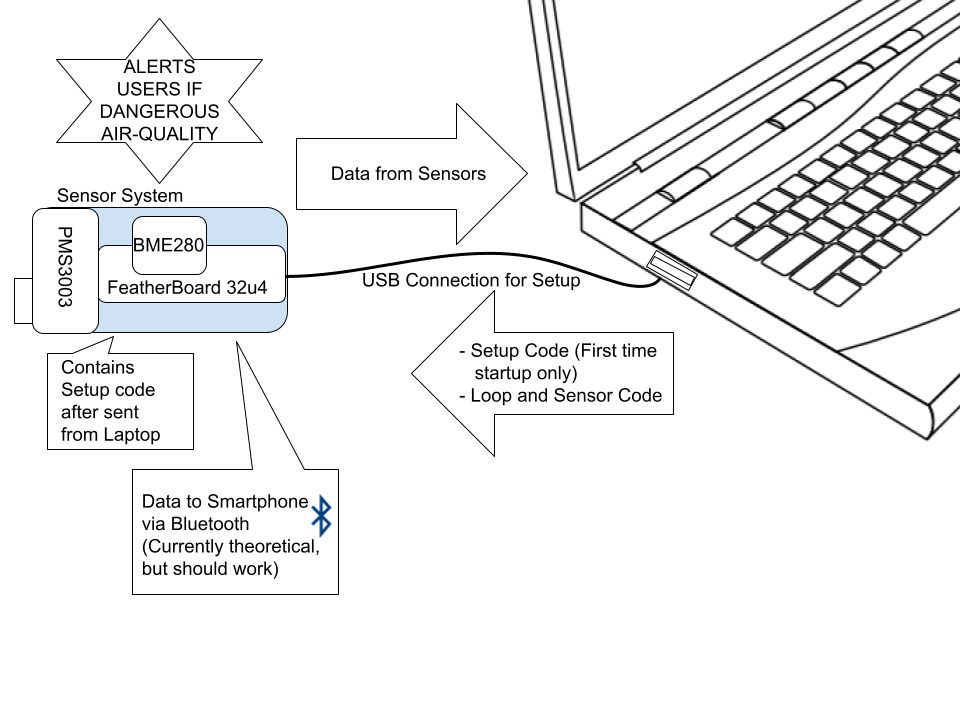
CS 488 – Week 11 Update

with No Comments

I worked on the project poster. I also continued working on software demo v2 and finally submitted it. I discussed with Becky on scaling the accuracy testing, and the method I should use. I have found the food density data that I was planning to use is very limited so I am going to put some more data by manual calculation. I am focusing on fruits instead of foods.

CS 488 – Week 10 Update

with No Comments

I worked on integrating the camera into my application. I found the bug for image processing, but I am working on finding a way to install the CUDA toolkit on Google Cloud VM. I also worked on software demo version 2. I made some changes in my project to scale it down discuss those with Becky.

CS 488 – Week 13

with No Comments

I have been working on wrapping up my project and worked on finishing up the final paper and the poster. The obstacle remains the same where the model gives out very erratic outputs for sentences that are not in its vocabulary but works well with sentences that it has seen before. I will keep continuing to keep working on this and try to figure out a way to make it work, but this goal might be outside the scope of the project given the current workload and time. 

CS488 – Week 14 – Update

with No Comments

During the past week, I have submitted the second version of my paper. After submission, I have continued working on the final parts of the paper. These parts include finishing the social engineering results and making the recommended changes to certain images to enhance my paper. With the given feedback, I have also started making changes to my senior poster which is due Sunday. 

CS488 – Week 14

with No Comments

This week I submitted my second draft of the paper, which required lots of results production as well as time to write. I graphed prediction trends between different materials of foreign data with my model which also was demonstrating how my model was performing. I received great feedback from my advisor regarding the poster and paper and will look to improve these both this week for final submission.

Week of April 20th

with No Comments

This last week I tried to connect my C++ code with my Python code. I failed because I couldn’t convert from cv::Mat to Numpy Array. There were several problems with that. I will instead save the output of my C++ code as a jpg, and read the jpg in python. This is still considerably faster than using Python for the image processing part.

CS 488 – Week 13

with No Comments

The second video was primarily focussed on the student application. As of now, a user can search for books based on categories like sports, academics, fiction, etc. They can issue books by scanning the QR code as well. The homepage of the student app needs some work, it will show which book is currently issued and give a brief history of the user and their activities in the library. In the coming week, I shall work on the 2nd draft of my poster, hope to complete the project and work on testing.

CS 488 – Week 12

with No Comments

I worked on finishing the frontend and wrapping up my project and figuring out what metrics to use measure and compare my models with. I also worked on the poster for my project. This upcoming week I will work on wrapping up my final paper and add the description of my second model to the final paper. 

Week of April 13th

with No Comments

I finished the first draft of the poster. While doing that, I needed to get the accuracies for my AI model and my image processing algorithm overall.

My AI accuracy was around 90% for the testing set. However, I realized my initial idea for measuring image processing accuracy was flawed. I have been working on some new, improved ideas.

CS488 – Week 13

with No Comments

This week we had the first draft of the poster due, which meant producing and visualizing a lot of results from my project. From this motivation, I compared my predictions across very different data (news articles, fictional novels, ect) and also was able to produce a convolution matrix that showed just how accurate my model was. This coming week I want to transfer these results into the next paper draft and continue with the user flow of the software.

CS 488 Update

with No Comments

I’ve mostly been working on making the poster and validating results. I found out that my original plan for validation would not work as nicely, so I will discuss with Xunfei to figure out what I can do. My diagram also needs to be tweaked.

CS 488 – Week 12

with No Comments

I downloaded some past posters to understand how to present my project idea through a poster. Working on the second draft of paper. Finishing up the admin app, in progress to complete all the features of the student app by the end of this week.

CS488 – Update

with No Comments

I couldn’t do much due to comps, but collected all information from participants to conduct the validation process. I also ran their results on my software and recorded the results. This week, I will work on extracting relevant reviews from Sephora to evaluate the efficiency of my method.

CS488 – Week 12

with No Comments

This week I further improved the pre-processing of sentences so that they are cleaner and easier to read on output. I then downloaded some previous year project posters to help with designing my own and have already completed half of it. It showed me that now I need to work further on results to present, on the accuracy of my model outside of its dataset.

CS 488 – Week 11

with No Comments

I have finished the front end of the project, and am trying to wrap it up. One obstacle that I am facing is that my project proposed to have human testing, which will not be possible due to the current situation. I will be working on the poster in the next few days.

CS 488 – Update – April 6th

with No Comments

This past week I mainly worked on the first draft of my poster. It was much easier to complete since I have the majority of my project finished. In the coming week, I plan to continue my testing with my virtual servers, Kali and Metasploitable. Luckily, I have not encountered any obstacles when trying to use these two for testing. I also plan to continue work on the second draft of my paper. 

CS 488 – Week 11

with No Comments

I submitted the second software video. Finishing up the first version of the poster. I also received feedback on the first draft of my paper from Charlie, and discussed the paper and feedback with Charlie. Got valuable suggestion to work and improve in the second draft.

CS 488 Update

with No Comments

In the past week, I mainly worked on implementing a simple interface for my program. I decided to take text inputs for skin type and beauty effects and use a button that returns the recommended products when clicked. To test my program, I collected more input data from participants. I will be using them in the upcoming week to validate my methods.

CS488 – Week 11

with No Comments

During the past couple of weeks, I made some good progress on my project. I now have a functioning driver file that the user will run to train or validate a model, or to predict from their input data. This has allowed me to tie up different parts of my software into one functioning project. I also have predictions working (big step) and am currently working on the best way for the user to view their results.

Week of march 23

with No Comments

I’ve done some work on the configuration parser to enable to core of the project to work: allowing a user to generate a ui with functionality from a text file. All i’ve been able to do so far runtime wise is to have the user select whether they are using VR mode or AR mode. Backend wise, i’ve done a lot of setup of methods and variables and i’ve done the first tests with ssh and telnet (long story) integration which didn’t turn out like i wanted. Next on my list is to create the actual objects that the user defines and start hooking up the ability for said objects to do stuff.

CS 488 – Week 9

with No Comments

This past week I worked on my other model that uses both engaging/readable and non-engaging/readable advertisements, I found that this model does not perform well because of the lack of parallel data and sentence structures between the two different sentences. For the next week, I will work on refining my initial model as well as writing the frontend for the project. 

Week of 23 March

with No Comments

I parallelized some of the python code.

I also rewrote the color processing code into C++. The C++ code for individually changing each pixel is 600 times faster.

I read up on how to make images of food look better and added more algorithms. I want to improve the algorithms/add more algorithms. They are currently not hooped up to the rest of the code.

Next I need to link the C++ code to my Python code, and find a way to to generate meaning full varaibles to pass the processing algorithms. I might rewrite and benchmark the cropping-and-retargeting code in c++ as well.

CS 488 – Week 9

with No Comments

Working on the logout procedure and to be able to pull up books from the database correctly when the QR code is scanned. The profile page of the librarian and student needs some design elements since the users can view the profile page to see the history of books issued. Planning on working on the second video in the coming week.

CS488 – Week 8 – Updates

with No Comments

The feature extraction module is finished (ready to use) now, but I am still stuck on the modeling module… The model I am using is called VGGVOX which is available on Keras. I am stuck on input pre-processing. The bug is on a function on BatchNormalization(). This function normalizes the activations of the previous layer at each batch. But the issue is not on this function, instead, it is on some deep layers of tensorflow innate functions… which i cannot modify. I am kind of lost which step is wrong exactly.

Project Description: Gender Bias Detection Using Facebook Reactions

with No Comments

Gender bias on Facebook might be measured by analyzing the difference in reactions on posts by women or men. My project is studying bias on Facebook pages of United States politicians using Facebook Reactions and post comments. Specifically, I am focusing on politicians running for US Senate in 2020. Data is being collected from Facebook pages of the politicians using a crawler and will be into a database. 

The data will be analyzed by performing sentiment analysis on the comments and using an entropy function on the reactions for each post. The comment analysis is both focused on whether a comment contains more negative or positive words, and if it contains more personal or professional related words. My hypothesis is that female politicians may have comments directed at them that are both more negative, and more focused on personal issues. I am using an entropy function on the reactions to each post to measure how divided the reactions are. Related work used an entropy function on reactions to measure the controversy of a post. My hypothesis is that, in general, posts by female politicians will be more controversial than posts by male politicians.

CS 488 – Succinct description

with No Comments

My project aims to develop models where we can predict the risk of having cancer based on both numerical data and image data. After training all the models, they will be analyzed to see which has the best accuracy and possible ideas to improve the accuracy. After that we can decide the best model to use if we want to predict the risk of having cancer.

CS 488 – Update – Week 8

with No Comments

Since I uploaded the architecture design last week, this will I will go back to posting the normal updates here – I have been slowly working on my second model that I will compare my initial mode to. I have not faced any obstacles yet except the learning curve that comes with learning Keras, but since Keras is well documented it does not take much time for me to figure out something that I am stuck in. In the upcoming week, I will keep working on the second model and plan to have it finished by the end of spring break.
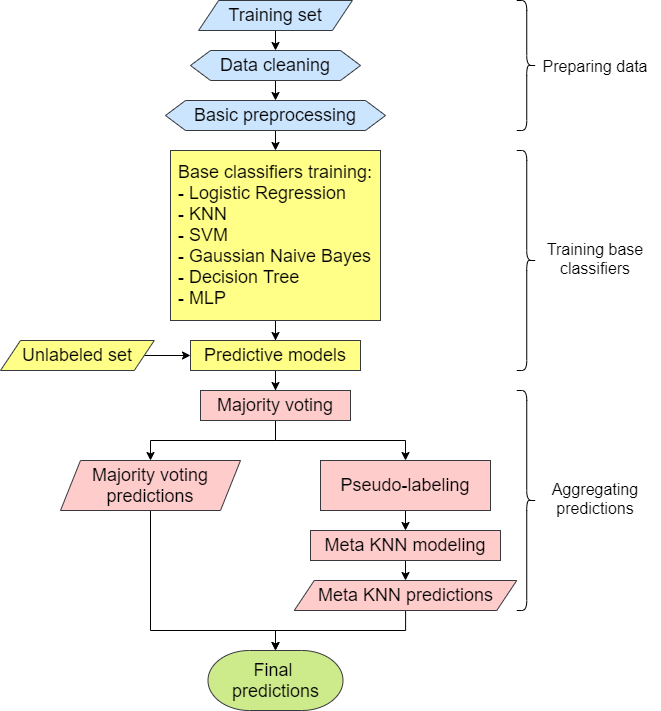
Week 7

with No Comments

 I fixed the problem where all returned images look the same. I started looking into how to parallelize the code and learning photography techniques to make images better. 

I have also made a more presentable diagram, which I will also use in my paper and poster.

CS 488 – Software Architecture Design

with No Comments

The overall design of the project:

High-Level Design of Project

The design of the User Interface/Data Finding process:

User Interface/Data Finding Process Design

The design for the Data Formatting process:

Data Formatting Process Design

The design for the Displaying Results process:

Displaying Results Process Design

The Partial Machine Learning process has yet to be defined as this is a new development in my project and there needs to be more research in the best way to create something that would allow me to easily add future scripts to the work.

CS488 – Elevator Pitch

with No Comments

Information informs our entire lives. Information shapes public opinion which shapes things like public policy, elections, the health and safety of the public, and more. No one is above the harm that can come from misinformation, which is why we need to fight against its spread.

Fake News as an area of research is relatively new and so some of the aspects are not very well researched, and new aspects to research pop up. Some existing problems in this research are that all of the solutions to these aspects are made in isolation, therefore no one solution can be used to find all instances of fake news, and that most solutions do not have an accessible, comprehensive user platform to disseminate their solution to the people.

This solution that I will provide will be a functional model of a user platform that demonstrates how an engaging and accessible one-stop-shop for fake news detection can work. It allows the user to interact in many different ways that require different levels of effort and is able to scale to include many different automatic detection methods.

CS 488 – Week 8 Update

with No Comments

In the past week, I worked to finish implementing non content-based filtering which recommends products based on the user’s skin type and desired beauty effects. I was able to apply the concept of TF-IDF to judge which ingredients are heavily related to each beauty effect. Now that all my methods are working, I will implement widgets to the python notebook to create some sort of interface so that I don’t need to change the input each time. I will also start revising the paper and validating my method.

CS488 – Elevator Pitch

with No Comments

My project is about extracting features from images. Using low-cost collection techniques such as satellite imagery or drone surveys, a database of positive and negative cases can be created. Additional information will be extrapolated from each image in the database using a combination of modern algorithms and combined back into a single imager as different colored layers of a JPEG image. These processed images, the goal of which is to provide as much information as is possible, are used to train a machine learning model. Hypothetically, the additional information provided by the edge detection algorithms will enhance the accuracy and reliability of the machine learning model, reducing the need for expensive surveying equipment.

CS488 – Week 8

with No Comments

This week I focused more on refining my idea and how it would flow for a user, which then helped me to create a flow diagram for this week. During this process, I realized some flows in my code were inefficient, so I changed the flow of information through certain functions to match up with my flow diagram.

I created a validation function to test a loaded model and also an argument parser to make it easier to pass values for different and important variables into the code.

CS488 – Week 7 – Updates

with No Comments

I developed the feature extraction module for my project and it is working. It now converts a voice input file (.wav) to a sequence of acoustic feature vectors. I tested with my own voice. The two files of my voice recording produce two very different sequences of vectors. But I think we cannot tell my looking at these numbers. They are just a list of numbers of the .wav file. I am still having bugs on my modeling module. I followed Charlie’s suggestion to learn TensorFlow from the basic. I build and trained a model with TF’s dataset and it worked. But this is just a basic try. I will keep looking at it.

CS488 – Week 6 – Updates

with No Comments

Last week CS was down so I couldn’t post my week6 updates. I finally finished the environment setting for my modeling module code. I am using a model called VGGVox Models which are created by the same authors of the dataset I am using. I almost gave up this resource because it is written in Matlab which I have never used before. But then I found a python resource guiding me how to import this model. However, I am still having bugs running this model. It says the true_fn and false_fn have different data types. I tracked the error and found that the error is in TF innate files which i cannot modify. But I don’t know which step that I pass data incorrectly.

Elevator Pitch

with No Comments

My senior project is to develop a technology that provides higher performance and security for target applications. It is called unikernel which is an optimized library operating system. Unikernel consists of the minimum set of components that a target application requires from a complete operating system. Unikernel is light weight and has higher isolation than containers. It will be the trend of running environment for applications in many fields such as cloud computing and high performance computing in the near future.

CS488 – Week 7 Updates

with No Comments

In the past week, I worked on creating a survey to take inputs for content-based filtering, modified the skin type test questions, and obtained some responses. I also worked on implementing non-content-based filtering using TF-IDF which I am struggling with. I will be meeting with Xunfei on Thursday and try to finish this part as soon as possible.

CS 488 – Elevator Pitch

with No Comments

My project aims to create a skincare product recommender system based on the user’s skin type and ingredient composition of a product. The main component of the project is content-based filtering and the secondary component is non content-based filtering. For content-based filtering, a user provides his or her skin type and selects a skincare product from sephora.com. The system then identifies the chemical components of products and uses cosine similarity to recommend products that have similar ingredient compositions. 5 recommendations for each product category are then made and returned to the user. Non content-based filtering allows users not to input the product if they lack knowledge or have not found a product they like. A user provides his or her skin type and desired beauty effect to obtain top 5 product recommendations across all 6 categories.

CS488 – Elevator Pitch

with No Comments

Parks Puzzle is a popular puzzle game that is played on a square grid. A Parks Puzzle consists of an nxn grid with contiguous regions known as parks. The aim of the puzzle is to place trees within parks such that every row, column, and park contains one tree, and no two trees are on squares that border one another. My senior proposal is to show that the associated problem of deciding whether a given configuration of a Parks puzzle is consistent with a solution or not, dubbed PARKS, is NP-Complete. This result lets us meaningfully state that the Parks Puzzle in general is an NP-Complete problem, and that it is highly unlikely that there exist any polynomial time algorithms for the problem. Since I have already found a proof, I am currently working on the kPARKS problem, which is the analogous problem of placing k trees in each row, column and park.

CS488-Week7-Update

with No Comments

Now that I have a proof for the parks puzzle, I am spending time working on a more general puzzle that we’ve dubbed kPARKS, which is the analogous problem of placing k trees in every row, column and Park. I am also working on writing the proof and the results that build up to the proof in a clean and concise manner.

CS 488 – Week 7 Updates

with No Comments

For this week, I worked on integrating pieces codes into an application. I completed login and register pages with sql database. Since I usually work on bowie and it is down, I decided to install all dependencies on my local VM. It took quite some time to figure out tensorflow gpu and cpu installations. I also worked on creating a video demo of my project.

CS488 – Week 7

with No Comments

This week I began creating a model using the Keras Python library. I have been training it on the SemVal Task 8 2010 dataset, with accuracies of around 90% during training and 5 epochs and 60-65% validation accuracy. I was successfully able to save and reload the model.

I will be working on increasing the accuracy of this model in the coming week before applying it outside of its dataset.

CS488 – Elevator Pitch

with No Comments

My project aims to see how applicable semantic relation extraction models are outside of their dataset. Semantic relations are how we draw knowledge and facts from a text and no text is the same and when we research we usually look for these relationships regarding certain subjects in the text important to us. I want to see if a normal user can use state-of-the-art semantic models outside of their dataset to decrease the time needed to find specific knowledge about any entity in an unstructured text.

CS 488 – Week 7 – Elevator Pitch

with No Comments

My project aims to develop a reproducible penetration test that can help secure a large network. Tests will come from three different avenues- physical and technical testing, as well as social engineering. The results from these tests will be put together in a final report and given to the appropriate people who can make appropriate changes as needed.

CS 488 – Week 6

with No Comments

— Elevator Pitch — 

My project aims to use a sequence to sequence encoder-decoder model to make text-based advertisements more engaging and readable. This will help businesses get an edge over their competitors by attracting new customers as well as retaining their existing customers by making sure that their advertisements are readable and engaging to their target audience. This will be done through the analysis of pre-existing advertisements which will then be used to train the model on how to restructure sentences to make them more readable and engaging. 

CS 488 – Week 7

with No Comments

My project is an application used in a library to issue and return books using QR code. The primary usage of this app is in college libraries. Using personal smartphones, users can scan the QR code and check out the books which reduce human work and reduces the average time spent in the library. Users can also search for any book in the library and learn basic information rapidly.

The login data and book data is stored in a firebase database. The librarian application involves 3-4 staff users who can manage the flow of books through the app and when a fraud activity takes place they get notified. 

CS 488 – Update – Week 6

with No Comments
  • This week I focused on getting part of the PolicialNews Data set from Castello et al. to work with Weka to be able to see if I can recreate the results used by their classification methods
    • Downloaded a tool to combine excel files into one sheet without data loss, manually added headers and an extra column denoting which was fake and which was real
    • But Weka still won’t load the data so that I can test it
  • Next week I will focus on making smaller versions of the data set to see what features are the issue for Weka and testing features individually; I will also look into Keras as a machine learning tool and see what kind of testing can be done

CS488 – Week 6

with No Comments

This week I was trying to run two different TensorFlow models with checkpoints, however, I could get the checkpoints to work which is key to my project. After a discussion with Dave, I have decided to implement a simple model myself using the Keras library since it is more abstracted and well documented, so it shouldn’t take too much time. I will be aiming for a minimum of 50% accuracy with my model and the SemVal-2010 Task 8 Dataset, which I think is the best dataset choice for this task.

Following this implementation, I want then start testing my model outside its dataset.

Week 6

with No Comments

I did not manage to get the foreground (the food) with zero user interaction. I have achieved pretty good success at picking just the food with minimal user interaction. I will try it with a pure white background next.

I can now successfully manipulating individual contour areas. 

For next week, I will (finally) work on learning more about food photography. 


I I have most of the standard functionality working. Pretty much the only untouched coding is the resizing.

CS 488 – Week 6

with No Comments

This week I started working on writing the first draft of the paper. The models seemed to run probably when I tried to test with the small data set. However the accuracy was not what I wanted since there were not enough data. I will tried to implement these models on an online cloud computing system while waiting for Layout to be available.
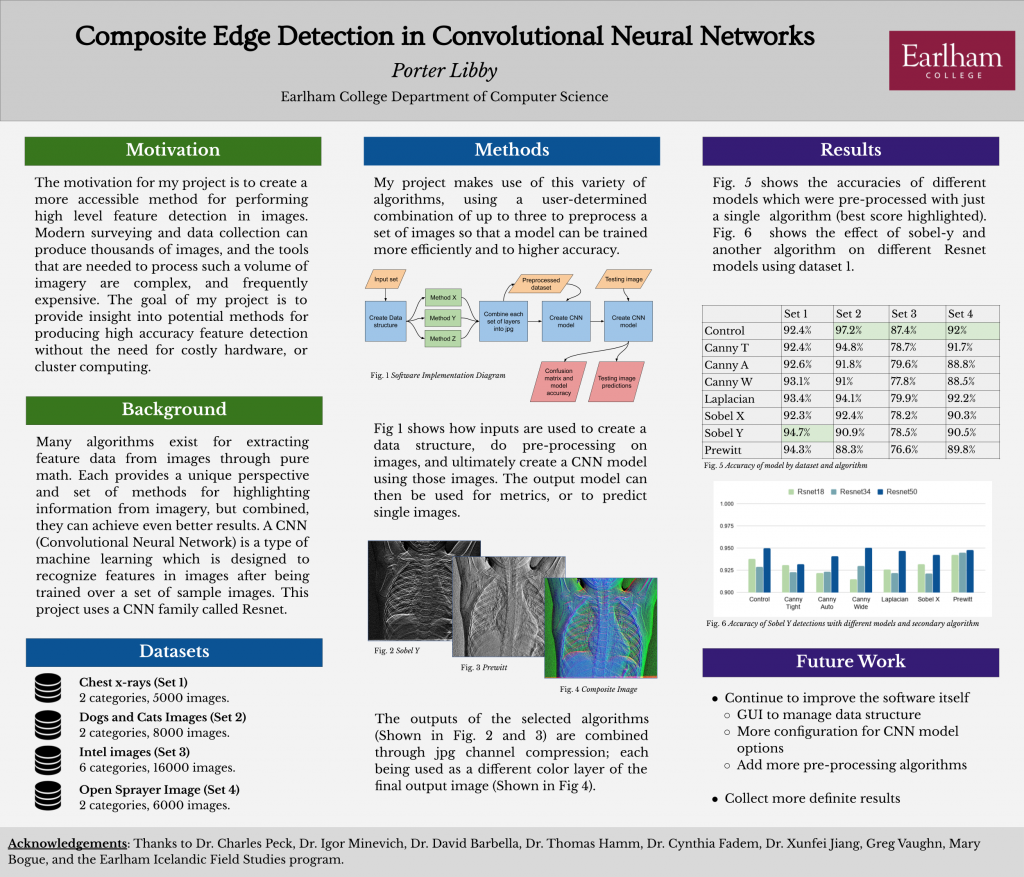
CS 488 – Week 6

with No Comments

Completed the paper outline. Working on the first draft as per the feedback received on the outline. Plan to complete the draft this week and present the first version of the project next week. I am still working on the QR code generation and scanning. 

CS 488 – Week 5 – Updates

with No Comments

I wrote the outline of the senior project paper. It is similar to my proposal but i changed my modeling method. i need to rewrite the modeling from GMM-UBM to Convolutional Neural Networks. But I am still having bugs on the CNN resource I gained from GitHub. I am pretty sure I will use MFCC as feature extraction. But if i cannot get proper resource of CNN I probably need to change to DNN or others. But I will try my best cuz I want to use CNN.

CS488 Week 5

with No Comments

This week, I focused on writing the outline of the paper. I also have been using NLTK to extract features from the text reviews. I need to figure out how to handle a review that has multiple sentences since my feature extraction is currently only applied to one sentence.

CS488 Week 3

with No Comments

For this week, I followed a tutorial from Educative about Natural Language Processing and followed for data preprocessing. I was able to load the dataset and I am in the process of preprocessing it. I ran into a problem of sentences that do not contain any emotions at all, therefore need to be eliminated. Also, I need to extract the word ‘not’ from words such as ‘don’t’, haven’t’ for better indication of a negation. In the following week, I shall try to do so

CS488 Week 2

with No Comments

For the past week, I was able to skim through the Amazon Review datasets and chose Clothing, Shoes and Jewelry, on the criteria that its size is not too much. I then researched and learnt how to use pandas to import the dataset from its json type into a DataFrame. In the following week, I will continue to research and find out the way to extract the review of the data into multiple feature of interest that will be use to train our ML models with.

CS388 – Week 5 – Update

with No Comments

I read six papers for my three ideas. It was interesting that many research ideas have the same goal, but the ways they approach the problem are very different. For example, in the fall detection problem, some research ideas apply deep learning on images and videos, but others work on radio frequency instead of using the images. Another example of this is improving the performance of the Optical Character Recognition for Chinese text. My initial thought about how to solve this problem is to apply image processing techniques to improve the image quality and then deep neural networks. However, there was one paper approaching this problem from a different angle. They apply statistical natural language processing models such as N-gram in order to improve the accuracy of OCR. These ideas might help me come up with an approach that is different from the one I was thinking of doing.

CS488 – week 5 – Update

with No Comments

In the last week, I have spent more time learning about using fastai with a convolutional neural network, specifically the resnet34 and resnet50 models, which I think will be ideal for my purposes. I have also been working with Jordan to get the modules for this set up on Lovelace.

I have also been scavenger hunting for more data. I have data from Iceland, and a few confirmed spots on campus which I can use for both positive and negative training cases, but more data is better for this kind of AI. My search has lead me to reach out to Tom Hamm, Greg Vaughn, The Earlham Library, and the Geology department.

Over the next week, I will continue learning about fastai and start implementing my model to be trained over the data that I have already.

CS 488 – Week 5

with No Comments

This week, I focus on the writing parts including the outline for the capstone paper. I also start implementing some neural network models for the image data set such as MobileNet and EfficientNet. I will try to test the model using a small sample training data set while waiting for Layout to be available so I can train the whole large data set. 

CS 488 – Week 5

with No Comments

I finished writing my initial model and have trained it using a small sample dataset. The accuracy of my initial model is quite bad. I am currently researching how I can modify and improve the accuracy of my model as well as downloading a larger dataset to increase the accuracy. I also worked on the outline of the first draft of the final paper. Currently, the obstacle is the lack of accuracy of my model. This next week I will work on finishing up the first draft of the final paper as well as increasing the accuracy of my model.

CS 488 – Updates – Week 5

with No Comments
  • I found a data set that would be the easiest to recreate results with
    • I just need to merge the data set of credible news and the data set of non-credible news with an added column denoting whether it was real or fake to be able to test
  • However, I ran into a major hiccup because Weka crashed and I can no longer open it.
    • I am documenting the errors and trying to reinstall it and fix but because for some reason I can’ t delete some of the old folders and so I still have not gotten Weka to start back up again
    • My hypothesis is that one of the packages is failing the whole opening process because I don’t have R on this machine
    • I am also afraid of force deleting the folder because I have no idea how it will affect Weka or my computer
  • I did successfully complete my outline but I do not have enough information to fill out the Results section and anything regarding my exact methodology.

Week 5

with No Comments

I am trying to succesfully detect the foreground object in the image, which will be food. While the initial idea was to use AI to detect the food in the image, this is not a completely solved problem yet. Since I can choose my own input, using the foreground image makes more sense. Charlie recommended a software called Image Magick, and I will look at that.

For next week, I want to finish the foreground, and start resizing the images, and passing them to the ranking AI.

CS 488 – Week 5 – Update

with No Comments

This week I spoke with Charlie and gained clarity into how Earlham handles guest connections through ECOpen and from there does not allow access to the network within Earlham but simply gives access to the outside internet. I also started my Social Engineering test on Thursday. I ran into some speed bumps with that and am currently resolving. For this next week, I plan to talk to Aaron in ITS about NMAP and its use to possibly check for any ports that are left open and could be vulnerable. I plan to meet with him sometime early next week.

CS488 – Week 5

with No Comments

This week I first worked on creating an outline for my final paper, which was useful as it sharpened my current understanding of my project and where it is headed. I also was working with a new model and was able to successfully train it, save checkpoints and load them. I also created basic pre-processing functions for my data to match the format of input sets.

Loading of weights did seem to not work with this model. When I reached a checkpoint with 80%+ accuracy and saved the weights, I followed up with loading the weights and feeding in test data from the dataset, but accuracy dropped to 5%. This was extremely confusing and is my priority to understand this week otherwise I will have to find another model.

CS 488 – Week 5

with No Comments

User login and authentication is complete. New user is able to sign and save details in the database. Sample set of 20 books to be used as testing data. Currently I am figuring out QR code scanning and generating new QR code’s. Next week scanning will work and books can be scanned and retrieved from DB.

CS 488 – Week 4 – Updates

with No Comments

TensorFlow is working fine on Lovelace now. But I just found that the demo uses TensorFlow 1 while the latest version installed on Lovelace is TF2………. The demo has a lot of code. I am not sure if i should work on this one and update all codes to TF 2, or just find another resource…… I talked to Xunfei, she told me to try other resource briefly. Because update that demo is not a small work.

CS488 – Week 3 – Update

with No Comments

I am still having issue on running the demo code from GitHub. I requested installation of TensorFlow in python3 on lovelace but it seems there’s still error. It is probably the issue of environment setting. I will communicate with the admins.

TensorFlow is working fine on Lovelace now. But I just found that the demo uses TensorFlow 1 while the latest version installed on Lovelace is TF2………. The demo has a lot of code. I am not sure if i should work on this one and update all codes to TF 2, or just find another resource…… I talked to Xunfei, she told me to try other resource briefly. Because update that demo is not a small work.

CS388 – Week 4 – Update

with No Comments

I am reading papers for my first idea, which is “Detect and Translate Chinese text in images”. One research that I read was about improving the performance of the Optical Character Recognition for Chinese books that are in precarious conditions. Instead of trying to enhance the image quality, their research applies N-gram, long short-term memory, and backward and forward N-gram statistics text model to develop a more accurate OCR model.

CS488 – Week 4

with No Comments

This week I did a lot of research and work on the more anthropological side of my project. I emailed Tom Hamm and Greg Vaughn and got some great information about where I could find the foundations of old buildings around campus that I could use for my project. This information will hopefully be detailed enough for me to create some labeled training images.

I also spent some time this week learning fast.ai, which I have settled on for now as the best option for identifying images. The library is extensively documented, and extremely robust. As soon as Layout or a similar machine is back up, I will be able to start testing code, but for now, learning the library is just as important.

CS 488 – Week 4

with No Comments

Last week I worked on collecting and preprocessing the data using Groupon API. I also started learning about and implementing my autoencoder model. So far the obstacle has been the learning curve but I have been extensively reading about neural networks and Keras and should be able to continue working on the project without any hiccups. Next week I plan to start my first draft of the paper as well as have a somewhat working version of the autoencoder model.

CS 488 – Week 4

with No Comments

This week, I started the data preprocess for my image data. The steps include, resizing, cropping, normalizing and lastly change to tensor value so that it can be fit in a neural network. For the numerical data set, I started looking into different algorithms which are not as computationally expensive as neural network such as k-nearest neighbor, support vector machine. In that way, I can test it when Layout server is still not available.

Week 4

with No Comments

I finished the ranking module. It take a folder of images, converts them to an array, passes the n best images to another function, which keeps processing the images, and then picking the best n again to be processed. There is no processing yet.

For the processing, I have started working on the genetic pixel changing for the image processing. I am reading the pixels into an array, and am changing each individual pixel. While it is (sort of) a genetic algorithm, I want the changes to be a little more intentional.

CS 488 – Updates – Week 4

with No Comments
  • I have spent this week analyzing the data sets that I have to see if there are any outside things that I need for these data sets to be able to be tested using Weka.
  • I have found that some required me to have my app registered with Facebook Developers and Disqus and some were not actually in proper .csv format and so Weka (the tool that I am using to test classification methods) could not read it.
    • This meant that I have a lot smaller pool of articles that I am able to replicate.
    • I have found 27 different data sets but I haven’t read all the papers those data sets are used in and some of the papers that mention the data sets are just explaining how they created the data sets and not how to use them in this context.
  • Because of all of these little setbacks, I am working on just finding smaller sample data to test Weka with, so that I can make sure Weka is working and I am focusing on recreating the results from Castello et al.’s work for the moment.
  • Castello et al.’s data format is different than what I have used for Weka before and I have to do some more digging to see if I need to combine the fake news data set with the credible news data set for each year first before sending it through Weka, or if I can just open both within Weka and tell it how to find what it needs.

CS 488 – Week 4

with No Comments

In the past week, I worked on generating five recommendations from each of the the six product categories. I still have a confusion about the cosine similarity formula so I’m planning to meet with other faculties in the following week while keep working on the next task. Other than that, there wasn’t any obstacle and I just need to make the function return the results in a nice and clean way.

CS488 – Week 4

with No Comments

This week I made efforts to get predictions from my model that was trained last week. However, after some hours spent understanding the code, I realized that this model is not for practical use but rather theoretical predictions, as each query set requires a supporting set.

Following this setback, I have now found some models to train from a smaller dataset in comparison to FewRel. I believe these models are able to be used practically on random query sets. With the smaller training time required for them, I should be able to verify which is best for my project this week.

CS 488 – Week 4 – Update

with No Comments

This week, I continued my testing for the physical aspect of my project. During this testing, I tried to focus on ECOpen since it says there is no encryption associated with the network. Come to find out, there is still an authentication process that one must go through when trying to connect to ECOpen. So when I ran a packet sniffer on a device that was on an ECOpen channel, I could not see any data. (This is a good thing and was noted). I also finished preparing my social engineering test which will begin tomorrow, February 12th. This next week will consist of my social engineering test, processing results from physical test, and working on my paper.  

Update up to 2/5/2020

with No Comments

This past month i have been mostly working with getting everything for my project working and fighting some major issues. The first issue that has been almost solved is that the NorthStar uses DisplayPort out while my computer only has an HDMI port and a MiniDisplayPort in. Turns out HDMI outputs are not compatible with DisplayPort and so the adapter i got to do that does not appear to work. I am investigating getting the proper port by the end of this current week.

The other issue i had to fight was the fact that for a week and a half, i did not have my primary computer since it was broken and needed to be repaired. I had a much less good backup computer that i used to test the hypothesis above, so i was not entirely useless during that time.

This coming week and weekend, i am hoping to have a fully functioning environment running and have the ability to display tracked hands in the headset, depending on the availability of an adapter.

CS 488 – Week 3 – Updates

with No Comments

Last weekend, I spent time with a small group of friends filling out a spreadsheet of information for 2020 Senate candidates. So far, 154/348 filed candidates have been added to the sheet. During that time, we discovered that a few candidates operate their campaign on a public Facebook profile instead of a Facebook page. In talking with Charlie, he guessed that the process in the API to collect profile data shouldn’t be too different from page data. Therefore, I am planning to collect this data as well, while noting the names with profiles in case their results are drastically different from overall results. Next, I plan to develop the scripts to start collecting and analyzing small amounts of data, planning to scale and automize them later.

cs488 – Week 3

with No Comments

This week was a big planning week for me. I spent a lot of time writing down notes and ideas, as well as researching the details of what I need for my project. I also spent some time gathering resources for my project in the form of data from Iceland. A combination of 2018 and 2019 data will provide me a much-needed training/testing case.

I have progressed in my implementation, further streamlining the process of creating various edge detections of original images. This week I added the Prewitt edge detection algorithm and improved my Caney edge implementation to have a tight, wide, and auto mode.

I have also been researching technologies for image recognition via machine learning with multiple channels. This is the idea that a single “object” in the AI can have multiple images associated with it, and it is necessary for my project.

CS488 – Week 3

with No Comments

This week I was able to create a saved checkpoint of my learning model for semantic relation extraction. This hopefully means I won’t need to train it further and can now focus on feeding it my data, which now needs to be pre-processed before being fed into the model. A basic GUI window was also up and running this week with PyQt5 which was great to see! I will be writing more code in the coming weeks now so I need to ensure that my project files are organized.

CS 488 – Week 3

with No Comments

This week, I tried to implement some models and was hoping to get it on our Layout server with GPUs. However, the system admins were still working on that and I could not ssh to the server. Therefore, I created a google cloud free trial account and started writing and testing my model on their server. 

CS 488 – Week 3

with No Comments

Since my project involves a significant part that’s marketing, I was advised by my instructor to talk to Seth and other professors about how I should approach a dataset. After talking to them, I have decided that a good approach would be creating a dataset using the readability formulas. First I will calculate the average readability and then filter the dataset using that average readability. A marketing dataset has been extremely hard to find, but asking around has led me to the Groupon API – it lets me get 100 deals per second which will help me easily scrape millions of deals in a few days. I plan to run a script in the background that does it. Since last week, I have also successfully implemented word2vec using Genism – a python library. 

CS 488 – Week 3 – Update

with No Comments

In the past week, I worked on calculating the cosine similarity between the ingredient composition of an inputted item and that of the rest of the items in the data. I am struggling to decide on which formula to use for this, since the related project used the equation different from the “typical” formula used to compute cosine similarity. I will need to look into this more next week. 

CS388 – Week 3 – Third Idea

with No Comments
  • Name of Your Project

A Real Time Fall Detection System to Assist the Elderly Using Deep Neural Networks

  • What research topic/question your project is going to address?

The elderly have a high chance of falling and get injured or faint. This might put them to danger if they are alone. One way that can help the elder people is having a system that can monitor their actions, detect the falling action and other behaviors after falling down, classify the levels of severity and send an alert to their emergency contacts or the emergency room if the level is serious.

  • What technology will be used in your project?

Deep learning, pattern recognition, image processing

  • What software and hardware will be needed for your project?

Python, PyTorch (or Keras)

I might also need a CCTV camera if I decide to build the actual device.

  • How are you planning to implement?

First I will apply some image processing techniques to enhance the images and videos quality. If the dataset is small, I will use of image data augmentation techniques to produce more data. Then train the model that detect the person falling in the photo frame using deep neural networks, then use the people falling photos and videos to train a model that classify the level of severity. When the index of severity passes a threshold, send out the alert.

  • How is your project different from others? What’s new in your project?

There are several projects that work on the similar problem. Most of them work on detecting the falling action only. In this project, I hope to build a system that is more detail and can decide whether it is an emergency case.

  • What’s the difficulties of your project? What problems you might encounter during your project?

I might not be able to find a big enough dataset to train the model.

CS488-Week3-Update

with No Comments

I worked with possible ways of proving that non-contiguous Parks is NP-Complete, and found one good avenue for exploration. Over the week I produced a general technique to convert any instance of 3-SAT to an instance of the non-contiguous Parks Puzzle, thus proving that it is NP-Complete, our first major result. I am working to modify the proof, or try similar techniques for the contiguous case this week.

CS 488 – Update – Week 3

with No Comments
  • I have started to keep a log of what I do every day for this project so if something goes wrong I know where to back up and begin again. This will also help later when writing about my process for the poster/paper
  • I have started mapping all the datasets I found to what papers used them so that I could figure out which papers I could replicate
  • I have started trying to replicate papers as well using Weka just to make sure I’ve set up everything correctly so that I can properly set up my own tools
  • I’m having issues with how vague all the research papers are, however. So I think to fix that issue, I’ll need to email the researchers which more questions so I can actually replicate them and know what tools they used.

Idea 3

with No Comments
  1. Name of Project

Automating laptop checkouts from CST front desk using image recognition

  • What research topic/question your project is going to address?

Although we need a human to address the needs of guests in the welcome desk of CST, it would be ideal for the worker and students if we can automate the process of MACs’ checkout. Humans are prone to error and we do not want any student worker to be liable of errors that could cost them thousands of dollars. So this project would allow a machine to handle the checkout using a camera to identify the laptop and the student wishing to check out the laptop and remove the process from the desk worker completely.

  • What technology will be used in your project?

Image recognition, machine learning models,

  • What software and hardware will be needed for your project?

This would need a good quality camera, python, and some database management software

  • How are you planning to implement?

Have a camera stationed above the cst desk. Also I think it would be beneficial to change the barcodes in the laptops to bigger QR codes for easy recognition and better visuals for the camera. Use various machine learning models to train the software to recognize students and identify unique laptops. This product should also send out emails regarding reservation details to the students like the current system does.

  • How is your project different from others? What’s new in your project?

This is different implementation from the current process we have in that we are removing human responsibility from this procedure. This will hopefully reduce human error in the process and decrease financial liability to student worker and the institution. It is also scalable to other use cases (like Runyan desk for example) to increase automation and improve efiiciency.

  • What’s the difficulties of your project? What problems you might encounter during your project?

The problem I anticipate is making sure the model I have does not mis-identify students checking out the laptop or mistaking someone walking by the cst desk as someone checking out a product. Lighting might also be some issue as the desk is besides huge windows and so lighting is very different in night vs day, or summer vs winter. Another issue to consider is the camera quality (need to get good camera under reasonable budget)

Idea Number 3

with No Comments
  1. Name of Your Project

Ans: SARS

  • What research topic/question your project is going to address?

Ans: Using trained neural nets to be able to tell when a statement/sentence is sarcasm 

  • What technology will be used in your project?

Ans: NLTK and 

  • What software and hardware will be needed for your project?

Ans: Botmock is the only software that will be needed for this project

  • How are you planning to implement?

Ans: I plan on making this an extension of Botmock

  • How is your project different from others? What’s new in your project? 

Ans: With my project, I am using the same method of using CNN model hierarchy when it comes sentiment analysis to learn the context and space in which the sentence exists

  • What’s the difficulties of your project? What problems you might encounter during your project?

Ans: Every sarcasm exist in a defined space one difficulty of this project is trying to build a barrier for that space. Another problem would be getting access to Botmock’s API to make this application compatible.

CS 488 – Week 3 – Update

with No Comments

This past week I have really dug into my physical testing. Using Kali Linux and a wireless adapter (supports monitor mode), I was able to use commands to see which networks were available and from there, I could see all of the clients connected to each network. However, I only could see the BSSID (MAC Address) of each device, nothing more. I then went in to WireShark which showed me a little more data. I could potentially see what type of device it was. However, all data was encrypted in ECSecure. Trying to break the encryption was hard as we have hundred of users with different passwords. It’s not just a single password for the ECSecure network (that would be too easy to break). I plan to continue this testing and see what else I can find through ECOpen.

I have also started to set-up my Social Engineering experiment that way everything is ready when the start date arrives.

CS 488 – Week 3

with No Comments

I worked on the login page and setup and almost done with the forget password setup. I have to decide on the database for the login, whether it will be single data base or sql for the whole application. I plan on working on the User interface features in the coming week. This involves setting up a db to store books, setting storage attributes etc. This is the main portion of the project and shall take the most time.

Week 2

with No Comments

I have spent some time thinking about how to split up the timeline into more detail. I have met with Charlie, and decided that the program should take a bulk of images as an input rather than a video. The next step is to learn more on the photography aspect of things.

CS 488 – Week 2

with No Comments

This week I have looked at some papers of most recent models for classifying images to build for my dataset. I encountered some challenges while reading those papers since there were terms that were hard to understand. Next week, I will continue to work on the image dataset and model.

CS 388 Idea 2

with No Comments
  1. Name of Project

Visual representation of nation’s development level

  • What research topic/question your project is going to address?

The goal of this project is to use the various world bank data that is available to evaluate different development metrics for each nation. Then I want to use visualization tools to effectively communicate to the interested audience. The visuals will change as the indicators for the countries change so the website would be a ‘live image’

  • What technology will be used in your project?

Api, data visualization tools like Tableau or python, statistical tools to calculate the indicators and compare between nations.

  • What software and hardware will be needed for your project?

Python, SQL, json. Maybe some database management system to store the data. Tableau for visuals.

  • How are you planning to implement?

I want to pull the data from various data sources like the world bank website using api and load it into some sort of database. Using this data, I want to use some tools to calculate and compare the indicators of development for various countries. The output from these calculations would be then visualize in a website live and these visuals would change based on any changes noticed in the world bank dataset.

  • How is your project different from others? What’s new in your project?

I want to create a live version of this problem. I found a few websites that visualize these metrics or tabulate them, but it is hard to interpret for people who are not very informed about the topics involved. I want to make my website very intuitive so people with different experience levels can look and interpret the data intuitively.

  • What’s the difficulties of your project? What problems you might encounter during your project?

The problem I anticipate is figuring out how to have the database where I store my data update in a lively manner so that any changes in the data bank is represented instantly in the website without any intervention required. I will have to learn various methods that are hopefully available readily that can make this possible for me

CSS 488 – Week 2

with No Comments

Due to a lack of available usable datasets, after talking to my advisor and instructor I decided to modify my project to focus on readability and sentiment instead. I researched papers on readability and sentiment this last week and have starting writing code using python(Keras). My next week’s goals are to have some working code for a trained network that produces more readable code. I still need to look a bit more into what constitutes as readable when it comes to marketing material.

CS 488 – Update – Week 2

with No Comments
  • This week I recovered all of the data sets I found last semester that were on my other computer. I then downloaded and extracted the data.
  • I also chose to set up my own Developer SQL database on my laptop so that I can keep my training data and the user data in one accessible place.
  • Because I wasn’t able to have my mentor meeting last week, I wasn’t sure where to begin with all the work I’ve set up. So I’ve decided to go back through all of my notes on the research papers I have read and create a giant spreadsheet detailing the tools used, features used, classification methods used, whether the dataset or the code was available, and if I’ve contacted the authors of these papers for more info.
    • This will help me figure out how I’ll need to create the learning loop to not forget any feature or method.
    • This will also help me show my advisor exactly what was in previous work and what I have to build off of

CS388 – Week 2 – Second Idea

with No Comments
  1. Name of Your Project

Driver Drowsiness Detection Using Deep Neural Networks

  • What research topic/question your project is going to address?

Driving while feeling sleepy or tired is one of the main causes of traffic accidents. One solution for this might be having a device in the car that monitor drivers’ behaviors and facial expressions and ring the alarm if the drivers tend to fall asleep.

  • What technology will be used in your project?

Dataset of facial expressions (images and videos)

  • What software and hardware will be needed for your project?

Python, PyTorch (or Keras)

  • How are you planning to implement?

Build a pipeline that first apply some image processing techniques to improve the quality of the images, then train a model (using neural networks) to detect and locate face position in the images, and the last step is to build a model (also using deep neural networks) to classify the behaviors and facial expressions.

  • How is your project different from others? What’s new in your project?

Most relevant projects track the drivers’ eyes to see if they close their eyes. I am considering checking eyes movements and also other behaviors such as yawning or nodding off in order to improve the classification performance.

  • What’s the difficulties of your project? What problems you might encounter during your project?

There might not be a big dataset for me to use.

CS 488 – Week 2 – Update

with No Comments

This past week, I have started phase 1 of my project, testing the physical security of the network. Along with starting this phase, I started to write the Google survey that will be used w/ the social engineering experiment. I also ordered the hardware needed for the social engineering test. I have not encountered any obstacles. This next will I will continue to use WireShark to test the physical network using both a wireless and ethernet adapter. 

CS488 – Week 2

with No Comments

In the past week, I have spent most of my capstone time organizing my project and testing some options for the machine learning component. I have been working with fast.ai and ImageAI python packages, trying to set up some groundwork for when I have data ready.

I have also organized all the algorithms that I want to try, at least until after I can compare some results (after I see the results, I may opt to implement more)

My hope for the next week is to make progress on acquiring training data with drones, or at least narrow down where I might want to survey.

CS488 – Week 2

with No Comments

I forked MLMAN, a PyTorch model that achieved the second-highest accuracy of validation on the FewRel dataset for semantic relation extraction. Running locally with a useful amount of iterations, it took to long to train, so I will be training the module on hopper and saving the model there to fetch for local use. With this saved model, I hope to start pre-processing and feeding sentences into it for validation.

CS488-Week2-Update

with No Comments

Over this week I finished up an non-contiguous IFF and OR gadgets, however I came to the conclusion, after meeting with Igor, that there does not seem to be a way to effectively put together these two gadgets. However, we also concluded that in most cases, it is not a particularly difficult challenge to find a gadget for contiguous parks, if one already knows the equivalent gadget for contiguous parks. Since I have reached a dead end, over the next week I am going to try out one promising new direction, and hopefully by close to proving the result for non-contiguous parks within the next two weeks.

CS 488 – Week 2 – Updates

with No Comments

My project is to collect and study the Facebook Reactions and comments on posts by U.S. politicians to see if bias exists based on the gender of the politician. I have decided with Charlie’s advice to focus my project on the 2020 Senate races. The 2020 Presidential election doesn’t have enough candidates to be a good sample size. The 2020 House races would likely have a wide variety of candidate strategies based on the district, many districts with no competition, and less voters per race. By contrast, the Senate races have enough candidates to be a good sample size, while also having more voters per race, meaning there should be more Facebook Pages with enough user activity to be used in my dataset.

This week I found sources for the Senate races, created a spreadsheet for candidates, and decided on which relevant columns should be in the spreadsheet. I am filling out the sheet first for races where the filing deadline has passed for the primary first. Next, I plan to learn how to access the Facebook API using the Facebook SDK Python library, and to collect sample data for candidates I have already added to the spreadsheet.

CS 488 – Week 2 – Updates

with No Comments

I decided to change my modeling method to neural networks. I have read a paper called Text-Independent Speaker Verification Using 3D Convolutional Neural Networks and checked their resources on GitHub. I tried to run their demo but required packages couldn’t be installed on my laptop. i probably need to request a place to run on CS/Cluster from the SysAdmins. I also found other similar resources on GitHub. My next step is to run them with testing files. I also had the first weekly meeting with my advisor Xunfei to discuss timeline and future plans. 

CS 488 – Week 2

with No Comments

I made a visualization (plot) displaying ingredient composition similarity between different products and skin types. I attached two drop-down options for users to select from product categories and skin types. I also attached labels to the graph so that it displays the product’s name, brand, price, and rank. 

CS 488 – Week 2

with No Comments

Working on the login and sign up system. Reading existing papers that talk about such system. Sign up will be via Zimbra only since using Facebook and other applications could lead to fraud accounts. The home page would be ready by next week.

CS388 – Week 1 – First Idea

with No Comments
  1. Name of Your Project

Detect and Translate Chinese text in images

  • What research topic/question your project is going to address?

Lately many translator applications have introduced the new feature that can scan a document or take an image with texts to detect and translate the texts into another language.

Many of these applications perform well with very neat and clear handwriting or high quality images but not quite well with cursive handwriting or low quality images. My research goal is to improve the detection performance in these cases.

  • What technology will be used in your project?

Chinese – English Dictionary API

  • What software and hardware will be needed for your project?

Python, PyTorch, matlab

  • How are you planning to implement?

Build a pipeline that first enhance the quality of the image data using image processing techniques, then feeds data to a deep neural network model (maybe CNN) to detect the Chinese characters and connect to a dictionary API to translate the text into English.

  • How is your project different from others? What’s new in your project?

The current applications do not perform very well on low quality images, so my goal is to find solutions to this limit of the translation apps.

  • What’s the difficulties of your project? What problems you might encounter during your project?

I did some experiments and found that big apps like Google Translate still had trouble detecting the not-very-neat handwriting. Therefore it could be very challenging to achieve my research goal.

CS 488 – Week 1

with No Comments

I go through the project again because it has been a while since I had CS 388 last Spring. I downloaded the data set and started doing some data manipulation and preprocessing. I will start looking at the models for image data set next week.

CS 488 – Week 1 – Update

with No Comments

This week I worked on setting up Keras and completed a course on deep learning using Keras (Learn Keras: Build 4 Deep Learning Applications). As I prepped for implementing the project, one of the significant challenges I have encountered is finding an appropriate dataset to train my neural network. Since my project aims to make a business’s marketing material more engaging, an appropriate dataset with labeled data to set up a clear definition of what counts as engaging and what counts as non-engaging is necessary. After some research and talking to my advisor and the instructor, one of the parameters that I am now looking for while searching for datasets is data that might be labeled based on reading level/hard to read/easy to read. The main goal for next week as I move forward with my project is to have a concrete dataset that I can train my neural network with. 

CS 488 – Week 1 Update

with No Comments

In the past week, I loaded the data, extracted ingredients from products, and made a document-term matrix containing product names and ingredient composition. I plan to visualize ingredient similarity between products this week. I haven’t faced many obstacles yet, but I want to finish things earlier than planned to allow some time for future obstacles.

CS 488 – Week 1 – Update

with No Comments
  • I bought a new computer over the break because my older one was unreliable and crashed unexpectedly from time to time. So I spent this first week setting up the computer and downloading the tools that I believe I’ll be using.
  • I also have spent a lot of time hunting down the data sets from the research papers that I have read and have a collection of over 22 different fake news data sets.
  • I created my presentation slides which helped me think about the project in a different way since I need to think about how to explain things in a way that will make sense to everyone and not just myself.
  • Finally, I chose my adviser and set up a meeting time and shared notes space but we were unable to meet this week since she will be at a conference.

CS488 – Week 1 Update

with No Comments

This week I created the presentation for Wednesday, which helped to make clear to me my new current goal after work done over break. I have found some new datasets and repositories for models online, which I will be presenting to my advisor to figure out which best suits my project. I have also tried to better breakdown my timeline following the selection of a module for the following month, and have personal project goals. I researched some libraries for GUI implementations, currently leaning towards Electron (Java) or PyQt5 (Python).

CS 488 – Week 1 – Update

with No Comments

This week was mainly for refreshing myself on the details of my project. I finalized Charlie to be my advisor for 488 and set up a weekly meeting time with him. I also completed the 3 slide powerpoint in preparation for the presentation in the joint class of 388/488. I adjusted my timeline and plan to start the first phase of my project on Monday. I did not have any obstacles this week. Within this next week I plan to start the physical testing phase of my project. 

CS488 – Week 1 Update

with No Comments

This week has been mostly organizational for me. I found some more resources on Github that I want to try and make use of, and I worked on my design plan for implementation. I talked with Igor about technologies I can use, and what I might need to use them effectively.

The main obstacle right now is the amount of structure that my project requires, which is why I am taking my time to create a solid plan for how things will connect to one another.

Next week, as my design becomes concrete, I will start coding different segments of my project, using some of the preliminary work I have done as a guide.

CS 488 – Week 1 – Updates

with No Comments

First of all, I decided my advisor to be Xunfei who was my advisor as well last semester. We decided our weekly meeting time. I have read some new papers and decided to change my modeling method from GMM-UBM to Neural Networks, and combine with i-vectors or x-vectors. I have found related code sources about Deep Neural Networks/Convolutional Neural Networks for speaker verification on GitHub. GMM-UBM is one of the most classical and dominant methods for speaker verification, but its accuracy decreases as the amount of users increases. Nowadays, there are new methods performs better than it, like Deep Neural Networks/Convolutional Neural Networks. This change on my project might be more challenging because I am using a new method which probably has fewer recourses. But I really want to make the accuracy for speaker verification higher than 90%. 

CS 488 – Week 1

with No Comments

I am getting familiar with Android studio. As per my timeline, the first step in the application is to implement the login system. Aim is to decide by end of this week whether to use Firebase and SQL or only SQL. I have to speak to Charlie regarding this. I revised my project through the first presentation, submitted the advisor form. Next week, work on the application should begin!

CS388 – Week 13 Update

with No Comments

In the past week, I have been working mostly on my presentation and my proposal. My proposal is close to a finished state, but I am still working on collecting preliminary results. I have also been trying to create new figures (images and charts) which are easier to read on printed copies of my proposal.

For the implementation itself, I am still working on the things I outlined in the first section of my project timeline (setting up the pipeline of the project without adding all the features at each stage), to try and get a minimum version working. I think that this will take a couple more weeks, but I am hopeful that it will lead to me having some buffer time next semester during my implementation of the project.

CS388 – Week 13 – Update

with No Comments

I finished my presentation. My next step is to add abstract and more introduction to my proposal paper, and finish the final version of it. I have done more research in the past week and planed to change my modeling method from GMM-UBM to Convolutional Neural Network or Deep Neural Network. GMM-UBM is very classical but also “old-fashioned”. CNN and DNN are newer and better. GMM-UBM’s performance lowers as the amount of speakers increases. But I do not have enough time to change method for this semester. I will do more research during winter break and probably change next semester. 

CS388 – Week 13 Update

with No Comments

I made final edits to my presentation and finished reading 3rd passes for all papers I have found. I have also revised my design by adding some more details to it. I have found a book about OpenCV projects so I have started implementing an application for image recognition. I am still working on my final draft proposal. More research is done on Android camera API, to see what I can use and what I cannot for my application. I plan to implement small chunks of my senior project during winter break, so I am looking for online resources to walk me through the process.

CS 388 -Week 15 – Updates

with No Comments

I have researched and read a few more papers in the last week. I have expanded upon my analyze -> split -> replace modules with actual implementation details using an encoder-decoder model to swap less engaging text with more engaging text. In order to do this, the text needs to be vectorized and then trained. I have also found a module that can help me achieve that. I have also extensively worked on my proposal presentation.  I also met with my advisor and went over the presentation and was advised to explain the slides in a way that a person with no understanding of neural networks can understand what is being communicated.

CS 388 – Week 14 – Updates

with No Comments

In the past week, I browsed to see if I could find a better data set for my project. I wanted to find a data set with users’ purchase history as well as the product information, but I could not find the appropriate data set to apply hybrid filtering. So I ended up modifying it to content-based recommender. I thought of more details to add to the project and discussed with Xunfei about ways to expand it. I ended up revising my diagram and some parts of the design. I also worked on creating slides for the presentation.

CS 388 – Week 14 – Updates

with No Comments

This past week, I spent time working on the presentation. I also met with Charlie to discuss the presentation slides. Charlie told me to replace a table in the Motivation section with graphs to show how wildfires have increased overtime. He also told me to cut down some texts in the Related Work sections. For the Proposed solution, he told me to redesign my graph. I also had to add more details in the Timeline and Budget sections. I also worked on the final paper during the break by adding the new requested sections. 

CS 388 – Week 14 – Updates

with No Comments
  • I spent the vast majority of this week looking for projects that have specifically detailed how they implemented a fake news detector and reading through the articles I’ve already found.
  • While some have given a lot more detail on their process, unfortunately, I can’t understand some of the details.
    • A lot of the details go into the mathematical aspects of machine learning and convolutional neural networks. That’s very difficult for me because math is not my strong suit.
    • I will either have to find a tutorial that will actually explain it well or I might have to compromise my big goals for this project. I need help finding papers or tutorials that clearly explain their processes so I can move forward in the way that I want to.

CS 388 – Week 13 – Updates

with No Comments
  • I focused this week on fixing my first proposal.
    • I re-did all of my diagrams so that they would use the proper shapes
    • I re-wrote my design section
    • I add more to my introduction to better explain the importance and the gaps
    • I elaborated about the timeline and gave a high level overview by month
  • I also did research into the postgres database using SQL because that seems like the best tool for my project.
  • Next week over the break, I hope to go more in depth into my readings and start to finalize the tools I want to use

CS388 – Week 12 – Update

with No Comments

I read some new papers and research about different modeling algorithms and started to worry about the accuracy on my system. The accuracy is not only rely on the modeling but also based on the dataset for training and the quality of acoustic input (the speaking environment). But selecting a suitable modeling algorithm is important. Now the popular models are: HMM, VQ, DTW, GMM, UBM, i-Vector. I temporarily chose hybrid GMM-UBM. I might change in the future or mix other modeling to enhance the accuracy. My goal is to reach an accuracy at least 90%.

CS 388 – Week 13 – Updates

with No Comments

This week, I continued working on my project proposal, submitting my second draft after some much-needed updates. I still need to work further on the Related Works section. I additionally continued working on early implementation of the project. Lastly, I prepared a first draft of my presentation slides.

Week 13

with No Comments

This week I have not been able to do much progress. I have decided to scrap the idea to use Machine Learning in the module for altering images, due to difficulty in implementation. Besides that, I have worked on the second draft of my proposal.

CS388 – Week 13 -Update

with No Comments

This week, I worked on the similar project posted online. While working on it, I found some challenges in modifying the content-based data set to fit the collaborative-filtering method. I might end up modifying my project from a hybrid recommender to a content-based recommender. But I will keep looking for alternatives to make it possible.

CS388 – Week 11 – Update

with No Comments

I discussed my proposal draft with my advisor. I got her feedback and suggestion, and knew how to revise and improve my proposal. In the past week, I read more papers about the GMM-UBM modeling method that I plan to use for my project. I understood the specific procedure now but it is still hard to fully understand this principle… Now my another problem is to find a suitable dataset and decide if my system is text-dependent. There are three primary ways for speaker verification now: text-dependent, mixed, text-independent. The text-independent way is very difficult and complicated to do because user can say anything to pass the verification. But text-dependent way is restricted and not safe for spoofing attacks. For example, people can replay pre-recorded voice to pass the verification. Therefore, the mixed way is better. It restricts the text in a way but safe for spoofing attacks. For example, they user can only speak numbers one – ten, but every time the text is random. But it is hard to find a dataset of all audio file in numbers in English. Now I need to decide which text way my system will use. 

CS388 – Week 12 – Update

with No Comments

This previous week, the work I’ve done has been two-pronged, as has become the norm and will continue to be for the rest of this semester. First, I continued work on the basic implementation of the game. I currently have the control module working, as well as a looping stage that I created in order to test the controls. On the proposal side, I’ve been making edits based on the in-class peer review that we did, as well as working more recently based on the feedback given by Xunfei. I also met with Xunfei to go over her feedback of my first draft, and updated her on my progress.

CS 388 – Week 12 – Updates

with No Comments

This week, I investigated the technologies being used in my found papers more closely to find which technologies would be more feasible for my project. For data collection, I have found that the facebook-sdk python library (https://pypi.org/project/facebook-sdk/) used by Pool and Nissim is the best option to connect to the Facebook Graph API, since it looks well documented and has all the options I might need. I also decided to use the Facebook Pages of politicians as my dataset. I reread As the Tweet, So the Reply?: Gender Bias in Digital Communication with Politicians by Mertens et al. to see if their methods could be adapted to my project. I will need to look at their references for methods in more detail to see if I can feasibly apply them to my project.

CS 388 – Week 12 – Updates

with No Comments

This past week, I worked on mainly reading my new papers. I did a third pass reading on all my old papers and did at least second pass reading on the new ones. I tried finishing more than half of the existing project on python notebook and played with the data set. I now have a better sense of how to start my project next semester. I also met Xunfei and updated my progress to her. As soon as the feedback for proposal draft 1 comes out, I will be revising my writing and finishing the existing project I have been working on. I also plan to test the existing project on collaborative filtering to make sure it works with a different data set.

CS 388 – Week 12 – Updates

with No Comments

In the past week, I have spent most of my time working on the first draft of the proposal. I decided to research and include a new category of papers in my proposal that I had not spent a lot of time before on. The new category that I included was “Sentiment Analysis.” While working on the proposal and refining the design of my framework, I realized that sentiment analysis, something that has been thoroughly covered by researchers of neural networks is very close to my research since I also need to know the sentiment behind the email/piece of text that is to be improved. 

CS388 – Week 12 – Update

with No Comments

Project Repo

In the past week, I have used my peer review from Jordan, as well as my own proof-reading of a physical copy of my draft to fix a lot of errors. I wrote my draft in a bit of a rush, and as a result, there were a lot of formatting errors, most of which I have now fixed. I have also updated some of my diagrams in accordance with feedback I have received and expanded some content in my draft that needed to be clarified.

In addition to working on my draft, I have been working on my project itself (preliminary work can be found in the git repo). I created a mockup GUI to give me some ideas about how I want to design the actual version next semester, as well as testing some implementations of different filters, operators, and edge detectors. Some of these results will hopefully be represented in the next version of my draft.

CS388 – Week 12 – Update

with No Comments

During the past week, I finished the first draft of my proposal and started to make those changes for the second draft. I have also continued reading some papers for their next pass. I continued to watch videos and read content related to the USB Rubber Ducky. I have started to put together some scripts that I would like to use for the attack. I also spoke with Charlie to refine my methods for the physical attacks I am going to implement. I now have a better/ more related CS implementation for this attack than what I previously had. During this next week, I am going to be working more with Metasploit on Kali Linux. 

CS 388 – Week 11 – Updates

with No Comments

For this week I looked into many different datasets, including gis fire map data https://frap.fire.ca.gov/mapping/gis-data/ and Kaggle dataset https://www.kaggle.com/elikplim/forest-fires-data-set but couldn’t find what I was looking for.

I picked The Ranch Fire in California but couldn’t find good datasets for it. I was trying to find I’m trying to find elevation, wind direction, humidity, and vegetation. 
All of them have to contain coordinates so I can layer them together. Also, I need each set at different time stamps for the simulation. I will discuss this during the next weekly meeting.

CS 388 – Week 12 – Updates

with No Comments

For this week I have done the following tasks:

Learned to view shapefile contents with Netlogo and Python library pyshp. A shapefile is an Esri vector data storage format for storing the location, shape, and attributes of geographic features. This type of file is quite complicated so it took me sometimes to understand the format and its contents.

I had trouble finding the right dataset for my project. Charlie suggested that I look into https://www.frames.gov/afsc/partners/fmac/guides-products. I downloaded the data for Alaska but it does not have the contents that I was looking for. Finding the right data is currently a big challenge.

I am also getting more familiar with Netlogo. Using Netlogo, I could view the content of the data for Alaska and also extract the metadata using the command line provided with NetLogo.

Week 12

with No Comments

I have been continuing learning machine learning with Python, specifically  PyTorch. I started with PyTorch because it has a less steep learning curve compared to Tensorflow (the alternative). However, there are more tutorials for Tensorflow and I might pivot next semester as the image processing gets more complicated and I need more resources in incorporating image processing into the machine learning. I think I will be able to build both a ResNet and AlexNet algorithm and compare them to decide which one to use. I have also written the code for video editing in Python to convert the input video into frames. For this task I am using OpenCV. It is straightforward to do this. I have not yet decided how many frames I will take in the first round. 

CS 388 – Week 12 – Updates

with No Comments
  • I spent a lot of time this week trying to closely read the texts I’ve found already to try and find any mention of the data set they are using. This was very difficult because the research articles usually don’t name what their data set was called or don’t explain where to find the data set they were using. There is not a lot of details in these papers about the researchers’ process and methodology in a way that would allow me to replicate their results. This made finding fake news data sets extremely difficult. However, through the close reading and intense web searches, I have found 21 fake news related data sets. 
  • I also spent a lot of time researching what would perhaps be the best machine learning tool to use for my project. I’ve narrowed it down to these possibilities: Oryx 2, Tensorflow, Azure ML Studio, Weka, Shogun, AWS CLI, TensorBoard, Kerras, Caffe2. I think that I might be able to use more than one for my project to get the best results but more research still needs to be done about which tool is better for the type of data set I have (which is not a timeseries data set).

CS 388 – Week 11 – Updates

with No Comments
  • Started my work in reviewing new found research that has more relevant research about a fake news detector application
  • Finished my first draft for my project proposal
    • I will need to update my related works section because of the new research I’ve found
    • After the peer review session, I will need to go back and redesign my figures so that they are easier to read
  • Started finding datasets which is very difficult because the research papers never tell you where to find the data set they use and often they never name the dataset either.
    • However, I was able to find some github repositories with datasets and some websites of the authors in the research papers that actually linked to the dataset of their works

CS388 – Week 10 – Update

with No Comments

Finished my first draft of proposal. I read some blogs about speaker verification tech and found out that I was wrong on some aspects (actually I was confused). Those blogs help me understand more and deeper about speaker verification. So I revised my framework and flowcharts: take voice input -> feature extraction -> modeling -> database. The modeling part is the most difficult part in speaker verification. The most popular models are: Hidden Markov Model, Gaussian Mixture Model, Vector Quantization, etc. I am not sure which one I will use for sure. It all depends on my dataset and customer need. I need to experiment several models to know which one I want the best. But I chose GMM temporarily on my proposal.

CS388 – Week 11 – Updates

with No Comments

This past week, I’ve finalized the basic design for the game I will be implementing. It will be a horizontal auto-runner, where the player ducks/jumps to avoid obstacles to the beat of the music in order to keep playing. I continued familiarizing myself with Unity2D, and plan on starting work on the game this upcoming week. Additionally, I wrote up the first draft of my project proposal.

CS388 – Week 10 – Updates

with No Comments

This past week, my work has been split in two directions: First, I’ve been refamiliarizing myself with Unity, by means of going through my Game Design second project. Further than that, I’ve been familiarizing myself with Unity2D for the first time, which I plan on using for the senior project due to the simplicity as compared to Unity3D. Besides getting used to the main software engine I will be using, I also continued reflection on my proposal outline; I’ve been looking more into different PCG-G algorithms and have decided on using the chunk paradigm as my second stage generation algorithm. Its stages won’t be as directly aligned to the music, but it should improve efficiency.

CS 388 – Week 11 – Updates

with No Comments

I extensively worked on the proposal last week, reading more papers and writing out what I plan to do helped me figure out the scope of the proposed project. I also experimented a bit more with tensorflow. I made some changes to my initial framework design to now include a frontend and backend for the end-user to interact with.

Week 11

with No Comments

I finally received the Gourmet Dataset. In fact, I received a devised version that has twice as many images as the original one. I also have the Yelp dataset, although that dataset has not be curated by humans, I am hoping to use it for training my algorithm in addition/instead of ImageNet or AVA.

Since I already have gotten access to the datasets, I have been reading about ResNet/AlexNet implementations, which was my goal for next week.

CS388 – Week 10 – Update

with No Comments

This week I met with Charlie to discuss my project design. We also talked about GIS extension, which is a library to handle GIS data for NetLogo. Charlie talked about how to layer different types of data on a base map. The most important tasks for the upcoming weeks are to figure out how to find different types of data for a fire location and how to process the data.

CS 388 – Week 10 – Update

with No Comments

Uploaded papers I have finalized for the proposal. I will meet Xunfei to confirm the papers and talk more about the first draft. I have made an appointment with the writing center for the first draft. I spoke to the library desk and Jose regarding the project and got suitable feedback.

CS 388 – Week 10 – Updates

with No Comments

I have narrowed my project to studying Facebook Reactions and how reactions may differ based on the gender of the post creator. I have also found papers that focus on facebook reactions. Because Facebook Reactions were released as a feature in 2016, the papers on the subject are limited, and I haven’t found any relating to gender. However, some papers I found analyze facebook reactions in a way that would be interesting to compare between the gender of the post creator. For example, one paper uses the reactions to measure the controversy of a post, so I could measure if posts by women are more controversial in general than that of men. I also found tools from some of these papers that I could use in my project.

CS 388 – Week 10 – Updates

with No Comments

After meeting with Xunfei, I decided to modify my diagram a bit so I redesigned it from my practice proposal. I also collected more papers that could be used in my proposal and read more articles and research papers. I also found an online tutorial of a project that is closely related to mine, so I enrolled in the course for free and downloaded the jupyter file to play with it on my own. I think doing this now will help me figure out some possible options and directions for next semester. I also made a timeline of my work for this semester as well as next semester. I asked Xunfei some remaining questions about the proposal and my project in general to clarify my thoughts. I also checked out the rubric for project proposal and brainstormed ideas for my first draft of proposal.

CS 388 – Week 10 – Updates

with No Comments

In order to get more familiar with neural networks I decided to use a program that lets you create neural networks. In order to do this I started reading about tensorflow and tensorflow graphs and their inner workings like variables, constants and operations. I read some tutorials on tensorflow and  also studied about the Keras model subclassing API which is one of the building blocks of tensor flow to start building a simple neural network.  I also read I also searched for more papers that are similar to my research and read Semantic expansion using word embedding clustering and convolutional neural network for improving short text classification, Semantic Clustering and Convolutional Neural Network for Short Text Categorization in order to familiarize myself more with neural networks that are used for text classification.

CS388 – Week 10 – Updates

with No Comments
  • This past week I have been trying to find more research papers that discuss how to create a prototype fake news detector instead of papers that just talk about how to discern fake news from media.
    • The hunt for those kinds of papers is more difficult than the one for methods of fake news detection which tells me that my work in creating a user application for fake news detection is very much needed.
    • It also seems like a lot of these papers are geared specifically towards twitter and so hopefully my research can fill a gap.
  • I have also been trying to figure out a good timeline for myself both for this semester and the next. I do believe this project is feasible if I can just find some data sets in a timely manner.

Week 10

with No Comments


I have been looking more into the image processing part. I have created my first draft of the code to alter the colors of an image. I have also looked into the rotating of the food in the image. This seems not doable (in the way and scope I wanted to), so I changed my framework to take a video as an input, instead of an image. The video can then be split into images, and the images from the better angels will be picked. I have also written to the Gourmet Food  Dataset researchers to ask for their dataset, but have not received a reply yet. I have been looking at the yelp dataset. I have found an online project that assumed all images taken with DSLR cameras were good, and the rest wasn’t. This seems to have worked pretty well for the classifying. I will look into that.

CS 388 – Week 9 Updates

with No Comments

I discussed my new idea with Charlie and Xunfei. I searched for more papers about 3D modeling and volume estimation but could not find a lot. I will be creating an Andriod application, so I looked into Andriod camera API and found that I can specify the distance between the food and phone camera until it satisfies the requirement. I plan to include face recognition as authentication for privacy purposes and found a GitHub repo for it that I can use. I also found a paper that is more closely related than what I have found so far.

CS 388 – Week 8 Updates

with No Comments

After coming back from CMU workshop for CS researches, I have decided to modify my idea a bit to integrate more CV into the project. From recipe recommendation and calorie estimation, I have decided to focus only on calorie estimation. There are many calorie estimation software that requires users to have a reference object when taking a picture of food. As much as this method has brought food calorie estimation to a new level of accuracy, it is inconvenient for users as they need to have the reference object with them at all times.

In my project, I aim to solve this problem as well as to bring the accuracy of calorie estimation to another level. Users will scan the reference object the first time they set up the application. The scanned object will be saved in the database as a 3D object with its area and volume. Next time the user scans the food, the object will appear next to food. These two will be compared and extract the volume of food from it. From volume, the calorie of food will be estimated.

CS388 – Week 10 – Update

with No Comments

During this past week, I have revised how I want to implement my social engineering attack. I want to use what is called a USB rubber ducky where you insert a MicroSD card into the USB. This card has payloads on it which you insert into the victims computer and then the payload is executed. Many different types of payloads can be written. These scripts are written in a language called duck script.

Charlie and I also discussed how to better implement my physical attack. This includes using a wireless adapter as well as ethernet cords to jack into ports around campus and see how easily I can get in.

Week 10 Updates

with No Comments

In the past week, I have:

  • Finished a simple Hangman Game in Elixir, I coded it up during the weekend. It can be found here: https://github.com/hungphi98/Hangman_Elixir. I learned a lot of things while making this tiny game: decoupling design; BEAM processes and concurrency; distributed client-side; and a couple of Elixir native concepts: Supervisor, Agent, and Application. I think these lessons will be extremely valuable to me once I started implementing my idea.
  • I started picking up three books and reading them at the same time, two books by Tanenbaum: Distributed System and Computer Network, another one is Handbook of Peer to peer networking. I find it much more useful to learn from reading books other than papers. They gave me a foundation of knowledge, and I don’t feel starved like I do when reading the papers. Some of the stuff I have picked up so far:
    • Scaling techniques
    • Basics of network security
    • Requirements and implications of a P2P network
  • I started seriously looking at the implementation of Blockchain. I have learned their basic protocol and had a rough idea of how they work. I have coded a basic blockchain using Flask but too shy to upload to GitHub since the code is extremely messy – I might clean it – probably not.

CS388 – Week 9 – Update

with No Comments

For this week, I started working on NetLogo, the software that I plan to use to create the simulation model for my project. I looked into the tutorials and the sample models library. NetLogo has its own programming language and development environment, so I spent quite some time to study its ecosystem. I also created a simple simulation model that read a file containing elevation information, display the elevation in different shades of green, built some fire sources and let them spread to places where elevation was smaller than 500. All of my notes for NetLogo can be found in Box.

Charlie and I also discussed my design for the project. For now I will focus on four types of input: Wind, Elevation, Temperature, and Humidity. First I will explore them individually to see how each affects my model. Then I will combine them, two at a time, to explore their combined effect on the model.

CS388 – Week 9 – Update

with No Comments

I found a MFCC library in GitHub and explored it a little bit. It directly takes a wav file as input and returns one N*1 array (a sequence of acoustic vector). I recorded my voice and converted to a wav file. I briefly tested the code. It took my wav file and return an array containing a sequence of vectors. I will use this library in my project. But there are many related factors that i need to study. I also wrote the timeline for the rest of this semester and next semester. My next step is to keep working on this MFCC library and explore the Dynamic Time Warping library in GitHub. 

CS388-Week10-Update

with No Comments

I finished a first pass of all but one of the papers in my reading list, and also read some of the papers that are highly relevant to my project, which I had already read for a first pass, for a second or third pass depending on how relevant the content seemed. I have also outlined the introduction and motivation for my project, and am working through the related works section. Apart from the project proposal, I have also spent some time trying to find some ‘gadgets’ that will assist with the proof for a simpler variant of parks puzzle, which is an effort that has not yet borne much fruit.

CS388 – Week 9 Update

with No Comments

This week I have:

  • Learned about the P2P and different Protocols in the implementation
  • Learned about the history of P2P, and different architectures in implementing a fully functional P2P File Sharing Application. It is quite colorful actually.
  • Made a rough draft of Outline Proposal
  • Learned about design patterns in Elixir. I am still very very new to the language. The backend architecture of Elixir is actually a lot different from all the web servers backend I have seen.
    • The code is really really tight – there is should be no place for redundancy, ever. A good Elixir code should be decoupled as much as possible for scaling later.
    • Perfect for real-time processing, and concurrency handling. – An absolutely perfect choice for this project. Fun fact, Elixir is built on top of Erlang VM. And Erlang is what helped WhatsApp become the WhatsApp we know today – at times WhatsApp had 1 million new users every day – and the scaling power of Erlang enabled instantaneous communication, with little to no failure of nodes. AT&T also used Erlang as its backbone for telecommunication – in Erlang, your application still runs while being updated! (That’s why you can make phone calls why AT&T updates their software in the background – mindblown!)
    • Supervision tree which automatically respawns failing nodes/processes –> guarantee availability.
    • Running on Erlang VM means the code in Elixir is compiled into Erlang bytecode, which runs on BEAM VM. Erlang processes are implemented entirely by the Erlang VM and have no connection to either OS processes or OS threads. So even if you are running an Erlang system of over ten million processes it is still only one OS process and one thread per core and completely isolated to your actual OS. Amazing!
    • There are more wonderful things about Elixir but I guess I stop ranting here.
  • I am trying to scale my current implementation of Baby Distributed Hash Table (still very early stage and primitive) to more nodes but there are some unexpected bugs that I have to study further. The Distributed Hash Table will become a crucial part of the query later in my application, along with the Merkle Tree.
  • I am studying the architecture of Napster – the killer P2P application that appears in the early 2000s that paved the way to P2P. However, I kinda want to improve/ or rather try with a slightly modified architecture – to negate the delegator/gateway node to make my system completely decentralized to absolutely destroy the single point of failure. I am not sure if this is possible. I might not have time to actually implement it in the near future but might be good to keep in mind.

Next week:

  • Continue with studying Elixir. The more I learn about it, the more I fall in love with this language. So elegant yet doing so much.
  • Continue to do more research on applications that have P2P architectures. I already saw some “grid architecture”, which is slightly different from P2P but have not taken a deep dive in it yet. So perhaps one of the things to look at. I have also looked at some apps other than Napster, and I wonder why most of them were implemented for Windows.
  • Contemplate over the current architecture that I have in mind and its purpose. Most of the P2P apps have faced a challenge in the legal issues regarding copyright. I guess I have to repurpose my app such that no such thing would happen if I decide to do hardcore and actually deploy it into use.

CS 388 – Week 9 – Updates

with No Comments

This week, I worked more on my proposal outline. Tuesday morning, I met with somebody from EPIC to go over my grant application to go to GDC, at which I may try getting some playtesting data from my project from professionals. This morning, I met with Xunfei to look at my proposal outline before revising and finalizing it.

CS 388 – Week 8 – Updates

with No Comments

During this week, I continued work on my literature review after meeting with Xunfei. After finishing the review, I also started work on my proposal outline, and continued looking for more resources to use in my project. I specifically need to find more procedural generation source code for game stages, I’m fairly happy with my two music generation methods.

CS388 – Week 9 – Updates

with No Comments
  • I’ve been working on the Lit Review and Proposal Outline this week and I finally finished the Lit Review fully.
  • My Lit Review included sections on:
    • Data sets: what kind of data has been tested and what do they extract from the data to use as a way of identifying misinformation
    • Identification/Classification Methods: what approaches did people take to test the data and have it respond with whether or not it was fake news
    • Prototype Design Consideration: some papers outlined what a good prototype detector should have or be used for and that is something I want to deliver on so it was important I note what I found
  • The Proposal was a bit challenging
    • While drawing designs, I realized that there are a lot of parts to my idea (not that it’s unfeasible though) so I’ll have to sit down and not only figure out a good overall framework but good designs for all the smaller parts
    • I also struggled with the methodology, budget, and timeline section because my framework is very much in flux since I actually need to figure out what works before doing the meat of my project.

CS 388 – Week 9 – Updates

with No Comments

I am working on finding more papers that study gender bias in social media posts and narrowing my idea further. One challenge is finding a feasible way to collect data from a site (since APIs have limits), or finding an existing data set or web scraper that fits my needs. I am also looking for authors that have published their code for their work and/or who have described their methods in detail.

CS 388 – Week 9 – Updates

with No Comments

This past week I worked on revising my literature review as well as writing my proposal outline that will serve as a starting point for my first proposal draft. I met with my advisor who helped me to come up with a good starting dataset for my initial neural network. I will continue read about neural networks and maybe try to implement a simple one in the upcoming weeks.

CS388-Week9-Update

with No Comments

I went over the broad categories that need to be addressed by the project proposal, and created a proposal outline for Assignment 7. I also worked with my advisor, Igor, to find a good candidate for the reduction adn start working on the proof. We found that there was a natural way of reducing a subset of 3SAT, 2SAT with distinct variables was, to an instance of Parks Puzzle. For next week I hope to generalize the technique to a larger subset of 3SAT.

CS388 – Week 9 – Updates

with No Comments

This week, I changed my method from hybrid to content-based filtering because there isn’t much research done in the hybrid method. So I chose to improve the content-based filtering instead. I also wrote my proposal outline and revised my diagram with the help of Xunfei. I might explore more ways to improve the existing method and see if there is anything else I can add.

CS388 – Week 9 – Updates

with No Comments

For this week, I wrote my proposal outline. During the next two weeks I will use this to construct the 1st draft of my proposal. I also spoke with Charlie about taking a different approach to the social engineering aspect of my project. Most of these I have found YouTube videos to demonstrate and describe the process but I have yet to find any hard research.

I also constructed more details for implementing the technical part of my project. This will also be discussed with Craig.

CS388 – Week 8 – Update

with No Comments

I finished my proposal outline. The next step is to write my proposal draft. I also discussed with Xunfei and she help me drew a better flowchart. I gained a clearer understanding about the flow of my project. I downloaded a SDK of the iFlytek company’s voiceprint recognizer product for reference.

CS388 – Week 8 – Update

with No Comments

I met with Charlie for the weekly meeting. We discussed different designs for my simulation model. I will first create some input data, which includes creating dummy values for the base map instead of using a real map. The main program will contain simple transition functions. This is to make sure that I can produce a simple version of a simulation model. I will also have to look more into NetLogo, especially into its fire model libraries.

Week 9

with No Comments

During my weakly meeting with Igor, he brought to my attention a better way to increment the ranking algorithm. In the first round, a certain number of image processing techniques will be applied to the original image and the top 10 or so images will be passed on to the next round. For each round after, permutations of the image processing techniques will be applied to the images, and the next 10 winners will be promoted to the next round. This way, we can keep applying several techniques on the images, and find the best combination. The process would go on until either the machine has a confidence interval beyond a certain threshold, or a certain number of rounds have passed. The latter is important so the machine does not keep going for ever (or for too long) if the image is simply to bad be made decent. This brings me to the question of what to do if no food is found in the image. Should it return an error, or maybe apply the process to the image and see how it turns out? It is possible that the user submitted an image that contains an unusually morphed food, which the AI might not recognize as food, but still be able to make look good.

I also have heard about genetic algorithms, and will look into those as a safety net/supplement.

CS 388 – Week 9 – Update

with No Comments

I met with Xunfei to improve my design outline for the proposal outline. I completed the outline on the box site. I am trying to find more ways to improve the existing system and see if there is anything else I can add. I found additional papers on QR code security, so I am learning how to avoid thefts with QR codes.

CS388 – Week 8 – Updates

with No Comments
  • I wrote my project proposal this week and I already had most of the info ready.
  • The sections that I didn’t feel really prepared for were the design and what software/hardware do you need sections.
    • I didn’t have a good idea of what should go into my design and what counts as a component
    • I’m also not sure what kind of software/hardware I need because I’m not completely sure what my own unique approach will be so I don’t know which software/hardware is the best for my approach yet

CS388 – Week 7 – Updates

with No Comments
  • After reading articles for my literature review, I see that there are a lot of different ways to identify and classify media with misinformation.
    • I will need to do a bit of work to be able to combine all the methods in a way that it will be able to identify and classify media of all different topics and types
  • I’ve also split up my project into smaller more manageable goals to accomplish
    • First Level Basic Goals:
      • Find a large enough dataset that is properly vetted as credible and one that is properly vetted as not credible
        • I want this dataset to be on a variety of topics
      • Find an algorithm/classifier that is accurate 80%-100% of the time on the dataset with a variety of topics
      • Find the key features that are the most reliable for classifying
    • Second Level Goals:
      • Expand the dataset to include pictures where the text was extracted from it
      • Re-test the algorithm/classifier to make sure a drop in accuracy hasn’t occurred
      • Re-test that the key features for articles can apply to the text within a picture
    • Third Level Goals:
      • Expand the dataset to include videos where they are transcribed as accurately as possible.
      • Re-test the algorithm/classifier to make sure a drop in accuracy hasn’t occurred
      • Re-test that the key features for articles can apply to the transcriptions
    • Fourth Level Goals:
      • Create an app/website where you can upload a piece of media and the app will use the algorithm/classifier and tell you if it is credible or not
    • Fifth Level Goal:
      • The app/website will keep a record of things that have been deemed credible or not 
      • Create a browser extension that will take the media from the current tab and check if it is credible
    • Sixth Level Goal:
      • The app/website and browser extension will scan and search for certain keywords set by the user and check new content that’s been uploaded

CS 388 – Week 6 – Updates

with No Comments
  • I’ve chosen Charlie as my adviser for my project
  • The idea that I picked for my Capstone is my Fake News Detection Idea
    • The basic idea is that I would create a website/application and a website extension that takes mediums as input and will tell the user if it is factual or not

Week 8

with No Comments

In the past few weeks I have settled on my topic being exploring gender bias on a website using a combination of computational linguistics and quantitative analysis. After writing my literature review on work that explored a variety of sites, I decided this week to focus on a social media site for my project. My next step is to explore more papers focused on analyzing social media and the APIs available for different sites in order to choose which site I want to focus on.

CS 388 – Week 8 – Updates

with No Comments

I read over 20 papers in the last two weeks to work on my literature review. I met with my advisor and talked to him about my proposal and what could be improved in my literature review. I have found some projects/papers that touch upon what my project aims to be. This will help me find and establish a starting point once I start working on my project. One of the challenges that I am currently facing is finding a dataset. I have come across a few datasets that I can use from kaagle.com.

This is what my initial model looks like (This does not delve deeper into how the neural networks are configured.)

Week 8

with No Comments

While preparing my diagram for the quiz, I got a much better conceptual understanding of what I want my project to look like. I have also found nice papers this week. I started thinking of a few different image processing techniques that might help with making the image, and picked a computer vision algorithm for my AI (AlexNet) . I also decided on an image ranking algorithm to decide which image to return, a binary comparison. I feel significantly more comfortable about my project now that I have a more concrete idea for my software architecture, even though I am still fuzzy on the implementation details/

CS388 – Week 7 – Update

with No Comments

This week, I wrapped up my first draft of the literature review. I’ll be meeting with the writing center as I embark on my final draft. I’ve continued working on nailing down my exact idea that I’ll be proposing, as well as looking into the available resources found throughout the papers I’ve read, from algorithms to source codes. I’ve done some basic work on a prototype game, but have been too busy to make much progress yet. I think a good portion of my project may include comparisons between different methods and combinations of methods between the PCG-G (different algorithms, mostly) and music generation (mostly grammar-based versus machine learning).

CS388-Week8-Update

with No Comments

This week I worked on improving my understanding of the Parks Puzzle and exploring possible proof techniques to show that it is NP complete from two directions. I continued working on the Time Complexity chapters of “Introduction to The Theory of Computation” by Michael Sipser to round out my theoretical understanding, while also solving many instances of the puzzle using an app on my phone. I came onto one general idea for the proof involving only ‘AND’ and ‘OR’ gadgets that I discussed with my advisor, who made some suggestions involving an ‘IFF’ gadget, which I am going to continue working on. I also received feedback on my literature review, which showed some significant problems that I corrected according to the grading rubric.

CS388 – Week 7 – Update

with No Comments

I’ve finished writing the Literature Review for my idea “Fire Spread Simulation Using Cellular Automata.” After reading the papers for my research, I found a recent paper on this topic which used Machine Learning to solve the drawbacks of previous research. However, I could only find one paper using this technique so I will have to dig deeper to find more related materials. Charlie has suggested that I should categorize the papers based on the input data (terrain, weather condition, etc).

CS388 – Week 6 – Update

with No Comments

I’ve chosen “Fire Simulation Using Cellular Automata” as my final idea. I have also met with Charlie and decided to meet every week on Monday. I will also meet with Xunfei regularly for my research. Xunfei has suggested that I should look into ArcGIS for the simulation part of the research and also suggested me to talk to Jose as ArcGIS would require funding.

CS388 – Week 7 – Update

with No Comments

I finalized my proposal to “Applying Voiceprint Recognition Technology to Identity Verification”. The keywords are voice recognition, voiceprint, feature extraction, voice detection, voice verification. The difficulty I might encounter is that there may be background noise in the voice input. If the noise is loud, it may affect the feature extraction and voice recognition. I probably need to explore methods for removing noise. 

CS388 – Week 7 – Update

with No Comments

I did not add an update to week 6 due to the long weekend but had been working on my literature review, which I finished today. It was very useful to read and re-read certain articles and realise some are useful and some are not. I now have further inspiration with where I can take my idea and am happy with its process. I will be looking in the next week or two to start looking into potential technologies to use for my project, which currently seems to be leaning on public Python libraries.

CS 388 – Week 6 Updates

with No Comments

I have decided on the project I will be working on as my senior project. I have talked to Charlie about it, discuss my ideas regarding this project. He will be my advisor for the project. I have found 10 more papers and a couple of technologies I might be using. I have also found the datasets of food and recipes I will be using for my project.

My final idea is nutrition management and recipe recommendation system. Users will be able to scan the ingredients they have using the app and the app will recommend recipes using the user input they have put before such as any allergies, or food they don’t want to or cannot consume. The next step of my project will be the calorie estimation of food the user will consume. For this part, I plan to use a texture mapping and scanning for the optimum estimation of calories, and ingredients. For the privacy issues, I plan to have users scan their face on the first use of the app and have an API that will determine whether the current user is the user of this account. I am still thinking about possible ways to detect liquid ingredients and seasonings of the food.

CS 388 – Week 7 – Updates

with No Comments

I now know what idea I am going to go with, it’s a new idea and is not related to any of my old ideas. My new idea is about using neural networks and natural language processing to predict a better way to write emails or other forms of text in order to better engage the reader. This will be focused on business emails and other forms of business-related texts. I have read a lot of papers on neural networks in the past week and have spent most of my time writing my literature review on it.

CS 388 – Week 6 – Updates

with No Comments

I’ve finalized the base project idea – I’m going with the one involving music generating AI. Additionally, I’ve officially gotten a proposal adviser, Xunfei, who I’ll be meeting with every Wednesday morning. I’m having some issues in limiting the scope and application of my project, which I’ll be focusing on while I finish up my literature review. In terms of the review, I’ve read 9 of the 10 papers, so I only need to read the last one and put the notes I have into the literature review format.

CS 388 – Week 5 – Updates

with No Comments
  • The First Responders Tech idea is not panning out in terms of finding any relevant research articles so that may be way to difficult for me to achieve in this time frame
  • The Secure Paperless Voting Machine is working out in terms of finding research articles but upon reading a couple of the them, I’ve realized how complex the issues are. Both the hardware itself and the software need to be more secure. This might be too big of a project.
  • There are a lot of articles and info about my Fake News Detector idea and my Ancient Sites in VR idea so that bodes really well for the feasibility of those two ideas as my official capstone idea

CS 388 – Week 4 – Update

with No Comments

Updates in Ideas

  • My first “Fake News Detector” idea has remained mostly the same
  • I still have not come up with a more doable idea for the secure paperless voting machines because there’s so much oversight with voting regulations and laws and because there’s an added obstacle of different voting systems/mechanisms.
  • My “911 Tech” has hit a wall in terms of find research articles on it

Updates in Process

  • I talked to Charlie about my three ideas and he suggested a change from 911 specific tech to First Responders/Disaster Relief tech because they actually use open source technology and it might be more feasible to create something and find research on it.
  • I also created a fourth idea in case the First Responders idea doesn’t pan out. My idea was creating very realistic recreations of ancient archaeological sites that you can interact with in VR.

CS388 – Week 6 – Update

with No Comments

My project is using  Voice Print Recognition technology to check if the voiceprint of the input match the corresponding one in the database. This technology can be used in many identity verification scenes like customer services for bank, door lock, business transaction. The main steps approximately will be: take voice input -> (remove noise -> ) extract voice features -> building models with selected algorithms -> compare voice features -> check if voiceprint match. The possible algorithms might be: VQ, MFCC, DTW. 

CS388 – Week 6 – Update

with No Comments

I read more papers on my ideas, met with my advisor to schedule a weekly meeting and discussed a new idea proposed by the company I interned with this summer.

The new idea is a Neural Network driven A.I. that can learn and predict better ways to write emails, marketing campaigns and other forms of communication with the customer.

CS388 – Week 6 – Update

with No Comments

This week, I finalized who my advisor will be (Charlie). I also decided that I will be working on my security testing idea as my main project. To start this, I spoke with Brendan Post (IT) to discuss my ideas. He was happy to help me and I will be in further discussion with him as I move forward with my proposal.

I also found a couple other papers related to my idea. There was one that had much more lower level detail and actuially described the implementation of their testing. The researchers used Kali Linux to hack into a router through different ways such as SSH, Telnet, and SNMP. There were images that showed the commands they used. It was the first article I found to have a lot of low-level detail.

CS388-Week6-Update

with No Comments

This week I spent some time finalizing my proposal idea. I discussed the Parks Puzzle with Igor and come to the conclusion that I should work on proving its NP-Completeness for my final project. I had to discuss this idea with my advisor Igor, as well as Charlie and Xunfei before I could finalize this plan. Once I had this confirmed by Xunfei, I put aside my work on the other ideas and started to solely focus on NP-Completeness. My first task is to go through the relevant chapters of “Introduction to The Theory of Computation” by Michael Sipser nad working through problems to clear up my understanding of the problem, which I have started to work on.

Week 6

with No Comments

I am going with the auto-image processing for food. I have been looking more into the literature, and there is limited literature that deals with making food look better, and they are all relatively recent publications. However, there is literature about how to train machines to assess how aesthetically pleasing images of food are, and also on how to make regular images more aesthetically pleasing.

I will start experimenting with different machine learning algorithms, and also image processing techniques.

CS 388 – Week 6 – Update

with No Comments

In the past week, I have found papers for the literature review, started working on the paper. I have to talk with my advisor regarding the papers. I also found that the QR code would be a viable option rather than a barcode. QR code can store data horizontally and vertically whereas only vertically in the barcode.

388 – Week 5 – Update

with No Comments

Most of the articles I have read this week have been quite informative and take the time to explain even the most basic things. However, this has not been true for all the articles that I have read. Some of these articles assume that the reader is already familiar with the terminologies and technologies used in their research or study. Although this helps the reader dig deeper into the topic and come out with a better understanding of the study or research, it also means that doing a 1 or 2 par reading often does not suffice in these cases. Along with reading research papers this week, I also worked on some technical diagrams for my projects this week.

CS388 – Week 5 – Update

with No Comments

In the past week, I explored different ideas, talked to the faculty, and found more papers to read. I found lots of interesting paper related to my personalized skin care product recommendation idea. I found out that using content-based filtering to recommend products might be helpful, and I could modify the algorithm to have better performance.

Some papers I found useful include:
[1] Recommender System By Grasping Individual Preference and Influence from other users
[2] Recommendations System for Purchase of Cosmetics Using Content- Based Filtering
[3] Item Clustering as An Input for Skin Care Product Recommended System using Content Based Filtering

These papers gave me an idea for what algorithm to use for the recommendation system and how to modify it according to my need. Some of the research was done using five skin types, but I’m thinking to increase it to 16 or more.

Week 5

with No Comments

I am pretty certain at this point that I want to do something food and image processing related. This evolved out of my first idea (MyOrder), but is not quite the same.

I want to do some sort of auto image processing to make food look better, and provide an interface/API to use the service. I have found a very large dataset that could help with that, albeit unlabeled. There also is research done on labeling food images as good-loking/not-good-lookingm, which I could use to label the food.

I have two other ideas I will consider (as long as I am still allowed to consider). The first is an app that can tell the ingredients of food and/or some kind of shazaam for food that tells what dish a certain dish is. The other is an app that counts calories by looking at pictures of the food you eat.

CS388 – Week 5 – Update

with No Comments

I haven’t decide my topic yet, but I was reading papers related to my three ideas to gain a deeper understanding on these ideas.

My first idea is an AI tech for voice print recognition. It can be used for avoiding voice spoofing attacks on business, banks (like mobile phone customer service), etc. The main steps for voice recognition is: take vocal input -> identity-feature analysis -> deviating feature selection -> deviating feature comparison -> distance to reference pattern estimate -> check if voice match. The main algorithms for feature extractions are: GMM, JFA, GMM-SVM, etc. On the paper “Vulnerability of speaker verification systems against voice conversion spoofing attacks: The case of telephone speech”, the authors experimented several algorithms and concluded that although JFA has a high inaccuracy but the converted samples with JFA sounds very mechanical so human can easily distinguish. The authors of paper “Voice command recognition system based on MFCC and VQ algorithms” discuss and examine two significant modules: MFCC and DTW. Their results were good. So I will consider use these two modules.

For my second idea which is creating an AI tool for safety driving, the key tech is 3D dynamic facial recognition. I learned that the most Facial recognition tech can be decided into two main parts: facial detection and facial recognition. I can use open sources like opencv and dlib to do facial detection. There are 3 factors i need to care about: detection rate, misdetection rate,  false alarm rate. The authors of the paper “BP4D-Spontaneous: A high-resolution spontaneous 3D dynamic facial expression database” reported a newly developed spontaneous 3D dynamic facial expression database in their paper. I am not sure if I can or should use their new database. Although the paper “Real time facial expression recognition in video using support vector machines” primary discuss detecting emotion from facial expression, it provides some facial recognition tech info for me.

My third idea is creating a smart tool to grade algebra on handwritten homework. The APP takes a photo of the handwritten homework and using OCR tech to extract the texts and grade them. The main tech is just OCR. Although the two papers I read both talk about their own APP and OCR system, I can refer some technologies they used, like matrix matching, fuzzy logic for facial extraction.

CS388 – Week 5 – Update

with No Comments

This week I researched deeper into my three ideas, and now have developed preferences and better understandings of them. Specifically, I believe the natural language processing idea where I will create summaries of subjects in PDF’s seems to not only be the most interesting to me, but the most achievable and most understandable of the ideas. It requires a lot more CS than the other two, which I like. The others, especially the math proof assistant idea, seem like they will contain much more design choices and therefore will distract from the CS side of it. I did make more progress though on finding approaches to the math notes to LaTeX idea, as there is a decent amount of research in symbol recognition, however handwritten was harder to find as opposed to digitally drawn with electric pens. The proof assistant idea is the hardest to research but I am making slow steady progress in this field.

CSS388 – Week 5 – Sources

with No Comments

In the past two weeks, I’ve read through a total of 12 sources, four for each idea, and created annotated bibliographies based on them. While some of these papers are more useful than others, each has been helpful in one way or another – and, indeed, I’ve been able to find more papers to look into further as I modify my ideas based off of both peer feedback and my own research. Some papers have given me actual algorithms to either implement or look at as a building block for my own- others have shown me, for example, how much one of my ideas (copyright detection) is already extensively researched, and pointed me towards new directions in which I could modify the project to make it something original.

CS388 – Week 5 – Update

with No Comments

I spoke with Charlie this past week and we both decided that my first idea is my best one. So, I decided this was the one I was going to pursue my penetration testing idea and found 6 more articles for this.

A couple of the articles I found were about professors having/teaching a first-time hacking course. It was really cool to see the different designs of the classes. There was a general theme of keeping a subset of computers in a controlled environment and then allowing the students to work from there. One article included a complete description of their syllabus and the assignments of the course. This was helpful as it gave me an idea as to what software was being used in these courses.

CS388 – Week 5 – Update

with No Comments

For my first idea, I have been researching methods and corner and shape detection that I might be able to apply to my implementation. I found a very relevant paper about shape detection using VLI and NIR imagery from drones, which, while new and not especially well cited, is very closely related to what I want to do, and I think it will provide a good base for my project.

For my second idea, I have been researching different classification methods for audio. Both of the papers I found this week use a metric called Mel-Frequency Cepstral Coefficients, in both KNN and DNN algorithms. I think, having read over these papers, I will continue to search more specifically for research related to this concept.

For my final idea, I have found two papers that discuss the obfuscation and user controls necessary to make geo-location safe, while still preserving its usefulness. One of these papers also discusses a relevance based weighting system which I think will be a good resource for my project.

CS388-Week5-Update

with No Comments

I found a very promising paper called “an introduction to the conjugate gradient method without the agonizing pain” and started working through it. I have only gotten through the first 10 pages or so, but it is helping me think of narrower research questions. I have also skimmed through a fair number of NP-completeness reductions, and have a much better idea about the background work I will need to do to be able to work on the Parks Puzzle problem. Some especially strange and interesting reductions I have come across are a reduction of SAT to minesweeper and a reduction of the Hamiltonian cycle problem for cubic graphs to the zen garden puzzle, which use boolean ‘gadgets’ and nodes and edges that can be combined to create instances of the game.

CS388-Week5-Update

with No Comments

Here are my comments for the papers I read this week.

[1] Forest fires spread modeling using cellular automata approach.

They described a method using cellular automata to simulate how fire spread over an area of island Brac in Croatia. The paper had a great overview of Classification of forest fire models, explanation of cellular automata, well-known Neighborhood Templates, and how Landscapes can be represented as cellular automata. They mentioned that only vegetation characteristics and wind conditions were taken into account as input parameters. I might include more input data if I use this model.

[2] Computer vision system for fire detection and report using UAVs Special Issue for Submission.

The main concerns of the paper was how to detect fire using computer vision techniques as well as hardware systems. The paper serves as an explanation to their system rather than how their system is compared to other fire detection models. I might use this pa- per for my research if I want to establish a communication system later on.

[3] Using cellular automata to simulate wildfire propagation and to assist in fire management.

Unlike the cellular automaton mentioned in the other two papers, this one did not take into consideration the state of stress of vegetation and the meteorological condition. If it possible, I would like to develop a system that can output different simulations based on different cellular automata models based the ones in this paper and in the other two mentioned above.

[4]  An FPGA processor for modeling wildfire spreading.

The model was designed to not require too much computational resources and computational power so that it could describe fire behavior in real time. I might use this model if I want to design my simulation model in real time.

[5]  A Cellular Automata model for fire spreading prediction.

The result was a model of cells that evolve with given transition rules. This model forms the basic foundation my research. I can implement a similar model with these transition rules.

[6] Forest fire spread simulating model using cellular automaton with extreme learning machine Extracting Traffic Events and Human Mobility Patterns in Geosocial Media Data for Assessing Real-time Road Traffic View project Understanding human activity pattern.

They mentioned that the accuracy of this model was between 58.45 and 82.08%. I do not think a simulation accuracy of 58.45% is a reliable. This research also used cellular automaton to pre- dict fire propagation, which is similar to the paper ”Forest fire spread simulation algorithm based on cellular automata.”

CS 388 – Week 4 – Update

with No Comments

For this week I tried to narrow down my research scope; I talked with Dave about my ideas, and where I might begin with researching each of them. I got some good ideas about previous work and what might work well to back up my project ideas, and then used that information to pick what I think were the six more relevant papers.

CS 388 – Week 4 – Update

with No Comments

(I was attending a CS conference in California this week so my post is late.) I have read some papers related to my 3 topics. I gained a clear understanding of the technologies I need for my three topics. I also explored the new ideas from Xunfei’s feedback. There are already available APPs that can scan printed music sheet and play the music. Most of them are not free. I only found two free APPs called PlayScore2 and iSeeNotes. PlayScore2 works much better than iSeeNotes. I tested the APP with my printed music sheet, and the result was not as good as I thought. It couldn’t read all the music notes. If I am going on this topic, my goal will be enhancing the accuracy. But scanning and reading hand written music sheet would be very challenging. Even I cannot read those old music sheets very well.

CS 388 – Week 5 – Update

with No Comments

In the past week, I read 3 more papers for each idea. I spoke to the faculty regarding the 3 ideas to decide which one is feasible for the final project. Some papers I found are listed below. I will work on the bib assign 2 based on the feedback on assign 1.

News Idea

  • A. S. Das, M. Datar, A. Garg, and S. Rajaram, “Google news personalization:scalable online collaborative filtering,” in Proceedings of the 16th international conference on World Wide Web. ACM, 2007, pp.271–280.
  • M. Tavakolifard, J. A. Gulla, K. C. Almeroth, J. E. Ingvaldesn, G. Nygreen, and E. Berg, “Tailored news in the palm of your hand: a multiperspective transparent approach to news recommendation,” in Proceedings of the 22nd International Conference on World Wide Web. ACM, 2013, pp. 305–308.

NBA Idea

  • J. Kahn, “Neural network prediction of nfl football games,” May 2003,
  • J. Shin and R. Gasparyan, “A novel way to soccer match prediction, May 2014.

Library Idea

  • R. Dinesh, S. A. Pravin, M. Aravindhan, and D. Rajeswari, “Library access system smartphone application using android,” International Journal of Computer Science and Mobile Computing, vol. 4, no. 3, pp. 142–149, 2015.
  • G. McCarthy and S. Wilson, “Isbn and qr barcode scanning mobile app or libraries,” Code4Lib Journal, no. 13, 2011.

CS 388 – Week 4 – Update

with No Comments

I did a 2 pass reading of all the sources that I had collected over the last two weeks. I realized that some of the things I had in mind already exist. I’m still researching about pre-existing technologies/frameworks that could help me set up a reference point to build upon as I work on my project.

Week 4

with No Comments

After talking to Igor, I realized I could incorporate a food recommendation system to my food ordering app. After thinking some more, I realized the food recommender might actually be more interesting than the food ordering system.

488 week 4

with No Comments

Started the draft of my outline and abstract. Continued working with the “jigsaw” idea/method ran into a hiccup with placing content while moving left and up, this will require a code segment to further regulate the placement based on there the anchor point is.

CS388 – Week 4 – Update

with No Comments

For this week, I started reading more into the papers that I found initially interesting for my ideas. I found some to be less relevant than others, but still drew some nice views that may be helpful later to shape my ideas. I want to perhaps find some replacement papers, and also talk to a CS professor this week about idea refinement.

CS388- Week4- Update

with No Comments

For this week, I created my annotated bibliographies for 2 papers of each of my 3 ideas. I also spoke with Charlie and refined 2 of 3 ideas. For my penetration testing idea, instead of making the project solely on the technical side, I want to basically have three phases of this project- technical, social, and physical. I plan to speak w/ Brendan Post in ITS and see how I could implement this at Earlham. I’d plan to publish the results of this testing to where other schools could do something similar.

In regards to the bibliography, one of my ideas is tracking Digital Footprints of users and I found a paper where the researchers created their own piece of software that was a blend of a password manager and an auditing service. I thought of being able to do something similar and create my own piece of software but with additional features.

CS 388 – Week 4 – Update

with No Comments

This week, I did a first pass reading for a total of 6 papers and visited the writing center for the annotated bibliography. Some of them turned out to be less relevant to the topic than they had appeared, but they were mostly useful and interesting. For one of my journals, the authors introduced the eigen-values and associated them with our facial features which I thought was fascinating. A lot of the methods that I thought were either subjective or determined by consensus actually involved detailed algorithms and logical processes. I look forward to reading them more in depth.

CS 388 – Week 4 – Update

with No Comments

Below are the papers I read for each idea this week. I also read more papers for my third idea, “Fire Spread Simulation” and found the cellular automata algorithm mentioned in one of the papers quite interesting. The basic idea behind the model is to break down the images of the forest fire into different cells and apply the same algorithms onto each cell, similar to divide and conquer. The authors have also developed an improved algorithm based on this model to not only predict how fire spreads but also trace the source of fire.

Improve Fire Identification Mapping and Monitoring Algorithm (FIMMA) 
[1]  Z. Li, W. Jiang, F. Wang, Q. Meng, X. Zheng, and B. Liu, “GIS based dynamic modeling of fire spread with heterogeneous cellular automation model and standardized emergency management protocol,” Proceedings of the 3rd ACM SIGSPATIAL International Workshop on the Use of GIS in Emergency Management, EM-GIS 2017, 2017.
[2]  X. Xie, J. Wang, H. Qin, and X. Cheng, “The simulation and research of fire spread situation based on osg,” ACM International Conference Proceeding Series, pp. 156–159, 2019.

Fire Detection Using A Combination of Different Image Analysis Techniques

[1]  L. Giglio, W. Schroeder, and C. O. Justice, “The collection 6 MODIS active fire detection algorithm and fire products,” Remote Sensing of Environment, vol. 178, pp. 31–41, jun 2016.
[2]  Y. Long and X. Hu, “Spatial partition-based particle filtering for data assimilation inwildfire spread simulation,” ACM Transactions on Spatial Algorithms and Systems, vol. 3, no. 2, aug 2017.

Fire Spread Simulation 
[1]  X. Rui, S. Hui, X. Yu, B. Wu, and G. Zhang, “Forest fire spread simulation algorithm based on cellular automata,” Natural Hazards, vol. 91, no. 1, pp. 309–319, 2018. 
[2]  S. K. Singh and S. Kanga, “Forest Fire Simulation Modeling using Remote Sensing & GIS,” International Journal of Advanced Research in Computer Science, vol. 8, no. 5. [Online]. Available: https://www.researchgate.net/publication/325848449 

CS388 – Week 4 – Update

with No Comments

This week, I created annotated bibliographies for papers pertaining to each of my three ideas. I also further considered the possibilities for updating my project ideas – I’m likely to not go with the copyright detection idea. If I go with the visualization of music idea, I’m likely to turn it on its head and deal with the audiation of visual art. I’m still fairly content with the rhythm game idea as it is in its current state.

CSS 388 – Week 3 – Updates

with No Comments

This week, I browsed through chiefly ACM and Google Scholar to find five papers on each of my topics. I additionally met with Charlie to go through my three ideas, getting some helpful insights about my projects and what is being looked for in the capstone project, as well as generating some ideas based off of the original three. The Copyright Detection idea in particular is likely to be cut – it’s a field already rich with research and work done, making it harder to come up with something better or wholly original.

CS 388 – Week 3 – Update

with No Comments

I researched and made a list of papers that I will read in the upcoming week. Here is the list of papers, that I plan to read:

Topic 1 Name: 3d Printer – A new Technique

Paper List:

(1)  Innovations in 3D printing: a 3D overview from optics to organs (2013) - Journal: British Journal of Ophthalmology - 

Journal: British Journal of Ophthalmology – 

Authors: Carl Schubert, Mark C van Langeveld, Larry A Donoso

(2) Development of a 3D printer using scanning projection stereolithography (2015) - 

Publication: Scientific Reports 2015

Authors: Michael P. Lee, Geoffrey J. T. Cooper, Trevor Hinkley, Graham M. Gibson, Miles J. Padgett & Leroy Cronin

(3) Printing 3D microfluidic chips with a 3D sugar printer (2015) - 

Publication: Microfluidics and Nanofluidics 

Authors: Yong He, Jing Jiang, Qiu Jian, Zhong Fu

(4) A Layered Fabric 3D Printer for Soft Interactive Objects (2015) - 

Conference: 33rd Annual ACM Conference on Human Factors in Computing Systems 

Authors: Huaishu Peng, Jennifer Mankoff, Scott E. Hudson, James McCann

(5) Recent advances in 3D printing of biomaterials (2015) - 

Journal: Journal of Biological Engineering

Authors: Helena N Chia, Benjamin M Wu 


Topic 2 Name: 3d – Drone Mapping

Paper List:

(1) Automatic wireless drone charging station creating essential environment for continuous drone operation (2016) - 

Conference: International Conference on Control, Automation and Information Sciences (ICCAIS) 

Authors: Chung Hoon Choi, Hyeon Jun Jang, Seong Gyu Lim, Hyun Chul Lim, Sung Ho Cho, Igor Gaponov

(2) INTEGRATED THREE-DIMENSIONAL LASER SCANNING AND AUTONOMOUS DRONE SURFACE (2013) - 

Conference: 2013 ICS Proceedings 

Authors: D. A. McFarlane, M. Buchroithner, J. Lundberg, C. Petters, W. Roberts, G. Van Rentergen

(3) Submodular Trajectory Optimization for Aerial 3D Scanning (2017) - 

Conference: The IEEE International Conference on Computer Vision (ICCV) 

Authors: Mike Roberts, Debadeepta Dey, Anh Truong, Sudipta Sinha, Shital Shah, Ashish Kapoor, Pat Hanrahan, Neel Joshi

(4) Google Street View: Capturing the World at Street Level (2010) - 

Journal:  Computer ( Volume: 43 , Issue: 6 , June 2010 )

Authors: Dragomir Anguelov, Carole Dulong, Daniel Filip, Christian Frueh, Stéphane Lafon, Richard Lyon 

(5) Integrating Sensor and Motion Models to Localize an Autonomous AR.Drone (2011) - 

Journal: International Journal of Micro Air Vehicles 

Authors: Nick Dijkshoorn, Arnoud Visser


Topic 3 Name: AI-NLP multi platform application builder 

Paper List:

(1) A Primer on Neural Network Modelsfor Natural Language Processing (2016) - 

Journal: Journal of Artificial Intelligence Research

Authors: Yoav Goldberg

(2) Natural Language Assistant: A Dialog System for Online Product Recommendation (2015) - 

Publication: AI Magazine

Authors: Joyce Chai, Veronika Horvath, Nicolas Nicolov, Margo Stys, Nanda Kambhatla, Wlodek Zadrozny, Prem Melville

(3) Web-based models for natural language processing (2005) - 

Journal: ACM Transactions on Speech and Language Processing (TSLP) 

Authors: Mirella Lapata, Frank Keller

(4) Web 2.0-Based Crowdsourcing for High-Quality Gold Standard Development in Clinical Natural Language Processing (2013) - 

Publication: J Med Internet Res

Authors: Haijun Zhai, Todd Lingren, Louise Deleger, Qi Li, Megan Kaiser, Laura Stoutenborough, Imre Solti 

(5) The impact of cross-platform development approaches for mobile applications from the user's perspective (2016) - 

Conference – Proceedings of the International Workshop on App Market Analytics

Authors: Iván Tactuk Mercado, Nuthan Munaiah, Andrew Meneely

CS 388 – Week 3 – Updates

with No Comments

Summary of Updates:

This week I spent a lot of time trying to refine my last two ideas to make it more suitable for a capstone and tried finding enough research articles about all three ideas. I struggled with finding related articles to my second idea so I came up with a fourth idea that was easy to research. Below I’ll put all four of my ideas that I have right now.

First Idea: Automatically Detecting Fake News

  • Create a database of media of different opinions that are credible with truthful information.
  • Using Machine Learning, find/develop an algorithm that when given a medium could accurately determine whether it is credible and truthful.
  • Create an app/website/browser extension as a user interface where you can manually input the medium you want to check, or follow certain keywords and be alerted when new credible content with those keywords has been created, or tell you when a medium you are currently looking at is not credible and link you to credible sources of both opinions.

Second Idea: First Responder’s Tech

  • Disaster relief first responders, like 911 operators, would benefit from a tech upgrade as well and they actually use open source software.
  • I would like to set up a text system for those responders because you can handle more texts at once than you can calls and sometimes it’s easier to text for help.
    • With texts, it would also be easier to automatically send location data to the responders
  • I would like to create a technology that uses the phone’s barometric pressure sensor and gps location tech to be able to tell first responders exactly where and what floor a person is on.

Third Idea: Secure Paperless Voting Machines

  • The paperless voting machines that we have at this very moment have been proven to have many flaws and vulnerabilities and are easy to hack into. Given the interference of the Russian in the last presidential election, this is extremely concerning.
  • I would like to create a paperless voting method that would allow people unable to securely cast their ballot and have the capabilities to have a secure virtual caucus for those unable to make it to the physical location.
    • I would make sure all data is encrypted to the highest standards we have at the moment and that all vulnerabilities noted in our current methods and efforts are addressed.

Fourth Idea: Virtual Recreation of Ancient Sites

  • world in an immersive environment without having to damage the sites and spend money building on top of the actual ancient stones and what not
  • People should be able to walk into places and into rooms
  • People should be able to hear sounds as well
  • Perhaps incorporate smell???
  • People should be able to walk up stairs!
  • There should be an interactive element that will give you facts and info about a specific thing that you touched or selected
  • This could be used as an educational tool in classes and could be used by museums so that they could give back the original pieces and works to the countries that can safely house them and use the VR with recreations

CS388-Week3-Updates

with No Comments

I am still exploring my new ideas.

Idea 1 Title: AI Assistant for Safety Driving

Description: My idea is to use facial recognition to detect fatigue driving or dangerous driving. A small camera will be placed in front of the driver and the AI Assistant will be a mobile phone APP. For fatigue driving, the camera detects behaviors like closing eyes for long time, yarning, frequently rubbing eyes with hand, etc. For other dangerous driving behaviors, the camera can detect behaviors like playing mobile phone, turning back to chat, smoking, etc. After detecting dangerous driving behaviors, the APP will do a series of operations according to the dangerous behavior: giving an alarm, play refresh songs, report the location of the nearest rest stop. Actually there are already research and real products available now, but most of them are commercialized. They are expensive and big-sized. What makes my idea different is that I am going to develop it as a cheap and handy daily life tool. And I probably can enhance the accuracy of detection under dark light or special environment. The main tech is facial recognition and there are many open sources online. 

Idea 2 Title: Voice Print Recognition Identifier 

Description: Facial recognition is very popular recently, but many people do not notice voice print recognition. VPR is cheaper and more convenient because it only needs one microphone. Voice can tell many information like age, gender, emotion, environment, and etc. Wearing glasses or makeup might affect the performance of facial recognition, but a mature human being’s voice is stable. There are already research and real application on voice print recognition. For example, WeChat user uses voice recognition to log in. But I can innovate my idea on the application, for example, combine it with bank customer service. When a user steals other’s password and calls Chase to do money transaction, the VPR can detect if the voiceprint matches the bank account owner. Or use it to fight crime, home robots, etc. The VPR tech is already exist. I need to innovate from other aspects. But the two primary usages are: speaker identification or speaker verification. Voice print is a spectrogram of voice, forming from wavelength, frequency, intensity and other hundreds of characteristics. I can differentiate people from differences in purity of voice, resonance ways, average pitch characteristic, voice range. 

The popular used spectrogram characteristics are: MFCC, PLP, FBank, D-vector by Google, Deep feature, Bottleneck feature, Tandem feature. Existing models: GMM-UBM, JFA, GMM-UBM i-vector, DNN i-vector, Supervised-UBM i-vector. Scoring algorithm: SVM, PLDA, LDA, Cosine Distance. 

(But i don’t know if the scope is too big)

Idea 3 Title: Using OCR to grade hand-written homework

Description: Take a picture of the hand-written homework and use OCR tech to extract the content. (OCR is a technology converting printed text into editable text.) Then check if the algebra calculation is correct. Mark the correctness in the picture near the problem. There are already APP like that available online. But it only checks for algebra calculation, and it is not that accurate. It requires good hand-writing. I can expand my project to enhance the OCR tech, or make it check for simple English homework as well. Especially some parents in non english speaking countries cannot speak english to help their children. And probably I can expand the idea to a mobile phone APP that can summarize and analyze the grades data: collect incorrect problems, analyze which category did incorrectly the most, and etc. 

488 week 3

with No Comments

This week I tackled simple branching. I have gotten it to the point where it is fully functional but limited in content. At some point during the process, the algorithm will place a specified branch segment, It will then create the lower branch using only chunks that are specified to be either flat or down. It places a certain number of chunks then a cap chunk to signify that the branch has completed. From here the algorithm works on the top branch, placing only rise and flat chunks, and eventually ending with the portal.  Thought about a “jigsaw” method where the algorithm keeps track of overall outline of placed chunks and after branching occurs checks before the placement of chunks.

Week 3

with No Comments

I have read some literature on all three of my ideas, and was pleasantly surprised to see that there was a lot of academic research potential in the ideas that I thought were a little dry in research, which was my main concern with my ideas. The most exciting idea I got was adding a food recommendation system for my food ordering app, where the user can get either a healthy or a tasty recommendation depending on their preferences.

For my second idea, I realized I need to research the intersection of human-computer interaction and pedagogy.

For my third idea, there is a lot to research about indexing a large number of text documents, where the corpora grows, and there is a space constraint. I can also look into text summarization techniques and metadata extraction from the documents.

CS388-Week3-Updates

with No Comments

Idea #1
Name of Your Project Computational complexity of the ‘Park Puzzle’
What research topic/question your project is going to address? The Park Puzzle is a game that involves splitting a n*n grid into different colored continuous ‘parks’. A solution to a park puzzle involves marking the position of a tree in each park such that no two trees share a row or a column. The research topic involves exploring various algorithms for solving the park puzzle, and determining some bounds on the computational complexity of the puzzle. The most involved version of this project could be to prove those bounds. (The initial, intuitive hypothesis is that the park puzzle cannot be solved in polynomial time)
Update: I am looking into the proofs of NP-completeness of other pencil puzzle problems to gain an understanding of the techniques involved in proving such complexity bounds.

Idea #3
Name of Your Project
Fast Integer multiplication
What research topic/question your project is going to address? There have been significant improvements in algorithms for fast multiplication of integers within the last decade (see Fast integer Multiplication by Anandya et al), approaching O(nlogn), which use modular arithmetic and computation on p-adics  The research project would be to explore the theory behind these algorithms and verify their results.
Update: I am looking into the minimal mathematical background required to make sense of how the algorithms work, without necessarily getting into all of the details.

Idea#3 Iterative solvers for systems of Linear Equations
Description Large and sparse systems of linear equations appear in the solution to some partial differential equations by finite difference methods, and in general many day-to-day problem areas such as in engineering and scientific computing. As such the theory of developing methods for solving such large systems, and proving their correctness is an area of active research. in this project I would like to test the effectiveness of various iterative methods at finding solutions to systems linear equations with various characteristics by taking an experimental approach.
Update: no update for this idea

CS388 – Week 3 – Update

with No Comments

Idea: Breakdown of Mathematical Proofs Using Natural Language Processing

I wish to use natural language processing to break down a bachelor-level mathematical proof into the components that make up a proof (e.g. given knowledge, statements, calculations). This will be shown in a GUI so that the user can clearly see the build-up of their proof. Without constraints of time, some more technologies could be applied (machine learning) to give feedback to the user of the strength of their proof.

Update:

No update to this idea.

Character Description Generation from Novels

I want to use natural language processing to allow a user to enter a character’s name (fictional or non-fictional) in whatever PDF they please, and have the algorithm generate a list of facts/short descriptive paragraph about the character. This could be useful when doing novel summaries, studying history and remembering the roles of persons, etc.

Update:

This idea is new and came after a discussion with Charlie that my previous ideas were not too interesting ideas (ie. not much room for expansion, not much coding).

Photo to LaTex Generation

This idea came while looking over some of my math notes and wanting to digitalize them. After looking online, the technology does not seem to be there, with some very primitive attempts. I would like to attempt myself at allowing someone to digitalize their math notes in LaTex form. It would require symbolic and natural language processing, potentially machine learning upon more investigation.

Update:

This is also a new idea, again discussed with Charlie after doubts about the previous idea.

CS388- Week3- Update

with No Comments

For this week, I read the papers on Moodle, met with Charlie to discuss my ideas, and read papers related to them. Below are some updates for each topic.

Idea 1 Title: Improve Fire Identification Mapping and Monitoring Algorithm (FIMMA)

Description: Enhance FIMMA to reduce the number of false-positive results and apply the algorithm to detect fire in urban areas.

Update: This algorithm has been developed for the past 20 years by NASA. It has gone through many modifications and enhancements, and is currently producing quite accurate results. The main reason why it cannot detect fire instantly is because of the time the satellites take to circle the Earth.

Idea 2 Title: Fire Detection Using A Combination of Different Image Analysis Techniques.

Description: The research aims to detect fire by analyzing different attributes (heat, temperature of the surrounding area, temperature and color of the smoke) at different ranges of the electromagnetic spectrum (UV, visible, and infrared).

Update: There have been numerous unmanned vehicles being developed to take images of a fire scene at different electromagnetic spectrum. A drawback of detecting fire using image analysis might potentially lie with the hardware rather than the analysis techniques. For example, the resolution of the images and the hardware of the camera are usually affected when the vehicles try to take photos too close to the fire source.

Idea 3 Title: Real-time Fire Tracking System.

Description: The research aims to create a system that can provide current data for active fire as well as calculate the direction it is moving. The system can combine the data from Google Earth and NASA’s Fire Map to provide the current condition of the fire. It will also need real-time data of a given location, particularly weather (wind, humidity) and local condition (population, buildings) in order to make predictions. 

Update: Since last week, I have been focusing on this idea more than the other two. What I am planning to do is to build a system that can produce a simulation of how an active fire spreads in a specific fire situation, particularly in forest fire. Many factors will have to be considered to build this simulation, especially data about the surrounding environment, weather, and terrain, etc. I plan to use archived data so that I can compare my predictive result to the actual fire spread direction.

CS388 – Week 3 – Update

with No Comments

I further developed my ideas and added more details to each of them. Then I talked to Xunfei about modifications and got more suggestions from her. We looked through the research paper I found on Google Scholars together and searched for related articles. After the meeting, I went back to find some more articles. I think I now know what to choose as my final idea.

CS388 – Week 3 – Update

with No Comments

As suggested by Charlie, I chose a new direction for my third idea:
Name of Your Project? Geosocial Weight Algorithm
What research topic/question your project is going to address? Lots of social networks, including, for example, one that I created with my classmates last year, use geolocation services to sort data. Our social network uses location to not only sort and tag data, but to filter what is available to the user. 
What technology will be used in your project? Location APIs, React Native (assuming that I build on to the pre-existing app we have built), Geosocial algorithms.
What software and hardware will be needed for your project? Requirements might include access to Apple devices for development and testing, such as a mac/macbook (could use one in hopper, or another lab), and some version of iPhone for testing, if making a mobile app is the most effective.
How are you planning to implement?  Assuming I continue to work on the same basic network that we already began to set up, my implementation would continue in react native. We already have the basic framework of a social networking app, but I think it would be a good foundation on which to apply my ideas for geosocial algorithms
How is your project different from others? What’s new in your project? My main idea for this is to create an algorithm which can efficiently update the viewable radius of a post based on the feedback from other users in the area. This algorithm would have to take many things into account, such as the population density, user density, post density, and how much positive and negative feedback should affect the geographic radius of each post.
What’s the difficulties of your project? What problems you might encounter during your project? Programming in react-native can be a bit of a challenge. This algorithm could be very complex, so it might get tricky to work with.

After updating my ideas, I picked out 5-7 articles for each of my ideas, quickly finding an abundance of relevant material. I also set up a meeting at the writing center this weekend to discuss how to get started writing, and I will start reading into the articles I found soon. I plan to try and meet with Charlie again soon to discuss my strategy moving forward, and to talk about the quality of the sources I aquired this week.

CS388- Week3- Update

with No Comments

For this week, I updated my 3 proposal ideas and met with Charlie to review and seek his advice. Prior to this meeting, I found my 5 articles for each and used these discuss potential problems if each idea was used.

Post meeting w/ Charlie, I read a little deeper into the articles and now have a better idea on which proposal I may want to further investigate. Before I ead into the articles, I read the two PDF’s on Moodle about reading research papers and tried to implement this into my first and second pass of each article.

CS 388 – Week 2 (3 Ideas)

with No Comments
  1. My first idea is to create an application that scans the picture of foods and let users know what ingredients are in the dish. I am still deciding whether I want my app to be used as a diet and nutrition guide or aid for visually impaired people. This application will be available in multiple languages (at least 3). Xunfei had provided me more questions to explore as feedback. I will integrate computer vision and natural language processing in this project.
  2. My second idea is a program that detects prank calls made to 911 or other emergency centers. I will focus on details of the caller’s speech such as the urgency, intonations, breathing, etc. as well as background noises like whether the background is too quiet or too loud or is there any footsteps, etc.
  3. My third idea is to generate speech from a user’s hand gestures in several languages. I plan to piggyback an already existing and working program that translates hand gestures to speech. My main focus will be on improving that program and working to the accuracy of language translations.

488 week 2

with No Comments

Thought a lot about how I am going to handle simple branching, currently looking into a version that would just at some point split the level and after the split, here will be a branch that only goes right and down and one that goes right and up. very rudimentary but it would be a building block.

Week 2

with No Comments

Idea 1

My first idea stays the same, making an online food ordering system that works over wifi. I need to think about how to differentiate my product, what is new with this, and how to test it.

Idea 2

A web platform aimed at helping people learn/practice math. Using a template, it would generate math questions, and allow people to try to solve them. It would also provide step by step solutions for people. This would be especially applicable to calculus. There are APIs that help with this, at least some open source.

Idea 3

A time tracker app for TAs, who are currently logging in their hours on a Google spreadsheet. This site could allow TAs to clock-in and clock-out, take attendance, and also show them how much they worked in each pay period. The app would also update the currently existing Google sheet with the new logs. This can also be packaged in a way that others can also use it.

CS388 – Week 2 – Three Ideas

with No Comments

Idea 1

  • Name of Your Project? Corner Finder AI
  • What research topic/question your project is going to address? Can deep learning and/or neural networks be used over a set of imagery to identify rectilinear structures which might be undetectable to the human eye (in other words, structures that are buried, or very obfuscated).
  • What technology will be used in your project? Drones and drone imagery, as well as machine learning concepts like deep learning with training data and neural networks.
  • What software and hardware will be needed for your project? I would like to make this project so that it can be used with the data the IFS trip collected from Iceland this summer. This also gives me an advantage with testing/learning data, as we created quite a stockpile of the kind of drone imagery I would like to analyse. 
  • How are you planning to implement? I plan to use python, or another language to create the software for this, possibly with support from some libraries (depending on language).
  • How is your project different from others? What’s new in your project? From my first hand experience and preliminary research, it seems that most image analysis like this is done through direct processing of data, rather than by training an AI. The scripts we have used are mostly filtering the data that is there, rather than analyzing patterns. I think that this different approach might help us find things we wouldn’t find otherwise.
  • What’s the difficulties of your project? What problems you might encounter during your project? The main difficulty will likely be the complicated nature of this kind of software. I have a medium level of experience with AI concepts, but something at this level will undoubtedly get murky with details eventually.

Idea 2

  • Name of Your Project? Scatter Box
  • What research topic/question your project is going to address? Is there an analysis based solution for organizing sounds based on their parameters? Can it be applied to music creation / production / organization? Can it be applied to scientific data? Can it be made efficient enough to be practical? Can it be abstracted to be broader; perform the same analysis over images, or text. In many ways, what I want this to be is a user-friendly, abstract K-nearest-neighbor classifier.
  • What technology will be used in your project? Audio Manipulation algorithms, maybe other analysis algorithms for things other than audio (pictures, text), 3D data plotting.
  • What software and hardware will be needed for your project? Libraries that include processing ability like Numpy and Pyaudio, 3d mesh plot output (matplotlib has a simple version of this).
  • How are you planning to implement?  I plan to use python, or another language to create the software for this, possibly with support from some libraries (depending on language).
  • How is your project different from others? What’s new in your project? There are many software options for organizing and evaluating sounds. What makes this project stand out is the idea of visualizing the data in terms of the actual parameters of the audio. These parameters could be anything from audio length, to pitch or frequency, and more could be added throughout the course of the project, as testing made it clearer which were the most beneficial to the purpose of the project.
  • What’s the difficulties of your project? What problems you might encounter during your project? There could be problems with processing efficiency, as well as with the actual output of the program. I haven’t worked much with programming visuals, let alone 3d visuals.

Idea 3

  • Name of Your Project? Earlham CS Info Tool / Resource Concatenation Tool
  • What research topic/question your project is going to address? The CS department at Earlham has a huge range of resources available to students through the cs.earlham.edu website. Many of these resources, however, are somewhat buried. Taking myself for example, I didn’t find out about some of the available resources, such as the CS wiki, until after I was a Junior CS major. 
  • What technology will be used in your project? Android Development Environment,Cross-platform Development Environment (Maybe React Native), Web Environment (Javascript, Node, React), Crawl and catalog specific websites for information.
  • What software and hardware will be needed for your project? Requirements might include access to Apple devices for development and testing, such as a mac/MacBook (could use one in hopper, or another lab), and some version of iPhone for testing if making a mobile app is the most effective.
  • How are you planning to implement?  I plan to use a platform-agnostic framework, such as React Native, to provide as broad of support as possible to students. 
  • How is your project different from others? What’s new in your project? All the information to provide students with the help they need is there, but it needs to be connected in a simple, front-facing user interface. My project would provide a single, unified way to search the information made available to students in CS. The project would (in theory) be able to search all the resources, including the CS website, as well as the CS wiki, portfolio page, and any other resources. From a single search bar, the app would be able to return a list, sorted by relevance or most recent, of all the matching information from each one of these resources. My side goal for this project is to create a more abstract version of the concept, capable of applying the same combined search to a user-defined set of web pages and resources. 
  • What’s the difficulties of your project? What problems you might encounter during your project? I have little experience with crawling web pages for data, which could be a big part of the implementation of the project.

CS388 – Week 2 – Three Ideas

with No Comments
  1. My first idea stays the same. Some items Xunfei helped me consider is what questions administrators would be prompted to answer, and how to moderate student answers for reliability.
  2. My second idea is to build a simulation of Earlham’s energy usage. I would research energy simulations and if visualizations of energy usage have been created. My visualization would show how adding renewable energy sources would affect the power grid. It may also show how improving the energy efficiency of certain buildings would save energy on campus.
  3. My third idea is to research climate simulations. My research would be focused on how simulations have changed over time, and the ways in which they could be made more accessible to the wider public. Visualizations of climate simulations may be a useful tool for the media and to inform policy makers.

CS388 – Week 2 – Three Ideas

with No Comments

Idea 1: Joseph Moore Museum Guided Tour

This project is an attempt at expanding the accessibility of the Joseph Moore Museum, especially to patrons whose first language is not English. The project is to create an app which will scan QR codes beside a museum exhibit, and provide information on that exhibit in the preferred language of the user. Audio narration for each language would extend accessibility even further. Additionally, exhibit traffic could be obtained by counting the QR scans for each exhibit, allow for a degree of analytics. To make the project fit the bill for a capstone, it would be necessary to plan from the beginning with generalization in mind. Rather than build specifically for JMM, I would build such that any museum could plug in their data and utilize it.

Technology

This project will utilize QR scanning technology, Unity for mobile app development, as well as web hosting to offload the exhibit information and audio files from the mobile device. 

Software

This project will require a mobile development suite, most likely Unity given I have some familiarity with it. I will also need to host a web server for the files related to each exhibit (text description for each language selection, audio files, photos, etc). The app will utilize a modern smartphone with a camera of decent resolution, and internet connectivity.

Implementation

Before I begin, I will begin a conversation with the museum director about the project. Since my project will be associated with an established organization, it is important that the project goals align with the organization’s vision. I will also begin searching for people who would be interested in translating exhibit info from English to various languages such as Hindi, Spanish, and Japanese. Meanwhile, I will begin working on a prototype app with the goal being to successfully scans QR codes and displays different data based on the QR code scanned. After I have a working prototype, I will begin work on setting up a web server to host the exhibit information, and linking that to the app. Towards the end I will polish up the UI experience.

Novelty

My project will be providing new features and technology to the Joseph Moore Museum in order to expand its capacities for language accessibility. 

Potential Issues/Difficulties

One of the most glaring issues with this project is scope. My unfamiliarity with web hosting combined with limited experience with mobile app design means making an accurate timeline will be quite difficult. Building a polished mobile app is time-consuming, and might not fit within the time-frame of the project. 

JMM has a lot of exhibits, which means there is a lot of text to be translated and audio to be recorded. Finding people up to the task of translating and recording could prove to be quite difficult. 

One last issue that has been brought to my attention is accessibility with respect to patrons who aren’t comfortable downloading apps. The most widely accessible version of this project is a website with pages for each exhibit directed to by QR codes. The shift of the project then becomes about managing the collection of translation data, rather than stretching my abilities in computer science.

Idea 2: Long Range RFID Guided JMM Tour

The basic idea here is to implement a multi-lingual app-based automated guided tour of the Joseph Moore Museum using long range RFID tags. While the app is open, it will scan for RFID tags present at each exhibit. When your smartphone is within a couple feet from the exhibit, the audio for that exhibit will play through the user’s headphones or speakers. Since exhibits at JMM are close together, it may be more practical to make the tags closer range, requiring the patron to touch their phone to the RFID tag. This project would require phones equipped with NFC capabilities. An extension to this project would be investigating how well google translate works on the exhibit descriptions. I will send google translate data from English to Russian of a few exhibit signs to Egor for accuracy analysis.

Idea 3: GPS-based Guided Tour of Earlham + Virtual Tour Using Drone Footage/Imagery

For this capstone idea I would design a guided tour of Earlham which utilizes GPS data to trigger informative audio clips as you pass Earlham’s various buildings. Multilingual accessibility is again crucial to this project. It would allow visitors who may not understand English fluently to take an informative tour of campus on their own time. This project would pair nicely with a virtual component as well. Using drones, I could capture video simulating a walking tour of campus, and stop at each location to play recorded audio describing each building. A simpler alternative would be stitching many still images taken in sequence, similar to Maps Street View; however, live video captures the liveliness of campus better, and would pair nicely with VR. Because high quality video isn’t cheap, a middle-path approach could be using street view style images to navigate from building to building, but have each building be associated with a 360 degree video clip to enjoy while the informative audio is played.

CSS 388 – Week Two – Three Ideas

with No Comments

Project Idea One:

Name of Your Project

Implementing AI into Rhythm-Based Video Games

What research topic/question your project is going to address?

The project is going to attempt to address a common issue with rhythm games – particularly for mobile devices – where, upon finishing a song, the game goes into an ‘Endless Mode’. Currently, ‘Endless Mode’s tend to be the same song repeated, generally increasing in tempo as time goes on, which makes the game more repetitive and boring the better you are/longer you can last.

What technology will be used in your project?

I would use Unity, as well as Melodrive, primarily. Further technology, including alternative music-based AIs, may be explored as needed. A laptop or desktop computer to code on, as well as a mobile device, would be used for testing.

What software and hardware will be needed for your project?

The Unity game engine, Melodrive, a laptop or desktop, and a mobile device.

How are you planning to implement?

I would implement this project by first creating a simple rhythm-based game (one example of such would be the popular Piano Tiles), in Unity, creating a system by which the game can generate a level based on any song uploaded by the user. Once that framework has been created, I would use Melodrive’s Unity API (or create an API using another music-based AI if necessary) to generate infinite new music for a truly ‘Endless’ experience that will never bore the user with repeated music. The implementation would also allow a user to save the songs generated by the AI – each song would be of a similar length to the original song, and after each song, would become more intense/fast-paced/harder.

How is your project different from others? What’s new in your project?

My project is different from others due to the two fields it delves into – video game design, and AI. The project would be new from its conception; from what I can tell, there are currently no games or apps on the mobile market that can offer a non-repetitive ‘Endless Mode’ upon completion of a song/level. Similar technology could be used in any other video game, as well, instead of a repeating song serving as the background music.

What’s the difficulties of your project? What problems you might encounter during your project?

The first difficulty I’ll have with this project is coding the initial game – while manually creating parameters for set songs (i.e. when to make objects for the player to tap, where to place them, and so forth) is easy, albeit time-consuming, making a program to dynamically create the level based on any input sound clip will be considerably more difficult. Additionally, depending on the limitations of Melodrive’s Unity API, it may be a challenge to create infinite music during the play session. If that is the case, I’ll have to jury rig it to do so, or alternatively create an all-new API using one of the other various music-based AIs.

Project Idea Two:

Name of Your Project

Copyright Infringement Detection in Music


What research topic/question your project is going to address?

There have been two major affronts on copyright law in recent times – a surplus of questionable copyright claims by various groups for audio and visual copyright infringement on YouTube, and the Flame v. Katy Perry trial, in which Flame claims Perry infringed on the copyright of his song Joyful Noise in her song Dark Horse. Currently, Flame has won the case, though it is likely to be appealed. While I am skeptical of the legitimacy of his claim, as well as many of those on YouTube, it is important for content creators and musicians to be aware if they are liable to be sued, or said to be infringing on copyright. As such, this project will attempt to create software which compares an input audio file to a library of music, to see if it is at risk.


What technology will be used in your project?

I’m unsure how exactly it would be handled at the moment, but extensive use of databases and database management software would be utilized – likely a database consisting of compressed data about each song, which it would compare to the input file.

What software and hardware will be needed for your project?

A desktop – and, in all likelihood, something holding such a database will need to be hosted on a server, if one is not readily available.

How are you planning to implement?

I would pull from databases of music in order to check them against the input file to check for liability of copyright infringement – potentially including a “how likely” measurement. I would look into Shazam and Google’s “what song is this” to see if I can incorporate any of that software. 


How is your project different from others? What’s new in your project?

This project differs from others in the particular scope of the problem it is addressing – I’ve yet to see similar projects dealing with music in such a way, particularly in accordance to copyright law. I may be able to use some information found in prior projects having to do with databases of music (such as a music recommendation project I saw last year).

What’s the difficulties of your project? What problems you might encounter during your project?

Assuming I’m able to find a database to suit my purposes, the greatest difficulties will likely be time-based: going through a database of ‘every’ song would likely be time-consuming, so I’ll have to find ways with which to quicken the process. If there is no such database available, then I’ll face another problem – I’ll have to make my own database, likely with only a selected number of songs, as a test case for the project, which will turn more into a proof-of-concept than a useful tool.

Project Idea Three:

Name of Your Project

(Visual) Art to Music


What research topic/question your project is going to address?

Music is made with waves of sound; color is made with waves on the electromagnetic spectrum. Given the similarity, and the proximity to each other as art forms, this project seeks to turn a visual art piece into music, or vice-versa, by mapping various colors to different pitches of sound, based on the properties of their respective waves.


What technology will be used in your project?

Depending on which languages’ libraries work best with sound and image reading/manipulation, I’ll base the project around that language – this is something I would ask a professor for help in determining. 


What software and hardware will be needed for your project?

At its core, no special software should be needed besides what I already have on my computer – language interpreters, code editors, etc.


How are you planning to implement?

I’d like to build this project from scratch. There would be a lot of work at the beginning, just trying to map images to sounds in a way that a painting wouldn’t come out to be a completely garbled mess – if I can’t find a way to do so without destroying the integrity of the project, it would mostly be used for turning songs into a visual representation. Currently, the plan would be to map each note to a new pixel, or batch of pixels.


How is your project different from others? What’s new in your project?

I haven’t seen a similar project like this via a few searches; as far as I can tell, this is more or less an original idea. What’s ‘new’ in this project is the transformation from audio to visual and vice-versa, aiming to result in a generally satisfactory end result.


What’s the difficulties of your project? What problems you might encounter during your project?

I believe the most difficult portion of this will be in trying to turn a complicated picture into a satisfying, not convoluted and/or unpleasant, audio file. I do, however, believe the song-to-visual component would be significantly easier, though the resulting images may need to be kept rather vague as a result. The implementation of both sides could change drastically over the course of the project in order to get a pleasant result.

CS388 – Week2 – Three Ideas

with No Comments

1 ) Name of Your Project: Improve Fire Identification Mapping and Monitoring Algorithm (FIMMA).

Enhance FIMMA to reduce the number of false-positive results and apply the algorithm to detect fire in urban areas.

2 ) Name of Your Project: Fire Detection Using A Combination of Different Image Analysis Techniques.

The traditional methods to detect forest fires such as using mechanical devices or humans are not effective on a global scale. With the advancement of technology, detecting forest fire using image analysis has proven to be promising due to its low cost and effectiveness on a global scale. However, these analyses generally focus on only one technique, either analyzing the images in one range of the electromagnetic spectrum or study the heat signature of the fire. The research aims to detect fire by analyzing different attributes (heat, temperature of the surrounding area, temperature and color of the smoke) at different ranges of the electromagnetic spectrum (UV, visible, and infrared).

3) Name of Your Project: Real-time Fire Tracking System.

A wildfire usually spreads rapidly within hours from the start, which means responding quickly to the fire can lead to fewer damages and casualties. The research aims to create a system that can provide current data for active fire as well as calculate the direction it is moving. The system can combine the data from Google Earth and NASA’s Fire Map to provide the current condition of the fire. It will also need real-time data of a given location, particularly weather (wind, humidity) and local condition (population, buildings) in order to make predictions.

CS388 – Week 2 – Three Ideas

with No Comments

First Idea: Credibility Analyzer

  • Create a database of media of different opinions that are credible with truthful information.
  • Using Machine Learning, find/develop an algorithm that when given a medium could accurately determine whether it is credible and truthful.
  • Create an app/website/browser extension as a user interface where you can manually input the medium you want to check, or follow certain keywords and be alerted when new credible content with those keywords has been created, or tell you when a medium you are currently looking at is not credible and link you to credible sources of both opinions.

Second Idea: 911 2.0

  • 911 operating centers are underfunded, understaffed, and under-equipped. Uber and Lyft have a better GPS location system than 911 does. 
  • I would like to create a free GPS location service that works 90%-100% of the time (instead of 10%-90%) and can also locate what floor of a building someone is on
  • I would also like to create a way to text 911 and have that text automatically send the coordinates of where your phone is to 911 without the user having to type it themselves
  • I would like to create a system that can screen texts to see if it’s something simple that an AI could handle and get an immediate response or if it’s too complex and needs to be sent to an actual person.

Third Idea: Secure Paperless Voting Machines

  • The paperless voting machines that we have at this very moment have been proven to have many flaws and vulnerabilities and are easy to hack into. Given the interference of the Russian in the last presidential election, this is extremely concerning.
  • I would like to create a paperless voting method that would allow people unable to securely cast their ballot and have the capabilities to have a secure virtual caucus for those unable to make it to the physical location.
    • I would make sure all data is encrypted to the highest standards we have at the moment and that all vulnerabilities noted in our current methods and efforts are addressed.

CS388 – Week2 – Three Ideas

with No Comments

Changes to Idea #1
There were no major changes recommended, except that the scope of the project could be limited to classical iterative solvers of linear systems.

Idea #2
Name of Your Project Computational complexity of the ‘Park Puzzle’
What research topic/question your project is going to address? The Park Puzzle is a game that involves splitting a n*n grid into different colored continuous ‘parks’. A solution to a park puzzle involves marking the position of a tree in each park such that no two trees share a row or a column. The research topic involves exploring various algorithms for solving the park puzzle, and determining some bounds on the computational complexity of the puzzle. The most involved version of this project could be to prove those bounds. (The initial, intuitive hypothesis is that the park puzzle cannot be solved in polynomial time)
What technology will be used in your project?A simple Java program for generating park puzzles coded by Igor (similar apps are also available online). Pen and lots of paper.
What software and hardware will be needed for your project? If computational methods seem like the appropriate way to tackle the problem, then the appropriate software may be written in python for reasonably sized puzzles
How is your project different from others? What’s new in your project? The project is more research oriented, and the end result is not a concrete implementation of an idea as a program.
What’s the difficulties of your project? What problems you might encounter during your project? It is quite likely that the problem is very complex, and a more restricted scope in the same direction might have to be chosen.

Idea #3
Name of Your Project
Fast multiplication using p-adics
What research topic/question your project is going to address? There have been significant improvements in algorithms for fast multiplication of integers using p-adic numbers, approaching O(nlogn). The research project would be to explore the theory behind these algorithms and verify their results.
What technology will be used in your project? C++ for writing the algorithms
What software and hardware will be needed for your project? Cluster for testing the algorithms
How is your project different from others? What’s new in your project? It is quite similar to the first idea I had proposed, but involves a different area of mathematics.
What’s the difficulties of your project? What problems you might encounter during your project? I expect most of the difficulties to arise with understanding and analysing the algorithms.

CS388 – Week 2 – Three Ideas

with No Comments

1. My first idea stays the same, but Xunfei recommended me to enable rating and commenting under each product to make the app a bit more interactive & informative. I will order recommendations for different skin types by star ratings. I am also thinking to include filtering by content, price, etc.

2. My second idea is similar to the first one, and it’s also on personalization with Machine Learning. I will be creating an app that will recommend makeup products such as lipsticks, eyeshadows, blush, etc. as well as their shades depending on the users’ “personal color”. The personal color analysis will be done using a quiz that will have a set of questions and perhaps facial recognition for higher accuracy. Then the app will pick out the best shades of makeup products that will go with your skin tone!

3. My third idea is making an app in which users can check for events happening not only at Earlham but also in nearby cities such as Richmond, Indianapolis, Cincinnati, etc. Students, faculty, and local residents get bored in a small town and are sometimes clueless about fun events happening nearby. I hope this app could get people more involved in the community. I am also thinking to include restaurant/movie deals that might be happening locally.

CS 388 – Week 2 – Three Ideas

with No Comments

Breakdown of Mathematical Proofs Using Natural Language Processing

I wish to use natural language processing to break down a bachelor-level mathematical proof into the components that make up a proof (e.g. given knowledge, statements, calculations). This will be shown in a GUI so that the user can clearly see the build-up of their proof. Without constraints of time, some more technologies could be applied (machine learning) to give feedback to the user of the strength of their proof.

WhatsUp! : A Passive Event-Sharing Application for Friends

This application will enable a user to check on friends current/planned activities through a simple feed or calendar. Events will have scheduled times, lists of “agreed” participants, and the location. They can be confirmed events, or requests for an event, such as someone looking to go to Walmart at a certain time. Privacy settings could be configured to those in a Geo-Area, or to a specific list of friends, and notifications could also be customized.

Extensive Music Recommendation Website

This website will allow users to input songs and/or attribute values to return recommendations. Users will be able to view detailed analysis of their input tracks attributes and can search also with track attributes (e.g. acousticness, energy, speechiness). This will be done with the Spotify API.

CS 388 – Week 2 – Three Ideas

with No Comments

3d Printer

A new way of 3d printing. The implementation includes a pixel grid that is controlled by a computer, the 3d object is converted into layers, the layer then controls the corresponding pixels the molten plastic flows through. Based on the layer the pixels ‘open’ and ‘close’ to form the 3d object. The pixel grid moves up as it finishes a layer forming the 3d object.


3d – Drone Mapping

A drone that creates a google street view like map. A radius can be set using a mobile interface and the drone will go around using pathfinding algorithms. It will take images that will be stitched together to create a 3d space – google street view like maps. This can be used to map and study deep cave systems.

A new way of 3d printing. The implementation includes a pixel grid that is controlled by a computer, the 3d object is converted into layers, the layer then controls the corresponding pixels the molten plastic flows through. Based on the layer the pixels ‘open’ and ‘close’ to form the 3d object. The pixel grid moves up as it finishes a layer forming the


AI-NLP multi platform application builder:

Based on natural language processing and AI – a program that takes in a description of the application that needs to be built. The AI will then use a natural language processor to convert the description to code. This can be useful for businesses that cannot afford to hire software developers to build their application. 


CS388 – Week 2 – Three Ideas

with No Comments

1st Idea

My 1st idea pretty much stayed the same as it was last week w/ some additional details. Instead of just testing/researching about network security, Charlie advised to look into physical security (open ports on servers, etc) and social security.

2nd Idea

Hacking into an air gapped device. Air gapped means that none of the devices interfaces have connectivity to the internet. Many believe this secures their device. I could look into and possibly use my own devices to test on.

3rd Idea

Today, everyone has some sort of digital footprint. I could envision writing software, that given parameters such as name, DOB, and age, could go on the web and find more information about that person.

Thanks to Charlie for helping guide me to finding these ideas.

CS388 – Week 2 – Other 2 Ideas

with No Comments

Idea 2 – Library Management Mobile Application

The library management system is a tool to organise the library automatically without requiring

human intervention to issue books, track record of books in library, and perform day to day

actions required to maintain and run a library. Our software solution will systematically keep track

of all the books in the library, by storing the section name, rack number, row number, etc that is

the essential data required to locate any book in the library.

It will allow students and other users of the library to issue the book by scanning the barcode on

the book. Our system will send the student a notification to remind them to return back the book

on due date and simultaneously inform the librarian as well.

Students can also search and find the number of available editions of all the books in the library

using a tab application that shall be available at the reception of the library.

The aim of the project is to automate all the processes in the library and reduce the effort of the

library staff and increasing the efficiency of book issuing process in the library

Additionally what can be done is to store the books issued by students and recommend them to

issue similar books based on their selection.

Idea 3 – News Filtering using Web-scrapping

Lot of people avoid news due to the vast topics present in everyday’s news. Young people prefer

news related to sports or technology while old people are more used to the country news and

politics. That is just for an example, anyone can like any kind of news. We develop an app in

which reading news is made easier, faster and enjoyable. An android app which is used to filter

news based on user recommendations using web scrapping or ml algorithms. A user can create

their account on the app and search for any news they want. The app will produce the most

relevant and popular content from the web. If a user types tennis, roger Federer then the top most

viewed articles will show up which contain content related to both the key words. The user’s

history will also be saved and gradually the app will provide recommendations of the certain

category of news. If the user searches for tennis 2-3 times then 4th time they will be given option

of news from tennis and other sports close to tennis or the most popular ones at that time.

CS 388 – Week 1 – First Idea

with No Comments
  • Name of Your Project

A Forum Site to Improve Student Access to Administrative Information

  • What research topic/question your project is going to address?

How do we improve communication between students and Earlham administration? Currently, when students have an administrative question, information is not easily found on Earlham’s website, and it is difficult to find the right person to talk to.

  • What technology will be used in your project?

Open source forum code such as Reddit or Discourse.

  • What software and hardware will be needed for your project?

HTML, CSS, and Javascript, and the dependencies for the forum code I choose.

  • How are you planning to implement?

Using an open source forum code, I will create a site for Earlham student to post questions about certain departments or offices. Members of the Earlham community can post replies, and administrators can moderate the categories of questions that apply to them. There also may be an automatically generated reply found by searching Earlham’s website. When a question has a lot of upvotes, it may generate an email to the relevant administrator.

  • How is your project different from others? What’s new in your project?

This site would provide a single space for student questions, improving student access to campus information. This would also ease the burden on administrators answering the same questions from many students. While the site is built upon an existing forum model, it would be formalized for usage by Earlham students and administrators.

  • What’s the difficulties of your project? What problems you might encounter during your project?

Finding the best existing forum source code to use will take time. Using the chosen forum basis, and being able to build upon it to work for both students and administrators is key. As with any software project, the project could run into problems of feasibility, so planning the minimum and most important features is also important.

CS 388 – Week 1 – First Idea

with No Comments

Name of Your Project

Implementing AI into Rhythm-Based Video Games

What research topic/question your project is going to address?

The project is going to attempt to address a common issue with rhythm games – particularly for mobile devices – where, upon finishing a song, the game goes into an ‘Endless Mode’. Currently, ‘Endless Mode’s tend to be the same song repeated, generally increasing in tempo as time goes on, which makes the game more repetitive and boring the better you are/longer you can last.

What technology will be used in your project?

I would use Unity, as well as Melodrive, primarily. Further technology, including alternative music-based AIs, may be explored as needed. A laptop or desktop computer to code on, as well as a mobile device, would be used for testing.

What software and hardware will be needed for your project?

The Unity game engine, Melodrive, a laptop or desktop, and a mobile device.

How are you planning to implement?

I would implement this project by first creating a simple rhythm-based game (one example of such would be the popular Piano Tiles), in Unity, creating a system by which the game can generate a level based on any song uploaded by the user. Once that framework has been created, I would use Melodrive’s Unity API (or create an API using another music-based AI if necessary) to generate infinite new music for a truly ‘Endless’ experience that will never bore the user with repeated music.

How is your project different from others? What’s new in your project?

My project is different from others due to the two fields it delves into – video game design, and AI. The project would be new from its conception; from what I can tell, there are currently no games or apps on the mobile market that can offer a non-repetitive ‘Endless Mode’ upon completion of a song/level. Similar technology could be used in any other video game, as well, instead of a repeating song serving as the background music.

What’s the difficulties of your project? What problems you might encounter during your project?

The first difficulty I’ll have with this project is coding the initial game – while manually creating parameters for set songs (i.e. when to make objects for the player to tap, where to place them, and so forth) is easy, albeit time-consuming, making a program to dynamically create the level based on any input sound clip will be considerably more difficult. Additionally, depending on the limitations of Melodrive’s Unity API, it may be a challenge to create infinite music during the play session. If that is the case, I’ll have to jury rig it to do so, or alternatively create an all-new API using one of the other various music-based AIs.

CS388 – Week 1 – First Idea

with No Comments
  1. Name of Your Project

Joseph Moore Museum Guided Tour

  1. What research topic/question your project is going to address?

This project is an attempt at expanding the accessibility of the Joseph Moore Museum, especially to patrons whose first language is not English. The project is to create an app which will scan QR codes beside a museum exhibit, and provide information on that exhibit in the preferred language of the user. Audio narration for each language would extend accessibility even further. Additionally, exhibit traffic could be obtained by counting the QR scans for each exhibit, allow for a degree of analytics.

  1. What technology will be used in your project?

My project will utilize QR scanning technology, Unity for mobile app development, as well as web hosting to offload the exhibit information and audio files from the mobile device. 

  1. What software and hardware will be needed for your project?

My project will require a mobile development suite, most likely Unity given I have some familiarity with it. I will also need to host a web server for the files related to each exhibit (text description for each language selection, audio files, photos, etc). The app will utilize a modern smart-phone with a camera of decent resolution, and internet connectivity.

  1. How are you planning to implement?

Before I begin, I will begin a conversation with the museum director about the project. Since my project will be associated with an established organization, it is important that the project goals align with the organization’s vision. I will also begin searching for people who would be interested in translating exhibit info from English to various languages such as Hindi, Spanish, and Japanese. Meanwhile, I will begin working on a prototype app with the goal being to successfully scans QR codes and displays different data based on the QR code scanned. After I have a working prototype, I will begin work on setting up a web server to host the exhibit information, and linking that to the app. Towards the end I will polish up the UI experience.

  1. How is your project different from others? What’s new in your project?

My project will be providing new features and technology to the Joseph Moore Museum in order to expand its capacities for language accessibility. 

  1. What’s the difficulties of your project? What problems you might encounter during your project?

One of the most glaring issues with this project is scope. My unfamiliarity with web hosting combined with limited experience with mobile app design means making an accurate timeline will be quite difficult. Building a polished mobile app is time-consuming, and might not fit within the time-frame of the project. 

JMM has a lot of exhibits, which means there is a lot of text to be translated and audio to be recorded. Finding people up to the task of translating and recording could prove to be quite difficult.

CS388 – Week 1 – First Idea

with No Comments

Name of Your Project? Corner Finder AI

What research topic/question your project is going to address? Can deep learning and/or neural networks be used over a set of imagery to identify rectilinear structures which might be undetectable to the human eye (in other words, structures that are buried, or very obfuscated).

What technology will be used in your project? Drones and drone imagery, as well as machine learning concepts like deep learning with training data and neural networks.

What software and hardware will be needed for your project? I would like to make this project so that it can be used with the data the IFS trip collected from Iceland this summer. This also gives me an advantage with testing/learning data, as we created quite a stockpile of the kind of drone imagery I would like to analyse. 

How are you planning to implement? I plan to use python, or another language to create the software for this, possibly with support from some libraries (depending on language).

How is your project different from others? What’s new in your project? From my first hand experience and preliminary research, it seems that most image analysis like this is done through direct processing of data, rather than by training an AI. The scripts we have used are mostly filtering the data that is there, rather than analyzing patterns. I think that this different approach might help us find things we wouldn’t find otherwise.

What’s the difficulties of your project? What problems you might encounter during your project? The main difficulty will likely be the complicated nature of this kind of software. I have a medium level of experience with AI concepts, but something at this level will undoubtedly get murky with details eventually.

CS388 – Week 1 – First Idea

with No Comments
  1. Name of Your Project Skip&Skin
  2. What research topic/question your project is going to address? One product can’t fit all. From beauty to skin care, people are thrown a bunch of products that are said to be popular or effective in enhancing complexion. However, each individual is so different from another that they need to do more research to figure out which products will fit them better than others. Using the concept of personalization with Machine Learning, I will be focusing on categorizing different skin types of users and matching skin care products that could best serve their needs.
  3. What technology will be used in your project? I will need XCode and Swift to build the IOS application. I might be using Python to manipulate the dataset.
  4. What software and hardware will be needed for your project? Since I will be making an IOS application, I will need a MacBook to use XCode. 
  5. How are you planning to implement? I am planning to create a skin type test for users with approximately 10 problems to determine their skin type. I might also ask them to identify their concerns. I will select products to recommend by comparing the content of their ingredients (glycerin, hyaluronic acid, etc.). I might also want to make options for filtering by price, brand, etc.  
  6. How is your project different from others? What’s new in your project? As a person with dry skin (due to lack of moisture), I always look for products that are a bit more oily than what others might prefer. I try to stay away from products that dry up fast and leaves my skin smooth. But most products that are highly rated don’t necessarily reflect this, and I have to either go through individual comments or search online to see if it will be effective for dry skin. I thought it would be comfortable for people to just see filtered results for their own skin type. 
  7. What’s the difficulties of your project? What problems you might encounter during your project? Finding a database of skin care products with ingredients, building an app by myself, learning Swift, coming up with a criteria for selecting products

CS388 – Week 1 – First Idea

with No Comments
  • Name of My Project

Managing Fire From Space

Improve Fire Identification Mapping and Monitoring Algorithm (FIMMA).

  • What research topic/question is my project going to address?

Space technology has been used to improve life on Earth through many applications. One of them is to use Earth observation satellites to detect forest fires and alert local authorities in real time.

NASA has been developing FIMMA algorithm that analyzes data taken from Earth observation satellites to detect possible forest fires.

The FIMMA algorithm has several limitations, which often leads to false-positive results. The research aims to address and find possible solutions to the current limitations and produce a better algorithm.

  • What technology will be used in your project?

Fire Information for Resource Management System (FIRMS).

  • What software and hardware will be needed for your project?

Data manipulation and graphing tools.

  • How are you planning to implement?

Compare the current implementation of FIMMA algorithm with other fire detection algorithms and fire products.

  • How is your project different from others? What’s new in your project? 

The algorithm is currently only accurate over forested regions. The algorithm may miss real fires over urban areas, as well as many agricultural burns. A focus of the research is to improve the fire detection accuracy of these regions.

  • What’s the difficulties of your project? What problems you might encounter during your project?

The research requires a deep understanding of the algorithm, geology, satellite technology, and data science.

It can be challenging to obtain the most updated progress of the algorithm.


CS388 – Week 1 – First Idea

with No Comments

Compile Python code into byte code.

To enable JVM to run python code. Since JVM executes bytecode, I want to find a way to automatically compile python code to byte code.

Software involved: JVM, javac, python interpreter

The difficulties come from the large scope of the language.

CS388 – Week 1 – First Idea

with No Comments

Name of My Project

Who’s Running?: In depth look at who’s running for what, when, and info about them.

What research topic/question is my project going to address?

  • How to reduce number of uniformed voters?
  • How to dynamically update a website when something with certain keywords is uploaded on the web?
    • How to do that accurately without mistaking an article for something else?
  • How to make sure sources being provided are credible?
    • How to make sure that sources from both sides are presented and credible?
  • How to make the registration process easier and encourage people to vote?

What technology will be used in your project?

  • Website: HTML, CSS, Javascript
  • Content Change Detection and Notification Service
  • CRON job with scripting?
  • FeedWelder?
  • Scripting
  • MDM Notifications API

What software and hardware will be needed for your project?

  • Laptop
  • Possibly access to CRON and FeedWelder

How are you planning to implement?

  • The implementation would be deploying a live website that updates automatically and alerts users of important dates and info and if new info is on the site.

How is your project different from others? What’s new in your project?

  • It’s a one stop shop and automatically updates with more detailed info on how candidates stand on certain issues, their track record, and articles pro and against them.
  • This also makes sure the sources about each candidate is actually credible and not peddling false info
  • This will also alert people when new information is out there and important election/registration dates

What’s the difficulties of your project? What problems you might encounter during your project?

  • Making it update automatically reliably
  • Making sure it successfully finds only credible sources
  • Making sure my script parses the info correctly onto the website
  • Making sure the new info it finds is accurate and about the right people

CS388 – Week 1 – First Idea

with No Comments
  1. Name of Your Project Iterative solvers for systems of Linear Equations
  2. What research topic/question your project is going to address? The effectiveness of various iterative methods at finding solutions to systems linear equations with various characteristics. Taking experimental / numerical analysis perspectives.
  3. What technology will be used in your project? C++ for implementing the solvers.
  4. What software and hardware will be needed for your project? Cluster, or some other computer with sufficient memory for the testing.
  5. How are you planning to implement? Choose a class of iterative solvers and test them against various types of matrices.
  6. How is your project different from others? What’s new in your project? It is closer to some of the more theory oriented projects, but leans heavily towards applied mathematics.
  7. What’s the difficulties of your project? What problems you might encounter during your project? The theory of iterative solvers is quite heavy on numerical analysis, which might limit the scope of the project to a a further restricted class of solvers.

CS388 – Week 1 – First Idea

with No Comments

Buying tickets of popular concerts: the application imitates real users to buy concert tickets on the website. Users can set it up before the tickets opening date. As long as the tickets are open to sell, the application will immediately buy them. If the tickets are sold out, it keeps reloading the webpage until there are new tickets available.

One time I wanted to buy a concert ticket, but that concert was very popular, and tickets were sold out immediately. Then I kept reloading the website, hoping other people would cancel their orders. But I couldn’t keep reloading the page every second for the whole day. Then I thought if I can have software to do that for me. I did research and found that some web browser automation tools, for example, Selenium, can imitate operation like real users on a web browser. I searched online and found that most of this kind of software buy train tickets instead of concert tickets. The primary technology I will use is Selenium. And I will also need to learn how to read page source code. I will primary write a python script with Selenium to imitate real users buying a ticket online. Selenium can provide a web driver on Google Chrome to go to the target website. And the driver will locate element by tag names, element ID, XPath, class names and etc., and it can do automatic click and input.

But there are several difficulties in my project. The first one is money security. Some ticket websites require payment immediately while making the order. Therefore, users need to provide their website account and bank card information beforehand. I need to be careful about bank card security. The second problem is that this software is website-specific. Different websites require different processes to buy tickets. I need to write different codes to deal with different sites.
The third problem is that some websites require complicated verification on user login. I don’t know if web browser automation can deal with a very complicated verification. The last issue is that I don’t know if the scope of this project is big enough. I can have my software operates for several famous ticket websites and probably can have the mobile APP version. 

CS388 – Week 1 – First Idea

with No Comments
  1. Name of Your Project

Penetration testing to show the weaknesses of businesses

  • What research topic/question your project is going to address?

What results can be gained from businesses investing in someone do penetration  

  • What technology will be used in your project

Personal computer & Network Adapter

  • What software and hardware will be needed for your project?

Kali Linux OS, Virtual Box

  • How are you planning to implement?

Using the Network Adapter and Kali Linux’s built in features, access to a specific network becomes easier. Goals are described at the beginning and the attack is centered around those goals.

  • How is your project different from others? What’s new in your project?

Other than Byron Roosa who graduated a few years ago, I am the only student who has had a security interest so this makes my project unique from others. My project is centered around helping the community. A penetration tests sole purpose is to help a business detect security flaws.

  • What’s the difficulties of your project? What problems you might encounter during your project?

An obvious difficulty with my project is the legality associated with hacking. Getting a business to allow me to do this would take some convincing. Learning to navigate Kali Linux correctly would also be a difficulty.

CS388 – Week 1 – First Idea

with No Comments

Name of Your Project?

Pixel Printer


What research topic/question your project is going to address?

My project aims to improve the current process of 3d printing that is used for mainstream industrial 3d printing.


What technology will be used in your project?

  • 3D-Printing
  • A small computer (Raspberry Pi)

What software and hardware will be needed for your project?

  • A plastic pixel grid made of either wood or metal.
  • Raspberry Pi or  similar small computer to control the opening and closing of the pixel grid. 
  • Plastic to print the 3d object out of.
  • Motors that will control the vertical movement of the pixel grid.

How are you planning to implement?

My implementation includes a pixel grid that is controlled by a computer, the 3d object is converted into layers, the layer then controls the corresponding pixels the molten plastic flows through,. Based on the layer the pixels ‘open’ and ‘close’ to form the 3d object. The pixel grid moves up as it finishes a layer.


How is your project different from others? What’s new in your project?

My project is an entirely new concept. This process of 3D-printing does not exist. The current 3d printers consist of a nozzle through which the molten plastic flows, the nozzle then moves around forming the object which is very time consuming. My process uses a pixel grid that allows molten plastic to flow through the pixels forming the object.


What’s the difficulties of your project? What problems you might encounter during your project?

  • Since this is an entirely new process of 3d printing, I will not be able to use pre-existing online resources.
  • I have no experience working with a raspberry pi and I’m not familiar with hardware programming.
  • My process relies on the density of the grid. The more ‘’pixels’’ my grid contains the more detailed the 3d object will be. 
  • Creating an extremely dense grid could be expensive and not viable in an academic setting.

CS388 – Week 1 – First Idea

with No Comments
  1. Name of Your Project

Breakdown of Mathematical Proofs Using Natural Language Processing

  • What research topic/question your project is going to address?

How available and useful current technology is to address completeness of mathematical proofs in intro/bachelor level mathematics courses.

  • What technology will be used in your project?

Python Natural Language Processing libraries, and SwiftUI for the GUI.

  • What software and hardware will be needed for your project?

Languages: Python, Swift

Development: XCode

  • How are you planning to implement?

The end goal would be to assist students taking undergraduate classes.

  • How is your project different from others? What’s new in your project?

I have not seen/be able to find applications of natural language processing towards the field of algebra and mathematical proofs.

  • What’re the difficulties of your project? What problems you might encounter during your project?

Finding a large enough dataset to work with, that is consistent. Creating a strict enough rule set to classify proof components by.

CS388 – Week 1 – First Idea

with No Comments

Predicting the winner of a NBA match

Usage of technology to help in the correct outcome of sports. The goal is to predict the winner of an NBA game using machine learning techniques. This is done on the based of the factors that have influence on the match and which ones are useful for the team in winning the match.

Machine Learning, Python

DDR4 8gb ram, 700 mb space for spider ide and project files, intel i3 7th gen processor an above.

No hardware required.

We will use this dataset to find out the entropy, which is nothing but a reward system that shall be used to calculate the probability of winning of the two teams playing the current match.

We will use various factors to calculate the entropy, for example, affect of injury of players in the outcome of a match, past performance of players in the season, home court or away court, past record and scores of players against the opposition team, grudges in between two players of opposition team, record of the coach, etc.

The project brings a unique way to predict the winner which can be helpful to lot of betting agencies, match analysers. We shall use our algorithm while the match is being played to dynamically take into effect of any possible injuries or fouls that the players may commit during the match. This will give a better number to calculate the probability of winning of both the teams.

The difficulties encountered would be getting the right accuracy level, trying different algorithms for the correct score, large quantity of data to access. 

388 Week -16

with No Comments

I have been working on editing my final draft for my proposal and updating it with new information that I discussed with Xunfei about the direction of the project. I have been adding information on the different directions I can take this project.

388 – week 15

with No Comments

Submitted Proposal Draft 2. Worked on presentation. I have decided that instead of just generating the geometry of the levels it will be a lot more interesting and compelling to also figure out how to generate the puzzles within the level. This will be tricky but I can think of a few ways to to this. The first and easiest one would have some chunks fully contain a simple puzzle, while this would be effective and ensure complete-ablility it would get repetitive fairly quick and not be very challenging. The second method would be to have meta data contained within each chunk, and have a more developed chunk selection process. such as this chunk contains a 4 block vertical jump, so before there is another chunk like this there must be a chunk that contains a crate. the last method that I thought of would be another algorithm that would loop over the geometry of the level and place puzzles like that. this would be quite tricky but it would simplify the generation of the geometry.

388 week 14

with No Comments

I have finally submitted the first draft of my proposal for PCG using ORE in my video game. I am excited to keep working on it, Initial results are promising.

388 week 13

with No Comments

I have been continuing work on my first draft of the proposal, progress is slow but I will eventually get there. I have been doing a little work to try and improve my simplified ORE algorithm but I think I will have to postpone this work so that I can focus on my proposal.

388 Week 12

with No Comments

I have designed a simplified ORE algorithm. I created a chunk library using ascii characters, only 15 different chunks. It is a simplified ORE algorithm because each chunk has 2 anchors, so there is only ever one place for the extension to take place. It also randomly selects the chunks so there is no selection process. While this algorithm is simple, I have been able to generate levels with great diversity. One of the parameters I feed it is the number of chunks I want to stitch together. I find that 40 looks the best and that the more chunks you have the more variety. since there is only ever one extension point, it does not allow for branching which is one facet that make a game more enjoyable.

488 4/10 update

with No Comments

This week I spent working on getting my poster ready for printing. Other than that I also spent several hours preparing my paper for the evaluation draft due Friday. Not there yet but making progress.

Mega Update

with No Comments

This is a mega update on my to make up for several weeks of missing updates.

  • I did a preliminary cost analysis for my first idea, which would result in either a budget of $400 or $3500 depending on what hardware i went with.
  • I applied for the Yunger Fellowship as a funding source to be able to afford the hardware needed for my first project idea.  I did not end up getting it, unfortunately, and so called in a favor for an alternative source of funding.
  • In the midst of my research, I discovered that as near as I can tell, no one has ever published research on applying Augmented Reality to the Management aspect of theater, only the artistic side.
  • I decided to combine my first and second ideas and switch from using Microsoft Hololens as the hardware to Leap Motion’s Project NorthStar, an open-source Augmented Reality device, after Microsoft decided that they couldn’t care less about small independent developer types such as myself.
  • After settling on NorthStar, i started delving into the Unity API’s as well as sourcing hardware and 3D printing capabilities.
  • Currently, I am waiting for the Leap Motion sensor to arrive in the mail so i can do concrete work with the APIs, and for my test print to finish to determine if i need to buy the recommended filament or if the one we use will suffice.

388 week 11

with No Comments

my literary review has definitely guided which direction I want to take my project in. While doing research into the different kinds and application of PCG There are a lot of cool examples of the use of tile based such as in spelunky or rhythm based in others. I am most intrigued by Occupancy Regulated Extension(ORE), an algorithm that looks at where a play can exist in a level and branches out based on a predetermined library of level segments. This methods seems like the most applicable to my video game, or at least the geometry and it gives the users some control, what level segments go into the library. I have yet to find source code for it however.

388 week 10

with No Comments

I have finally finished my literary review, and it has been super cool finding more examples of games that use PCG. I think It would be really neat if I could figure out a way to implement an algorithm in a way to make my game infinite! Its also amazing how far PCG has come from Rouge which was basically the first to now, were some games are much more complex and intricate.

3/27 update

with No Comments

This week I continued debugging my code. I now have everything I need working working. It’s not as good as I think it can be, but it is fully operational. Spent a little time starting paper revisions and that’s next up.

Capstone Progress 3/29/2019

with No Comments

Still polishing the paper. Been revising section by section and created a new diagram for the paper.

Need to fix an issue with the citations.

Will make time to try and tweak the experiment for the paper to see if I can get different result.

CS488 Update 8 (03/20/19)

with No Comments
  1. The spring break week dealt with mapping MIDI control into the acoustics of the three-dimensional space, which I have successfully done.
  2. I have also successfully added an FIR based buffer into the program as well to track analytics. You use buffir~ object when you need a finite impulse response (FIR) filter that convolves an input signal with samples from an input buffer. With that, you can look at an FIR filter response graph in MaxMSP which calculates the filter response of the FIR in the main sound patch for a given number of samples (coefficients)

CS488 Update 7 (03/06/19)

with No Comments

This week I have dealt with working on improving my final paper and working on the MIDI mapping and audio of my project inside MaxMSP. I primarily worked on getting the audio format correctly to be able to loop and connect each file with the object associated in the three-dimensional space within MaxMSP.  I secondly worked on the formatting of my paper; it needed to flow from topic to topic more also recognizing why it was relevant to the project as a whole.

March 6th update

with No Comments

This week I have been working on my paper both revising the submitted partial draft and adding the portions that were not done yet.

I have also done some work on my project itself. I have been doing a lot of refactoring. I made it so all the variations I am testing can be turned on and off via toggle buttons and all things that need to be initialized to run the patch are accessible in the main patch window instead of having to open the subpatches. I also revised portions of my project that had large repeated sections of code. 

Capstone Progress 3/6/2019

with No Comments

Built a functioning, testable (not yet accurate) Neural Network that takes in my input of heuristic data and output a direction.

Since the puzzle states were strings, I wanted the output to be the value added to the index of the “_” to move to a new position but negative values cannot be used as targets or labels in neural network so instead I coded them using values 0-3 to represent each move.

I created a function that takes in the output of the neural network and converts it to a move for the puzzle.

Also know which specific layers I need to experiment with make my neural network be accurate.

Week 4 Update

with No Comments

In past week, I have spent time doing research to find interesting papers that I think will be related to my ideas. For each of my ideas there are at least five papers to take a look on at thee moment. However, for the last idea about a mobile application for time scheduling, I could only find some topics about effective time scheduling and mostly are just about general mobile application development. I have also read some paper for the first pass in order to briefly know what the authors were proposing in their papers and how well are those paper fit to my topics. I am also looking for available data sets for my first two ideas.

388 week 6

with No Comments

I have continued working on my annotated bibliography, but I have not finished it yet. I am finding it hard to focus on and be motivated for a project that I can not physically work on. I am still missing a couple sources for the annotated bibliography and I have been a bit lazy about looking for them. I think I will start by looking at other papers that I have found citation’s.

CS488 Update 6 (02/27/19)

with No Comments

This week mainly dealt with the writing of my final paper. My paper was mainly a mostly complete draft that worked for my initial goal and vision of SoundStroll 2.0. However, in its finality, it will be called SonoSpatial Walk and and it will be its completely own project. The added changes allow for generation of objects through MIDI, and hopefully other things will be allowed with the source code that was completed changed by myself as well. Hopefully, with the object generation, I will be allowed to work on the sound properties that play and loop through triggers. Also with the sound properties, I’m hoping I can resynthesize sound in real time using Fourier Transformations in order to complete change the sound as well.

Weekly Update

with No Comments

Read the CS papers help documents to understand how to read and understand the long papers.

Finding difficulties in searching for papers directly related to my ideas. Read a couple of papers according to the instructions which helped understand the material.

Weekly Update

with No Comments

Met with Dave and Ajit to discuss the 3 ideas. The first 2 ideas were supported and I received some extra information about some features I can add to the project.

ACM membership is set- up and I am trying to refine the 3 ideas by looking up CS papers and discussing with fellow peers.

Weekly update (2/25)

with No Comments

This week I finished implementing a rough version of the student user interface. I spent a considerable time discussing the logic behind to student check out and check and what measures were necessarily to put in. I received feedback from Ajit on the design, and modified my approach based on that.

388-week 5

with No Comments

I have been a little bit behind on synthesizing my articles into the annotated bibliography, I mostly have just been trying to collect more and more articles. The gesture control Idea and the educational app idea seem a little difficult to complete in a semester of work so I think I will probably continue forward with the PCG for my video game, It is something I am definitely passionate about, I cant say the say for the others.

February 20th Update

with No Comments

-I created a large variation to my algorithm that spacializes the visualization based on the ratios just intonation ratio instead of being directly correlated to the frequencies. This involved implenting a new module that calculates the just intonation ratio and scales the sine wave visuals to that.

-I created tables to use in my paper draft and started turning my outline into my draft.

CS488 Update 5 (02/20/19)

with No Comments

This week, while I was not able to work on the coding aspect to my project, I did receive a synthesizer from Professor Forrest Tobey, and have been working extensively in MaxMSP to get it to react to my program.

Also, I have been working on my paper to get it ready for the 02/25/19 deadline. 

4/20

with No Comments

I’m still trying to get the data over. I’ve been working on it for like 2 to 5 hours everyday but errors keep arriving. I’ve also researched about algorithms and have a better idea of my project scope.

2/20 update

with No Comments

I tested that the last of my dependencies is on the cluster and functional. Started implementing the second major piece of my approach, SURF. Taking a little longer than expected but not a major delay.

Changed a piece of my pipeline and created some issues. Working on fixing those, and hopefully improving the overall functionality in the process.

Capstone Progress 2/19/2019

with No Comments

Managed to have Keras, an open source network library, installed in Jupyter.

Currently focusing on building a sample neural network, adjusting the data into a format that can be used by the network, iterating on the architecture required for the Neural Network and writing a draft of the first few sections of the Capstone paper.

Weekly Progress CS388 (2/15)

with No Comments

For this week, I have been looking for research papers on the three topics that I have chose, specifically for the Text Categorization and the Air Quality Monitoring system. Two things I found out:

– Air Quality Monitoring system:There have been many research on a low-price air quality system, some of which use the same technology as I do. This gives me two advantages: First is that I can reference and study those paper for my research. Secondly, I can compare the results I made on my model with that of other researchers so that my model monitoring system would be the same as the others (which would indicate that my model is working correctly).

– Text Categorization: It has been a research and application topic for over a decade. Many researchers have made considerable amount of progress on this topic, which provides me with more insight into the way to approach, which model should I use, etc… Furthermore, I have not found any documents about the application of Text Categorization on Social Media. Therefore my application can be a newly added topic. One thing that I need to worry about is how I am able to get the post and analyze them. Also, I need a pre-classified dataset to train my model in, which I haven’t found. Other than that, I think this can be a great topic to look into.

CS488 Update 4 (02/13/19)

with No Comments

This week, I was able to realize partial spatialzation in MaxMSP using the new tool that I had found previously, HOA Library. Right now I am trying to get my object driver to work to be able to create multiple figures. Also, Forrest wanted me to map the knobs of a MIDI keyboard to Max and the patch.

388-Week 4

with No Comments

I have started collecting papers on my three ideas.

There are many different sources that have used gesture controlled navigation in the past so I think it will be hard to differentiate from them, but most of them seem to have to use another device. There are a couple that are just controlled by a camera, this would be a neat way to solve this problem, and wouldn’t require people to buy anything.

For my second Idea of PCG for my video game, I have gathered sources where people use pcg to remake games or even make new ones. None of them seem super similar to what I would like to implement. I have also found a few good overviews and lit reviews of the subject. These will come in handy.

The papers I found for my last idea, of an educational app for ultimate frisbee, mostly just include the theorys and methods for educational applications. these include apps such as duo lingo and other language learning sources. I figure a lot of this could be mapped over to any educational application. It seems like a lot of the problems in this field deal with retention.

488 Update

with No Comments

I have been trying to get the sensor to give me significant results and have had a lot of trouble with that. I mostly did research and experimentation to try and get it to work.

2/13 update of the week

with No Comments

This week I finished my implementation of the SIFT algorithm, starting to work on implementing SURF next.

Also looking ways to organize images to improve accuracy. Currently planning to get keypoints, then organize photos based on similar keypoints rather than locality.

Feb 13th update

with No Comments

This week I did the following tasks:

-Met with Dave about the structure of my outline and my experimental results section

-Met with Forrest to get feedback on my work.

-Began to work on a new variation of my algorithm based on Forrest’s feedback

-Read chapter 5 in writing for computer science

Week 3 Update

with No Comments

I have talked with Ajit about all three ideas and received some feedbacks and suggestion. Also, I have started finding research papers that are related to my ideas to read for next week.

Weekly Update (Feb 10)

with No Comments

This week I finalized the schema for the database with Ajit, and familiarized myself with the PostgreSQL commands after receiving the log in information from Craig. I faced an unexpected challenge with the ordering of the RFID device from Ebay. Instead I researched for two days and found a few other cost friendly options in the US, and have proposed to the department to purchase one of them. 

I am planning to finish all the software end of the project by the time I get my hands on the device!

388-Week 3 updates

with No Comments

I decided to pivot on my ideas a little bit because 2 of them were already solved and I didn’t feel that I had anything to add to the field. I have found papers and starting to read them on my new ideas, ideas listed below.

Idea 1 : Gesture Controlled Mouse and Keyboard

Description: The Idea is to fully replace the keyboard and mouse of a computer by using a 2D camera to track hand motions. I really like the idea of incorporating the feature of swipe to text as seen on some mobile phones, this could possibly increase typing speed. 

Idea 2 : Procedural Level generation for 2D platform game

Description: Last semester I built a Game in Unity with 2 friends, we have continued to work on our game with the intention that one day we sell it. A large part of this process will be the generation of new levels. One idea is to develop an algorithm that procedurally generates the levels. While procedurally generated games are fairly common, procedurally generated platformers are far less common. There are a few challenges involved that I think would make this interesting. 

Idea 3: Educational app for learning the rules of Ultimate Frisbee

Description: My other new idea, is to create an app that is maybe similar to other educational apps such as Duo-lingo, but with the intention of teaching the rules of ultimate frisbee. Since it is Self-refereed sport it is much more important that the players know the rules themselves. However these rules in the rule book are very wordy and hard to follow sometimes, this would provide an easily accessible way to learn the rules without having to sit down and read a book.

Weekly update 2/6

with No Comments

This week I made a first draft of an outline for the paper. Also worked on implementing the first of three algorithms I plan to use in my research, Scale Invariant Feature Transformation. While not completely finished I have most of the framework complete, and am just about where on schedule.

CS488 Update 3 (02/06/19)

with No Comments

This week offered me a chance to get into detail with spatialization libraries:

  • Jamoma – C++ and Max/MSP general purpose audio and spatialization toolset with standard interfaces, requires custom installation depending on the version of Max though. This library is needed to use most of Tom’s Max patches.
  • NASA Slab – (Older) open source project for testing spatial auditory displays, requires registration to NASA open source archive.
  • CICM Higher order ambisonics library – SuperCollider(under development), CSound, Pd, Faust, oFx, Max/MSP and C++ archive of useful ambisonics stuff, renders down to binaural well but computationally quite intensive. This library is required to use most of Tom’s Max patches.
  • Sound Field Synthesis Toolbox for MATLAB – Python version exists as well btw. Sound Field Synthesis Toolbox (SFS) for Matlab/Octave gives you the possibility to play around with sound field synthesis methods like Wave Field Synthesis (WFS), or near-field compensated Higher Order Ambisonics (NFC-HOA). There are functions to simulate monochromatic sound fields for different secondary source (loudspeaker) setups, time snapshots of full band impulses emitted by the secondary source distributions, or even generate Binaural Room Scanning (BRS) stimuli sets to simulate WFS with the SoundScape Renderer (SSR).
  • MIAP – Max/MSP objects, not spatial audio per se but pretty cool. More spatial parameter space exploration, though the binaural example is in the pack.
  • Octogris – OSX DAW 8 channel spatialization plugin
  • Spatium – Plugin (AU), Max/MSP, Standalones (OSX). Modular open source software tools for sound spatialization: renderers, interfaces, plugins, objects. Got some nice processing based physic interactions for spatial control.
  • ambiX – Ambisonics spatialization Plugin compatible with Reaper, Ardour, MaxMSP, Bidule or as standalone applications with Jack.
  • HOA – Higher Order Ambisonics (HOA) resources for Pure Data and Max from Paris Nord university.
  • ATK – Ambisonic Toolkit for Reaper and SuperCollider.
  • Sonic Architecture – resources for ambisonics in Csound and the blue environment from Jan Jacob Hofmann.
  • Iannix- a graphical open source sequencer for digital art. It requires sound making software or hardware connected to the sequencer. The sequencer sends instructions (e.g.OSC) and allows to create 2D and 3D scores programming the behavior of sliders and triggers.
  • Zirkonium – tool from zkm to spatialize music.
  • NPM – web audio classes for Ambisonic processing FOA and HOA.
  • [omnitone] (https://github.com/GoogleChrome/omnitone) – spatial audio on the web – by Google.

Adapted from: https://github.com/darkjazz/qm-spatial-audio/wiki/Open-source-free-spatialisation-tools-around-the-web


What I decided to go for was was HOA Library, because HoaLibrary is a collection of C++ and FAUST classes and objects for Max, PureData and VST destined to high order ambisonics sound reproduction. It won “Le Prix du Jeune chercheur,” awarded by the AFIM in 2013. This library is free, open-source and made available by CICM, the research center of music and computer science of the Paris 8 University. WIth using that, I know that I can make a lot of edits to it, and many people have used it in a concert or installation setting. Now that it’s decided, I can work towards the connection between MIDI and the spatialization of objects.

Topic ideas

with No Comments

Here are my ideas for topics! Another post with some cost analyses is coming soon!

Topic Name: Real-time management using Augmented Reality 

Topic Description: Examine the applications of Head-Mounted augmented reality displays such as HoloLens or Project Northstar in real-time management scenarios like Theatre Stage Management or NASA rocket launch management and implement a basic proof of concept software to eventually be used in the Theatre department as part of my Theatre Capstone.

Topic Name: Using real-time spacial mapping to improve calling for stage managers during performances

Topic Description: Examine the feasibility of using technologies such as Kinect 2.0 in the area of theatre to allow stage managers to keep better track of the positions etc of their actors, allowing them to make more accurate cue calls when their vision of the actors might be obscured, and implement a proof-of-concept application for use in my Theatre Capstone.

Topic Name: Using micro controllers to facilitate cross-device communication and control

Topic Description: Use Arduinos or Raspberry Pis to allow two or more very different devices to be controlled by another device.  For example, allow Qlab on a computer and cues on a light board to be controlled from a single application running on a different computer.  If feasible, make a proof-of-concept for use in my Theatre Capstone.

Feb 6 update

with No Comments

This week I accomplished several things:

-Reconfigured the way my patch combines matrices to avoid issues I was having w crossfade

-implenented horizontal movement after note press

-Organized parts of my project into sub-patches and cleaned up some stuff

-Implemented envelopes connected to sound and video out

-Created an outline for my paper 

CS488 Capstone

with No Comments

This week I talked to Dave about the delay on my database. I am waiting to hear back from Charlie andor Craig so I can start working on building the database and connecting the dots. Until then I have read up on some more algorithms, specifically Reddits and ELO’s. I am also writing up my outline for CS488 and cleaning up some paragraphs from last years paper.

Capstone Progress #3 2/5/2019

with No Comments

Built a prototype testing agent for the Capstone that should in theory take in a file of problem states and go through them with each Heuristic(Neural Network not yet ready) then output the solution size, number of nodes visited and number of nodes that are waiting for a visit. Haven’t gotten to properly test this one so will need to make time for that.

Tried writing a high level outline of my Capstone.

388 Week 2

with No Comments

Further deliberated on my 3 ideas, I really enjoy the idea about replacing the keyboard and mouse set up with a gesture recognition system from a 2D camera, most gesture recog systems require another device that one must buy, but cameras are already built into most things. My other favorite is the personal budgeting app, I am interested in this one because it applies to my life, It would be software that I would use to help me save money.

Weekly Update

with No Comments

This week, I finally got my own laptop so I redownloaded all the necessary software and libraries for my gesture recognition system. Using the OpenCV library in Python, I was finally able to use the camera to detect the hand by separating the background with the foreground via thresholding. Then, I used findContours to identify the hand within a region of interest (roi). Finally, I made a copy of the the frame containing the roi and displayed the video in binary black and white. My code can now detect the hand with a static background.

Weekly Update (Jan 30)

with No Comments

This week I met with Ajit and discussed some of the necessary features for the user interface that the administrator will be using. This involved seeing a list of recently checked out items, adding new objects, and adding new users. I also met with Craig and discussed the back-end work. We decided to use Django and PostgreSQL.

Capstone Progress#2 1/30/2019

with No Comments

In terms of implementation, I have created 4 different heuristics functions for my Capstone that take in a state and output a value based on how good the state is. with 4 being inadmissible. Technically 5 as 2 heuristics are additions to a single heuristic.

Modified my admissible heuristic function so it outputs a move (left=-1,right=+1,up=-4,down=+4) based on what move a search algorithm would have performed if it is was taking an action in that state.

Created my training agent function that outputs a file contains vectors of these heuristic outputs. One per state

Did some research into activation functions and Neural Network types to figure out what initial design I should go with for my Network.

January 30th Update

with No Comments

This week I worked on developing a script that takes a directory and determines if the contents are all images of the same type, and if they aren’t converts them to jpgs. I also meet with my adviser and starting working on an outline that will be due next week.

CS488 Update 2 (01/30/19)

with No Comments

This week dealt with the focus of the FFT and other conversion formulas. In recognizing that the Fast Fourier Transform is an algorithm that computes the discrete Fourier transform (DFT) of a sequence, or its inverse (IDFT), you understand how that mainly relates to Fourier analysis and converting a signal from its original domain (often time and/or space) to a representation in the frequency domain and vice versa. With my current project, I am trying to understand how this relates between the signal processing and MIDI, and how that will allow me to transfer the signals into the shapes that I will be making in Jitter and MaxMSP. In understanding the multiple ways in which the transforms work I can use the signals that I get by decomposing a sequence of values into components of different frequencies, which will then generate multiple sounds, and that hopefully can be somewhat composed into a song or piece that is made through the patch. Currently SoundStroll 2.0, but it might end up being a whole different concept and Max patch when it’s done. In understanding what changes are being made, the new product could be thought of as a completely different three-dimensional audiovisual spatialization software.  My main work has been with working to create a different audiovisual projection whilst working with MIDI and other signals to get different spatialization in MaxMSP, this was concurrently added to my paper, and it was also worked on in MaxMSP and Jitter.

January 30 Update

with No Comments

Here is what I worked on for my project this week:

-Worked with poly tool to process two simultaneous notes.

-Got it working but temporarily disabled the circle of fifths map table-Now midi messages are sent to two paths for separate notes.

-Using xfade to combine matrices is not good, colors are still evenly distributed throughout the whole matrix instead of following freq mapping.

-Patch is getting crowded need to figure out in and out tool to split up and organize project.

-Talked with Xunfei about getting Max installed on some Earlham laptops

Week 1 Ideas

with No Comments

Idea 1: Optical Character Recognition using Machine Learning

Optical character recognition is not a completely new field of research. However, with the advance of today’s technology, we can apply machine learning to optical character recognition and therefore can recognize not only the printed characters but the more difficult handwritten characters or characters from different type of documents such as certificate or receipt. With the help of OCR, a lot of human work can be reduce. I would like to research about that specific use of machine learning in OCR to handle those harder cases.

Idea 2: Disease prediction

People have always want to know their health status therefore they can prepare and take a better care of their body. It is not difficult to know a person’s current health status since he/she can just go to hospital to have a general medical check. However, people also want to know what type of disease they may have the future, this is when disease prediction using machine learning will be useful. I would like to research about this topic but the first things I found to be difficult will be how to get the appropriate the training data set.

Idea 3: Time management application

Since students sometimes need help with planning the classes and studying for exams, I want to create an application that at first can suggest the best time for students to go class or what time to study. After that, each term, the student can input how well did he/she perform on those classes/exams and from that in the next term/semester the application may suggest a more specific timetable for that specific students to have a better performance.

Week 1 Ideas

with No Comments


Topic Name: Earlham Tennis App

Developing an app to use it as a way of improvement for the tennis players. Entering data during matches to get score stats, errors and serve percentages. All this data will be stored in a database and could be accessed at any time. 

Topic Name: Box Office App

Again, develop a mobile application to manage the Earlham Box Office. Users would be able to look at the event schedule, purchase tickets. To make it efficient, the student data will have to be obtained in order to find from the directory. 

Topic Name: Sensor

If possible, make a sensor that would be attached to the tennis racquet determining how much strength is used and how many balls were hit in a span of time. This would be collected and according to the body analytics of the player, it can be determined how to improve the performance. The stats can then be seen on a web application.

CS488 Week1 Update

with No Comments

Researched how image processing works (tutorials, examples using python and open-source software OpenCV). ~20 minutes on 1/19/19, ~30 minutes on 1/21/19

Made sure all necessary software was downloaded to my computer. ~30 minutes on 1/17/19

Adjusted timeline. ~15 minutes on 1/23/19

CS 488 First Post

with No Comments

Found an advisor, and set up a meeting time to plan my project. Tested that the libraries I plan on using are available and functional on the cluster. Finally reviewed my project to make review the goals I’ve set myself are achievable and reasonable.

CS488 – Welcome Post

with No Comments

This is my first post for CS488.

  • Met with Ajit to plan the next few weeks, and decided to start the data collection this week.
  • Edited the timeline a little bit to include implementation of the project.
  • I’ve shared my box folder with Dave and Charlie and will soon be contacting Andy Moore for access to volumetric data collected by the Geology students across campus.

CS488 Update 1 (01/23/19)

with No Comments

This first week, I tried to focus my project into something tangible. Initially, I was not sure about how I wanted to go about editing and making SoundStroll 2.0, and I had talks with advisors who told me that I tried to achieve too much in a short period and that I also needed to find a focus. Interestingly enough, I think that working with and creating a bandpass filter, in addition to other improvements, can produce different effects in SoundStroll 2.0, and I’m curious to see how that might change SoundStroll 2.0, regarding effects and three-dimensional objects that are spatialized with the signals.

In understanding what needs to be done for the project, I still have many main steps:

1. Completely rehaul and add a new more advanced spatialization toolset/visualizer to work with the updated software.

2. Add vocal recognition through a speech processing patch that’s made by myself to the updated Max project and get them to work together.

3. Add new additions that track the Fourier Transforms for analysis that allow the original and added vocal recognition through a speech processing patch.

4. Make sure that vocal, MIDI, and OpenGL components are working so that objects are spatialized through vocal component or the MIDI interface.

5. Potentially add virtual reality/VR component to the project to let you traverse the world.

In finality, I want SoundStroll 2.0 to be a logical successor to its former self. SoundStroll 2.0, or the new edition that I plan to create will use Fourier Transforms for vocal recognition through a speech processing application, which can also be analyzed for more profound findings audially or mathematically in relation to sound; a different, more advanced spatialization toolset to create a scene that you can traverse; and a more connected environment to create different ways to traverse with Max for Live, Ableton Live, and Reason, which will allow new sounds and objects to be triggered and spatialized through SoundStroll 2.0.

Week 1 – Update

with No Comments

This week I looked over the specific dataset that I want to use for my project. I reached out to sources to obtain that dataset. Similarly, I read various researches and, checked existing experiments and projects to learn implementation of Convolutional Neural Network (CNN) in python using Tensorflow and Keras. Read documentations and went over tutorials to learn Tensorflow and OpenCv. Also, I setup Tensorflow in my local machine to work with OpenCv library.

Just sharing a helpful tutorial link below to understand about OpenCV

Link: https://www.lynda.com/Python-tutorials/OpenCV-Python-Developers/601786-2.html

388 week 1 – 3 ideas

with No Comments

My first idea is for a application that allows the computer to be navigated with gesture control, initial thought is to use the camera that is on almost every laptop to map the mouse pointer between say the thumb and the forefinger, and when the thumb and forefinger touch emulate a the click of the mouse. Further interface could also be implemented such as a virtual keyboard or talk to text features, basically attempting to replace a mouse and keyboard, further research needed.

My second idea is either a stand alone software or a Photoshop add on for real time pixel art animation editors. Given a sequence of images with a specified distance apart, color pallet and speed at which to move through the images, one could make a change and the animation would update real time, also allowing the change of color pallets.

My third idea is a personal budget planning and expense tracking app. I person can track what they buy by inputting the cost of an item and categorize that item falls into (possibly further subcategories for more in depth statistics) ie $16.69 on groceries on 1/21/19, $32.55 on cloths on 1/22/19 etc. One can input there salary and how much they want to not spend and the app could keep track and suggest a budget for you, give statistics about your spending patterns etc.

Week 1 update 488

with No Comments

The tangible work I have done this week on my project is finding the data sets and started setting up a work flow to automate the process. I created the connection between SQL and my simulation so that the simulation takes 2 arguments, a name of the database to store the timestamp data as well as the result data and the file path of a csv containing data. This sets up a database for the data with three tables, two of which contain results and one with the actual timestamp data. I have also started to take notes as I go so that I can refer to them when I start to write my paper.

January 23 Update

with No Comments

I have gotten off to a relatively smooth start on my project. Xunfei is going to be my adviser and I have scheduled a meeting with her for tomorrow morning. I have prepared to present on my topic in class tomorrow. The majority of my time this week I spent starting my project implementation. I am still learning how to use Max/Jitter effectively but here are some of the things I have done:

-Map color values to MIDI notes.

-Map a saw waveform function over the x axis with scale relative to note frecuency

-Make the saw function scroll horizontally at a rate relative to frequency

-Crossfade the color and waveform matrices

With all of this together, my projects output visual output represents a single note at a time. Obviously it is a pretty rough version of what I want the eventually single note visualization to look like but the foundation of representing tone through color and pitch through wave frequency is functional and has no noticeable latency between note press and display.

22/1/2019: Capstone Progress#1

with No Comments

First post of Capstone progress. First thing I did was review my Capstone proposal paper to re familiarize myself. Immediately I begun work on the work I outlined for Week 1 in my timeline.

I built a generator for random initial board states for an 11 sliding tile-puzzle. I chose to have each board state be a solved state that was then subjected to a random number of moves. This is ensure that each state is solvable without having to check first. Another choice I made was to have each state be represented as a string with each tile being represented by a hexadecimal number and position represented by its index in string.The blank space is represented by “_”. This was done because a number of states will be generated during the AI’s decision making process so the states should be as small and compact as possible.

I also started to look into the tools for creating the neural network. So far I am looking at Tensorflow, Keras in combination with Python.

Weekly Update

with No Comments

This week, I attempted to collect preliminary data, which made me realize that I would need an air compressor in order to obtain meaningful data. I added this to my proposal and made some modifications to improve it overall.

Weekly Update Dec 5

with No Comments

Got feedback for my second draft of my proposal. Ready to make these final changes and submit on time! Started installing the dependencies so that I can get familiar with the tools I’ll be using over the break. Not planning to commit too much effort into this in the midst of finals, but will redouble my efforts after the tests are over.

Weekly update Dec 3rd

with No Comments

This week I received feedback on the second draft of my proposal from Xunfei. I spent time updating the proposal with respect to her feedback. I also met with Craig and decided on a set of RFID reader and tags. Craig is going to purchase them before the end of the semester.

CS-488 Nov 28 Update

with No Comments

This and the previous week, I spend my time trying to beat my way through a variety of problems related to one specific module of my project’s code. After talking over it with my adviser I have shifted both that piece of code and what should be taking my priority. The original model of my project was that, after the blockchain authenticated a ‘website’ so that it could access a user’s ‘cookie’ file, the functions would be passed over to the user from the website’s server to the user’s. My adviser suggested I simply change this so that the user has both the file and the functions, and that the website simply sends a signal if the blockchain transaction was approved. The actual process of the functions on the cookie file are not as important as the blockchain authentications, which is the center of the project.

The refocusing suggestion was also on everything related to my experiment, such as the details of my experimentation, and the discussion of further research. Leave it so that I have as much done as possible, with that window left for my experimental results.

Weekly Update (Nov 23)

with No Comments

This week I haven’t been able to work much because of some traveling. However, I was able to think more about my design decision including the RFID reader that I will buying. I have selected a device, and discussed with Xunfei. I am planning to meet with Craig and possibly purchase the equipment before the end of the semester.

Weekly Update

with No Comments

Submitted the CS second draft on Wednesday and waiting for Xunfei’s Feedback. The demo presentation went well without much questions from the audience. On working on making the poster for the presentation on Dec 5.

Weekly Update

with No Comments

I met with my mentors 3 times to discuss the proposal’s feedback and what I can do to improve it. I also reached out to some folks whose previous work could help me. I decided on my end product as a result of that. I also decided to change a few things in my project based on the feedback I got. I will start with a simpler artist style to replicate and if that goes well, I will move to the more complex one. I will also most likely change my sensor from an “air quality” to a CO sensor because that will allow me to see more variation on campus, but I will have to obtain preliminary data before I can make a final call.

November 14th Update

with No Comments

This week I did a lot of research into how jitter works and how it communicates with max and msp objects. In the process I found a few more helpful sources to replace some of the less relevant related works that I have. The past couple of days I did some programming on a max patch to familiarize myself with the basics of converting an audio signal into jitter output. I still have a lot to figure out but I was able to create a visual representation of a basic sine wave. I learned about audio sample rates and how to buffer an audio stream into a matrix.

Week before Thanksgiving update

with No Comments

A much slower week than normal, I was swamped with a number of other pre break assignments so I wasn’t able to put much work into reading or revising this week. But I was able to work on revising my introduction and related works section. The focus for the coming week will be to make any final revisions in my paper, and see if there are one or two more papers worth adding in. Found a very good paper on field work that helps establish the background for my work.

Weekly update – Rei

with No Comments

During the past week, my focus has been on:

  • Preparing for the demo.
  • Working on the second draft of the paper.
  • Manually labeling the corpus.
  • Working on getting the overlapping tests working.
  • Outlining the poster.


Weekly update

with No Comments

I have been reading up on documentation and research for the Leap Motion controller so that writing the code will be more easily managed in the future. I have also been updating the commented portions of my proposal, and I’m also changing certain sections so that it will make more sense with the context of the scope of my project.

Weekly Update

with No Comments

Worked on the demo presentation. Experimented with 2 datasets each taking 4 hours of run time. One observation I found is that changing the labels of the fake news changes the accuracy. It was found that detecting reliable news rather than fake news was statistically better in performance.

Week 12

with No Comments

This week I made some minor changes to the python script so now the generated file is in the right format. I also made some major changes to my paper and have an updated draft of it. Next week I’ll be able to get together a draft of my poster and then I should be pretty much set to start extending this work in my psychology capstone next semester.

Weekly update – Rei

with No Comments

During the last week, I mostly continued working on getting the exhaustive parameter search working for the classifiers. At first, I was having a few errors but in the end, I was able to get it working and get results.

Next, I worked with the Open American National Corpus. I extracted all the text files in one folder. I was able to convert those text files into a csv where each sentence is contained in one row. After that, I run a script which created two csv files: one containing sentences which can potentially contain analogies and one that potentially don’t. I have started labeling them manually.

I have also started preparing for the demo and the second draft of the paper.

November 7 Update

with No Comments

My proposal adviser will be Dave. We met last friday to talk about my project idea. one note he gave me was to be clear what parameters I will use to measure my success since my project is almost completely software designing as opposed to research. Over the next few weeks I need to revise my proposal and prototype some basic features of my audiovisual synth.

Weekly Update

with No Comments

My adviser for my project for the remainder of the semester is Charlie Peck. We met on Tuesday to discuss my weekly plan. Over the next 4 weeks I will be building the database from the source code, which includes installation of many things. I will also be doing statistical analyses over some datasets that I have yet to find in order to understand the research/ database user side of my project. I have a clear plan of my tasks that lay ahead.

Another Week Another Update

with No Comments

Found an advisor, Ajit, and scheduled a meeting. Otherwise did a second look at a couple papers I had only done a first pass on. Otherwise waiting on feedback on my first draft and spent a little time looking at some potential test data if I find myself in need of other sources.

Weekly Update

with No Comments

This week, I met with Craig, and discussed what kind of tools I need to purchase for the project, such as RFID reader and Tags.  There are many options however, I need to make sure to purchase a reader that allows backend manipulation. I am scheduling a meeting with Ajit, to discuss this further with him.

Weekly Update

with No Comments

This week

  • I met with Seth Hopper concerning light pollution on campus and different ways to measure that, so I have some ideas to test.
  • I was introduced to some of the fire department’s devices to measure air quality, which will help me improve my design to get better data.

Week 11

with No Comments

This week I re-structured things again. I decided to look into other methods of generating a visualization and decided to separate that process out from NVDA. Under this design, the developer runs NVDA with my plugin installed and that generates a text file. Then the developer navigates to my web-based visualization tool, uploads the file, and then views the generated visualization. I have a working demo of the visualization tool now, but I’m still working on ironing out some of the issues in generating the text files (specifically coming up with a method for splitting the chunks pulled out appropriately).

Weekly Update

with No Comments

The front end development part for my project is almost complete. The database setup and connection is completed. The integration of backend machine learning model with flask has worked. The flask prediction model has also been linked with the frontend. There are some issues with websites that are not blog and I am fixing the issue. Next step is to make a retrainable model.

Weekly Update

with No Comments

I read more papers where the researchers used a Leap Motion controller to recognize gestures. People use a variety of methods to classify static and dynamic gestures. One of the more frequently used methods takes advantage of a ‘Hidden Markov Model”.

Additionally, I did research on the software available for the Leap Motion controller. By the end of this week I will finalize the framework of my project.

CS-488 Update 8

with No Comments

Worked on my final paper some more, as well as familiarizing myself with my two-node blockchain set-up. I’m still working out how to integrate my other modules into the system, particularly how to pass a function from one server to another through the chain, but I am making progress and anticipate that I will be finished with that tomorrow at the latest. I’ve taken a glance at how my poster will be set-up, but it’s been a tertiary concern for the past few days.

Weekly Update

with No Comments

This week I just worked on writing the first draft of my proposal. Found several additional papers to bring myself up to the requirement and fleshed out my idea for what I want to do in a bit more detail. The new papers provided insight on several other computer vision algorithms that I might be able to use, time allowing. Got notes and incorporated those changes into my draft. Built a diagram for my proposal.

Weekly Update

with No Comments

This past week, I did my literature review presentation and got caught up with class assignments. I also created a framework for my project and obtained the Arduino air pollution sensor I will use so I can start testing that. I did I third pass on some of my most important sources and I am 85% ready for the proposal.

Weekly update – Rei

with No Comments

For the first half of the last week, I was working on the first draft of the paper. Since then, I have been working on getting the exhaustive search working. It has been a struggle. I was trying to implement a pipeline between the classifier and feature extraction tools. However, this seems to be incompatible with data structures I have been using. As a result, I have decided to not use the pipeline, but rather do the exhaustive searches separately for the classifiers.


On the other hand, I have started working with the Open American National Corpus. I should have labeled data in the next two weeks at a maximum.


Finally, I started working on an outline for the poster.

Week 10

with No Comments

At this point, since I’m still having issues with DrawString, I decided to start looking into alternative options. My adviser recommended that I look into Tkinter again, but after some playing around with it and digging into it, I learned that Tkinter is fundamentally incompatible with NVDA because it does not produce accessible content. wxPython is often used to make NVDA-related GUIs, so I  looked into that some but I don’t think it will let me make quite what I want to, so I’ve decided to back up and change plans slightly. I’m going back to the idea of just creating a clean-as-possible transcript of what information NVDA is able to gather when it’s running and developing a script completely outside of NVDA that can take that transcript and create a visual representation from it. I’ve started working on the transcription script and will hopefully have that done by the end of the week so that over the weekend I’ll be able to get a visualization together and ready to present.

Weekly Update

with No Comments

Worked on completing the frontend. I have decided to use my local machine for hosting flask and have made progress on the backend. I still need to fix Database issues but progress this week has been significant. I have just received feedback from Xunfei on my project and will be working on it this week. A look at my front end:

Week 11 update

with No Comments

I have decided to go with the Database Akumuli. My reasoning behind this is both because of the index structure it uses along with it’s documentation. This data base clearly states in the README that it uses a combination of an LSM tree and B+ tree. These also happen to be trees that are very well researched and it is easy to become well informed about these trees. Other databases I’ve looked at, for example InfluxDB, while very well documented, uses it’s very own specific tree that was created specifically for this database. Therefore, it is more difficult to learn about it. Akumuli also has a page where it describes it’s index structure, https://akumuli.org/akumuli/2017/04/29/nbplustree/. Furthermore, I have cloned the repository and looked at the index source code. It is in C plus plus, a language I am not as familiar with, but I have used it once or twice. This code was well organized and well commented. For the index the programmers used a boost property tree. While I couldn’t find very much documentation about the property on boost, Akumuli is good at explaining the functionality of the tree. On Thursday I met with Xunfei, who gave me some helpful advice as to where to focus my efforts to be prepared for the proposal. One of these areas includes preliminary testing of the database. At this point I do not have that time at my disposal, seeing as I have just spent a lot of time and effort finding and choosing this database. This requires learning how to use the database and figuring out a testing environment along with finding datasets. Often ingesting datasets into a database can be very time consuming. However, the documentation of Akumuli does include some details and figures about it’s performance. I am in a good spot. I have a solid direction to go in. While there are still some things I need to do, I am only at the first draft stage of the proposal, so there is still time to do things and include them in my final proposal.

Weekly Update

with No Comments

I reviewed more papers over the week to get a better sense of what I would need to address in my proposal. I also met with Xunfei and discussed the structure of my project as well as how to work with some of the shortcomings of an RFID system

Weekly Update

with No Comments

Worked on the front end component of the project. With the sys admin telling me that they cannot host flask for my project. I started to look for alternatives. Heroku could not be used as it did not provide support for sci-kit the way I needed. Worked with Ajit to edit my first draft paper. Mades some figures of the architectures.

Weekly update – Rei

with No Comments

During the past week, I have mostly worked on the first draft of the paper. I did a quick review with Dave on Monday. Then, I reworked on the paper based on the suggestions from Dave.

I have also worked on the coding aspect. I am almost done with implementing the exhausting grid search for hyperparameter tuning for the classifier and the feature extraction tools. The results of the grid search should improve the overall performance of the system.

I am also close to deciding on the corpus that will be used for the experiments. Once I have that, getting the results should be relatively straightforward.

CS-488 Update 7

with No Comments

I have successfully set up a blockchain system, and run experiments to familiarize with how it works and the involved processes. My first draft of the paper is mostly complete and will be ready by the deadline tonight. It will not be a complete paper, as the evaluation and conclusion sections will be mostly empty. Advice and consultation from Ajit on the paper is making me restructure some things, and has given me a better reference point for what is required and expected. The paper right now also does not have direct citations to any of the references, as the documentation on how that part works is confusing me. I decided to move that part of the work to the second draft.

Week 9

with No Comments

I found this function to create a font and played around with it until I had a version that was recognized by the GdipDrawString function. Now I have code that compiles without errors and causes no runtime errors, but the text is still not displaying (or maybe just not displaying how & where I thought it should). So I still need to play around with that problem, but at least I know that I have found a function that produces the right type of thing to pass to GdipDrawString.

I spent quite a bit of time this week drafting my paper and sent a rough draft to my adviser Friday. He responded quickly enough that I was able to make revisions before submitting a draft for grading. Overall I’m happy with the way the paper is shaping up.

Week 10 update

with No Comments

I have been taking notes and learning about different tree indexing structures. I currently have 6 pages of notes and understand How R trees work and how X trees uses techniques from both R trees and B trees. I need to go further into detail and learn about R* tree and the X tree along with the LSW tree along with others. I have also started looking into which database to use for my project. I need a database that uses R or R* trees. I am doing this by downloading a database’s source from github and looking into the code using tools such as searches. I am starting by looking into the database InfluxDB. The documentation for this database seems adequate, so it is a good option.

Week who knows what update

with No Comments

After filtering through many different project ideas, I finally decided to create an aesthetically pleasing data visualization of pollution on Earlham’s campus. I have written a literature review of 15 sources on all of data visualizations, artistic factors that influence them, pollution health effects and awareness of them, as well as multiple projects that use Arduino to collect and display pollution data.

Weekly Update

with No Comments

This week I finished writing the literature review and looking in depth into the literature available for my two topics: RFID in library and Sentiment analysis for stock prediction. I believe I will proceed with RFID technology and research more about the resources and different components of the system.

Weekly Progress

with No Comments

Finished the machine learning pipeline with actual experimentation. Having issues getting Flask setup and have been in touch with the SysAdmins. Halfway through the first draft of the paper. Made new design for the system architecture.

week 9 update

with No Comments

I am still in the process of writing my literary reviews. I have completed one and the second I am currently outlining. I am learning a lot of new information with my new sources. Since I know which of the two topics I will be choosing, I am using the second literary review, which is on a related topic to learn more background on the general area that these two topics are in. The most challenging feat I am facing currently is accessing book sources through the ACM website.

the update for this week

with No Comments

This week I filled out the quiz and started looking into what resources I’ll need for my project, image stitching. At the least I’ll need openCV, but probably imageMagick as well. Starting to think about how I should organize my project, and looking into how easy or hard parallelizing my procedure will be. A few of the papers I read referenced open image libraries they used and I’m thinking about looking into how hard it will be to get access to those.

Weekly update – Rei

with No Comments

For the past week, I have been looking at some available corpora found online. I was able to get one for free, namely the Open American National Corpus. It seems like it might be a better fit than the Blogs corpora. In the meantime, the TSVM is working and I have been getting some basic results. I have started working on implementing an exhaustive grid search to find the best parameters for the TSVM. I have also worked on the first draft of the paper, which is due next week. I am hoping to get the results from the grid search before Wednesday, so I can add those to the paper.

CS488 – Update 6

with No Comments

Last week I was able to set-up a two node blockchain on the Earlham Cluster, after working through technical issues with the help of Craig. However, I discovered several problems with this structure this week. I couldn’t re-access an already created chain, and getting nodes to connect to it was giving me errors. Unfortunately I had spent the Thursday and Friday of that week working on my draft and module designs, so by the time I encountered the problem I wasn’t able to meet and discuss with Craig until Monday. We talked about it and are working on solving the issue together, but he said he needs to poke around and look at things in the cluster. I tried experimenting with the issue on my end, using the program on my desktop and laptop computer, as well as ssh-ing into the servers, and have had little results to show for it.

October 17 Update

with No Comments

This week I dedicated my time towards designing my proposal idea. After my literature review I decided I wanted to continue my audiovisual project. I read through the documentation for the jitter programming language to see what would be feasible to work on. Then I designed a basic architecture for how the synthesizer would convert MIDI note messages into visuals.

Week 8

with No Comments

This week I’ve focused primarily on drafting my final paper. So far I have a general outline of my paper (abstract –> introduction –> related work –> framework and design –> implementation –> conclusions and future work), and I’ve fully drafted the abstract, introduction, and related work sections. I have a clear idea of what I want to go in each of the other sections, so I should be able to have those sections fully drafted by this time next week.

In terms of the software development component of the project, I almost have a complete (although not especially fancy or sophisticated) visualization tool, but I have spent most of the last week making lots of progress at getting nowhere. All I absolutely need at this point is to figure out how to make a call to the function GdipDrawText, but because gdip is the way python handles GDI+ — a component of .NET made to work for C, C++, and C#, the documentation on it is fuzzy and somewhat sparse. I still have a couple of ideas to try, though, and I’m trying to find people who have experience using it.

Week 8 Update

with No Comments

This week I am writing my literary review for Indexing Time Series Databases. It is going well. Because this is an area that has been researched for over two decades there is a lot of background information I will be covering in this literary review. I have been focusing on Time Series Database Indexing as a whole rather than a specific database. Since I am feeling confident about going in this direction with my senior projects, my next steps after completing the literary review includes researching specific databases and looking at the road maps for these individual Time Series Databases to know at what development stage each database is at and if it fits the criteria for a database I am looking for.

October 10 update

with No Comments

This week I made good progress in my research. Here are some of the things I have done:

-Met with Forrest Tobey to discuss his past research involving motion tracking virtual instruments as well as visual capabilities of the Max/MSP/Jitter programming language

-Condensed my research papers that I will be using and selected 8 for each literature review

-worked extensively on writing my literature reviews

Weekly Progress update

with No Comments

Making heavy headway into literature review, but still adjusting to overleaf. My final topics are predicting matches in the premier league, and making a software that combines several CV methods in a robust wrapper for easy use. Found eight sources for both topics. Found surprisingly little continuity in methods predicting futbol games.

Weekly progress – Rei

with No Comments

Last week I was having a problem with a deprecation warning. I looked into that and I thought I fixed it. It seemed to be working fine, but I got the same error at a different point. So I am just ignoring the warning for now. This lead to getting the TSVMs working and getting some results. For the next step, I intend on getting bigger datasets and also looking at the available corpora. I am currently considering the Corpus of Contemporary American English.

Moreover, I reread my last year’s proposal and started to prepare to work on the first draft of the paper.

Week 7

with No Comments

This week I started playing around with creating the visualization tool piece of my project. In doing that, I learned a lot of the more finicky details of NVDA. It uses an internal installation of Python, which makes sense for users because they don’t need to already have Python installed on their machine to use NVDA. However, this makes installing packages more difficult and requires basically copying and pasting the contents of the package into a directory within the NVDA set up so that its installation of python can use it. To test small changes I want to make, I’ve found the NVDA Python console to be really helpful, but it’s only accessible when NVDA is running which can sometimes slow down the testing process. Overall, I feel like this project has gotten me really into the weeds and I’ve begun identifying specific problems in the way NVDA tries to go about reading this type of content, but I’m not entirely sure of what solutions would best fit with the existing NVDA structure.

CS488 – Update 5

with No Comments

After talking to Ajit about the problems I have been running into with my virtual machines I’ve made the decision to switch to using the Earlham servers for the purpose of running my experiments and collecting data. There’s only one thing that still needs to be worked out and I intend to talk to Ajit about it. Due to poor sleep and bad time management over the last few days I am not as far as long as I should be, and I have not been able to run experiments yet. I will move correct this in the coming weeks and aim to catch back up to the work.

CS388: Weekly Update

with No Comments

In the past week, I have been working on the related for my three project ideas. I wrote an annotated bibliography for each topic with five different sources. This week got rid of one of the ideas and decided to work on these two:

  • Sleep Pattern Classification
  • Modified method for HDI calculation

Weekly Update

with No Comments

Prepared a presentation for class on my final two topics, image stitching and predicting premier league games. Started searching for additional topics so I can meet the 8 requirement for the imminent lit review.

Week 6

with No Comments

I found some quirks and issues with the way NVDA works in different settings. I can now get a transcript with the appropriate details by using object review mode in Firefox, but not by navigating the objects normally or while in Chrome. This gets at the issue of “not knowing what you don’t know” and screen reader users needing to have significant experience and ideas of how to work around poorly designed web layouts. Because at this point I don’t believe there’s an easy way to generalize the automatic transcript making and restructuring process, I think identifying these issues and barriers and creating example demonstrations may be the best end result for my project at this point.

Weekly update – Rei

with No Comments

Continuing from last week, I was able to change the implementation of the Scikit-Learn wrapper for TSVM from Python2 to Python3. I am currently getting a new deprecation warning caused by TSVM. It seems like the code for TSVM assumes I am using an older version of Numpy. For this week, I plan to look more into that so I can figure out how to solve the issue.

I have randomly generated a sample from the Blogs corpora and during this week(as well as the next one) I will manually label it. Moreover, I plan on rereading my proposal to determine the parts which are going to be useful in my final paper.

Update Ideas

with No Comments

I am certain at this point that I will be going in a direction where I will be doing research on a database. My first thought was to explore how to store Tree Data Structures in Postgresql. Which led me to then think about indexes in relational databases and finding an open source relational database that is less mature than Postgresql and improving on the way they store their indexes. Firebird is one that popped up onto my radar. I am unfamiliar with it and still need to do background research. Later, it was pointed out to me that relational databases in general are very mature and don’t have as much room for improvement especially when compared to Time Series Databases. My two ideas are to improve the way indexes are used in Time Series Databases and in Relational Databases. My next steps include looking into what open source databases of these types exists and how they use their indexes.

Dungeon Crawl Optimization: First Floor Search Space

with No Comments

For my project, optimizing an AI agent for Dungeon Crawl Stone Soup, I’ve recently changed the scope of my project somewhat. Instead of trying to improve the AI agent’s chance of winning a game of DCSS, I’m now working to optimize its chance of success at delving past the first floor of the dungeon.

This different scope has several benefits:

  • A reduced search space makes identifying sources of difficulty and features for optimization simpler.
  • A faster run time (two orders of magnitude) make machine learning based optimization much more practical.
  • The first floor of the dungeon is commonly regarded as one of the more interesting areas of the game for expert players – before the character accrues experience or equipment, they are weak and must rely on strategy alone to survive and progress.

Some example results of preliminary trials are as follows:


Some bug fixing and tweaking of the algorithm is necessary to avoid accidental “shafting” to lower floors of the dungeon. Additionally, with the high rate of success you see above, it may be necessary to choose a weaker starting character to make room for significant improvements.

Weekly Update

with No Comments

Nothing much to report, worked on my annotated bibliography and am narrowing down my interest to just two of my three ideas. Currently leaning towards 2d stitching, potentially expanding it to include some 3d point cloud work as well, but that is only a thought at the moment. The amount of work that has gone into predicting premier league games has taken a lot of interesting directions, but I’m not sure thats what I want to focus on.

CS488 – Update 4

with No Comments

I’ve laid down the bare bones for my thesis paper.


With the main project however, I am running into problems with my virtual machines and blockchain code, rather I keep running into problem after problem with them. I plan on talking to my adviser about this and try to figure out something. Biggest issue is that I can reliable to collect and study my data until I get this set up, which is a problem.

Week 5

with No Comments

This week I’ve gotten minorly stuck. I know that NVDA is able to grab — and speak — certain information about the data visualizations I’ve created(it might say, for example, “graphic New York” when I navigate to a point representing the population of New York). But when I try to grab information about those navigator objects, I end up grabbing objects whose roles are either “unknown” or “section.” These objects also don’t have names, descriptions, basic text, or any useful attribute containing the text information NVDA is able to provide, but isTextEmpty also consistently returns False. At this point I’m not entirely sure where I should be looking to keep digging — I’ve looked into the code for NVDAObjects, TextInfo, speech.py, etc. I’ve also dug into forums and things and found an NVDA development mailing list, so I posted a response to a forum thread asking for clarification about something that might be relevant to this issue and sent a more detailed account of the issue I’m facing and request for guidance to the mailing list. Hopefully I’ll get this sorted out by this time next week.

Weekly update – Rei

with No Comments

During the past week, I run into a few problems. I kept getting a PendingDeprecationWarning coming from one the methods used from Scikit Learn. It seems that something has changed or is currently changing on Numpy that affects Scikit learn modules. For now, I was able to ignore the warning. However, I will look more into it to make sure that the warning won’t become a bigger problem in the future.

I was able to find a Scikit wrapper for TSVM, and I tried implementing it. I am currently getting an error coming from the implementation of the TSVM. I suspect it is due to being written for Python 2. I will make the necessary changes so I can use with the current version of Python. For example, it uses xrange() instead of range(). I believe that once I make the necessary changes, the TSVM should work as suspected.

Moreover, the Blogs corpus was too big to be imported as CSV on Google Sheets. So I am currently implementing a simple script which will randomly create a smaller sample, which I will manually label afterward.

Weekly Update (09/19/2018)

with No Comments

I’ve been researching Voronoi graph regions and their usage in recommendation system. I’m particularly interested in finding open-source implementation of Voronoi graph regions usage. I’ve also been reading and researching FiveThirtyEight’s gerrymandering maps and how they created their maps of different districting schemes. I am especially interested in the algorithm they used for one of the districting plans. Lastly, I decided on a mapping tool, Leaflet, which is an open-source JavaScript library for interactive maps. I started building the visualization tool using Leaflet and the algorithm taken from FiveThirtyEight.

Weekly Update 4

with No Comments

Read the papers and summarized them.

I am leaning more towards the gesture control system idea, but at the moment it seems like I keep finding more and more challenges to overcome with this project. Typing with gestures may not be feasible, and if I use a camera, there would be lag, making it suck.

Dungeon Crawl AI Agent Optimization via Machine Learning

with No Comments

For my senior project, I’m working on optimizing the performance of qw, an AI Agent developed to play (and sometimes win) the game of Dungeon Crawl Stone Soup.

To reduce the search space and make optimization with machine learning faster, easier, and more efficient, I’m limiting the bot to only explore the first floor of the Dungeon. This takes significantly faster to complete compared to running through a full game, and the AI agent will be faced with a much smaller set of monsters, items and dungeon features.

Currently, the plan is to adjust minor variables in the coding of qw to see if it can survive the first floor of the dungeon with a higher rate of success.

Following is my experimental design.

september 19th update

with No Comments

My project ideas have been evolving since starting to research articles. My main fields of research have been in audiovisual synthesis, motion control for virtual instruments, and algorithmic music composition. I have found lots of articles including a good one by alumni Edward Ly that relates very directly. I think his project will be very useful for what I want to work on. He was focusing on conducting an orchestra which is not what I want to do, but I think there should be some overlap and hopefully I could build off of some of his work. I’m still scratching the surface of the research field though and have lots more to find out.

Weekly update 4

with No Comments
  • Met with Andy Moore and talked about projects regarding natural disasters.
    • Realized that many of the ideas were too big for a semester, and started researching in Earthquake Early Warning systems
  • Worked on Quiz 2, and collected papers for each topic.
  • Worked on Annotated bibliography.

Week 4 update

with No Comments
  • Realized two of my ideas don’t really work at all and so I need to search for new ones
  • Learned that I really need to work on something I’m interested in because if I’m not it’s going to be hell
  • Met with my adviser and talked about my current ideas and how to find new ones
  • Read the papers I found and submitted the notes I took on them

CS-488 Update 3

with No Comments

Have found a working software for my Virtual Machines and the blockchain program to run on them, was harder to find than I thought it would be. I have my timeline finished and solidified thanks to my talk with Ajit, so I know what I am doing week by week. I am difficulty actually installing the blockchain onto my Virtual Machines and am not entirely sure why, need to investigate that now and get back on-top of things.

Also have a number of small website files to run on the program for the purposes of my tests. Will see how they work when I get the system fully set up.

Weekly update

with No Comments

I spent the past week reading related papers to my three ideas. It helped me gain a better understanding of the scope and challenges associated with each potential project. I also met with Ajit and discussed the projects. I believe I am leaning more towards working on the RFID technology as it seems a distinct idea and has a fair scope.

Week 4

with No Comments

I finished making an additional data visualization — a Sankey diagram this week. I looked into NVDA’s built-in logging system and decided I didn’t want to use it to create my logs because it includes — even at the bare minimum settings — too much information that is not relevant for my purposes. Writing to a blank output file makes the most sense as a course of action at this point. I found an existing add on for NVDA written by Takuya Nishimoto (found here) that draws a box around the NVDA “focus object” and “navigator object.” This was helpful because by using it I was able to see that those objects don’t actually completely reflect what the screen reader is picking up and what information it’s focusing on. Often those objects represented an entire window or page, so I need to search for how NVDA is pulling out those more granular details.

Weekly update – Rei

with No Comments
  • This past week:
    • Looked into the SKL issue; I now understand what’s happening.
    • Had to change a few things – LabelPropagation only accepts numpy arrays
    • When making the pipeline as a structure, I need to do it differently than what has been done in the past.
    • Got results for label propagation
  • This coming week:
    • Get things working with TSVMs.
    • Start manually labeling the blogs corpus

Progress Update

with No Comments

Completed corpus creation. Filter the dataset and collecting data from Facebook. Automated process using pyspark. Reduced 40GB file to 9 GB and needed to be cleaned for machine learning processing.

Weekly update 3

with No Comments
  • Read the papers about how to read a paper.
    • Met with Michael Lerner regarding one of the strategies talked about in his research last year.
  • Found 5-7 papers related to each of the three topic areas.
  • Attempted the Quiz 1 for CS388.

Weekly Update 3

with No Comments

This week, I decided to change my first project (soccer coaching tool) and do something different. I haven’t really thought to utilize my knowledge I’ve gained from classes and I want to do some type of AI or ML project.

Additionally, I found articles that relate to my ideas.

This week’s update – CS488 – Rei

with No Comments
  • This past week
    • Have run into difficulties this week:
      • Blogs corpus compiler isn’t working.
      • Looking into making a small implementation of semi-supervised learning
        • This seems to be working
        • Trying to do the same with the SVM one from github
          • We think we may be getting close to this. We have found a Scikit-learn wrapper.
  • This coming week:
    • First: Looking at the scikit learn issue
    • Do the same implementation
      • Get some basic results – confusion matrices, etc.

Last week update – CS488 – Rei

with No Comments
  • This past week:
    • Got blogs extraction going
    • Looked at algorithms
      • Have found ones that seem to work in a similar way to scikit-learn modules.
      • Generative adversarial networks?
      • Label propagation from scikit-learn.
      • Found the representations to use.
  • This coming week:
    • Get TSVM’s working with the data we have
      • The blogs corpus is currently unlabeled.
      • We have a labeled corpus, but it’s smaller.

Weekly Update

with No Comments

Retrieved the FakeNewsCorupus Dataset from Kaggle. The file size is 40GB and I am thinking about selecting a subset of it to create a smaller dataset. Sci-kit learn cannot load the data on my computer and I need to use a cluster system. Will talk to Craig about getting the issue fixed.

Senior Capstone 3 Ideas

with No Comments
  • Improved Earlham Directory

I want to work on a system that manages courses, students and registration similar to Earlham directory but with better management and user-interface. The project will entail a large scale design and breakdown of the problem into smaller subproblems. I will need to learn to work on managing database, and perhaps writing a REST api to create the communication between the system and the database. It will involve easy to understand graphics, and a user friendly interface.


  • Uber-like system for buses

I want to build a system similar to Uber- online tracking, separate accounts for users and online payment. The project will entail several moving pieces. I will need to use different tools in order to store the data, process payments, and have authorization in place. A great portion of the project will be designing and understanding how to make the different pieces work together.


  • Stock price prediction using social media

The project will be on predicting the price movements and trends of stocks based on the sentiments expressed on social media or newspapers. This will involve parsing and sentiment analysis of the data and studying its comparison with the price trend of a group of stocks. The project will entail usage of different sources for managing and parsing the input sentiments. A great portion of it will also be on using machine learning to study the correlation between the price and polarity of sentiments.

Questions for Planning a Research Project

with No Comments

Python Module for Image Processing
• Is your proposed topic clearly a research activity? Is it consistent with the aims and purposes of research?
Yes. I plan to create something new and make some small breakthrough.
• How is your project different from, say, software development, essay writing, or data analysis?
It is different because, although those are necessary to complete components of my project, they are not the purpose of this project.
• In the context of your project, what are the area, topic, and research question? (How are these concepts distinct from each other?)
The topic and area of my research has to do with image processing. My research question is different from the topic because it is more narrow and specified. My research question is looking at image processing text found over an image/video. For example, reading the overlaying text that appears from a camera in a home video that usually says the date, instance.
• Is the project of appropriate scale, with challenges that are a match to your skills and interests? Is the question narrow enough to give you confidence that the project is achievable?
This project seems of appropriate scale, however I can always extend this project seeing as it is a python module and adding features to it would be conceivable. It seems appropriate scale seeing as it will be from scratch. The challenges of this project that match my skill set is using python, however, image processing itself is not which is an interested I am excited to learn more about. I am confident that this is achievable in a semester.
• Is the project distinct from other active projects in your research group? Is it clear that the anticipated outcomes are interesting enough to justify the work?
I am working individually, however in the 388 group this project is very distinct because I am the only person in the group who has proposed a python module and a project related to image processing.
• Is it clear what skills and contributions you bring to the project? What skills do you need to develop?
The skills I need to develop is knowledge in image processing. I have experience with OpenCV, an image processing library, but I do not know the mechanics of how image processing works.
• What resources are required and how will you obtain them?
I will most likely be needing resources related to AI and image processing, most likely specific chapters in books along with online resources.
• What are the likely obstacles to completion, or the greatest difficulties? Do you know how these will be addressed?
I anticipate this project to be made from scratch, it will take specific deadlines and time management to address the difficulties in completing this project.
Platform for viewing data
• Is your proposed topic clearly a research activity? Is it consistent with the aims and purposes of research?
Yes, I don’t simply plan to create something, but create a minor, realistic breakthrough for a senior undergrad.
• How is your project different from, say, software development, essay writing, or data analysis?
It is different because, while these are a components of this project, they are not the purpose or specific question of my research. They are tools to help me answer my research question. My project is about creating a platform that will store data in a binary tree and to see how storing large amounts of data in a binary tree structure would work.
• In the context of your project, what are the area, topic, and research question? (How are these concepts distinct from each other?)
The context is of my project has to do with storing data, specifically binary tree data. The area is in big data and storing it. The topic has to do with storing and displaying binary tree data and algorithmically how to do that. The broad problem that I am investigating is storing binary data, so my research question is that.
• Is the project of appropriate scale, with challenges that are a match to your skills and interests? Is the question narrow enough to give you confidence that the project is achievable?
The scale is appropriate, if anything it is too large. The challenges in this project that match my skills and interests are dealing with large amounts of data along with creating a visualization for it. Furthermore, there will be a big challenge in figuring out the algorithmic part of this project for ingesting large amounts of data in an appropriate time. Because most of the components of this project have already been done in other tools, figuring out how to do them should be within my reach.
• Is the project distinct from other active projects in your research group? Is it clear that the anticipated outcomes are interesting enough to justify the work?
I am working individually on this research with one advisor, but in comparison to the wider group of 388, there are not projects from last week’s presentations that relate to this topic, so it is safe to say that this project is distinct from other projects in the research group. My anticipated outcome is to have a platform/database for ingesting and displaying binary tree data, which I personally find interesting and I believe justifies an entire semester’s work of work.
• Is it clear what skills and contributions you bring to the project? What skills do you need to develop?
Yes, to the project I bring some knowledge about big data, binary trees, some D3 and languages to build the project. Skills I need to develop are knowledge about ingesting large amounts of data and algorithms for storing data into binary trees along with some other complex algorithms and skills to create such a platform.
• What resources are required and how will you obtain them?
Many resources are required, some having to do with data structures, other with web development and others with moving large amounts of data. I plan to obtain them primarily form the internet and picking apart other such tools.
• What are the likely obstacles to completion, or the greatest difficulties? Do you know how these will be addressed?
There are many components of this project that will be difficult to push through, using time management and helpful pointers from my adviser. Furthermore, since this project entails creating a platform (probably web) from scratch, I will probably need to specify specific deadlines for myself to keep progress steady.

Computer Echolocation
• Is your proposed topic clearly a research activity? Is it consistent with the aims and purposes of research?
Yes, although I will be creating physical, it will be productive and novel.
• How is your project different from, say, software development, essay writing, or data analysis?
This project deals specifically with the intersection of software and hardware. So, it also has a component of hardware in addition to these specific things. Additionally, although hardware, software development, essay writing and data analysis are involved, my project is about exploring the intersection of hardware and software in the are of computer echolocation.
• In the context of your project, what are the area, topic, and research question? (How are these concepts distinct from each other?)
The topic is computer echolocation, however my research question is much more narrow and specific because it deals with the intersection of software and hardware in the area of computer echolocation.
• Is the project of appropriate scale, with challenges that are a match to your skills and interests? Is the question narrow enough to give you confidence that the project is achievable?
My project is both appropriate scale for the semester and is not too ambitious that it would take longer than a semester to create. This project matches my interest in echolocation and matches my skills in software development.
• Is the project distinct from other active projects in your research group? Is it clear that the anticipated outcomes are interesting enough to justify the work?
Although this project is individual and will not be done by an entire group, the overall group of 388 has thus far not mentioned any project having to do with echolocation. The anticipated outcome is to have a robot that is blind but uses microphones to understand it’s surroundings, I personally find this very interesting and am confident that the work is worthwhile given the anticipated outcome.
• Is it clear what skills and contributions you bring to the project? What skills do you need to develop?
Yes, I will be needing to develop knowledge and experience with hardware. The overall contributions involve hardware, software and an understanding of echolocation.
• What resources are required and how will you obtain them?
Most of the resources needed are available online. I will be needing resources that explain the varying hardware that exists, what they do and how to use them.
• What are the likely obstacles to completion, or the greatest difficulties? Do you know how these will be addressed?
The obstacles that are in my way for this project are obtaining hardware. I will address this difficulty with my adviser.

Weekly Update 2

with No Comments
  • Met with Ajit to filter ideas regarding parallel computing, and machine learning.
  • Emailed Andy Moore in Geology to talk about Earthquake and Tsunami predictions.
  • Emailed Charlie for suggestions regarding my Structure From Motion idea.
  • Searched for more specific details on work done in similar areas.

Ben FS / CS-488 / Update 1

with No Comments

Have set up and arranged weekly meeting times with Ajit as my adviser. We’ll be meeting weekly at 4:00pm on Wednesday.

I have better evaluated what pitfalls and goals I will need to be aware of for my research, and have worked on re-evaluating my timeline. The protocols for managing the data are important, as well as the time overhead of the whole system, and so regular testing and experimentation are going to be important in working things out.

I have also found a few good virtual machines to run my tests on, still selecting which specific one I’ll use..

Senior Project Ideas

with No Comments

Deploying Software Defined Networking (SDN) for cloud endpoints

Topic Description: Using the cloud infrastructure, a Software Defined Networking (SDN) can be deployed for cloud endpoints. SDNs are used to connect data centers to public cloud providers to create a hybrid cloud network to manage micro-segmentation and dynamic scaling, implementing SDN with the mobility of cloud endpoints creates a more efficient hybrid cloud network capable of better managing network traffic and organizing the data.

Content Management System (CSM) for Android applications

Topic Description: The ability to flexibly manage mobile contents allows the app builders to create Android apps more efficiently and faster. Building a custom backend for the content management of the app is tedious work so, having a CMS for Android will allow developers to easily update the app. Certainly, the editors would be able to set up the content structure according to the need of the project.

Smart lock security system for Home

Topic Description: The capabilities of smartphones and (Internet of Things) IoT has made it possible for smartphones to take the role of remote control. I want to build a security lock system which can remotely be controlled using the smartphones. The system could also integrate Radio Frequency Identification Device (RFID) tagging which then allows the smartphone to be used as only a security monitoring device.

Second post about project ideas

with No Comments

Idea 1: Soccer Coaching Tool
Did research to find similar softwares for coaching.

Idea 2: Hand/Finger Gesture Sensor for Browser Control and Navigation
Read research papers regarding similar ideas about monitoring hands and fingers. Found devices that provide the sensors and can easily be used with Google Chrome browser.

Idea 3: Thermal Modeling of Building(s) on Earlham’s Campus
Create 3D map of a building or buildings at Earlham and simulate the dynamics of energy loss and generation. Read papers regarding empirical model of temperature variation in buildings.

Week 2

with No Comments

In this past week, I’ve found and simplified 2 types of data visualizations that I think would be useful for testing purposes: a slopegraph and a bubble graph. I’ve run some preliminary tests with NVDA on them to see how it’s trying to process them and developed basic plans on how to process that information in a way that makes more sense to NVDA.


In the upcoming week, I plan to finish gathering my data visualization test sets and coming up with those early transformation ideas and begin looking into how to get NVDA to transcribe what it’s looking at and output that to a file so it’s easier to track and document its process.

Senior Project Ideas

with No Comments

Ideas:

  • Pillow AI: I am thinking of having Arduino device built-in the pillow, which can be charged and have heart-rate sensors to receive heart-rate while the person is sleeping. Having this data, I could determine sleeping patterns and find the Light Sleep phase. After having a light sleep phase, I can send the alarm signal to the phone to wake up a person closest to the time when they set the alarm.
  • Signature Recognition: I can use some deep learning algorithms, create a testing dataset and collect signatures of a lot of people. After that, I want to determine if the given signature is fake or a person’s real one.
  • Human Development Index: I’ve been working on this project with my Econ professor this summer on the research, but the project turned out to be so exciting I might use it for my senior research project. So the basic idea is that have a platform(website) where people can go and choose their indicators(whatever they think are essential for country’s development) for the Human Development Index and get a new ranking of those countries. Keeping track of all given inputs from users, I can make some cool data analysis with it. Back-end will be python with pandas library, and dataset will be streaming live Restful API from Worldbank database.

Very first draft of thesis ideas

with No Comments

Computer Echolocation

For my project, I would like to do something where I can use both hardware and software. An idea I am interested in that contains the intersection between hardware and software would be creating a robot that uses echolocation to find the walls that define its boundaries. For now, I am thinking of using an EV3 robot and sonar. However, this doesn’t seem like it’ll be enough for a final project, so I am considering using other hardware tools for the robot besides the EV3 robot. I’m still narrowing that part down and need to do a little more research into hardware tools.


Platform for viewing data

I am interested in data, an idea relating to this is be to create my own platform for ingesting and displaying data. Having experimented with D3 recently, I think that would be a tool I would like to use for a large portion of project. During the summer, I used a platform that stored data in a graph form and would display said data, I would like to make something similar to this but with a different data structure for the data. I will be doing research to consider what direction to go with this.


Python Module for Image Processing

My final and least developed idea is to make a python module for image processing. I would make this from scratch, it would be dependant on other modules, but not other image processing modules. Creating a python module from scratch and image processing are two things that

Project Ideas

with No Comments

1)A piece of software that takes aspects of a soccer team and suggests players to sign or release based on statistics found online. This will include physical attributes, such as height, weight, 40 time, as well as statistics like shots on target and passes. This could be improved to search for specific words in scouting reports such as “dynamic” or “intelligent”.

2)Soccer is a dynamic and fluid game with many complexities that make it very difficult to predict. I’m interested in looking at how current predictions are made, such as at fivethirtyeight, and attempting to develop software to predict outcomes of matches.

3)Drones create opportunities to see the world with an unprecedented amount of freedom and flexibility. As they improve they’re able to fly higher and for longer, and cameras also improve to take images of incredible quality even from heights of more than 100 meters. The result is a lot of images. I’m interested in creating a robust piece of software that stitches large sets of images together reliably and quickly into a single 2D image.

Flannery Currin Week 1

with No Comments

This past week I reached out to Dave and he agreed to be my mentor for this project and prepared my presentation slides based on my project proposal. I dug into the NVDA developer’s guide and walked through some basic examples of creating and testing NVDA add-ons, so now I have a better understanding of what developing an add-on looks like. I met with Dave to go over my general approach and strategies to adapt that approach as necessary as time goes on. I also reached out to the director of the program where I worked over the summer to ask her to connect me with a colleague of hers or one of his students who have done more work in this space and who could help me especially at this stage of my project.

In the upcoming week I hope to develop criteria for the types of data visualizations I’ll be focusing on and begin creating examples of those and playing preliminarily with how NVDA digests them. I’d also like to go back over my literature review and begin working on paring it down some and shaping it into a Related Works section of my final paper.

Project update

with No Comments

This week I acquired a linux iso file that I will run using Virtual Box, so I will have something to put Singularity on, and reviewed how to use Singularity and DOCK.


Things I have to do for the project to be finished:
[X] – Not done

[O] – Done

[I] – In progress

[O] Get a DOCK license

[O] Familiarize myself with DOCK

[O] Get a linux VM set up that can run Singularity

[X] Install Singularity

[X] Create Singularity Virtual Machine (This is the bulk of the assignment)

[X] Write Paper

2/7 Weekly Progress Report

with No Comments

This past week I set up a git repo for my senior research, and am now working to create a system diagram for my project.

In addition, this week I will be working through the source code of scikit-learn to better understand how they create their decision trees, and identify which parts of the extensive source code are required for my project, so as to reduce the space required for the research.

Project Update

with No Comments

So this week I went to get DOCK, found out that I need a license to use it, and that licenses are free for academic purposes.  I’ve got a DOCK license and I’m working on learning the ins and outs of it, but I’ve got a pretty good handle on it already.


Things I have to do for the project to be finished:

[X] – Not done

[O] – Done

[I] – In progress


[O] Get a DOCK license

[I] Familiarize myself with DOCK

[I] Get a linux VM set up that can run Singularity

[X] Install Singularity

[X] Create Singularity Virtual Machine

[X] Write Paper

Ali Shahram Musavi-Project Ideas

with No Comments

I realize my ideas are a bit general at the moment, but I am trying to make them more specific and novel after discussing with Dave and Ajit.

  • Predicting stock prices using sentiment analysis of social media resources such as Twitter
  • Predicting S&P prices using indicators such as stock trends, news and Google trends
  • Creating an e-commerce website

Herschel Darko,ideas about my 3 projects

with No Comments

After speaking with Dave,I have realized my ideas are not focused enough and I need to inspire confidence.

I will narrow my ideas specifically to:

1.Using neural networks to improve G.O.A.P

2.Neural networks in Intelligent Character.

3.A examination of Case Based Reasoning A.I in Serious Games and RTS


Any project I decided to implement using these ideas will be built using the Unity Engine,As I have experience and familiarity with Unity.

Will find time to discuss with Dave to get his input.


1/27 Priscilla Coronado project ideas

with No Comments

Initially I wanted to do something more towards HCI. These were the following ideas that I had:

(1) Creating a chatbot using NLP where a user would talk to the chatbot and see if there could be some sort of connection made between user and chatbot.

(2) Studying how websites (i.e. typography, colours, layout, etc) affect users emotions and decisions.

(3) Creating a robot that could study dirt temperature and feed it to a database for farmers to use.

However in the end I have to change scope and lean outside of HCI. I will continue to think of new ideas as the days go by.

Adhish Adhikari Senior Project Proposal

with No Comments

Background

As a student I have realized that being able properly understand my personal academic data is very
important. From grades and transcripts to majors and courses, I need to be able to clearly acquire the information about my academic standing. We can take for example the data for a student’s degree progression. While a college degree has it’s hierarchy (a degree can be broken down into majors, minors and general requirements, majors can further be broken down into first year courses, major requirements and electives and so on), the course progression each semester is also chronological. Thus, I believe that the idea of using both treemaps and timeline data visualization for such data seems to be an idea worth exploring.

The Idea

Studying at Earlham College, it seems only natural that I’ll work with Earlham College’s degree progression data. As of right now, Earlham College provides information on academic standing (including, majors, grades, courses taken, etc) using a web based platform called Degreeworks. While Degreeworks does have all the relevant information, it lacks presentation. Thus, many students can’t really see the big picture. The interface is very traditional and major chunks are divided into lists. It’s difficult to imagine where you are in the road map to graduation by just staring at the list. A student can see that they have taken x credits out of 120 credits for their graduation requirement and y credits out of z requirement (for majors) credit. However, there is no relativity. These two things seem very disjointed even though they are deeply connected.

My goal for the senior project is therefore, to create a visual version of the Degreeworks which I call Degreeworks V2. By providing this visual interface for Earlham Degreeworks, I want to help Earlham College students to effectively visualize their academic standing. Like I discussed earlier, I will be using treemaps and timelines in order to visualize the data. Like I said, just being able to know how manycredits I have taken or how many are left does not give me a good sense of where I am. Neither does looking at a list of electives. If we can visualize this data, I think it would
hugely benefit the students as well as institution.

Software

Like I discussed in my survey, D3 (short for Data driven documents) is one of the frameworks that provides processing capabilities . D3 is a domain-specific programming language that uses these algorithms to provide a library of classes and objects to create data visualizations including treemaps and timelines. D3 is a JavaScript based framework. However, if I go with the web-based option, I might need a little bit of php to connect to the database.

D3 does most of the rendering for us so the frontend work is limited to styling the visuals. I will useHTML for page content, CSS for aesthetics and SVG for vector graphics while a further JavaScript layer can be added for interactions.

Niraj Senior Research Paper & Software

with No Comments

Background

Ever since their introduction in the late 2000s, smartphones have been changing the landscape of people’s daily lives. As these devices get more popular, they are also getting more powerful. Today, we can hold in our hand a device that is more powerful than a room full of computers in the 1960s. Not only this, smartphones today come with sensors like accelerometers, gyroscope, magnetometer, GPS, ambient light sensor and so on. Human activity recognition utilizes the increased computational power of smartphones and their diverse array of sensors to collect raw data from a subset of the phone sensors, use the computational power of the phone to detect motion patterns and recognize the activity that the user is engaged in.

Fitness monitoring trackers like fitbit and android watch have also steadily gained popularity worldwide. This reflects the increasing demand for ways to monitor fitness. Activity recognition also presents us with a marvelous prospect when it comes to fitness monitoring. Using techniques employed in activity recognition, not only will users be able to track the number of step taken, the number of calories spent, the number of stairs climbed, the number of hours slept, their quality of sleep and distance traveled but smartphones can also be used to alert idle users to move around if it notices that they have been sitting for too long. Since no extra sensors are required and they are accessed through the smartphone, these applications are zero cost and easy to use. Therefore, my motivation behind this project is to provide an affordable means of monitoring fitness through an Android device.

Software

The final product of my project will be an Android (possibly cross-platform) application that comes with a trained classification model (possibly based on decision trees) capable of classifying activities into separate classes based on the current input data stream from sensors like accelerometer, magnetometer, gyroscope, etc. Furthermore, the application will also keep track of how many steps the user has taken, stairs climbed, hours slept, distance travelled and so on. I plan to build a suitable visualization within the application to allow the users to better understand the data.

Paper

My paper will contain a detailed description of the framework I used to build the application, as well as the techniques I used to extract features from training and test datasets. Also, in this paper, I will justify my choice of the machine learning algorithm used and the visualization techniques used. More importantly, I will evaluate the accuracy of the current model and suggest further ways to improve on it.

Vitalii Senior Research Paper and Software

with No Comments

Background

Cities are complicated systems that consist of numerous interconnected citizens, businesses, various transportation modes, services, and utilities. Scientists expect around 70% of the population to be located in cities and surrounding areas by 2050. Hence, the demand for smart cities which would provide everyone with high-quality services and ensure a suitable environment for economic and social well-being has appeared. Smart cities are mostly driven by the Internet of Things (IoT). A major part of costs that city municipalities face come from data collection. IoT applications in smart cities are argued to have a significant positive impact on efficiency and cost saving.

Garbage is a direct source of spreading diseases in underdeveloped countries and it contributes to the overall estimation of how clean an environment is. Since garbage collection process has to be repeated continuously, some countries simply cannot afford it which leads to some portion of garbage not being picked up. Studies have shown that garbage directly influences life expectancy which makes it a very important issue to be considered by governments all over the world. That is where the question arises of how to get a good implementation of waste collection system at a price that government can afford. The aim of my project is to create an affordable waste monitoring system that takes advantage of IoT, historic data, and various routing techniques.

Software and Hardware

The final product of my project is a waste monitoring system that consists of Arduino board mounted directly in the garbage bin along with ultrasonic sensor and RF transmitter, Arduino board acting as a control center with RF receiver, and software that connects all of the specified components. An ultrasonic sensor is capable of detecting the distance to objects it points to. Therefore, it can be used to measure garbage can fill level. Arduino board within a trash bin will continuously receive this information and send it using RF transmitter directly to the control center at every specified period for further analysis. The control center will receive this data using RF receiver. Later on, the software will analyze received information and make adjustments to routing plans for near future if a given value falls within a warning or critical zone. Such a system will create routing and scheduling policies that reflect a real-time data collected at physical locations of garbage bins.

I acknowledge that testing a full-scale monitoring system will be impossible with an amount of time and hardware components available to me. Therefore, after coming up with a prototype of the monitoring system, I will run simulations based on available data from Dr. Charles Peck of waste collection services within Richmond, IN. This approach will let me evaluate the effectiveness of a proposed system without necessarily setting up a complete system and complete a result section of my paper.

Paper

This paper will provide good background information about IoT and it’s applications in smart city. The primary focus of the paper will be to evaluate the effectiveness of the created waste monitoring system, various routing policies etc. Additionally, this paper will suggest optimal techniques that minimize the garbage spread based on the available resources.

Zeyang Gao senior research project

with No Comments

Aim of the project

More and more large-scale Monte Carlo simulations are now run on parallel systems like networked workstations or clusters. In a parallel environment, the quality of a PRNG is even more important, to some extent because feasible sample sizes are easily 1015 times larger than on a sequential machine [2]. The main problem is the parallelization of the PRNG itself. Some generators with good quality that do not run on parallel sacrifice their efficiency. Those parallelized generators cannot ensure their quality. This problem

becomes even difficult for TRNGs, due to their nature of instability of quality and complex implementation for parallelization and them- selves. Therefore, I think it is important to resolve this problem with a stable RNG design runs in parallel that can generate random numbers on a large scale. If applicable, I will definitely go for a TRNG based design. However, given the difficulties of imple- mentation and limited hardware knowledge, I will not feel guilty if I end up with a PRNG design.


Software and paper

The software of this project will be divided into two parts. The first part will the interface of TRNGs or the source code of a PRNG design. The second part will be a set of statistical test to certificate the randomness of output stream. My paper will introduce my implementation and design in great detail, including how to bring ordinary RNGs into parallel and how to optimize them for large scale purpose. It will also include a result analysis part where I run statistical test against sample streams. The success of a design is dependent on whether the design is able to generate random numbers on large scale and how successful (i.e. how many tests can the output pass) the output stream is.

Jeremy Swerdlow Senior Research Paper & Software

with No Comments

In machine learning, there has been a shift away from focusing on the creation complex algorithms to solve problems. Instead, a large focus has been on the application of simpler algorithms which learn from datasets. This shift has been made possible through the ever-increasing computational power of modern computers, and the massive amounts of data generated and gathered through the internet of things. However, even given the power and storage cheaply available for creating these models, it can still be quite time and space intensive to make a useful machine learning model. Datasets can vary in size, but can range from hundreds of thousands, millions, or even billions of unique data points. Due to the copious amount of data, training even a relative fast machine learning model can take hours or days. Because of how time and resource intensive that process is, companies often wait to recreate the model, even though they may lose some performance due to it. Some companies even wait to do it on a monthly basis, such as CoverMyMeds, who update their models every 28 days.

Part of why updating models is so intensive is that many do not allow data to be added after they are initially trained. This means each time you want to add data, you must create a new version from scratch, using the old set and the new points. Other types of models do allows this though, so it is possible to add it. The aim of my research focuses on learning how to add data dynamically to the model from neural networks, a machine learning algorithm based off of how the brain works with neurons, and apply similar logic to classification decision trees. The hypothesis of my research is that the time intensity of updating a decision tree can be decreased by adding data incrementally, with little loss to the tree’s effectiveness.

Paper
For the paper associated with this research, I will focus on the theory behind neural networks and their dynamic data addition, how decision trees are created, and how I will be adapting their training to mimic the behavior of neural networks when it comes to training. However, it may not be the case that decision trees can be changed to act as neural networks do, but can be edited in some other manner. To confirm or discredit my hypothesis, the resulting software will be tested on a series of datasets which range in size, type, and topic, and recorded in the paper.

Software
For the software component of this research, I will be reviewing, editing, and testing the sci-kit learn package in Python, which comes with well-tested and documented implementations of both decision trees and neural networks. These will be gathered into a Git repository, along with the relevant datasets, my edited version of the code, and the necessary files to run to test the results.

Shihao_Chen Senior paper&software

with No Comments

No matter how developed technologies may become, humans need to consume food and convert into energy. Autotrophs, usually are plants, take inorganic compounds and convert into organics which then could be digested by animals. Growing a feeble seed into a mature plant has always been carefully manually processed which is time consuming for large quantities. A sole seed takes approximate 7 days to germination, and the germination rate is difficult to control. In addition, different species require distinct environment even an expert could not predict the germination rate. Fully automation could not only help to reduce the resources cost but increase the efficiency as well. First, it is much more precise on each environmental condition, thus making sensitive changes more quickly. Then, with precise adjustment, reducing chemical waste and energy lost which means the cost would be decreased. Among developing countries, starvation is still a daily problem that needs to be considered.

Paper: As for paper, I will be mainly concentrate on the development of software frame and the interaction between the agent and the environemnt. Since this project is heavily depend on using machine learning to make rational decisions, applying algorithms to analyze data is essential. In addition, precise sensors could collect data which then should be labbled and pass on the the agent.

Software: Althogh this is a project involving both software and hardware components, using certain algorithms (such as Bayesian networks) to process collected data and make rational decision is critical. Upon that, by analyzing data from the past, a future prediction could be made for productivity and cost.

Victor Zuniga Senior Project Idea

with No Comments

The technology of blockchain has reached the mainstream conscience as a result of the popularity of Bitcoin and other cryptocurrencies. Blockchain as implemented in Bitcoin is a distributed ledger system in which transaction history is maintained by a consensus of participant nodes. These participant nodes also compete in using proof of work to decide the block of transaction added to the chain. This system has the benefits of being totally decentralized and creating a nearly unalterable transaction history. However, the proof of work method is resource intensive and slow. Another cryptocurrency, Etherium uses a consortium variation on blockchain in which a subset of participant nodes are selected to determine the next transaction block added to the chain. It is this consortium blockchain which my project will be based on.

In the healthcare industry of today data privacy is a major concern. There are numerous examples available of healthcare providers failing to maintain the security of their patients’ data and being hacked. As Internet of Things devices become more commonplace they will play an ever grMy senior project will focus on using blockchain technology to connect Internet of Things devices, specifically in a healthcare context where patient data is of high security concern. The implementation will make use of the consortium blockchain concepteater role in healthcare and form the basis of smart healthcare. Of primary concern with this fact is being able to secure these devices of low computational power. My project will use the consortium blockchain previously mentioned to secure such devices and improve the security of the data being transfered.

Paper

My paper will delve into the technology of blockchain and specifically focus on consortium blockchain. It will explain what the Internet of Things is and how these devices pertain to healthcare. And it will bring the two together explaining how a blockchain will provide increased security to an IoT network and how it allows providers to remain HIPAA compliant.

Software/Hardware

The hardware component of my project will utilize affordable single board computers (SBCs) like CHIP to model healthcare IoT devices. These SBCs will be set up in a network similar to one that could feasibly be found in smart healthcare. Additionally, another SBC or a more powerful computer, if need be, will be used as a sort of aggregator. For my blockchain implementation I will use the University of Sydney’s Red Belly Blockchain with the Linux Foundation’s Hyperledger as a backup. My code will use the blockchain framework which is currently geared towards currency and tweak it for communication. My prediction is that this repurposing will present the bulk of the challenge and time commitment for the project.

Minh Vo Senior Project

with No Comments

With the non-stop improvements in technology, more and more fields are trying to apply computer science to achieve their goals in a more efficient and less time consuming way. Sports are no outsiders to this group of fields.

In sports, especially in soccer, technology has become an essential part. Soccer experts now make use of technology to evaluate a player’s or a team’s performances. Other than using their experience and their management abilities after many years being parts of the game, the soccer coaches also use statistics from data providers to improve their knowledge of their own players and teams so that they can come up with different strategies/tactics that bring them closer to the wins. Besides coaches, soccer analysts also make use of the data to predict results in the future as well as evaluate new talents emerging from the scene.

This is where Machine Learning techniques can become useful. Machine Learning is one of the intelligent methodologies that have shown promising results in the domains of classification and prediction. Therefore, Machine Learning can be used as the learning strategy to provide a sport prediction framework for experts. The end goal of this project is to produce a program/script that will automatically execute the complete procedure of results prediction.

Paper Plan:

For the paper, there should be several sections that explain the framework of using Machine Learning to predict results in the English Premier League. This will include basic knowledge about soccer and the League, data preparation and understanding, feature extraction (Scikit-learn, Machine Learning algorithms/models, Selections), training and testing. Other than those sections, I will also discuss the results of my program/script in my paper from predictions for the upcoming matches. Finally, I will talk about the difficulties/obstacles of the project, the conclusions, and a few possible directions for further development of this field/topic.

Software Plan:

For the programming part, my plan is to just create a basic program/script that can carry out every step needed in the process of predicting the future results. This starts from writing code that retrieves the data from the source stated above and preprocesses the data in an usable format. As said above, during the course of the project and after training and testing have been performed, the best performing features and Machine Learning algorithms (provided and tested by using Scikit-learn) will be determined. I would then set those features and algorithms to be used in the program.

My current idea is that the program will first ask the user for the home team and the away team. Then, it will use the decided Machine Learning algorithms to predict the result between the specified teams and print that result out to the screen. However, the user can also choose to predict the 38 matches of one team for the whole season. The program will then write the predictions to an output file which can be accessed by the user.

Jon Senior Project

with No Comments

In the past couple of decades, there has been a significant growing amount of research on Natural Language Processing (NLP) which has largely been motivated by its enormous applications. Some of the well-known systems that use NLP techniques include Siri from Apple, IBM Watson and Wolfram|Alpha. There has also been much work done on building efficient NLIDBs that allow people without SQL backgrounds to query a SQL database in natural language. For instance, a research team at Salesforce developed WikiSQL with the aim of democratizing SQL so databases can be queried in natural language. WikiSQL is a large crowd-sourced dataset for developing natural language interfaces for relational databases that generates structured queries from natural language using Reinforcement Learning.

The purpose of my senior project is to solve the inequitable distribution of a crowd’s resources. The goal is to build a large Natural Language to Interfaces Database System for the Sharing and Gig economies. In other words, this means building a database of our current resources and services that can be queried and modified in the English natural language.

Given the scope of this project I will start with a small database for the Earlham student community. The application will connect students with certain needs with students who can fulfill those needs. I will start with simple queries and sentences related to the following contexts: Homework, Transportation, and sharable items.

Facilitating the connections between crowd members requires communication between the users and the database. The functionality of the application will be dependent on the constant input of information from users about their daily activities so that the algorithm will be better able to connect users. I realized that communicating with a chat-bot in natural language will be the best option to facilitate the constant input of information. I decided to use one the most widely used relational database management systems, PostgreSQL. Hence, the goal of this project is to democratize SQL so that users can query the SQL database in natural language (for example: “Who graduated from Earlham College this year?”) and modify the SQL database in natural language (for example: “I graduated from Earlham College this year”). There is huge potential in such systems where people can query a database system using natural language as it can create accessibility to a lot of people without SQL backgrounds.

Description of Paper
The paper will include an outline of and an introduction to Natural Language Processing (NLP). I will base my final paper significantly on my survey paper. Therefore it will contain sections on aspects of NLP, such as Natural Language Understanding, Knowledge Bases, Information Extraction and part-of-speech tagging. However, the primary focus of the paper will be on comparing the techniques discussed in my survey paper.

Description of Software
The application will consist of the following components:

  • User Interface – The application user interface will be a web application through which users can query and modify the SQL database. The frontend will be built using React and BootStrap CSS. The plan is to build a chat area where a user can communicate with the chatbox by typing messages. The results of the queries and sentences will appear beside the chat-box. Since this application is only for Earlham students at the moment, people will be able to login only with Earlham email addresses.
  • Server – The server will be built using Python’s Django framework since the main natural language processing component will be written in Python as well. It will essentially serve the results to the queries made on the user interface as well as update the database based on the information given.
  • Natural Language Processor – This is the main component of the application which will require the most amount of time and effort. Essentially the goal of this component is to identify characteristic patterns in natural language queries and sentences and convert them into SQL statements. The natural language processor will be implemented according to the algorithm described in the paper.

Project Idea 3

with No Comments

A Data Science and Machine Learning Project to explore the stock data of a particular stock exchange. The exploration will be focused on observing the repetitive trend in stock markets and relating it to the business cycles. Some questions that can be asked in this project is as follows:

  • Is there any particular pattern that stocks market follow in between the end of December and start of January. This time period is said to be a speculative time for investors and trader. Particularly, it is observed that traders can benefit by buying in December and selling in January because of the closure of accounting books of firms.
  • Another interesting phenomenon would be to ask if there is a trend in between bull market and bear market. That does a bull market always have to be followed by a bear market and vice versa.

The main resource for this project would be “Python for Finance” Analyze Big Financial Data by O’Reilly Media. Some other resources are as follows:

  • https://medium.com/mlreview/a-simple-deep-learning-model-for-stock-price-prediction-using-tensorflow-30505541d877
  • https://pythonprogramming.net/machine-learning-pattern-recognition-algorithmic-forex-stock-trading/
  • http://www.financial-hacker.com/build-better-strategies-part-4-machine-learning/

Project Idea 2

with No Comments

A portfolio tracker that keep tracks of investments in stocks in a particular market. Keeping in mind the time limitation, it would be better to focus on small markets for this project. The web-based application will provide different portfolios to users to keep track of their investments and to easily look at their best and worst investment.

In this project, the major component of research would be figuring about how to structure the database design for such a system as well as enforcing multiple levels of database transactions logging. A further investigation might be in mirroring the data for backup. Along with this, the project can have a data analysis research segment for any market that might suffice the need of this project.

The research component of this project will also lie in using Model View Controller design pattern to develop such a system. This project essentially has two part, the software design, and the data analysis research. If this project is taken, serious amount of planning has to be done to ensure that all both the component of the project is completed,

Project Idea 1

with No Comments

The project is about creating a software that can determine an optimal value for a company by looking at their balance sheets records in the past to predict future cash flows. Financial analysis methods such as DCF, DDM and FCE can be implemented in this approach (only one). This system would be automated using machine learning and data analysis.

The main research for this project is coming up with a model that can predict the future cash flows of a company by looking at past trends. Regression will be one of the core Machine Learning Techniques that will be applied in this research. Some resources for this project will be “Python for Finance” Analyze Big Financial Data by O’Reilly Media.

The valuation of the company is doing using what finance people call as the time value of money adjustment. Basically, what this means is that getting $100 today is better than getting in tomorrow or anytime in the future. Thus, all future cash flows that the company generates needs to be discounted at today’s value. In order to do this, we need to figure out the discount rate. There are different approaches we can take for this. For instance, we can use the interest rate provided by the Federal Reserve or we can make our own that can reflect the real financial scenario better. The Capital Asset Pricing Model can be used in this scenario but there are things such are beta and the free interest rate that needs to be estimated. This estimation can be the second part of the research.

Utilizing cloud storage for realistic augmented reality on mobile

with No Comments

ABSTRACT

As for today, augmented reality technologies are shifting towards small devices with a focus on user interaction. As more techniques in rendering AR objects are developed, more computing powers are needed to keep up. Mobile AR technology has all functions built in, in addition to GPS and compass for realistic AR rendering technology. However, mobile devices lack storage and the raw power for 3D rendering of complex objects. The paper discusses the possibility of integrating cloud to fix these problems, and conclude that using cloud for performance is difficult while using cloud for storage is possible. Results show that performance drop when utilizing cloud storage for 3D objects are minimal. As for now, cloud fetched objects are rendered without textures, leading to a reduce in realism compared to local fetched objects. Thus, the next step of the pro ject is implementing textures fetch from cloud DB on top of the 3D object file fetch.

Links: GithubPaper


Stock Market Trend Prediction Using Sentiment Analysis

with No Comments

Abstract 

For decades people have tried to predict the stock markets. Some have used historical price trends to predict future changes, while others rely on their gut feeling to make predictions. The prices of stocks reflect the overall confidence the market has on the stocks. The level of this confidence, according to the behavioral economics, is a collective of society’s emotions towards a particular stock, which to some extent influences their decision-making. However, is there a way to know the collective mood of society towards a stock? Can this mood be extracted from newspaper articles and magazines? To address this question, I turn to the field of Natural Language Processing. With the help of various sentiment dictionaries, I ran various types of sentiment analysis over 1.7million newspaper articles published in The Guardian between 2000 and 2016. I then chart the changing sentiments over a time period against the various stock market indices to see whether or not news sentiment is predictive of economic indicators such as stock prices.


Software Architecture :

Links:

GitHub Link

Research Paper


Examine different neural networks’ efficiency in predicting stock prices

with No Comments

ABSTRACT
There has been a lot of attempts in building predictive models that
can correctly predict the stock price. However, most of these models
only focus on different in-market factors such as the prices of other
similar stocks. This paper discusses the efficiency/accuracy
of three different neural network models (feedforward, recurrent,
and convolutional) in predicting stock prices based on external
dependencies such as oil price, weather indexes, etc.

Software architecture

Links:

Bringing Innovative Load Balancing to NGINX

with No Comments

Senior Capstone: Bringing Innovative Load Balancing to NGINX

Abstract

Load balancing remains an important area of study in computer science largely due to the increasing demand on data centers and webservers. However, it is rare to see improvements in load balancing algorithms implemented outside of expensive specialized hardware. This research project is an attempt to bring these innovative techniques to NGINX, the industry leading open source load balancer and webserver. In addition to implementing a new, native NGINX module, I have developed a simple workflow to benchmark and compare the performance of available load balancing algorithms in any given production environment. My benchmarks indicate that it is possible to take advantage of more sophisticated load distribution techniques without paying a significant performance cost in additional overhead.

My Software Architecture

Links

Final Project

with No Comments

Capstone_Project_Proposal_Nirdesh

SurveryPaper_SeniorCapstone_Final_Nirdesh

My Senior Project will be based on improving the accuracy of machine learning algorithms by using various statistical methods to correctly pre-process a dataset and then feed it into a machine learning algorithm.

The software part of my project will be based on designing a platform that works with R studio to run these tests on a dataset and then feed it to a machine learning algorithm and then analyze the results. This software recommends the series of ‘knobs’ that can turned on the dataset to better it for the algorithm. My paper will be based on the results that I found and whether or not pre-processing made a difference in the performance of these algorithms.

Update April 13

with No Comments

Steadily working on the prose of the survey paper. Got the feedback from Charlie and incorporating those. No major changes yet. Reading some of the failed cases of p2p/mesh mobile/wireless implementation to understand and find problems with appropriate scope.

Survey Paper

with No Comments

4/12 Continuing Work. Going to finish explaining current sources before I add new ones.

4/5 Finishing prose in first draft, but the outline is done. Most of the work is gonna be in the area of explaining each of the technical sources.

Steadily working on my paper. I’ve been looking at the paper on linguistics especially; its good material. I’m thinking of separating it into two parts: Structural Analyis, and Signal Analysis. I think i have sources for both.

Survey Paper

with No Comments

Topic 1 : Data Mining Analysis and Prediction 

Week 1: March 12- 18

Went into more detail on the annotated bibliographies, organized the order in which would will help my paper and best fit the flow of ideas.

Week 2:   March 19 – 25

Looked into what the data mining tools and application that are mentioned in the papers. Checked if they could fall within the scope of the work that I want to do. Created the overall outline for my paper including how the major topics and methodology would progress. Created the workflow diagram and looked at other previously done Survey paper. Latex seems like a good tool to use in addition to Zotero to create templates.

Watched some TED talk videos on the topic:

Aaron Koblin: Visualizing ourselves … with crowd-sourced data

Hans Rosling: The best stats you’ve ever seen

Mathias Lundø Nielsen :How to Monetize Big Data

Week 3: March 26 – 31

Started connecting major topics in terms of how they fit the block structures for my paper and compiled paragraphs on some topics. Looked into other previously done works mentioned in the papers regarding Data Mining and the tools used in those research.


Week 4: April 1- 7 

Building on the outline and creating diagrams mentioned. Mostly going through papers to build on the brief few sentences mentioned for each topic.

Week 5: April 7 – 14

Worked on the second draft. Added more content to the paper, removed a couple of subtopic.

Week 6: April 14 -21 

Finished up the survey paper with all necessary topics and figures and diagrams as well as the conclusion.

Survey Paper

with No Comments

Week 1 (3/29):

  1. I have found a reasonable amount of papers to read.
  2. I have refined the topic. The previous topic was about analyzing and find the relationship between weather pattern and oil stock price. I have decided to broaden the topic to find the relationship between two general entities (so not just weather pattern and oil stock price) by developing an algorithm for similarity scoring and matching.
  3. I have a basic outline for the survey paper jotted down.

Week 2 (4/5):

  1. A lot of readings, especially about SVM (Support Vector Machine)
  2. Work on adding some more text in the introduction part
  3. Read, read, and read.
  4. Explore the term artificial neural networks, etc.

Week 3 (4/12):

  1. Read about different approach to pattern matching problem in other area of study (BLAST, etc.)
  2. Read about AI neural networks, it’s confusing.
  3. Start adding meat to the outline of the survey paper.

Week 4 (4/19):

  1. Watch the MIT’s Opencourseware Intro to AI
  2. Modular Neural Network – Reading
  3. SVM readings

Week 5 (4/26):

  1. Continue the course
  2. Re-learn calculus

Survey Paper

with No Comments

Week 1 March 30th

I have gone ahead and read more carefully about the chosen topic from my bibliography. Furthermore, I’m looking for some more papers to add to the bibliography list. I also have the general outline for the survey paper ready, and waiting to add more details.


Week 2 April 6th

  • I have skimmed through a few more papers to try to find something to add to the bibliography.
  • Try to improve the overall structure of the paper, haven’t been able to
  • Read carefully the papers already in the bibliography. Some of which doesn’t fit in the current context and needs to be replaced/removed.

Week 3 April 12th

  • Sit and think of some other projects that might befit this
  • Find papers about Cloud computing on mobile devices
  • Find some more paper about 3D augmented rendering on mobile devices
  • Find a good tutorial on beginner augmented reality (place a 3D cube on a spot with a mark)

Week 4 April 19th

  • Add a few articles to the reference list
  • Update cloud computing
  • Finish up the 2nd draft

Week 5 April 26th

  • Continue the paper
  • Looking at AR examples

Annotated Bibliography

with No Comments

Profiler:

1/ Real Time Face Detection

M. Sharif, K. Ayub, D. Sattar, M. Raza

Real Time Face Detection method by changing the RGB color space to HSB color space and try to detect the skin region. Then, try to detect the eye of the face in the region. The first step is face detection, second step is face verification. Time is crucial since it is real time. The published time is 2012.

http://sujo.usindh.edu.pk/index.php/SURJ/article/view/1553

https://www.researchgate.net/publication/257022696_Real_Time_Face_Detection

https://arxiv.org/abs/1503.03832

2/ FaceNet: A Unified Embedding for Face Recognition and Clustering:

A paper describing the method for face recognition using FaceNet system. FaceNet is a system by Google that allows high accuracy and speed in face detection mechanism. The accuracy of FaceNet system is 99.63% on the widely used Labeled Faces in the Wild (LFW) dataset.

Two Implementations of FaceNet for Face Recognition:

https://github.com/cmusatyalab/openface

https://github.com/davidsandberg/facenet

3/ http://www.cmlab.csie.ntu.edu.tw/~cyy/learning/papers/SVM_FaceCVPR1997.pdf


Virtual Space:

1/ Towards Massively Multi-User Augmented Reality on Handheld Devices

Develop a framework for implementing augmented reality interface on hand-held devices. There’s a graphical tool for developing graphical interfaces called PocketKnife, a software renderer called Klimt and a wrapper library that provides access to network sockets, threads and shared memory. In the end, they develop several AR games with the framework, such as the invisible train game.

2/ http://www.mitpressjournals.org/doi/abs/10.1162/pres.1997.6.4.355


Investor:

1/ Financial time series forecasting using support vector machines

Using support vector machine and compare the results with other methods of forecasting. The upper bound C and the gamma kernel parameter play an important role in the performance of SVMs. The prediction performance may be increased if the optimum parameters of SVM are selected.

C parameter is the parameter for how small will the hyperplane of largest minimum margin be.

2/ https://papers.nips.cc/paper/1238-support-vector-regression-machines.pdf

3/ http://link.springer.com/article/10.1023/A:1018628609742

Annotated Bibliographies

with No Comments


T1-  Data Mining, analysis and prediction 

Topp, N., & Pawloski, B. (2002). Online Data Collection. Journal of Science Education and Technology, 11(2), 173-178.

This paper touches on the history online data collection, some brief review of the more recent progress and work that is being done as well as how a database connected to the Internet collects data. It also presents a brief insight into where these methods might head towards in the future. Overall, this is a short 7-page article to give a good insight and a starting point as well good references.


Hand, D., Blunt, G., Kelly, M., & Adams, N. (2000). Data Mining for Fun and Profit. Statistical Science, 15(2), 111-126.

This is a more detailed paper regarding the different tool, models, patterns and quality of data mining. Even though it was written in 2000 is very useful is terms of getting a broader idea of model building and pattern detection. It looks at statistical tools and their implementation as well as the challenges to data mining through well explained examples and graphs.


Edelman, B. (2012). Using Internet Data for Economic Research. The Journal of Economic Perspectives, 26(2), 189-206.

Economist have always been keen to collect and analyze data for their research and experimentation. This paper introduces how data scraping has been employed by companies and businesses to extract data for their use. It is an excellent paper that combines data scraping with data analysis and where and how it has been used. It sets the foundation for data analysis and lists various other good papers in the particular field.


Buhrmester, M., Kwang, T., & Gosling, S. (2011). Amazon’s Mechanical Turk: A New Source of Inexpensive, Yet High-Quality, Data? Perspectives on Psychological Science, 6(1), 3-5.

Amazon’s Mechanical Turk helps bring together a statistician’s dream of data collection and an economist’s love for data analysis. It has proved to be an excellent platform to conduct research in not only economics but also psychology and other social sciences. This is a very short 4 page paper that looks at the mechanical Turk, what it has helped research and conclude and how it has been used to obtain high quality inexpensive data. This paper is significant in a sense that it is an application of the above-mentioned tools of collection, analysis and possibly prediction.


T2- A more informed Earlham : Interactive Technology for Social change

1/ Vellido Alcacena, Alfredo et al. “Seeing Is Believing: The Importance of Visualization in Real-World Machine Learning Applications.” N.p., 2011. 219–226. upcommons.upc.edu. Web. 20 Feb. 2017.

2/ “And What Do I Do Now? Using Data Visualization for Social Change.” Center for Artistic Activism. N.p., 23 Jan. 2016. Web. 20 Feb. 2017.

3/ Valkanova, Nina et al. “Reveal-It!: The Impact of a Social Visualization Projection on Public Awareness and Discourse.” Proceedings of the SIGCHI Conference on Human Factors in Computing Systems. New York, NY, USA: ACM, 2013. 3461–3470. ACM Digital Library. Web. 20 Feb. 2017. CHI ’13.


T3– CS for all : Learning made easy.

1/  Muller, Catherine L., and Chris Kidd. “Debugging Geographers: Teaching Programming To Non-Computer Scientists.” Journal Of Geography In Higher Education 38.2 (2014): 175-192. Academic Search Premier. Web. 20 Feb. 2017

2/ Rowe, Glenn, and Gareth Thorburn. “VINCE–An On-Line Tutorial Tool For Teaching Introductory Programming.” British Journal Of Educational Technology 31.4 (2000): 359. Academic Search Premier. Web. 20 Feb. 2017.

3/  Cavus, Nadire. “Assessing The Success Rate Of Students Using A Learning Management System Together With A Collaborative Tool In Web-Based Teaching Of Programming Languages.” Journal Of Educational Computing Research 36.3 (2007): 301-321. Professional Development Collection. Web. 20 Feb. 2017.

Annotated Bibliography

with No Comments
  1. Fake news:
    1. Shao, Chengcheng, et al. “Hoaxy: A platform for tracking online misinformation.” Proceedings of the 25th International Conference Companion on World Wide Web. International World Wide Web Conferences Steering Committee, 2016.
    2. Castillo, Carlos, et al. “Know your neighbors: Web spam detection using the web topology.” Proceedings of the 30th annual international ACM SIGIR conference on Research and development in information retrieval. ACM, 2007.
    3. Boididou, Christina, et al. “Challenges of computational verification in social multimedia.” Proceedings of the 23rd International Conference on World Wide Web. ACM, 2014
  2. Peer-to-peer platforms:
    1. Daswani, Neil, Hector Garcia-Molina, and Beverly Yang. “Open problems in data-sharing peer-to-peer systems.” International conference on database theory. Springer Berlin Heidelberg, 2003.
    2. Ripeanu, Matei. “Peer-to-peer architecture case study: Gnutella network.” Peer-to-Peer Computing, 2001. Proceedings. First International Conference on. IEEE, 2001.
    3. Hinz, Lucas. “Peer-to-peer support in a personal service environment.” Master of Science Thesis, Uppsala University, Uppsala, Sweden (2002).
  3. Browser Fingerprinting (possibility of going into cyber-security and related branches):
    1. Eckersley, Peter. “How unique is your web browser?.” International Symposium on Privacy Enhancing Technologies Symposium. Springer Berlin Heidelberg, 2010.
    2. Nikiforakis, Nick, et al. “Cookieless monster: Exploring the ecosystem of web-based device fingerprinting.” Security and privacy (SP), 2013 IEEE symposium on. IEEE, 2013.
    3. Acar, Gunes, et al. “FPDetective: dusting the web for fingerprinters.” Proceedings of the 2013 ACM SIGSAC conference on Computer & communications security. ACM, 2013.

Final Abstracts list

with No Comments

T1–  ::Data Mining, analysis and prediction 

This survey paper will first look at the tools used to gather and store data from user and other domains. It will then look at how, in the past, others have worked with data to make co-relations and predictions. It will then look attempt to look at publicly available data and try to find correlation with other market data. Our focus here will be to see the extent to which one data can be abstractly analyzed and linked to others and with what degree of certainty. It will involve working with a lot of data and analyzing it to find trends and patterns and possibly making predictions.


Topic 2 – CS for Social Change and Sustainability


Every year the different branches of campus such as Health Services, facilities, Public Safety, ITS and the registrar’s office send out emails to students that are lengthy reports which no one ever reads. Earlham facilities keep records on energy consumption that the students seldom look at and every now and then there are issues around campus that divides the student body but students rarely get to vote on.

To address these problems I suggest a mobile survey app that allows students to vote on issues as well as view various data from departments around the campus. These survey results and data will also be dynamically displayed on screens around the campus. It would involve learning and implementing graphic interface tools as well as visualization programs. If we link this through quadratics (as is done for student government voting), we can make sure that only Earlham students get to vote and each student gets to vote only once.

The ability to view data and trends on key statistics across from these departments would certainly help the students in a better-informed position and in a place to bring change.


T3 – CS for all

As I see my Econ professors struggle with STATA (a simple tool to work with data through commands), I cannot help but draw parallels on how it first felt to learn programming. Reality is that most people without a CS background have difficulty in learning these new tools and softwares. Softwares, most of which are outdated in their use, but, are still taught to students who usually resort to memorizing them to pass midterms. I think that it would be very helpful if we as CS students can help discover, learn, teach as well as document these softwares and help other departments. I propose an interactive interface like Code-academy where students are given tutorials that go progressively forward in complexity. Co-ordination from these departments would be essential to understand their needs and create an interface catered to help their students learn from scratch.


{ possible additions could be log-in mechanism via moodle to ensure students are spending the amount of time they should be taking these interactive courses”}


Annotated Bibliographies

with No Comments
I/ Econ Simulation Game
1) “Educational Video Game Design: A Review of the Literature – Semantic Scholar.” N.p., n.d. Web. 16 Feb. 2017.
2) Squire, Kurt. “Changing the Game: What Happens When Video Games Enter the Classroom.” Innovate: journal of online education 1.6 (2005): n. pag. www.bibsonomy.org. Web. 16 Feb. 2017.
3) —. “Video Games in Education.” International Journal of Intelligent Simulations and Gaming 2 (2003): 49–62. Print.
II/ Social Network Data Mining
1) Cheong, France, and Christopher Cheong. “Social Media Data Mining: A Social Network Analysis Of Tweets During The 2010-2011 Australian Floods.” (2011): n. pag. works.bepress.com. Web. 16 Feb. 2017.
2) Kempe, David, Jon Kleinberg, and Éva Tardos. “Maximizing the Spread of Influence Through a Social Network.” Proceedings of the Ninth ACM SIGKDD International Conference on Knowledge Discovery and Data Mining. New York, NY, USA: ACM, 2003. 137–146. ACM Digital Library. Web. 16 Feb. 2017. KDD ’03.
3) Wu, X. et al. “Data Mining with Big Data.” IEEE Transactions on Knowledge and Data Engineering 26.1 (2014): 97–107. IEEE Xplore. Web.
III/ Connection between stocks
Zager, Laura A., and George C. Verghese. “Graph Similarity Scoring and Matching.” Applied Mathematics Letters 21.1 (2008): 86–94. ScienceDirect. Web.

Top 3s

with No Comments

Project Idea:

Real-time visualisation of point clouds through android device

http://ieeexplore.ieee.org/abstract/document/5980567/

http://ieeexplore.ieee.org/abstract/document/6224647/

http://ieeexplore.ieee.org/abstract/document/6477040/

Project Idea:

P2P Git: a decentralised version of git version control

https://github.com/git/git

https://pdfs.semanticscholar.org/f385/29a1983e66491085d91364f30daf15ccb55f.pdf

http://www.bittorrent.org/beps/bep_0003.html

http://ieeexplore.ieee.org/abstract/document/4724403/

Project Idea:

Automatic exposure, shutter speed, ISO, and aperture algorithm implementation for digital cameras.

resources:

https://mat.ucsb.edu/Publications/wakefield_smith_roberts_LAC2010.pdf

http://www.sciencedirect.com/science/article/pii/S0096055102000115

http://ieeexplore.ieee.org/abstract/document/6339326/

http://proceedings.spiedigitallibrary.org/proceeding.aspx?articleid=979346

Capstone Abstracts – v1

with No Comments

Abstract 1

Recently I became interested in P2P messaging and/or protocols. While these protocols can offer security and prevent wiretapping (for example, bitmessaging), there are some serious drawbacks. For one, decentralization is difficult to achieve while maintaining the advantages of a centralized server, which provides major shares of benefits of client-server model. Even if decentralization is achieved, the architectures turns out to be not so well for scalability. I haven’t identified what exactly I am going to work on, but focusing on an aspect that makes the P2P protocols more robust is my motivation behind the project.


Abstract 2

It’s a widespread belief that fake news has played a noteworthy roles in shaping the voters pick for the US presidential candidate in the election cycle 2016. Fact checking, and thus weeding out fake news is one of the most difficult challenges that technology can take on; however, it’s unlikely for a set of algorithm to match the accuracy of a human fact checker, as of today. In this paper, we examine how natural language processing can help finding patterns in dubious claim as opposed to stories that are factually consistent. Employing artificial intelligence agent, we are able to show that a “true story” is supported by several sources and report the same event/fact, while a fake news story is likely reported from a single source and gets circulated. In addition to that, we’ll also examine how AI can be used to detect the extent to which a story is verifiable, which is a key characteristic of a credible story.

Abstract 3

When a device is connected to the internet, a combination of several data points uniquely identify a machine, which is known as browser fingerprinting. Advertisers and marketers use cookies in order to target potential customers, and it is very easy to abuse those tools and it leaves any device connected to the internet vulnerable to attacks. We’ll investigate the uniqueness of browser fingerprinting briefly and examine the impact of a single data point in determining the uniqueness of a fingerprint. In doing so, we’ll analyse the privacy aspect of an user and ways to achieve the security, anonymity and how the anonymity impacts the connectivity of a device.

Capstone Abstracts- V1

with No Comments

IDEAS: 

T1 – One data predicts another

This survey paper will look at publicly available data and try to find correlation with other market data. For example, it would study how weather patterns or viral news stories could correlate to stock prices for certain stocks. It will try to see to what extent one data can be abstractly analyzed and linked to others with what degree of certainty. It will involve working with a lot of data and analyzing it to find trends and patterns.

Possible Ideas to build on: 

— > Will be looking into Behavioral economics and how certain events follow another. Using this, I will look for places to extract co-related data. 

— > Will involve a fair bit of learning STATA to work on data and derive co-relations. Some statistical modeling would be helpful. 

—> Stock market data is usually well kept however similar day to day data is rarely seen in other places. One possible topic being finding co-relations is to look in unusual places within the stock markets. for example: Boeings stocks might be brought down by President Trump’s tweets but what other markets have shown unusual reactions to his tweets. Perhaps a comparison of market changes with key words in tweets of with the most popular people on twitter on that area. 

/———————————————————————————————————————————-/

T2- Computers, data and everything else.

This survey paper will look at how the trends and tools of data analysis have changed within the stock markets and particularly with the field of Economics. Infamously labelled “the dismal science”, economist are only now able to collect and manipulate data to prove their theories. It will look at how data analysis because of modern computing is affecting other fields.

Possible Ideas to build on: 

—> Databases used in the stock markets and how they have eased day to day operations. 

—> Other popular mass scale data collection tools and how development in computing has changed their workings. { This would be more of a history digging up, I would look up how and why the successors were picked over their predecessors.}} 

—> Some bits of this project could be used on the first idea. 

/——————————————-]———————————————————————————-/

T3 – Data Mining

This survey paper looks at how and what data is being extracted from users and in what ways companies are storing and profiting from it. It looks at targeted advertisements, cyber security, the algorithms working in the background and the databases that sell our data.

Possible Ideas to build on: 

—> Look into tools of data mining. The use of cookies and pop up ads and data extraction from search bars. How are these companies getting smarter every day, what loopholes in are they employing.  How they create a virtual personal of you based on what they know about you so far. 

—> Learn how the government has in the past used data from social security and taxes to analyze various sociological aspects. Where else has such data analysis existed within the computer science. How can the two be related ? 

/——————————————————————————————————————————-/

Capstone Abstracts – v1

with No Comments

I/ Sometimes lectures and text books can be too “dry” for students to get excited about a subject, specifically economics. At the same time, researchers have found the potential of games in education, especially when used as an introduction to new concepts. EconBuild is a game that simulates different aspects of economics that we normally encounter in our economics intro classes, proving students a platform to practice what they learn in class. The game can help students to enforce the most fundamental elements of economics such as demand and supply, stock market, etc.

II/ In this day and age, more and more businesses choose to expand their brand using social networks, thus leading to the fact that social media users continue to provide advertisement, positive and negative. In order to become competitive, it is necessary for a company to establish its online present as well as analyze its component’s dominance. Using a Hadoop based approach to reduce the size of database, we can gather and analyze information about a company on social media and predict certain trends to help with its growth.

III/ Stock market is usually unpredictable. There is no particular rule that it obeys to, which is why investing in stock is considered a risky business. Many people have tried to analyze particular trends in order to guess whether the stock price would rise or not. However there hasn’t been a lot of software that analyze the relationship between different related stocks. Using support vector machine approach, combining with graph similarity scoring and matching algorithm, we can establish relationships between different stocks, thus open the possibility of being able to predict particular stock trends.

Capstone Abstracts – v1

with No Comments

This paper will describe a project created using support vector machines (SVM) to predict stock price. Since the method is support vector machines, the data must be labeled, which fits what needed for stock evaluation. Stock’s information comes from its financial statements, which are all labeled. In this particular project, the version of SVM is a machine called least square support vector machines, which are used for regression analysis. The language being used is Python with scikit-learn, which has SVM implemented in the library.

This paper will describe a project using augmented reality (AR). AR is a live direct or indirect view of a physical, real world environment augmented (or supplemented) by computer-generated sensory input such as sound, video, graphics or GPS data. For this particular project, I will use Swift to implement a iOS app to provide users a augmented reality graphical view with supplemented GPS information. The application will take the user’s location and give additional information about the POI around the areas on the phone when the POI shows up.

This paper will describe a project using Machine Learning for Real-time Face Detection and Recognition using the mobile’s camera and compare the result to college’s student database. The paper will allow people to connect easily by knowing the name, location and mobile number with just a look on the phone. The program will run on iOS and Android using Cordova as a base.

Last Program Update

with No Comments

Yesterday, I just changed the name of the executable file to “konductor” simply because I wanted the command to be a little more descriptive over just “main,” and all related files have also been updated to reflect the change. Unless something else happens, this will probably be my last program update for the semester.

Meanwhile, today is all about finishing my 2nd draft so that I can work on other projects due tomorrow.

v12.8

with No Comments

I’ve been sick for the days I wanted to do the poster, so it’s substantially lower in quality than I wanted it to be and I haven’t submitted it for printing yet. I intend to do so before noon tomorrow.

Also because of illness, I have no other progress to report. Timeline:

  • Finish the poster tonight (R)
  • Submit the poster for printing tomorrow (F)
  • Revise the paper for the last time (S)
  • Poster presentation (T)

Most of that is either on schedule or only slightly behind. The part of the project that will be set back most by this is the software component, which is in good enough shape that it is now lower priority than all of the other items.

v12.6

with No Comments

I met with Charlie this morning. Due to feeling increasingly sick throughout the day I haven’t finished the poster as planned, but I know what needs to be added on Thursday – just a few hours of work on that day, print either that afternoon or first thing in the morning Friday.

Progress on Paper and Program

with No Comments

Today, I tried getting rid of the sleep function from OpenCV that watches when a key has been pressed so that the program can quit safely. This is the only sleep function left in the program that could possibly interfere with the timekeeping functions in the program, and keyboard control is not necessarily a key part of the program either. However, I couldn’t find any other alternatives in the OpenCV reference; I was looking for a callback function that is invoked when a window is closed, but that doesn’t seem to exist in OpenCV.

Nevertheless, I have been continuing to work on my paper and add the new changes to it. Although, I don’t know if I’ll have time to finish testing the program before the poster is due on Friday.

Second Draft Complete

with No Comments

Wanted to update to make that clear.

I hope that my only requirements in the final version relate to style and language: adding the appropriate academic structure, rephrasing sentences and paragraphs, maybe moving something here or there.

I hope not to need additional content, though it’s possible that some section will need an extra paragraph or two.

It’s certainly enough for the poster.

Paper Update

with No Comments

The paper was my project for the weekend. I had intended it to be the final version, in order to be done with it entirely before exams and other projects came due, but I will instead consider this version the second draft and submit it to that slot on Moodle.

More specific status of the paper:

  • 6 pages, including references and charts
  • Wording is still shabby. I’ve emphasized completing the page count and choosing the correct scope, and therefore left wording and flow problems to the final draft.
  • I updated the flow diagram to include arrows and better logical grouping of objects and information.
  • I incorporated examples of interface design from Apple and Nextdoor.
  • I expanded the description of the software, its current state, and what it could become in the future.
  • I expanded the section on the social significance of HCI and behavior changes.
  • In the final version I will also revise the abstract, move sections around, and remove the cruft. The revision is the time to subtract, not add.

It’s a good second draft. It would be a bad final draft.

This week I will accomplish three things:

  • Complete the final draft no later than Sunday night.
  • Complete the basic software and clean up its git repository.
  • Create the poster, lifting much of the content from the paper and building on a library template.

Looking forward to others’ presentations on Wednesday.

Demo Video and Small Update

with No Comments

Before I forget, here’s the link to the video of the demo I played in my presentation. This may be updated as I continue testing the program.

https://youtu.be/BOQAUUJLLyU

Today’s update mainly just consisted of a style change that moved all of my variables and functions (except the main function) to a separate header file so that my main.c file looks all nice and clean. I may separate all of the functions into their own groups and header files too as long as I don’t break any dependencies to other functions or variables.

Progress Update

with No Comments

Over Thanksgiving break I have learned how to compile and modify the software for ffmpeg in Cygwin, a virtual Unix environment.  This makes the process of modifying and compiling the code easier.  Furthermore, I have been developing and working on implementing algorithms to use the conclusions from my experiment better choose how many keyframes to allocate for different types of videos.  I have also made the full results of my experiments available here.

Work Log[11-27 to 11-30]

with No Comments

I did not do much work during Thanksgiving since I was travelling a lot. However, after coming back from the break I have spent a good amount of time everyday working on my senior sem project. I have especially been working making a web interface for the python script of Robyn. Since I had not done much work with python web frameworks, I had to learn quite a bit about these. After looking at several options like Django, CGI, Flask and Bottle, I decided to use Bottle since it has a relatively low barrier to learning and since it is light weight, which is sufficient for Robyn and makes the system easier to setup as well. Today I finished the plumbing for the web interface, as well as the front end for Robyn.

Now, for the next couple of days I will work on the NLP part of Robyn.

Post-Presentation Thoughts

with No Comments

Today’s program update was all about moving blocks of code around so that my main function is only six lines long, while also adding dash options (-m, -f, -h) to my program as a typical command would.

Looking through the XKin library for a little bit and after having done my presentation, I’ll soon try to implement XKin’s advanced method for getting hand contours and see if that helps make the centroid point of the hand, and thus the hand motions, more stable. In the meantime, though, my paper is in need of major updates.

v11.30

with No Comments

Notes post-presentation, including a few features I need to complete the base version of the code:

  • Ran long but that’s fine.
  • Need the URL’s input by the author to be written to file
  • Need to choose start URL’s from a file
  • Need to produce a randomized-choice start URL for the user
  • (Database may add overhead, for now focusing on text files)

Now I’m putting the project down until this weekend, to get some other work done. This weekend I will complete the software and paper. If there’s time I’ll do the poster.

v11.29

with No Comments

I am shortly going to complete the presentation for this class and a quiz for another, but I made massive progress today. It is not perfect but it has enough functionality for a demo tomorrow (though because it’s not perfect I’ll spend some time tomorrow afternoon practicing).

What it can do:

  • works as a developer extension with basic functionality: has an icon, proper structure, several web files, and no privacy-compromising information
  • logs messages to the JavaScript console (more verbose if the developer enables debug output)
  • publicly accessible on gitlab

The core functionality deserves its own bullet points:

  • on activation of the extension, start time is recorded
  • on each new page, gets the URL
  • compares the URL to each line in a file of acceptable stop URL’s
  • if there’s a match, stop and send a message to the console with a timestamp of how long it took to get there

What I may still be able to do between now and tomorrow’s class but can’t guarantee:

  • author inputs stop URL’s, those are written to a file by JavaScript for comparison
  • start_time begins upon clicking the icon rather than upon activation (this should also change the icon in some way to show the state change)
  • rename on gitlab so it isn’t known now and forever as “craig1617”

See my git commit messages here.

I’m not sure how much more work I’ll get done on this software this semester. I hope more, because it’s got a lot of promise and a good foundation, but I would be satisfied with this for purposes of the course grade given my other academic constraints.

Before Testing

with No Comments

I forgot that I also needed to compose an actual orchestral piece to demo my program with, so that’s what I did for the entire evening. I didn’t actually compose an original piece, but rather just took Beethoven’s Ode to Joy and adapted it for a woodwind quintet (since I don’t have time to compose for a full orchestra). Soon, I’ll actually test my program and try to improve my beat detection algorithm wherever I can.

I also tried adding the optional features into my program for a little bit, but then quickly realized they would take more time than I have, so I decided to ditch them. I did, however, add back the drawing of the hand contour (albeit slightly modified) to make sure that XKin is still detecting my hand and nothing but my hand.

v11.28

with No Comments

I solved multiple issues just by walking through this diagram …

flow-diagram-ssem

… and it’s not even complete, I suspect. Subject to examination tomorrow morning.

Progress relative to what I anticipated: basically good. Details:

  • I process text from forms and can populate and reset those forms. I can open URL’s and produce timestamps (and therefore time intervals). The basics, in other words, are done.
  • I know a whole basket of potential URL problems that will need to be solved in future iterations of the software.
  • The page’s appearance is plain but not completely offensive.

The biggest problem is that it does not (to use my metric from yesterday) “work, start->finish.” I’m planning to spend tomorrow much like today, except more emphasis on coding and testing. I will produce my presentation in the evening and demo what I have (which I will consider the final version, for purposes of this course) on Wednesday.

Also here’s a silly throwback to when I was initially doodling that diagram in Jot! for the iPad.

img_0300

v11.27

with No Comments

Thanksgiving is over. I exercised my prerogative to take a break and did no work in the last week. I also chose to give my final presentation this week, so I have a firm timetable that prioritizes this project (both code and paper) for the next week.

To wit:

  • Sunday, 11/27: Implement the basic JavaScript functions for submitting and processing URL’s; working on using Date.now() in JavaScript for time-stamping
  • Monday, 11/28: Create an electronic and more detailed version of the flow diagram in the morning, make the code actually work, start->finish, in the afternoon
  • Tuesday, 11/29: Ask Charlie questions in the morning; finish what’s left over; in the ideal world, I would spend the afternoon just getting the aesthetics right, but I suspect complications will lead to a fairly sparse interface (ironically, for an HCI project)
  • Wednesday, 11/30: Final presentation, no further work on the software for this course anticipated
  • Saturday and Sunday, 12/05 and 12/06: Finish the paper – read and write Saturday, revise Sunday, submit as soon as it’s available

There are a number of pitfalls I can foresee, and the reasons I would fall short of completion by Wednesday would most likely be because one of the following proved more complex than anticipated:

  • Moving from a web tool to a Chrome extension
  • Parsing URL’s
  • Data collection and storage
  • Timers
  • Exception handling

In short, this week will be mostly devoted to this class (and the following two weeks will emphasize others).

Core Program Complete!

with No Comments

Yesterday was a pretty big day as I was able to implement FluidSynth’s sequencer with fewer lines of code than I originally thought I needed. While the program is still not completely perfect, I was able to take the average number of clock ticks per beat and use that to schedule MIDI note messages that do not occur right on the beat. I may make some more adjustments to make the beat detection and tempo more stable, but otherwise, the core functionality of my program is basically done. Now I need to record myself using the program for demo purposes and measure beat detection accuracy for testing purposes.

Two other optional things I can do to make my program better are to improve the GUI by adding information to the window, and to add measure numbers to group beats together. Both serve to make the program and the music, respectively, a little more readable.

Learning to Schedule MIDI Events

with No Comments

The past few days have been pretty uneventful, since I’m still feeling sick and I had to work on another paper for another class, but I am still reading through the FluidSynth API and figuring out how scheduling MIDI events work. FluidSynth also seems to have its own method of counting time through ticks, so I may be able to replace the current timestamps I have from <time.h> and replace them with FluidSynth’s synthesizer ticks.

Configuring JACK and Other Instruments

with No Comments

Today, I found out how to automatically connect the FluidSynth audio output to the computer’s audio device input without having to manually make the connection in QjackCtl every time I run the program, and how to map each instrument to a specific channel. The FluidSynth API uses the “fluid_settings_setint” and “fluid_synth_program_select” functions, respectively, for such tasks. Both features are now integrated into the program, and I also allow the users to change the channel to instrument mapping as they see fit as well.

Now, the last thing I need to do to make this program a true virtual conductor is to incorporate tempo in such a way that I don’t have to limit myself and the music to eighth notes or longer anymore. Earlier today, Forrest also suggested that I use an integer tick counter of some kind to subdivide each beat instead of a floating point number. Also, for some reason, I’m still getting wildly inaccurate BPM readings, even without the PortAudio sleep function in the way anymore, but I may still be able to use the clock ticks themselves to my advantage. Although, a simple ratio can convert clock ticks to MIDI ticks easily, but I still need to figure out how I can trigger note on/off messages after a certain number of clock ticks have elapsed.

Another Feature To Add

with No Comments

Yesterday, I changed the velocity value of every offbeat to make them the same as the previous onbeat since the acceleration at each offbeat tends to be much smaller and the offbeat notes would be much quieter than desired. This change, however, also made me realize that my current method of counting beats may be improved by incorporating tempo calculations, which I forgot about until now and is not doing anything in my program yet. The goal would be to approximate when all offbeats (such as 16th notes) would occur using an average tempo instead of limit myself to trigger notes precisely at every 8th note. While this method would not be able to react to sudden changes in tempo, this could be a quick way for my program to be open to all types of music and not just those limited to those with basic rhythms.

Late Minor Update

with No Comments

Yesterday, I only had time to make relatively small changes to my program, but I did write more of the readme in more detail explaining how to use the program. Even more will be explained as I finish developing my program.

Also, I figured out that the reason for the bad points showing up so often was that part of the table was mistaken to be part of the hand, so I moved the Kinect camera a little higher, and sure enough, that issue was fixed. Now the only two important issues I have left to figure out are how to change the instrument that is mapped to each channel, and how the user will be allowed to change said mapping to fit the music. I may also try to figure out how to automatically connect the FluidSynth audio output to the device output of the computer, but I’m not completely sure if this is OS-specific.

Getting FluidSynth Working

with No Comments

In a shorter amount of time that I thought, I was not only able to add FluidSynth to my program, but also able to get working MIDI audio output from my short CSV files, although I had to configure JACK in such a way that all of the necessary parts are connected as well. For some reason, though, I’m seeing a lot more stuttering on the part of the GUI lately and the hand position readings aren’t so smooth anymore, and the beats suffer as a result. I’ll try figuring out the cause soon, but now I have a paper to finish.

v11.15

with No Comments

I am spending today (Tuesday) writing the paper. I have now written all section and subsection headers that I need into it and started incorporating useful bits of the proposal as a baseline.

In an effort to produce a working version of the software, the following are my goals for the rest of the day:

  • paper: fill out the sections and revise what already exists there
  • software: complete a bit of php code to interface with PostgreSQL, write starting html, create flow diagram

This means that the following will be delayed for the second draft and the poster:

  • paper: add content, specifically expanding the Related Works section
  • poster: import content from paper, adjust form
  • software: a complete working base case

The final version of the paper will be a revision of the second draft, in which I will remove cruft rather than add content. The software version as of December 12, when the second draft is due, will be the last version of the software I work on for grading purposes in this class.

I intend to work minimally over break, so what I complete this week is likely all I will complete before the return the following week.

v11.13

with No Comments

I did a little more reading this weekend. Tomorrow (Monday) I’m occupied with meetings and classes, but I’m dedicating all day Tuesday to concluding my readings, completing the first draft, and (I hope) finishing iteration zero of the software.

Because of recent disruptions I am not keeping pace with my imagined progress from a few weeks ago, but Tuesday should catch me up enough that I can return from break and complete everything satisfactorily.

Daily Work Update [11-13]

with No Comments

I have been working quite a bit on my program. I set up what I think will be my primary database for info related to diseases. I have also been updating my github to reflect the updated state of my code. I ran into issues where the sql script I was using was based of MySQL and had many syntax that is incompatible with SQLite3 which is my db server. After working on it and through several processes I was able to fix the script and create the DB.

Minor Improvements

with No Comments

I briefly removed the timestamps from my program, but I didn’t notice any change in performance any more, so I just left them in the program as before. I also made my program a little more interesting by playing random notes instead of looping through a sequence of notes, and changed the beat counter to increment every eighth note instead of every quarter note. The latter change will be important when I finally replace PortAudio with FluidSynth.

I also played around with the VMPK and Qsynth programs in Linux to refresh myself on how MIDI playback works and how I can send MIDI messages from my program to one of these programs. Thanks to that, I now have a better idea of what I need to do with FluidSynth to make Kinect to MIDI playback happen. I also plan to have a CSV file that stores the following values for the music we want to play:

beatNumber, channelNumber, noteNumber, noteOn/Off

The instruments that correspond to each channel will have to be specified beforehand too.

More Experimentation

with No Comments

The past few days have been really rough on me, as I attended the Techpoint Xtern Finalist reception all day yesterday, all while being sick with a sore throat and cold from the freezing weather recently. On a positive note, I used my spare time to continue writing my rough draft, so there wasn’t too much time lost.

Back to my program, I’ve added a number of features/improvements to it, the first one being adding timestamps for every recorded position in the hand so that I could actually calculate my velocity and acceleration using time. I did notice that the “frame rate” of the program dropped as a result, so I may try to reduce the number of timestamps later and minimize their usage. I also made sure that all of the points that fall outside the window are discarded to lessen the effect of reading points nowhere near the hand. This also means checking the distance between two consecutive points and discarding the last point if the distance is above some impossible value. I also use distance to make sure there are no false positives when the hand is still, so that the hand has to move a certain distance in order to register a beat. A number of musical functions have also been added for future use, such as converting a MIDI note number to the corresponding frequency of the sound.

v11.10

with No Comments

I didn’t accomplish anything the first few days of the week. Today I want to read some more sources and finalize the paper topic. I may start incorporating the survey paper into the draft, so I can start building up the page count.

Tempo Tracking and More Searching

with No Comments

Yesterday, as suggested by Forrest, I added the ability to calculate the current tempo of the music in BPM based on the amount of time in between the last two detected beats. It doesn’t attempt to ignore any false positive readings, and it doesn’t take into account the time taken up by the sleep function, but it’s a rough solution for now.

Now, the next major step I am hoping to take with this program is to use the beats to play some notes through MIDI messages. I am searching for libraries that will allow me to send MIDI note on/off messages to some basic synthesizer, and FluidSynth looks to be a decent option so far.

Daily work log 11/8/16

with No Comments

Today I open up the extension cord to see what I was going to be working with. I expected two solid pieces of copper instead, I found many very skinny pieces.  Will need to consult with kyle about how to go about working from this point on.

Daily Work Log [11-7] and Design

with No Comments

So after playing around and exploring for a bit, I have finally chosen my final set of tools for the project. I will be using Python, AIML, SQLite with Py3kAIML and sqlite3 libraries. I was able to finish the plumbing and now have a very basic bot that can listen to the user, fetch data from the SQLite database and print the result. Now that I have the main tools I will be using, the design of the system will be the following:

design

Fun with PortAudio and Next Steps

with No Comments

Today, I added the ability to change the volume of the sound based on the acceleration value, or how quickly the hand is moved, as well as change the frequency of the sound and thus change the note being played using a simple beat counter. I also noticed that the beat detection works almost flawlessly while I make the conductor’s motions repeatedly, which is a good sign that my threshold value is close to the ideal value, if there is one.

Now that the beat detection is working for the most part, the next thing I need to do is to figure out how to take these beats and either: a) convert them to MIDI messages, or b) route them through JACK to another application. Whichever library I find and use, it has to be one that doesn’t involve a sleep function that causes the entire program to freeze for the duration of the sleep.

November 2 – November 7 Weekly Update

with No Comments

November 2 – November 4

Since I figured that understanding Android development would take more time than I expected, I decided to speed up the development process by using Cordova as my development platform. I installed Cordova on my computer and started integrating the Wikitude API into it.

November 5 – November 6

I took an actual campus tour on the family weekend to see how the guides walk the guests through the campus of Earlham and see from a visitor’s perspective. It is really helpful and I collected some information for the application.

November 7

I started working with GPS locations and Image recognitions.

v11.7

with No Comments

Nothing new from this weekend. Today I’m considering the IO of the URL’s for the software and, if that goes well, writing the code to create the visual interface. I’ll outline the paper and gather final reading material tomorrow. At the end of the day tomorrow I’ll post a comprehensive update.

Audio Implementation

with No Comments

I added the PortAudio functions necessary to enable simple playback as well as revised my beat detection algorithm to watch for both velocity and acceleration. My first impressions of the application so far is that the latency from gesture to sound is pretty good, but I noticed that the program freezes while the sound is playing (due to the Pa_Sleep function which controls the duration of the sound), which freezes the GUI, but could potentially mess up the velocity and acceleration readings as well. False positives or true negatives in the beats can also occur depending on the amount of threshold set, and the detection algorithm still needs more improvement to prevent them as much as possible.

Current Design and Next Steps

with No Comments

Here’s the current version of the flow chart of my program design, although it will surely be revised as the program is revised.

framework_draft.png

I’ve also been thinking about how exactly the tracking of velocity and acceleration is going to work. At a bare minimum, I believe what we specifically want to detect is when the hand moves from negative velocity to positive velocity along the y-axis. A simple switch can watch when the velocity was previously negative and triggers a beat when the velocity turns positive (or above some threshold value to prevent false positives) during each iteration of the main program loop. The amount of acceleration at that point, or how fast the motion is being done, can then determine the volume of the music at that beat.

v11.04

with No Comments

For the last couple of days I’ve been walking through a simple Chrome extension, HexTab, the source code of which is open and published on GitHub. The functionality is nothing like mine, but it has the virtues of …

  • being simple and open-source
  • relying on just a few JavaScript/HTML/CSS files and therefore being easily adaptable
  • being well-organized (in contrast to a few others I’ve looked at)
  • obeying the Chrome naming/organization guidelines to the best I understand them (it occurs to me that those guidelines may be worth mentioning in the HCI context as well as Apple’s)
  • being complete enough to build from

I would like to start hollowing out this code soon, but I’m spending a while reading the code first.

Work log 10/29/16-11/4/16

with No Comments

I have spent the last week split up between 3 different tasks: Starting to chart the twitter ER diagram, following the O’Reilly Social Media Mining book to continue to learn about harvesting through APIs, and reopening my database systems textbook to remind myself how views work.

After speaking with Charlie last week, we discussed the possibility of using views to select relevant tables from the larger Facebook and Twitter structures to create a model that was easily modifiable and a combination of the two existing models, rather than trying to force the models themselves together into a new, heavily set model.

Work on the Twitter model is coming along, and I hope to be done by the end of this week.

Daily work log 11/2/16

with No Comments

Went to home depot and found a very help person who was knowledgeable in electronics.  I have decided to use an extension cord as the backbone of my non-invasive device.  I will plug both the power source of the Arduino and the washing machine into the extension cord, then open up the extension cord to read the voltage of the washing machine. I am working and talking to kyle about different technique with resistors to bring the voltage down to a readable amount and then using the Arduino’s built in 0-5V reader to read the voltage.   Began working with online bread board and Arduino simulators to begin testing.

Quick Update

with No Comments

Small update today since I have other assignments I need to finish.

I implemented a simple modified queue that stores the last few recorded positions of the hand in order to quickly calculate acceleration. I also learned a bit more about the OpenCV drawing functions and was able to replace drawing my hand itself on the screen with drawing a line trail showing the position and movement of the hand. Those points are all we care about and that makes debugging the program a little bit easier.

v11.02

with No Comments

Presentation went well today. No project updates, except that I’ve decided that I hope to complete a working software version by the end of November so I can focus on the paper during December. (This will not interfere with completing the first draft by class in two weeks.)

Daily work log 11/1/16

with No Comments

Couldn’t get OpenCV to install properly on my laptop so I asked the CS admins to create a cluster account for me. By sshing to the cluster I will be able to use OpenCV. Tomorrow I expect to get the facedetect sample to compile and run. From there I can start working on implementing the emotion code.

Compiling the Program

with No Comments

After a good amount of online searching and experimentation, I finally got my Makefile to compile a working program. There is no audio output for my main program yet, but I am going to try out a different beat detection implementation that bypasses the clunky gesture recognition (namely tracking the position of the hand and calculating acceleration), and hopefully, it will result in simpler and better performance.

Daily Work Log 10/31/16

with No Comments

Just wrapping the wires around the cord, doesn’t work, neither does attaching the wires to the prongs of the plug.  I am thinking about going to an electrician or home depot to find someone who knows where to measure the voltage

Testing PortAudio

with No Comments

I don’t know what took me so long to do it, but I finally installed PortAudio so that I can actually use it in my prototype program. To make sure it works, I ran one of the example programs, “paex_sine”, which plays a sine wave for five seconds, and got the following output:

esly14@mc-1:~/Documents/git/edward1617/portaudio/bin$ ./paex_sine
PortAudio Test: output sine wave. SR = 44100, BufSize = 64
ALSA lib pcm.c:2239:(snd_pcm_open_noupdate) Unknown PCM cards.pcm.rear
ALSA lib pcm.c:2239:(snd_pcm_open_noupdate) Unknown PCM cards.pcm.center_lfe
ALSA lib pcm.c:2239:(snd_pcm_open_noupdate) Unknown PCM cards.pcm.side
bt_audio_service_open: connect() failed: Connection refused (111)
Play for 5 seconds.
ALSA lib pcm.c:7843:(snd_pcm_recover) underrun occurred
Stream Completed: No Message
Test finished.

I’m not entirely sure what is causing the errors to appear, but the sine wave still played just fine, so I’ll leave it alone for now unless something else happens along the way.

Now that I have all the libraries I need for my prototype program, all I need to do next is to make some changes to the demo program to suit my initial needs. I’ll also need to figure out how to compile the program once the code is done and then write my own Makefile.

Halloween Update

with No Comments

Accomplished since 10/28 post:

  • Completed the IRB form, pending approval by Charlie (most likely it will need revised but could be submitted by class on Wednesday)
  • Drew a design of the minimal version of the program, more comprehensive design pending

img_7638

Next to work on:

  • Augment the minimal design by class on Wednesday
  • Produce the presentation for Wednesday’s class
  • Resume research and reading, the bulk of which I will probably do late in the week
  • Find JavaScript code for an existing (open-source) extension, save it, and hollow it out to serve as the foundation for the Chrome extension

Update 10/28/16

with No Comments

Currently still trying to compile the OpenCV facedetect.cpp file from the samples directory. I keep getting an error saying it cannot locate the libraries in the OpenCV.pc file. I am trying to get this resolved as soon as possible so I can use that program and begin working on the emotion detection portion of the project.

Kinect v1 Setup

with No Comments

The new (or should I say, old) Kinect finally arrived today, and plugging it into one of the USB 2.0 ports gives me the following USB devices:

Bus 001 Device 008: ID 045e:02bf Microsoft Corp.
Bus 001 Device 038: ID 045e:02be Microsoft Corp.
Bus 001 Device 005: ID 045e:02c2 Microsoft Corp.

. . . which is still not completely identical to what freenect is expecting, but more importantly, I was finally able to run one of the freenect example programs!

Screenshot-from-2016-10-28-13_07_02.png

This is one-half of the freenect-glview program window, which shows the depth image needed to parse the body and subsequently the hand. I then dived into the tools that the XKin library provides, helper programs that let the user define the gestures that will be recognized by another program. With some experimentation, along with re-reading the XKin paper and watching the demo videos, I found out that the XKin gesture capabilities are more limited than I thought. You have to first close your hand to start a gesture, move your hand along some path, and then open your hand to end the gesture. Only then will XKin try to guess which gesture from the list of trained gestures was just performed. It is a bit of an annoyance since conductors don’t open and close their hands at all when conducting, but that is something that the XKin library can improve upon, and I know what I can work with in the meantime.

Work Log 10/19/2016-10/27/16

with No Comments

I spent this week charting out ER diagrams for a Facebook database schema. A lot of this work involved converting DDL statements I found online into a class diagram, and understanding how the classes related to each other. I am now at a point where I understand the entities and their relationships, and the next step is figuring out which of these entities I care about for my project.

I have also been using Mining The Social Web. This book is an overview of data mining popular websites such as Twitter, Facebook, and (interestingly as a social media site), LinkedIn. It even touches on the semantic web and the not-so-popular Google Buzz. Each area is covered with explanations on how to set up programs, a brief introduction to and explanation on the workings of the API, some examples of mining code and a couple of suggestions on how to use it.


I plan to use the data I am learning to harvest through these APIs to test and iteratively hone my data model. I’m currently working on charting out the ER diagram for Twitter, although this is proving trickier than it’s Facebook counterparts because I’ve only been able to find fragments of the model in different places.

v10.28

with No Comments

Catching up after traveling last week, I focused mostly on procedural bits for the project: opening an Overleaf project for the paper and getting the formatting/section headers right, researching Chrome extensions, and drawing some diagrams (about which more later).

I will focus on building up the paper for the next week. I also need to complete the IRB form (I’m about halfway through now) and the software design, which I intend to do by the time of the next class. Again see here for detailed timeline.

Update 10/27/16

with No Comments

I have begun work on testing how long it takes ffmpeg to compress certain files, and how effectively it compresses files at certain key frame sizes.

I have also been working on compiling the program’s source code so I can work on modifications, but I haven’t yet succeeded at that.

Program Design and Progress

with No Comments

While I am waiting for the Kinect to arrive in the mail, hopefully by tomorrow, I have been planning out the structure of my program and what exactly it is going to do. More will be added and revised as the gestures and musical output get more complex, but the foundation and the basic idea is, or at least should be, here.

design.txt

Also, I was able to successfully push to my Gitlab repository from my computer (the one I borrowed from the Turing lab) after adding an SSH key. Check out what I have so far!

https://gitlab.cluster.earlham.edu/seniors/edward1617

Update 10/26/16

with No Comments

After further researching open-source projects and tools that are available to me, I have decided that I will instead focus on ffmpeg.  It is similar to Xvid in the sense that it is an open-source project that provides codecs for compressing and decompression data, but it has better documentation and seems easier to work with.

I have also attained several sample files and have begun experimenting with how well ffmpeg compresses them.  In order to test their compression algorithms as best as possible, I have many different types of videos for performing testing on.  One video is a black screen, and it compresses quite nicely, which makes since given that there is little randomness is the video.  Another video, which involves confetti falling, compresses poorly, since the video is much less predictable.  I plan to continue to experiment to see what ffmpeg excels at and struggles with, and I will study and evaluate its source code.

Work Progress For This week

with No Comments

I played around with Wikitude and Vuforia SDKs and tested the sample examples that they gave. The next step would be testing how well each platform can recognize the target image. I have talked with Xunfei about how I should test these on certain scenarios like when there are multiple recognizable objects are in the view of the camera.

I will also start collecting important data and information that would be superimposed onto the screen when the object is recognized. Implementation of the application will be started shortly after I compare the test results of the two SDKs and decide which SDK to use.

Building a Chrome Extension

with No Comments

Never done it before, but Google’s guide here is a good start.

I was traveling late last week with some Physics research students, so my accomplishments for this project this time around are sparser than in the past. I’ll sit down tomorrow or Thursday to sketch out a design on whiteboard for how the process should work.

It looks straightforward enough to get started. That’s good, both because in the short time available I can implement something and because, if I have to change to a webpage or the like, I will likely be able to preserve some of the design without having been too bogged down in details.

Some other notes:

  • Thanks to hackathon-winning Earlham students Eli Ramthun and Flannery Currin for help getting started.
  • I see we’re going to start posting project updates daily starting tomorrow, which should be valuable.

Setup Complications Part 2

with No Comments

Thanks to Charlie, I added a 2-slot PCI Express USB 3.0 Card into the PC, and now instead of these devices from the Kinect:

Bus 001 Device 006: ID 045e:02c4 Microsoft Corp.
Bus 001 Device 003: ID 045e:02d9 Microsoft Corp.

I get these:

Bus 004 Device 003: ID 045e:02c4 Microsoft Corp.
Bus 004 Device 002: ID 045e:02d9 Microsoft Corp.
Bus 003 Device 002: ID 045e:02d9 Microsoft Corp.

. . . which is unfortunately still not what I’m looking for when compared to what freenect expects. Not surprisingly, I still couldn’t run the example programs with the Kinect through the new ports either. So the next step is to wait for the v1 Kinect to arrive. I would start writing the program now, but I hesitate to run into more problems if I’m not able to test the program at every step.

Setup Complications

with No Comments

My biggest fear for this project is being able to setup the hardware and software libraries in such a way that they would be able to work together. In terms of installing the libraries, I ran into a few complications that I had to manually fix myself, but thankfully, there weren’t any major issues I couldn’t solve.

The hardware, however, is a different story, since I couldn’t get the Kinect to be detected by the example programs. It turns out that according to a thread in the OpenKinect Google Group, the second version of the Kinect (v2), which is what the music department has now, doesn’t actually sends infrared images through USB instead of the depth data that libfreenect expects to receive. Moreover, OpenKinect says that I should be seeing the following USB devices through the “lsusb” command:

Bus 001 Device 021: ID 045e:02ae Microsoft Corp. Xbox NUI Camera
Bus 001 Device 019: ID 045e:02b0 Microsoft Corp. Xbox NUI Motor
Bus 001 Device 020: ID 045e:02ad Microsoft Corp. Xbox NUI Audio

Instead, I just get:

Bus 001 Device 006: ID 045e:02c4 Microsoft Corp.
Bus 001 Device 003: ID 045e:02d9 Microsoft Corp.

To complicate things even further, the v2 Kinect connects through USB 3.0, but the CS department computers only have USB 2.0 ports. We are currently finding a USB 3.0 to 2.0 adapter to see if that changes anything, but I just ordered a v1 Kinect myself as a backup plan. Time is running short and I’m already falling behind schedule.

Timeline & Design

with No Comments

This is my estimated timeline for this semester.

Timeline

I have also included my literature review and project proposal too.

Literature review – LiteratureReview_SawYan

Project Proposal – Proposal_SawYan


The following is the design flowchart for EARL: mobile app for better campus experiences. Input information will come from GPS, Text and markers when the device recognize them and it will be fed into the device for tracking. Then the device will look for the relevant virtual overlay for that object in the database. For finding the correct one, the application will render the virtual information and show it on the screen as an output.

Draft Design

Project Proposal

with No Comments

presentation-3

project-proposal

I have completed my project proposal and powerpoint.  Below is the timeline I have constructed for my project.

  • October 21: Be familiarized with the Xvid codec, how it works, and how to make simple modifications to it to change compression.
  • November 6: Have unique, decently working, personal compression algorithm. At this point I will have explored Xvid and experimented with ideas for some time, so I hope to have added some of my own ideas to the codec.
  • November 8: Complete a general outline of the paper to serve as a guide.
  • November 16: Complete the first draft of the paper.
  • November 30/December 4: Be prepared for project presentation.
  • December 12: Finish second draft of paper.
  • December 16: Finish final draft of paper and software.

Progress Update as of 10/19/16

with No Comments

I’ve obtained an Arduino uno board and have been working and messing around with the sensors given to me.

Also, I have obtained a Watts up meter and have watched and measured the voltage used during different cycles and different machines.  I have arrived at the conclusion that any Voltage over 100V indicates that a machine is running.

Up next is getting a voltage or current sensor for the Arduino board and working to connect the board to the wifi.

Project Design and Proposal

with No Comments

The current version of the proposal, which includes my revised thoughts from the survey paper as well as the design and timeline of the project:

Proposal.pdf

Presentation-3.pdf

Deadlines:

  • October 26: Develop a preliminary test build for the application by learning a simple gesture and controlling the playback of a sawtooth wave.
  • November 2: Add more complex gestures, particularly conductor gestures, and add more control over the sawtooth wave accordingly.
  • November 9: Integrate JACK for routing gesture messages to LMMS for integration with VST instruments and synthesizers.
  • November 16: Complete the first draft of the paper.
  • November 23: Continue working on application. Complete outline for the poster.
  • November 30 or December 4: Presentation
  • December 12: Complete the second draft of the paper.
  • December 16: Complete the final draft of the paper.


Project Design

with No Comments

First, the documents.

The proposal outlines some research on HCI, in addition to a proposed browser extension (Chrome) to facilitate easier interface comparison tests on the scale of academic and independent developers. I will complete an IRB form and a (visual) sketch of the software logic for upload by the time of the next class.

Revised timeline, copied from the proposal:

  • October 26: Software design complete (i.e. the design is robust enough to implement a preliminary version with no additional design); submit form to the IRB in the event the software is complete enough to test
  • November 2: Paper fully outlined and key topics un- derstood
  • November 9: Initial software written; poster outlined
  • November 16: First draft completed and handed in
  • November 30: Be prepared to present (may also end up presenting December 4)
  • December 12: Second draft complete
  • December 16: Final draft complete, best version of software done

These, as always, are subject to revision.

current approach: GeoBurst method

with No Comments

The GeoBurst algorithm detects local news events by looking for spatiotemporal ‘bursts’ of activity. This cluster analysis uses methods which look at geo-tag clusters of phrases.

Phrase network analysis has been able to historically link user clouds, however the use of GPS in mobile devices has led many users of social media to indicate their wherabouts on a reliable basis. Clusters appear not only in the spatial proximity of phrases, but also in their temporal proximity. This is being compared to a recent history which is sampled from a ‘sliding frame’ of historic phrases.

Possible changes may emerge as I rework the sampling process, in order to account for larger historic contextualization from previous years of data, in order to compare seasonal events, such as famous weather systems or sports. In the case of my research, the events are sports (specifically Football). This is because sports are temporal events on Twitter which happen in a simultaneous manner in the USA, giving me lots of clusters to look at. Though politics would be a fun topic, it is not resolved well in my dataset which dates to 2013.

The pursuit of GeoBurst is eventually to work towards disaster relief, however the behaviour of humans may arguably not be directed to social media in some disasters. The objective being that existing cyberGIS infrastructure may benefit from social media and be used to inform disaster response decision making.

In the mean time, it’s time to get GeoBurst running and looking at the Twitter API.

Gitlab

with No Comments

We use a self-hosted gitlab page for the Applied Groups and other internal CS work. All seniors have an account, which they can access through gitlab.cluster.earlham.edu upon receiving an email with your password.

If you haven’t worked with git, it’s good to learn now. Version control through git is ubiquitous in software development, so knowing how to do it before you graduate is valuable. A few tutorials:

We’ll add more. Command-line git is installed on cluster, so you can use that if you don’t want to install it on your local device.

If you have your own GitHub or similar account, please let us know and we can probably work with it.

One technical note you’ll need to know if you’re just getting started: when you log in to create your project, to create a local copy of it that you can update…

  • Add your ssh key for whatever machine you’re on (local, cluster, etc.) to your gitlab profile.
  • On the project homepage, make sure SSH is selected
  • copy the URL
  • On your local terminal, someplace in your home space, type:
    git clone <URL> <directory name>

If it worked, you should not be prompted for a password and should see text describing the cloning process. If there is an error, ask someone to help. See tutorials for details of how to do work.

Next Steps

with No Comments

I’ve been trying to figure out which libraries and frameworks are best for developing my Kinect application on Linux, and without testing any of the libraries I’ve found for compatibility so far, the search has been really difficult. This paper provides one possible setup, using:

  • openFrameworks for essential libraries such as OpenGL, a choice number of audio libraries, and a font library
  • ofxOpenNI module, a wrapper for:
    • OpenNI, providing access to the Kinect device and extracting the video stream (unfortunately, the original website was shut down, but there is this site instead)
    • NITE, providing the skeleton tracking capabilities (also shut down with OpenNI)
    • SensorKinect

I’ll look for other papers that have developed Kinect applications and check which of these libraries are absolutely necessary, if at all.

UPDATE: libfreenect (to replace OpenNI) and XKin (to replace NITE) seem to be attractive open-source alternatives.

Break Update

with No Comments

I spent some time over break reading The Design of Everyday Things, the first work of popular literature on user design I’ve read for this project. I’m about a third of the way through – it’s a quick and illuminating read – and I’ll finish the relevant sections soon. Some of his insights will certainly be included in the final product.

I want to move onto Ralph Caplan and a bit from Tufte this week, then spend next week focusing on the software component.

Basic idea right now:

  • October: design, read, annotate, brainstorm, pick algorithms/data structures/languages –> outline and program specs
  • November: write and revise, implement –> complete paper, draft of the associated poster, working code base
  • December: polish and present

There will of course be overlap.

Also, our gitlab group is set up and we should all have our individual project repos set up soon.

Road Map

with No Comments

First, the annotated bibliography, the preliminary version submitted two days ago: craig_annotated_bibliography.

Second, I want to outline my general plan here. After a meeting with Charlie this week and carefully reading some of the more fundamental papers for the topic, I have greater clarity about the project.

My general plan, subject to – potentially major – modification as the class assignments are posted, is as follows (each date is a deadline):

  • 10-01: Read all papers and complete an annotated bibliography which can be melded into a survey paper
  • 10-04: Complete the survey paper (technically due 10-05)
  • 11-01: Produce outline of the paper and high-level software design
  • 12-01: Done with paper, poster content ready, have some software developed
  • 12-?: Poster and presentation with the others who will not be at Earlham next semester
  • Regular presentations as they come due

I graduate in December so my project is somewhat more limited in scope than those who will be here the full year, but I anticipate a complete paper and a decent initial version of a piece of software by the end.

UPDATE: The annotated bibliography included here has been updated to correct a citation. Wang 2013, not Wang 2011, is the correct citation for the Facebook study.

Updated Project Idea

with No Comments

Topic: Augmented Reality to enhance campus tour experience

Advisor: Xunfei Jiang

I would like to develop an interactive and informative mobile application that will assist the prospies and other outside visitors during their campus visits with the use of Augmented Reality. By using Augmented Reality’s ability to create virtual overlays on the mobile screens, I would like to provide the users with rich information about the buildings on the campus, the departments and their curriculums, the current on-campus events and many other things that are available to the public. On top of providing information, the application will also help people navigate their ways on campus, offer interactive and fun mini game activities and has some features like scheduling a short meeting with a professor. Currently I am planning to use the fiducial markers and text recognition (OCR ?) for target object recognition. I can also resort to geolocation to explore more possibilities of making the user experience better. However, I am still working on the details and have to consider what is possible and what is not.

New Project Proposal

with No Comments

Now that I have a better understanding of what I want (and need) to do, here’s the first draft of my new plan:

Using the 3D motion tracking data of the Microsoft Kinect, our goal is to create a virtual conductor application that uses gesture recognition algorithms in order to detect beats and control the tempo and volume of the music. Care must also be taken in order to minimize the latency of the system from gestural input to audio output for the system to be suitable for live performance. We will be testing various beat detection algorithms proposed by other papers in order to determine which is best in terms of latency. Moreover, in regards to the audio playback itself, we will generate the desired music from appropriate synthesizers, further allowing for the possibility of live musical performance as well as the possibility for custom instrument creation and music composition.

Advisors: Charlie Peck and Forrest Tobey

Project Topic

with No Comments

I have chosen to do my senior project on data compression and my adviser for the project will be Xunfei Jiang.

Data compression is the concept of compressing data to fit into a smaller space.  Lossless compression is when when some form of data, like a video file, is compressed into less space with no loss in quality.  In lossy compression, a file can be compression even more, but at the expense of the quality of the data.

There are many different types of data one may want to compress.  For instance, we can compress the amount of space it takes to store text using a technique like run-length encoding.  In run-length encoding, we count the repetitions of characters, and store the number of times that character repeats itself.  If the sequence EEEEE appears in a string, we could instead store it as 5E so that it takes up less space.  This would be an example of lossless compression since the original string can still be perfectly reproduced despite requiring less storage space.

If one was compressing a video file, one might use bit rate compression.  In bit rate compression, the number of bits used to determine the colors the pixels can turn is reduced.  This will cause the video to require far less storage space, but at the cost of quality, since not as many color options are available.  Thus, this would be an example of lossy compression.

For my personal project, I will read papers published on various data compression techniques.  I will write my paper describing various compression techniques used in computer science.  I will also come up with my own method of compressing data, probably for video files.  I will write code to demonstrate this compression technique, and I will explain the method and how it works in my paper.

Project Topic

with No Comments

Project Idea (Charlie is the Advisor):

Developing some sort of hardware/software combination that would allow for monitoring of washers and dryers on Earlham’s campus. I would then create an app of some sort so that students could go on to the app and be able to 1) get notifications when a machine is done 2) look to see which machines are available so that they do not have to make the trek to their closest washing machine only to find out that that the machines are all taken.  Right now, my idea for the hardware is just a machine that is plugged into the outlet at the same spot as the machine, kind of like an adaptor, and will broadcast a signal telling whether the machine is running or not.  The software will then simply read the broadcast to determine if a machine is running or not.

Topic Statement

with No Comments

Deeksha Srinath

Senior Seminar Topic Statement

Advisor: Charlie Peck


My interest in how social media today is influencing our lives influenced my topic. I will be working to design a unified data model for Facebook and Twitter data. I will be doing this in order to be able to query a pool of data that spans multiple social media platforms. This is useful to the scientific process because people interact with different social media sites differently. In designing a unified data model, I will be able to analyse trends across platforms.


Once my data model is established and I have moved my data into it, I am interested in exploring the different scenarios around disordered eating on social media. In a day and age when everyone has access to everyone else’s pictures at the touch of a button, I am curious about what this is doing to body image and body positivity among young women in the US, particularly women of color. Eating disorders in the US are steadily climbing, with thousands of young women losing their lives to disordered eating. Body positivity is also on the rise, with more and more people speaking out about loving their body as is and embracing the beauty in difference.
 I am interested in exploring how to mine trends in the data across platforms. I do not have an ample psychological background to understand all the facets to this part of my project. I will be working with the Psychology department in order to better understand what to look for and how to query my data usefully once it is in a unified format.

Project Topic

with No Comments

For my Senior Research, my topic will be a data mining project using data collected from Twitter. Twitter’s API offers 1% of a spatial bandwidth (in my case, the continental U.S.A.) for users to collect. This data has been collected for over 3 years, and represents well over one billion tweets. Of these, a significant percentage of tweets contains at least one hashtag, which is one kind of data I will be looking at. The other datatype I have an interest in is geo-tags, which are an optional GPS coordinate which users may choose to include. Using machine learning algorithms, I hope to identify regular hashtags, in order to classify different kinds of signals based on hashtag frequency. The purpose of this is to see if I can predict hashtag occurrence, or whether hashtags are too noisy to classify or group into reliable frequencies.

My goal is to then study the noise, and to give that noise a geo-spatial context in which to understand the events which contributed to that noise.

Here’s a simple example:
Given that the State of Indiana tests tornado sirens on the first Tuesday of each month, it is likely that hashtags similar to #tornado or #siren appear in greater numbers on the same days as tests. This is a regular signal which could be reduced to a variability of +- 6 hours. This signal can be ignored. However, should a tornado strike on a different day, the sirens will go off, and #tornado or #siren might appear on an irregular day. The siren creates a spatial event which only affects the region which hears it, which might distinguish it from the more regular signals.

At a larger scale, looking at the noisy hashtags might give insights into real time, less predictable events. This can help de-obfuscate growing stories or events in real time, allowing us to find the meaningful information which hides under layers of signals.

I will be doing this research with David Barbella (Dave). Dave and I will be working with resources hosted by NCSA, including the CyberGIS Supercomputer ROGER (an XSEDE resource, for others that are interested).

Revised Project Proposal

with No Comments

. . ., but it may be revised again soon.

Our goal is to make a 3D rhythm game that would, among other possible applications, teach players the gestural motions of an orchestral conductor and act as a teacher for conducting music. The basic gameplay is that at certain points in the music, the game will show where the wand needs to be placed in 3D space and calculate score based on the distance between the intended position and the actual position of the wand. The gameplay would be comparable to the free game osu!, except no other inputs (e.g. mouse buttons) are required to play the game.
The project will consist of both software and hardware components, namely the game itself and a controller made specifically for said game, respectively. Currently, the game is planned to be built from scratch while including libraries such as OpenGL for a graphical interface and PortAudio for interacting with audio. Meanwhile, the required hardware may include just two infrared cameras/sensors as well as one infrared emitter on the tip of a wand for the cameras to detect. The reason for using infrared is to minimize any background interference that may occur when tracking a specific object as opposed to tracking by color.

Senior Project in HCI

with No Comments

Big Picture

Topic: Software Interfaces and Human Behavior

Adviser: Charlie Peck

Description

While this requires some additional refinement, I’ve settled on the general topic and hope to incorporate some of my interests from the other topics along the way.

I will study how interfaces affect interactions between humans and computers. There is a rich history in this area, both in academia and in history/current events. Charlie recommended the Apple design guidelines, an outstanding trove of insights about why components of a software or OS interface should be designed in a particular way. From my own research I see that human-computer interaction (HCI) contributes to choices about everything from Facebook privacy to nuclear meltdowns.

In a potential paper, I would introduce the history of some high-profile HCI choices before zooming in on a few particular factors (to be determined) for more careful analysis and software design. This is a new area of study to me, so which factors I choose in particular will be determined upon completion of further research.

For the software project, I will approach this from the perspective of optimizing the response time for a given interaction. I intend to create a simple application, likely web-based to make scale feasible, with two simple interfaces and a series of prescribed interactions to be done in a given order. I have considered using a few of our local datasets: Iceland data, 911 emergency call data, transportation data, and a few public datasets on key topics. My intention with the software is to focus on the HCI components, so my preference is to use the data environment I am already familiar with as the backend for the project.

Since the major concern with my and most projects is getting directly to the CS, I intend to focus in particular on these subdomains:

  • Human-Computer Interaction: Trivial from the description.
  • Software Engineering: Trivial from the need to design and implement the application.
  • Algorithms: Choosing the correct algorithm to optimize the interaction; evaluate the time data
  • Relational Databases: The backend data will be stored in a PostgreSQL database

In addition, this project draws on insights from several topics in the social sciences – behavioral economics, psychology, business – but I consider these topics as launch sites rather than journeys or landing sites.

Updated Project Idea

with No Comments

Intelligent Personal Assistant for Medicine

Research Supervisor: Dave Barbella

I want to build a software (potentially mobile application) that acts as an intelligent personal assistant for medical purpose. The inspiration comes from modern programs like Siri, but instead of being a general purpose, I want it to have a narrower focus (i.e. medicine). While I am still working on the details, I envision that you can talk to the app about various things such as diseases, medicines, hospitals and so on. I want the communication between the user and the app/program to be as human-like as possible. The app will also do other things like remind you to take your medicine, tell you if your physical health is matching with the symptoms of some disease, tell you when it’s time to go for a regular check-up and so on. I anticipate integrating other 3rd party web services to make some of these functionalities possible. I am also expecting to go through the works of CALO (Cognitive Assistant that Learns and Organizes) a lot among other resources.

There will be various aspects of computer science (or Artificial Intelligence specifically) that will be at the heart of this project such as:

  • Natural language processing
  • Question Analysis
  • Data collection/mashup
  • Reasoning/Pattern detection

While these are all new fields of study for me, I am excited to learn more about these and apply these while conducting my research/project.

Potential Project Ideas

with No Comments
  1. Connecting a seemingly similar history to a surprisingly variable present

With this project, I would examine how a set of nations (a subset of Scandinavian nations) that are today relatively homogeneous in terms of race and economic capacity have vastly differing attitudes and policies around immigration and integration of immigrants. This interest developed as I was reading about Iceland’s policies around immigration before visiting there, and being struck by it’s vastly open immigration policy. Part of the reason this was so striking to me was it’s proximity to nations that in comparison, are very closed to immigration. I am yet to find the serious Computer Science in this project, but I am hoping that in learning more about the question I am trying to ask, I am helping myself find the Computer Science tools I could use to answer it.


2. Analyzing twitter data to study emotional health as tied to disordered eating

Social media is in our homes, and in our kitchens. This project would be an advent into studying twitter data about eating preferences. With information about healthy eating at everyone’s finger tips, it’s easy to get pulled into the 1234 fad diets that are popular on the interwebs on any given day. Through this project, I would study how patterns in popularity of fad diets affect dietary preferences as projected on twitter. Disordered eating is on the rise in the US, as is veganism. The question I will be trying to ask in this project is whether so called lifestyle changes(such as switching to a vegan lifestyle) have become the ad-hoc way of normlising disordered eating, and whether this phenomenon is discoverable through twitter data.

Ideas

with No Comments

I’m primarily interested in human-computer interaction (HCI) and, extending the notion further, how the principles of computer science, when applied through software or social networks, produce changes in human behavior.

In general I’m drawing my thoughts from behavioral economics, network theory, research into user experience of software, and the general principles of software engineering and structuring information.

My three ideas on that general theme follow. Each contains a paragraph about the topic, a few areas of computer science that potentially relate to it, specific examples I’ve encountered, and some project possibilities. Nothing in the descriptions is final, comprehensive, or definitive, so change is not only possible but expected. It’s also not clear I have the CS in every one of these ideas, but they’re moving the right direction. The list is unordered.

Nudges as a strategy in application design and development

We know that small changes in an environment can cause dramatic changes in behavior. In the social sciences, research has shown that switching employee retirement accounts from opt-in to opt-out, for example, can dramatically increase the percentage of employees who enroll in the accounts. Application and web developers must always consider how their design decisions, from the surface layer to the data structure layer, impact the human experience of interacting with the application and its information.

Computer science topics: HCI, Application/Web Design, Software Development, UI/UX

Potential examples: nudge literature in behavioral economics, campaign web design to encourage donations (Obama and HRC in particular, NPR story), user experience elements, Apple design guidelines

Project possibilities: Test two app designs (a la A/B testing) to determine how behavior changes; website designed to demonstrate the principles in various ways in the service of some simple task (to-do list, search, etc.)

Group behavior on social media

Group behavior on social media and the filter bubble: Social media wants to keep you onsite and, if you move offsite, to do it by way of their site. Therefore they want you to stay, and in turn they give you what you want (think Facebook’s News Feed algorithm). The problem is that this breeds the dreaded filter bubble, in which epistemic closure takes over and only things you like or agree with ever have to come across your timeline. Is it possible to design systems to reduce this problem and therefore improve public understanding and social behavior?

Computer science topics: HCI, Network Theory, Information Architecture, Interface Design, UI/UX

Potential examples: Nextdoor and racial profiling, Twitter harassment and quality filtering algorithm, Facebook News Feed

Project possibilities: website or mobile app analyzing data mined from Twitter or Instagram

How humans understand data

Big data is confusing, and we use visualizations to reduce the confusion and potentially communicate a message. Some vis forms are better – more comprehensible, less misleading, nicer to look at – than others. Does this matter for how humans experience the information? This emphasizes explanatory as opposed to exploratory data science.

Computer science topics: HCI, Application/Web Design, Scientific Computing, Databases

Potential examples: Dozens of vis/comp modeling websites exist now, so NYT Upshot/538/Our World In Data all potentially valuable; Tufte and other researchers in the field have covered this extensively

Project possibilities: Data visualizations of various kinds, some interactive and some not (may build on some existing projects at ECCS for this)

Potential Projects (UPDATED: SEP21)

with No Comments

UPDATED IDEA: Object Recognition and Tracking for Augmented Reality

While exploring more about Augmented Reality and AR-based applications currently circulating on the internet, I have seen limitations of Augmented Reality, especially in object recognition and tracking. I would like to see the current status of the capability of object recognition and tracking technologies available and how we can improve them. If possible, I want to push further so that markerless augmented reality can be less complex and frustrating and we do not have to rely heavily on markers anymore.


Idea 1: Educational/Fun Augmented Reality Application

Seeing and interacting with digital creations of your favorite characters in reality would sound like an unrealistic fantasy but, thanks to the rapidly advancing realm of technology, we can bring our imaginations into reality now. I would like to make an educational yet fun application targeted to kids but the idea is not limited to only kids or education. The application allows the user to explore his/her surroundings and interact with the objects by using any devices that can do AR. The application should recognize the object or a part of an object and create an overlay which the user can interact with.

Idea 2: Facial/Image Recognition (Computer Vision) and Algorithms Behind it

While neurologists and other scientists are debating whether the ability to recognize is an innate ability, facial/image recognition has been an easy task for humans. It is so easy that we are not even aware of the fact that we can operate because we can recognize stuffs. However, it is still difficult for computers to perform this task. I think this part would be challenging in perfecting my idea 1 and I would like to spend time researching how we make computers recognize faces or objects under different circumstances.

Idea 3: Schedule Planner

At the beginning of every semester, the supervisor of libraries has to make a work schedule that works around the student workers’ timetable and it is a very tedious process. I want to come up with a software or at least an algorithm that would take in students’ varied timetable and build a schedule that makes everyone happy.

Project Ideas

with No Comments

1.)  Data Compression

I am interested in how data is represented as MPEG, JPEG, and other file formats, and how this data can be used to display an image or video.  In particular, I am interested in the compression algorithms used to store this data in a smaller space, with little or no loss in the quality of the information.  I would explore various lossless and lossy compression algorithms in the paper, and explain their strengths and weaknesses.  I could then create some code to illustrate some compression algorithms and how they work.


2.)  3-D Passwords

While passwords are crucial to how we protect our information, they are also tedious to remember.  One interesting alternative is 3-D passwords.  The idea is the user is placed in some sort of 3-D environment with various objects that can be interacted with.  The user could enter a passwords by interacting with various objects in the environment in a specific sequence.  For example, a user might move a chair, head to a thermostat, and then change it to a specific temperature as a way of entering a password.  This would be an appealing idea to explore in a project as well.


3.)  Soft Computing

I was reading about soft computing and the idea seemed interesting and different from other ideas I have encountered so far in computer science.  I would be interested in exploring it further, but don’t have a specific idea yet.

Project Ideas

with No Comments

Topic: bioinformatics to track ones health:

The goal of this research is to be able to use ones personal health data to track and display a time line of ones health progress. By first gathering relevant data from various inputs, this software will be able to organize and store all the data. Second is the display of health records for easy access as well as reminders for prescription refills, appointments, and when to take medicine. The last part of this is to incorporate an algorithm that tracks ones heath record to create a time line or data sheet of once health for personal and medical use. The Computer Science aspect of this research will include a lot of machine learning such as input organization, and variance tracking.

Project Topic

with No Comments

Facial Recognition

Facial recognition is something that we as human beings have been doing since the beginning of time. We have also become masters at identifying a person’s mood or emotion simply by looking at their facial expression. Today, we have harnessed the powers of artificial intelligence and are now able to apply it to facial recognition software. This software usually consists of “faceprints” which are collections of data that contain certain features and dimensions of the face (length/width of nose, depth of eye socket, ect..). And with this software we are able to not only scan an image for a face, but we are able to determine the expression or emotion that the face is portraying.  This is where I want to focus my research. I want to study facial recognition and how the software is able to detect faces and their expressions to determine human emotions.


Project Ideas

with No Comments

Idea 1 (Intelligent Personal Assistant for Medicine):

I want to build a software (potentially mobile application) that acts as an intelligent personal assistant for medical purpose. The inspiration comes from modern programs like Siri, but instead of being a general purpose, I want it to have a narrower focus (i.e. medicine). While I am still working on the details, I envision that you can talk to the app about various things such as diseases, medicines, hospitals and so on. I want the communication style to be as human-like as possible. The app will also do other things like remind you to take your medicine, tell you when it’s time to go for a regular check-up and so on. I anticipate integrating other 3rd party web services to make some of these functionalities possible. I am also expecting to go through the works of CALO (Cognitive Assistant that Learns and Organizes) among other resources.

Idea 2 (Optimal Character Recognition):

The process of OCR of converting images of typed, handwritten or printed text into machine-encoded text has always been something I have been interested/curious about. I want to research on how this process is done and hopefully recreate the technology. For a more personalized experience, I will try to learn the particular user’s handwriting style better through the app and then hopefully have a higher degree of recognition accuracy.

Idea 3 (Dissecting/Adding functionality to a machine):

While this idea seems increasingly less likely, I thought I would make a note of this regardless. Having had some interest in working with hardware/circuits, I wanted to open up a machine, learn more about the internal components/circuits. Along with that, I also wanted to add some other piece of hardware and add functionality to the machine.

Project Ideas

with No Comments

Some of this is copy and pasted from the email I sent last spring, but anyway, here’s my two project ideas:

  • Expanding on the research that I have been doing with Forrest, I hope to make a 3D rhythm game that just uses two Raspberry Pi infrared (NoIR) cameras as well as one infrared sensor on the tip of a wand for the cameras to detect. The basic gameplay is that at certain points in the music, the game will indicate where the wand needs to be placed in 3D space and calculate score based on the distance between the intended position and the actual position of the wand. If I have to compare this to any other rhythm game out there, it would be osu!, since the wand would effectively be treated as a mouse cursor for the game to interact with, and the gameplay would look similar, but without the mouse clicking.In terms of development, I may start with one camera and a 2D game for ease of programming and a simpler user interface, and then transition to 3D afterwards using algorithms already discussed with Forrest and Jim Rogers to get coordinates in 3D space using the two cameras. If all of this goes well, I may add a second sensor and a second wand, so that either one person can control both wands for added difficulty, or two people can control one wand each for competitive or cooperative play. My goal for this is to make a game that is relatively cheap on hardware compared to the hardware of most other rhythm games out there, and potentially teach players the gestural motions of a conductor or any other possible motions. For now, the player won’t be in direct control the music, but that may be a feature that can be implemented farther into the future, as part of the game or in a separate DAW application such as Ableton Live.
  • I would like to learn more about data compression and the algorithms that go into it, especially in the context of compressing media files such as music, images, and video, and the difference in algorithms when using lossy or lossless compression. If there is an algorithm that can perform better (in terms of either running time or resulting file size) than what existing file formats currently provide, I can write a program that can compress files using said algorithm (either into a new file format or to improve an existing algorithm) using the new algorithm(s). If the compression is lossless, I can also decompress the compressed files back to their original state as well.


Research project ideas

with No Comments

Possible research: Spatial computational resource allocation

see also: CyberGIS’16 panel

Data structures are fundamental to the efficiency of algorithms pertaining to transfer and storage, computation, and visualization. Parallel and distributed computing comes in many implementations whose purposes vary greatly. Using centralized computing networks, new resources are available to more institutions, however the bridge between onsite spatial data collection and offsite computing is uncertain, even in terms of data structuring. The changes in resolution and computational needs have brought bitmap and vector closer than ever, however the software resources rely on centralized resources, for which there are few designed for LiDAR terrain mapping.

Research topics:

1: Study data structures to store spatial information. Do aspects of existing structures resolve any problems faced by users?

2: Study whether spatial data compression could be implemented to improve computability and

3: Study methods for data browsing and distributed storage solutions. Big data systems may limit the filesizes remote end users can personally compute with, however some data must be represented by the remote end user.

Panel overview

with 1 Comment

Panel: Future Directions of CyberGIS and Geospatial Data Science (Chair: Shaowen Wang)
Panelists: Budhendra Bhaduri, Mike Goodchild, Daniel S. Katz, Mansour Raad, Tapani Sarjakoski, and Judy —

Selected topics by Ben Liebersohn

Michael:

  • 3D domains are limited, more GIS integration with 3D rendition and simulation be well received.
  • Support for different types of data, which is sometimes more proprietary or otherwise have limited longevity.
  • Can we do analysis of data which we need 3D representation in order to compute simulations with it. Not everything is just landscapes (possibly meaning >3 dimensions? -B).
  • Decision support systems need more types of data. We need the integration with the applications as well.
  • Real time data streams and distributed loads which serve local decisions on broader, better networked scales.

Judy:

  • Integration needs quantification of size, needs What do we envision as the problem, and the scope? What technology (hardware, network) is needed?
  • What does all this data mean? What do we do about it? This gets you closer to the science policy area.


Paul:

“As an outsider, when I see what’s going on in this community I ask: what unique problems is this community facing versus common problems? I presented networking and cloud stuff you may not have seen before. The application can drive the network and the compute resources. Flexible and scalable networks. Maybe both sides can help one another.”

Project Ideas

with 2 Comments

<!–Idea 1:

Developing some sort of hardware/software combination that would allow for monitoring of washers and dryers on Earlham’s campus. I would then create an app of some sort so that students could go on to the app and be able to 1) get notifications when a machine is done 2) look to see which machines are available so that they do not have to make the trek to their closest washing machine only to find out that that the machines are all taken.  Right now, my idea for the hardware is just a machine that is plugged into the outlet at the same spot as the machine, kind of like an adaptor, and will broadcast a signal telling whether the machine is running or not.  The software will then simply read the broadcast to determine if a machine is running or not.
–>
Idea 1:


Developing a piece of software that is able to perform population estimation by scraping information from popular sites. I would most likely scrape instagram posts with tags, twitter posts that mention a location, facebook photos with location tags, and also if possible recent google searches regarding the location.  For instance, if 1000 people in the last day had searched on google, food locations on Miami beach, it is a good predictor that a high proportion of those 1000 people are visiting Miami beach in the near future.  Then a person would use my piece of software to say, search how busy Miami beach on that day, and a predictor of how busy it will be in the near future. This approach would require a lot of probability into the calculations.


Idea 3:


This idea would be the same concept as idea 2, but instead of scraping information, i would obtain the location information (or create fake data as charlie suggested) and process that data to then provide a more accurate depiction of the population at a location at any given moment.  The predictive capability will then be based on past data that i had collected.